

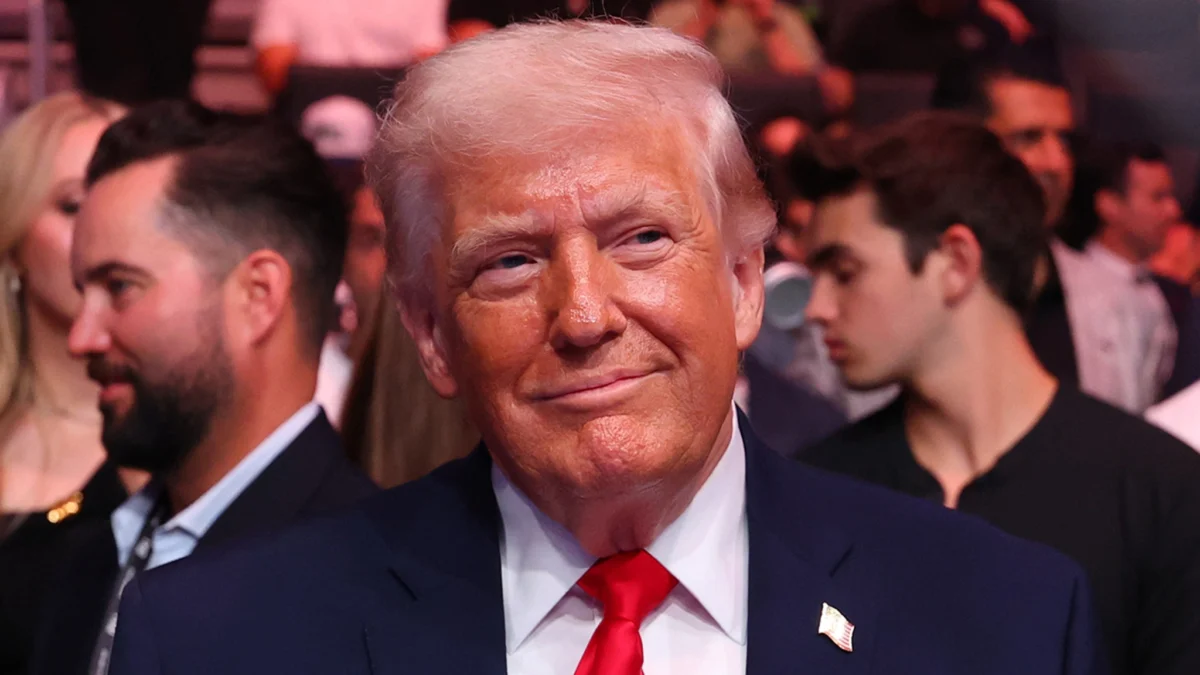
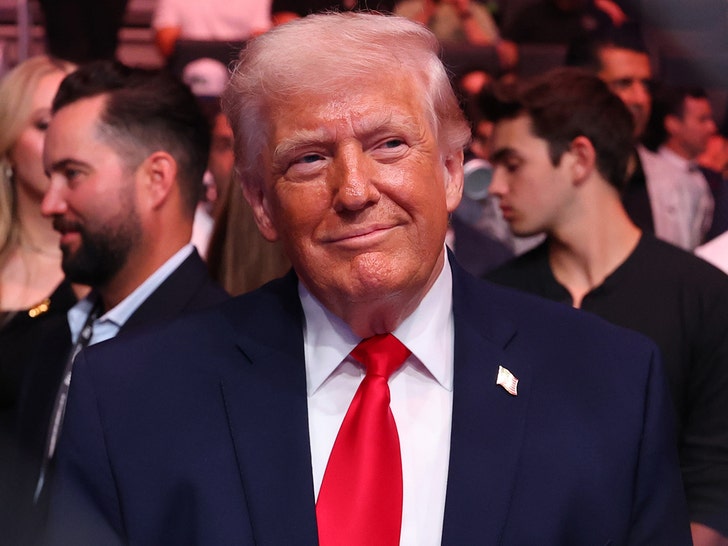
In a stark juxtaposition of high-stakes diplomacy and high-octane entertainment, President Donald Trump made a prominent appearance at UFC 327 in Miami on Saturday night, April 12, 2026, even as critical ceasefire negotiations regarding the escalating conflict in Iran reached an impasse overseas. The President’s presence at the Kaseya Center, marked by his characteristic grand entrance alongside Ultimate Fighting Championship (UFC) President Dana White, drew significant attention, casting a spotlight on his public priorities amidst a turbulent geopolitical landscape.
A Grand Entrance in Miami
The atmosphere inside Miami’s Kaseya Center was electric as President Trump, accompanied by long-time associate and UFC boss Dana White, emerged from a backstage tunnel. The crowd, a mix of ardent fight fans and political supporters, erupted in a cacophony of cheers and applause, many raising cell phones to capture the moment. This highly choreographed entrance, a hallmark of President Trump’s public engagements, underscored his enduring appeal within certain segments of the American public and his established rapport with the mixed martial arts community.
As the President waved to the cheering masses, pausing to shake hands with several eager fans, he and White made their way to prime ringside seats directly in front of the Octagon. Already awaiting their arrival was Secretary of State Marco Rubio, a key figure in the administration’s foreign policy apparatus, whose presence added another layer of political significance to the sporting event. The visual of the nation’s chief diplomat seated alongside the President at a combat sports event, while crucial international talks were underway, immediately sparked discussions about the administration’s focus and messaging.
UFC 327 itself was a highly anticipated event, featuring a card packed with title fights and prominent contenders, drawing an estimated live attendance of over 20,000 spectators and millions more via pay-per-view and streaming platforms. Miami, a city with a vibrant Cuban-American community and a strong Republican base, has frequently been a favored backdrop for President Trump’s public appearances, offering a receptive audience for his brand of populism. His consistent attendance at UFC events, a tradition spanning several years, highlights a strategic alignment with a sport that often embodies themes of individual strength, resilience, and unapologetic competition, resonating deeply with his political base.

The Shadow of the Iran Conflict
The President’s foray into the world of professional fighting occurred against a backdrop of intensifying international crisis. The conflict in Iran, which dramatically escalated in late February, has plunged the Middle East into renewed instability, with global repercussions. The precise origins of the current hostilities remain debated, but analysts point to a series of naval skirmishes in the Persian Gulf, followed by targeted drone strikes and cyberattacks, which quickly spiraled into a broader regional confrontation involving proxy forces and, ultimately, direct military engagement.
A critical point of contention in the ongoing conflict has been the status of the Strait of Hormuz, a vital maritime choke point through which an estimated 20% of the world’s petroleum and a significant portion of its liquefied natural gas pass daily. Reports indicated that segments of the Strait had been intermittently closed or severely restricted due to naval operations and threats, leading to significant disruptions in global energy markets and driving oil prices to their highest levels in over a decade. The economic fallout has been palpable, with international bodies like the International Energy Agency (IEA) and the World Bank issuing urgent warnings about potential global recession if the free flow of commerce through the Strait is not swiftly restored.
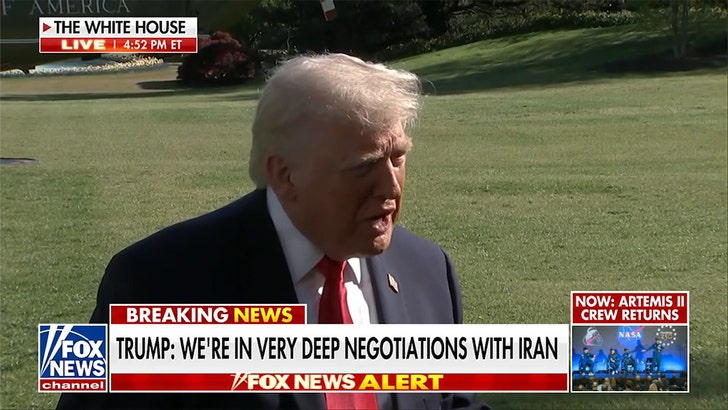
Before departing for Miami, President Trump engaged in a heated exchange with reporters outside the White House, a confrontation that underscored the domestic political pressures surrounding the conflict. An NBC journalist pressed the President on the administration’s failure to fully reopen the Strait of Hormuz, a question that evidently struck a nerve. In a style that has become characteristic of his interactions with the press, President Trump lambasted the reporter, accusing her of ignorance regarding the complexities of the situation in Iran and dismissing NBC as "fake news." This public rebuke, widely circulated across media platforms, further fueled debates about the administration’s transparency and its approach to media scrutiny during a national security crisis.
Diplomatic Efforts at a Standstill
While President Trump was immersed in the spectacle of UFC 327, Vice President J.D. Vance was thousands of miles away, leading the American delegation in crucial ceasefire talks in Islamabad, Pakistan. These high-stakes discussions, convened over the weekend following the initial escalation, aimed to de-escalate the conflict and find a diplomatic resolution between the warring parties. Vice President Vance met with both the Pakistani and Iranian delegations in a marathon session of negotiations that reportedly lasted 21 hours.
The choice of Islamabad as the venue for these talks highlighted Pakistan’s strategic importance as a regional intermediary, possessing historical ties with both Iran and the United States. The agenda for the ceasefire talks was extensive, covering immediate cessation of hostilities, withdrawal of forces, establishment of humanitarian corridors, and a framework for long-term de-escalation and regional stability. However, despite the exhaustive efforts and the urgency of the situation, Vice President Vance emerged from the negotiations to announce that no agreement had been reached.
"Despite our diligent efforts and extensive discussions, which spanned nearly a full day, the delegations were unable to bridge fundamental disagreements," Vice President Vance stated in a brief and somber press conference following the conclusion of the talks. "The path to peace remains challenging, and significant hurdles persist. The United States remains committed to facilitating a peaceful resolution, but both sides must demonstrate a greater willingness for compromise." This pronouncement sent ripples of concern through international diplomatic circles, signaling a protracted and potentially more dangerous phase of the conflict. The failure of these initial talks not only prolongs the suffering in the region but also increases the risk of broader international intervention and further destabilization.
Political Optics and Public Perception
The juxtaposition of President Trump’s public appearance at a sporting event and his administration’s simultaneous struggle to contain a major international crisis immediately invited scrutiny from political analysts and commentators. For supporters, the President’s attendance at UFC 327 was viewed as a display of strength, resilience, and a commitment to maintaining a semblance of normalcy despite global challenges. They argue that a leader must project confidence and not be seen as consumed by crisis, demonstrating that the nation can handle multiple fronts simultaneously. His interaction with the crowd and connection with popular culture, they contend, reinforces his image as a man of the people, distinct from the traditional political establishment.
However, critics quickly pointed to the potential optics of a President seemingly disengaged from critical diplomatic efforts during a moment of international peril. Many questioned the timing and appropriateness of such a high-profile leisure activity while American diplomats were failing to secure a ceasefire and global markets were reeling from the conflict’s impact. Political strategists highlighted the risk of appearing indifferent to the humanitarian and economic consequences of the war, potentially eroding public trust and international credibility. The image of the President enjoying a fight night while his Vice President delivered grim news from Islamabad was painted by some as tone-deaf and potentially damaging to the administration’s image.
Furthermore, the President’s combative interaction with the NBC reporter before his departure for Miami amplified concerns about the administration’s communication strategy during a crisis. The labeling of legitimate journalistic inquiry as "fake news" is seen by media watchdogs and press freedom advocates as an attempt to delegitimize critical reporting and control the narrative, particularly when facing difficult questions about policy effectiveness. Such tactics, they argue, can undermine informed public discourse and create an environment of distrust between the government and the press, which is especially detrimental during times of conflict.
Broader Implications and Future Outlook
The events of April 12, 2026, underscored several critical aspects of the current political and geopolitical landscape. The ongoing conflict in Iran, now confirmed to be without an immediate diplomatic resolution, suggests a period of heightened tension and potential escalation. International pressure on all parties involved, including the United States, is expected to intensify, with calls for renewed diplomatic efforts and potentially more stringent sanctions or even multilateral intervention if the Strait of Hormuz remains compromised. The economic impact, particularly on global energy prices, is likely to persist and could worsen, posing a significant challenge to the global economy.
Domestically, the incident will likely fuel ongoing debates about presidential leadership, media relations, and the appropriate balance between public engagement and crisis management. President Trump’s unique approach to public office, characterized by direct appeals to his base and a confrontational stance towards critical media, continues to define his administration. His strategic use of cultural touchstones like the UFC to connect with supporters remains a powerful tool, yet it also carries the risk of alienating those who expect a more traditional, solemn approach to grave international matters.
The coming days and weeks will be crucial. The failure of the Islamabad talks necessitates a re-evaluation of diplomatic strategies. It remains to be seen whether new avenues for negotiation will emerge, or if the conflict will further deepen, drawing in more regional and international actors. For the Trump administration, navigating this complex geopolitical challenge while managing domestic political perceptions will be a defining test, with the world watching closely for its next move—whether in the Octagon of international diplomacy or the literal Octagon of a championship fight.