
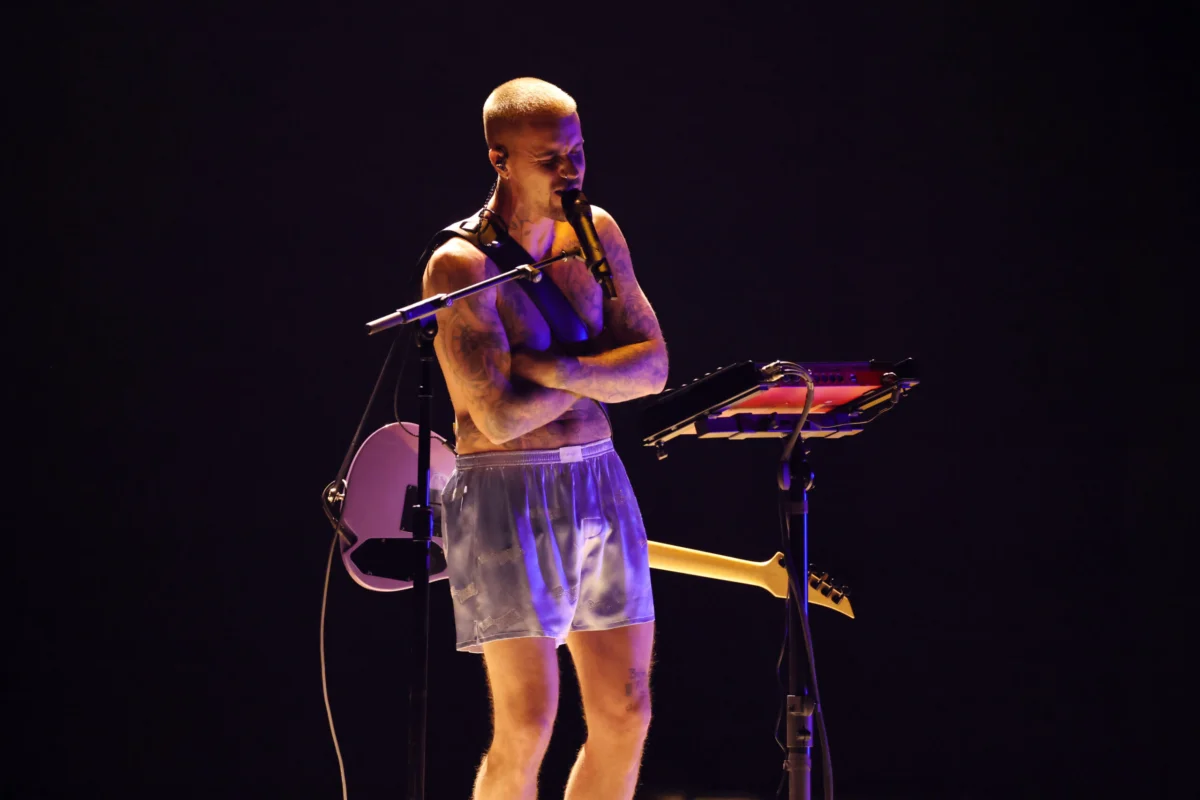
Justin Bieber commanded the Coachella stage on Saturday night, delivering his most significant concert in years as a festival headliner. The performance diverged sharply from the spectacle typically associated with a Coachella main stage act, opting instead for a deeply intimate and stripped-back presentation. Leaning heavily into what has been dubbed his "Swag era" — a thematic return to confidence and creative control following a period of personal and professional upheaval — Bieber mined through old YouTube clips on his laptop, taking fans on a poignant journey back to the very genesis of his global phenomenon. This unique approach underscored a potential redefinition of his artistic path, presenting an artist more focused on connection and legacy than elaborate showmanship.
Coachella’s Grandeur and Bieber’s Unconventional Choice
Coachella Valley Music and Arts Festival, held annually in Indio, California, stands as one of the world’s most prestigious and highest-grossing music festivals. Renowned for its cutting-edge lineups, immersive art installations, and often extravagant stage productions, a headlining slot at Coachella is a coveted honor, typically reserved for artists capable of commanding massive audiences with visually stunning and meticulously choreographed shows. Past headliners have included Beyoncé’s iconic "Beychella" performance, Travis Scott’s elaborate pyrotechnics, and Daft Punk’s legendary pyramid stage, setting a high bar for theatricality.
Against this backdrop of expected grandeur, Bieber’s choice was notably unconventional. His set was remarkably pared down, particularly when contrasted with the elaborate spectacle presented by Sabrina Carpenter the previous day, which featured intricate stage props, multiple costume changes, and a large ensemble of backup dancers. Bieber performed largely on his own for the majority of the set, navigating a singular halfpipe-like structure that dominated the stage. The absence of backup dancers, complex stage props, and elaborate costume or stage design changes was a deliberate artistic statement, signaling Bieber’s intention to place the focus squarely on his voice and his connection with the audience. This minimalist approach challenged the prevailing festival aesthetic, suggesting a mature artist confident enough to shed the trappings of typical pop superstardom in favor of raw authenticity.
A Career Defined by Milestones and Metamorphosis
Justin Bieber’s journey to becoming a Coachella headliner is a saga of unprecedented rise, immense global fame, and profound personal evolution. Discovered on YouTube in 2007 by Scooter Braun, Bieber’s meteoric ascent with hits like "Baby" in 2010 transformed him into a global sensation, ushering in an era of "Bieber Fever" that captivated millions worldwide. His early career saw him shatter numerous records, with albums like My World 2.0 and Believe solidifying his status as a pop juggernaut. His Purpose album in 2015 marked a significant artistic shift, showcasing a more mature sound and earning critical acclaim.
However, the relentless glare of the spotlight also brought immense challenges. Bieber openly grappled with mental health issues, public scrutiny, and the pressures of navigating adulthood in the public eye. His "Justice World Tour," initially slated for 2020 and rescheduled multiple times, was ultimately cancelled in 2022 due to his battle with Ramsay Hunt Syndrome, a neurological disorder causing facial paralysis. This period marked a significant retreat from the public stage, prompting a period of introspection and healing.
Beyond health issues, the past several years have been defined by immense personal and professional transformations. In 2023, Bieber made headlines by selling his music publishing catalog and master recording rights to Hipgnosis Songs Capital for an estimated $200 million, a move that provided significant financial security and creative freedom. This was followed by a highly publicized parting of ways with his longtime manager, Scooter Braun, who had been instrumental in his career since its inception. Concurrently, Bieber embraced fatherhood, a milestone that has reportedly brought a new sense of purpose and stability to his life. His return to music was marked by his critically acclaimed album Justice in 2021, which garnered a Grammy nomination for Album of the Year and marked his first full-length project in four years, signaling what many observers dubbed his "Swag era" with its deluxe edition, Justice (The Complete Edition). This Coachella performance, therefore, was not merely a concert but a pivotal public re-emergence, a testament to his resilience and a potential blueprint for his artistic future.
The Performance: A Chronology of Intimacy and Nostalgia
Kicking off around 11:30 p.m., Bieber’s set began with a concentrated focus on tracks from his recent album. He opened with "All I Can Take," a song that immediately set the tone for a more reflective and personal performance, before transitioning into "Speed Demon," "First Place," and "Go Baby." These selections from his latest work underscored his current artistic direction, demonstrating a nuanced sound distinct from his earlier pop anthems. The initial segment of the show was a deliberate showcase of his evolved musicality, allowing his voice and the emotional depth of his newer material to take center stage.
The first significant shift in the set came with the introduction of surprise guest The Kid Laroi. The Australian rapper joined Bieber to perform their immensely successful 2021 collaboration, "Stay." The track, which topped charts globally and became a streaming behemoth, injected a burst of high-energy pop into the intimate proceedings, eliciting a roar of approval from the massive Coachella crowd. The synergy between the two artists was palpable, reminding the audience of Bieber’s enduring ability to create commercially resonant and culturally impactful music.
As the set progressed, it veered into a deeply personal and unconventional segment that transformed the massive festival grounds into what felt like a collective karaoke party. "Tonight is such a special night, but I feel like we’ve gotta take you guys on a bit of a journey,” a hooded Bieber announced to the audience. He then proceeded to fiddle with a laptop hooked up to the large screens behind him, a move that initially puzzled many. The crowd soon erupted in a frenzy of recognition as they realized he was typing "Baby" into a YouTube search bar. The screens then displayed the iconic music video for his debut hit. "You guys remember this song?" he asked, prompting a chorus of cheers.
From that point, Bieber embarked on a unique trip down memory lane, singing quick snippets of his oldest classics alongside their original YouTube recordings. This segment included beloved tracks such as "Beauty and a Beat," "Never Say Never," and "Confident." The visual juxtaposition of a baby-faced Bieber on screen with the fully grown, seasoned artist performing live served as a stark and powerful reminder of his extraordinary longevity in the music industry. While some observers noted that this "YouTube karaoke" felt less labor-intensive than a fully produced segment, it undeniably created a compelling visual and emotional experience, connecting the present-day artist with his foundational past. The raw, almost improvised nature of the segment fostered a unique intimacy, making the immense festival feel remarkably personal.
However, the segment also encountered minor technical glitches and veered into unexpected territory. As Bieber attempted to pull up the video for his smash hit "Sorry," the video buffered, prompting him to humorously lament, "Wi-Fi, come on man," to the chuckling crowd. The spontaneous nature of the segment further escalated when it transitioned from his music videos to a series of millennial-era internet memes, with Bieber pulling up the "Deez Nuts" and "Double Rainbow" YouTube videos. Acknowledging the unexpected detour, he quipped that he was "getting pulled into the deep dark web, we’ve got to keep the show going,” before abandoning the laptop and transitioning into "Yukon." This unexpected interlude, while perhaps confounding for some, further emphasized the unscripted, spontaneous vibe Bieber was cultivating.
Collaborations and a Grand Finale
The latter half of Bieber’s set continued to feature notable guest appearances, further enriching the musical tapestry of the evening. Dijon, who had performed at the festival the previous day, joined Bieber on stage for a soulful rendition of "Devotion." This collaboration showcased a different facet of Bieber’s musical taste and versatility, blending his pop sensibilities with Dijon’s R&B influences.
Next, Nigerian sensation Tems graced the stage to duet with Bieber on "I Think You’re Special," a track that highlighted their vocal chemistry and Tems’ distinctive sound. The inclusion of Tems, a rising global star, underscored Bieber’s appreciation for contemporary international talent. Following this, Grammy-winning Nigerian artist Wizkid joined Bieber to perform a captivating cover of his globally acclaimed hit, "Essence." The presence of these African music titans not only elevated the performance but also showcased Bieber’s willingness to share his platform and celebrate diverse musical artistry on one of the world’s biggest stages.
Bieber brought his performance to a close with "Daisies," a track that resonated with the intimate atmosphere he had cultivated throughout the night. For the finale, guitarist Mk.gee, who co-produced the song, joined him on stage, adding a layer of authenticity to the closing number. As the final notes reverberated across the festival grounds, a spectacular display of fireworks erupted behind Bieber, painting the desert sky with vibrant colors. He bid farewell to the crowd with a heartfelt declaration of love before swiftly exiting the stage.
Implications and Future Outlook
Justin Bieber’s Coachella headlining performance was more than just a concert; it was a carefully curated artistic statement. The stripped-back production, the deeply personal dive into his past via YouTube, and the deliberate choice of collaborators all point to an artist in a phase of re-evaluation and artistic maturation. By foregoing the typical festival spectacle, Bieber demonstrated a confidence in his raw talent and an intention to foster a more direct, authentic connection with his audience.
Fan reactions, as evidenced by the fervent engagement during the nostalgic segments, suggested a deep appreciation for this intimacy. While some critics might have found the YouTube segment a "low-effort" approach compared to a more traditional production, its emotional resonance and unique visual impact were undeniable. The performance served as a powerful reminder of Bieber’s incredible journey, from a viral sensation to a global icon, and his ability to command a stage with little more than his voice and a laptop.
For the music industry, this performance could signal a new direction for legacy pop artists – one that prioritizes vulnerability and authenticity over elaborate, high-budget theatrics. Coming after a period of significant personal challenges and professional shifts, including health issues, a major catalog sale, and a change in management, this Coachella set positions Bieber not as an artist attempting a grand comeback, but as one who is thoughtfully recalibrating his career on his own terms. It offers a glimpse into a potentially less strenuous, more artistically driven future, moving away from the relentless touring schedules that have often defined his career.
Bieber is slated to perform another headlining set the following Saturday. This second performance will provide an opportunity to refine the approach, address any technical issues, or perhaps even introduce new elements, further solidifying the implications of this pivotal appearance on his enduring legacy and future artistic endeavors. The Coachella performance was a compelling testament to Justin Bieber’s resilience, evolving artistry, and his unwavering connection with the millions of fans who have witnessed his extraordinary journey.