
A new independent film, "City Wide Fever," is making waves in niche cinematic circles, offering a vibrant and stylized homage to the Italian Giallo horror genre of the 1970s. Directed and written by Josh Heaps, the 74-minute feature plunges viewers into a labyrinthine mystery that mirrors the aesthetics and narrative complexities of its inspirations. The film centers on Sam, a young film student who stumbles upon a digital archive belonging to the enigmatic and largely forgotten director Saturnino Barresi. This discovery propels Sam into an investigation that becomes increasingly dangerous, drawing uncanny parallels to the fictional plots of Barresi’s own films.
The Genesis of a Giallo Obsession
The narrative of "City Wide Fever" is rooted in a common lament among film enthusiasts: the perceived visual decline of contemporary cinema. Many critics and cinephiles argue that modern filmmaking often prioritizes technical efficiency, particularly the seamless integration of visual effects, over bold aesthetic choices. This, they contend, has led to a homogenization of visual language, characterized by desaturated palettes and a general avoidance of the saturated, often jarring, colors that defined an era of filmmaking. The 1970s Italian Giallo subgenre stands as a stark contrast, renowned for its audacious use of color, elaborate set designs, and often surreal or nightmarish imagery. These films, while sometimes criticized for convoluted plots or gratuitous violence, are celebrated for their commitment to visual storytelling and their unique ability to create immersive, albeit often unsettling, worlds.
Josh Heaps, as both writer and director, appears to have taken this appreciation for Giallo’s distinctive visual flair and narrative idiosyncrasies as a creative mandate. "City Wide Fever" is explicitly designed as an ode to this specific cinematic tradition, embracing its "features and bugs" – a phrase that suggests an intentional replication of both the celebrated stylistic elements and the inherent structural eccentricities that often characterize Giallo films. The film’s premise, featuring a young protagonist drawn into a shadowy mystery with roots in a forgotten cinematic past, directly echoes the thematic preoccupations of many Giallo works, which frequently explored themes of hidden identities, dangerous secrets, and the blurring lines between reality and fiction.
Unraveling the Mystery of Saturnino Barresi
The film’s protagonist, Sam, portrayed by Diletta Guglielmi, is presented as a modern-day cinephile whose discovery of a hard drive ignites her curiosity. The drive contains extensive materials related to Saturnino Barresi, an Italian director whose work, though influential to some, has largely faded from public consciousness. Barresi is described as a figure who "some consider to be the true father of Italian horror," a designation that imbues his work with a mythic significance within the film’s narrative. The hard drive reveals that Barresi directed three notable films before his abrupt disappearance. His last known whereabouts were in Times Square, New York City, where he was reportedly scouting locations for his intended fourth film, ominously titled "City Wide Fever."
Sam’s initial motivation is twofold: to uncover the truth behind Barresi’s vanishing act and to document her findings for a potential documentary. This dual pursuit immediately establishes a meta-narrative layer, where the act of filmmaking itself becomes a central theme. As Sam delves deeper into the investigation, her journey takes her through various locales in Manhattan and beyond. This exploration is not merely geographical; it is a descent into a world that begins to mirror the fictional landscapes of Barresi’s films. The narrative arc suggests a gradual immersion, where Sam’s personal quest becomes increasingly entangled with a dangerous conspiracy, leading to a rising body count that underscores the tangible risks involved in her pursuit of cinematic history.
A Visually Disorienting Introduction
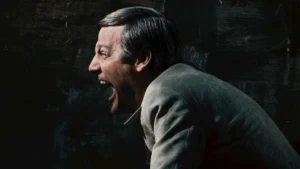
From its opening moments, "City Wide Fever" signals its departure from conventional filmmaking. The film eschews a linear, easily digestible introduction, opting instead for a "dizzying, destabilizing montage" of New York City. This sequence is characterized by a deliberate use of disorienting imagery, atypical camera angles, and the juxtaposition of familiar urban elements with what the original review describes as "nonsensical images." This deliberate stylistic choice serves to immediately establish that the film’s exploration of its setting will be unconventional, setting a tone that is both familiar in its locale and alien in its presentation. This approach is designed to disorient the audience, mirroring the protagonist’s own sense of disorientation as she enters a world that is both recognizable and profoundly strange.
Cinematic Aesthetics: A Symphony of Color and Grain
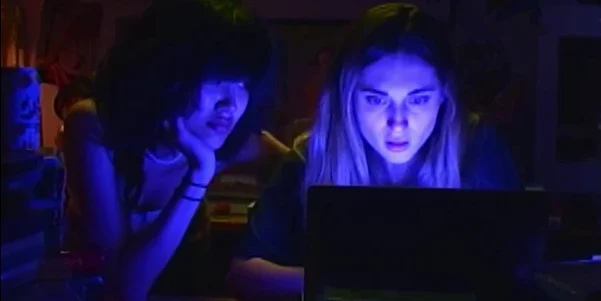
The film’s visual language is a critical component of its Giallo homage. Cinematographer Ethan Johnson employs a deliberate aesthetic that further separates the on-screen world from the audience’s reality. Shot on what are described as "low-quality digital cameras," the film achieves a "home-video look." This technique is not intended to convey a lack of production value but rather to evoke a sense of authenticity and intimacy, as if the viewer is privy to unearthed personal footage. This retro-inspired visual texture is amplified by the film’s audacious use of color. "City Wide Fever" is described as being "absolutely drowning in color," with hues that are often deployed during scenes of heightened tension or peril.
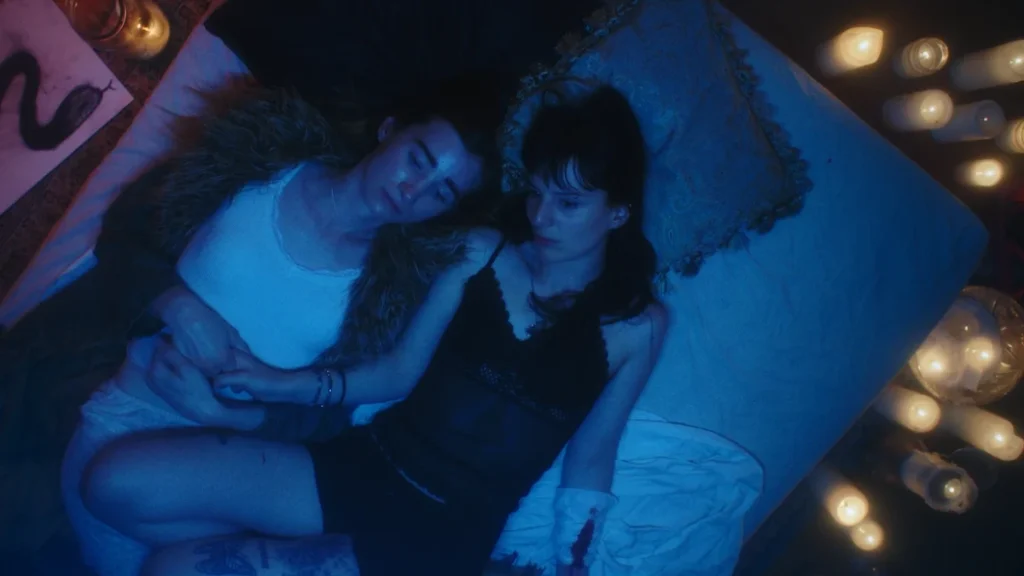
The color palette is not always predictable; the review highlights an early kill scene bathed in "total blue," a choice that deviates from more conventional color associations with violence. Even in less overtly saturated scenes, the film eschews muted tones, opting instead for "eye-catching color." A notable sequence depicting Sam’s travel to Sleepy Hollow showcases intensely vibrant greens, a deliberate exaggeration that contributes to the film’s dreamlike and stylized quality. The editing further enhances this effect, incorporating techniques such as "delightfully deployed double exposures, slow-motion, and crossfades." These stylistic choices are employed to emphasize the "dreamy nature of the story," reinforcing the idea that the film operates on a plane of heightened reality, where the boundaries of perception are fluid.
The review contrasts the visual sophistication of "City Wide Fever" with the perceived shortcomings of contemporary Hollywood productions, asserting that this "low-budget film looks" superior to much of the mainstream output. This comparison underscores the film’s success in achieving its aesthetic goals through creative means rather than sheer financial investment.
Soundtrack: A Minor Discord in the Visual Harmony
While the visual elements of "City Wide Fever" are lauded, the musical score receives a more nuanced critique. The review notes that the music appears to be a compilation of "multiple musicians’ preexisting tracks." While acknowledging that these compositions are "generally well-composed," the assessment suggests that a "unified musical sound" could have further enhanced the film’s "eerie energy." The implication is that a cohesive score would have contributed more effectively to the immersive and unsettling atmosphere that the film otherwise achieves so successfully. Despite this critique, the review does offer a specific commendation for the music of Dressel Amorosi, one of the artists whose work is featured, noting its effectiveness as background music during the writing process.
Performances: Guglielmi’s Commitment to the Giallo Ethos
Diletta Guglielmi’s performance as Sam is singled out for particular praise. She is described as a "totally compelling lead," fully embodying the film’s "brazenly strange tone." Guglielmi’s delivery is characterized by "heightened emotion that appropriately borders on camp," a performance choice that aligns perfectly with the theatrical and often exaggerated nature of Giallo cinema. The review further observes a meta-textual element in her performance, suggesting that she "truly believes she is in a giallo film." This conviction is balanced by moments of unexpected humor, often facilitated by her friend Chloe, played by Angelica Kim. A scene where Chloe humorously contextualizes Sam’s tales of supposed danger by pointing out her location ("You were in Gowanus, down the street from Whole Foods") provides a grounding counterpoint to the escalating absurdity of Sam’s experiences, injecting levity into the film’s otherwise intense atmosphere.
Audience and Impact: A Niche Appeal for Discerning Viewers
"City Wide Fever" is positioned as a film primarily intended for aficionados of the Giallo genre or for a broader audience that appreciates "creatively constructed genre films." The narrative’s increasing unreality, where "time and space themselves start to bend," suggests a deliberate move away from conventional storytelling. The review acknowledges that this unconventional approach "certainly won’t work for most filmgoers," recognizing its niche appeal. However, for those actively seeking cinematic experiences that eschew modern trends and unapologetically embrace visual spectacle and thematic peculiarity, "City Wide Fever" is presented as a compelling and potentially rewarding viewing experience. The film’s success lies in its ability to transport viewers into a world that is both a loving homage and a distinct creation, offering a potent antidote to cinematic homogeneity. The 74-minute runtime also positions it as an accessible entry point into the often lengthy and complex world of Giallo, making it a potentially influential work within the independent film landscape.