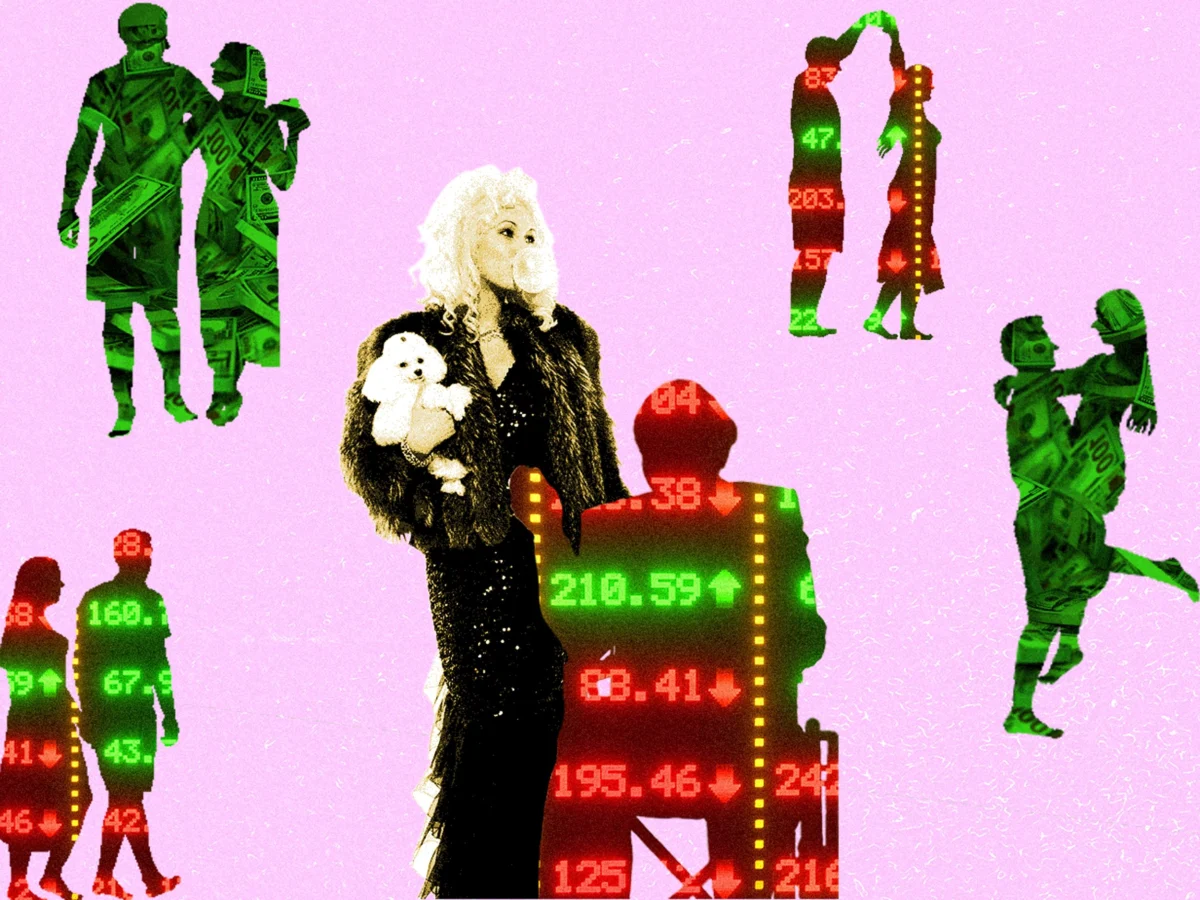
The landscape of transactional relationships, commonly referred to as "sugaring," is undergoing a fundamental transformation as global economic pressures and market volatility reshape the discretionary spending of the wealthy. What was once a world defined by five-figure monthly allowances, first-class international travel, and luxury retail experiences is increasingly becoming a space defined by financial pragmatism, investment strategy, and survivalist economics. For many participants, the "sugar" in these arrangements is shifting from liquid cash to professional expertise and long-term financial literacy.
Nikki Saryan, a 30-year-old influencer based in Los Angeles, exemplifies this transition. Saryan, who documents her experiences under the moniker "SugarBabyBestie" on TikTok, recently reached out to a former benefactor—a finance professional in his late sixties—not to request a luxury gift, but to seek investment counsel. Having previously commanded up to $20,000 a month in support, Saryan now finds herself navigating a market where traditional cash flow is less certain. Her request for advice on whether to enter the stock market was met with a sobering recommendation: avoid Wall Street’s current volatility and opt for low-risk, slow-growth accounts, such as those offered by Charles Schwab.
This shift in focus highlights a broader trend within the "sugar bowl"—a term used to describe the ecosystem of these arrangements. As inflation persists and the cost of living climbs, the demographic of "sugar daddies" is bifurcating. While the ultra-high-net-worth individuals remain largely insulated, the "low-level millionaires"—tech mid-managers, accountants, and small business owners—are pulling back, creating what many participants are now calling a "sugar recession."
The Economic Drivers of a Market Correction
The current contraction in the sugaring market is not an isolated phenomenon but a reflection of broader macroeconomic indicators. According to recent labor statistics, hiring in the United States has reached a historic low relative to the post-pandemic recovery era. With the cost of essential goods and services spiking, the discretionary income required to sustain a sugar arrangement—which can range from $3,000 to over $10,000 per month—has become a secondary priority for many.
Market volatility has also played a significant role. Investors have noted that the current political climate, characterized by rapid-fire social media pronouncements and shifting trade policies, has made traditional investing more hazardous. For instance, market analysts have observed that posts on platforms like Truth Social by political figures such as Donald Trump can cause immediate, sharp fluctuations in global markets. For a sugar daddy whose "allowance" budget is tied to the performance of his portfolio, this volatility necessitates a more conservative approach to spending.
Brian, a tech professional in his forties who has participated in the lifestyle for several years, notes that the combination of tariffs, the rise of artificial intelligence, and general economic uncertainty has forced him to exit the market. "The truly wealthy will be unaffected," Brian told reporters, "but life is about to change for the entire class of low-level millionaires who make up the majority of sugar daddies. In reality, there is just a lot less money to shower beautiful women with."
A Chronology of the Sugar Economy: From Boom to Contraction
To understand the current "sugar recession," one must look at the evolution of these arrangements over the last decade:
- 2014–2019: The Digital Gold Rush. The proliferation of specialized dating apps and the mainstreaming of "side hustle" culture led to a surge in participants. Sugaring was marketed as a glamorous way for students to pay off debt or for young professionals to elevate their lifestyles.
- 2020–2021: The Pandemic Pivot. While physical meetings decreased, the stimulus-fueled economy and the rise of remote work saw a spike in "online-only" arrangements. Discretionary spending remained high as the wealthy saw significant gains in the tech-heavy stock market.
- 2022–2023: The Inflationary Peak. As the Federal Reserve began raising interest rates to combat inflation, the "middle-class" sugar daddy began to feel the squeeze. The cost of luxury dining, travel, and housing—the staples of the sugaring world—rose sharply.
- 2024: The Structural Shift. The market is currently experiencing a surplus of "sugar babies" and a diminishing number of "sugar daddies" willing to pay premium rates. This imbalance has led to a decrease in the "market rate" for companionship.
Data and Market Dynamics: Supply vs. Demand
The "sugar bowl" operates on the basic economic principles of supply and demand. As traditional employment becomes more precarious and the "vanilla" dating market remains fraught with dissatisfaction, more women are entering the sugaring market as a survival strategy. However, the supply of benefactors has not kept pace.
Will, an accountant based in Milwaukee, provides a perspective on the "value-based" shift in the market. He argues that even men who can still afford the lifestyle are becoming more price-sensitive. "Just because men can afford to pay more, that doesn’t necessarily translate to a higher amount of money that they’re willing to provide," Will explained. He likened the situation to a billionaire refusing to pay $100 for a $5 cup of coffee. This sentiment suggests a "normalization" of rates that were previously inflated during the tech boom of the late 2010s.
The impact of this contraction is felt most acutely by those who rely on these arrangements as their primary source of income. Roxanne, a 42-year-old Denver resident with two decades of experience in the lifestyle, observes that the political and economic environment has forced many women into desperate positions. "For women who rely on sugaring solely as their source of income, the impact has been hard," Roxanne stated. She noted that many are now forced to manage multiple arrangements, take on additional "vanilla" jobs, or transition into full-scale sex work to maintain their financial stability.
The Rise of Financial Mentorship and the "Chess Game"
As cash allowances become harder to secure, many sugar babies are pivoting toward seeking "intellectual capital." Nikki Saryan’s shift toward asking for stock tips rather than shopping sprees represents a strategic move to ensure long-term stability. On her TikTok channel, she teaches her followers that sugaring is "like playing a game of chess," requiring foresight, risk management, and an understanding of the benefactor’s psychology.
This educational turn suggests that the future of sugaring may lie in mentorship and professional networking. In an economy where a high-yield savings account or a well-timed investment can be more valuable than a one-time cash payment, the "sugar" is being redefined. Benefactors who are no longer willing to part with $5,000 a month in cash may still be willing to provide the "value" of their professional network or financial expertise.
Broader Implications for the Gig Economy and Social Safety Nets
The "sugar recession" serves as a microcosm of the broader vulnerabilities in the modern gig economy. For many young people, particularly those in high-cost-of-living cities like Los Angeles or New York, traditional employment often fails to cover the basic costs of living and student loan repayments. Sugaring has functioned as an informal social safety net for a specific demographic, and its contraction leaves a significant financial void.
Furthermore, the shift in the sugaring market reflects a growing wealth gap even within the upper echelons of society. The "low-level millionaires" mentioned by Brian are finding themselves squeezed by the same inflationary pressures as the middle class, albeit at a different scale. This suggests that the "luxury" economy is becoming increasingly exclusive, reserved only for the ultra-wealthy who are immune to the fluctuations of the "Trump-era" markets or interest rate hikes.
Conclusion: A Market in Transition
The sugaring world is currently in a state of flux, mirroring the anxieties of the global economy. The era of easy money and extravagant, unquestioned spending appears to be cooling, replaced by a more calculated and survival-oriented approach to transactional romance. Whether this is a temporary dip or a permanent restructuring of the market remains to be seen.
For participants like Nikki Saryan, the goal is now sustainability. By focusing on investment accounts and financial literacy, she is attempting to leverage her current lifestyle into future independence. For the benefactors, the "sugar recession" is an opportunity to re-evaluate the value of their contributions in an uncertain world. As the boundaries between dating, work, and financial planning continue to blur, the sugar bowl remains a stark, if unconventional, indicator of the health and direction of the modern economy.