

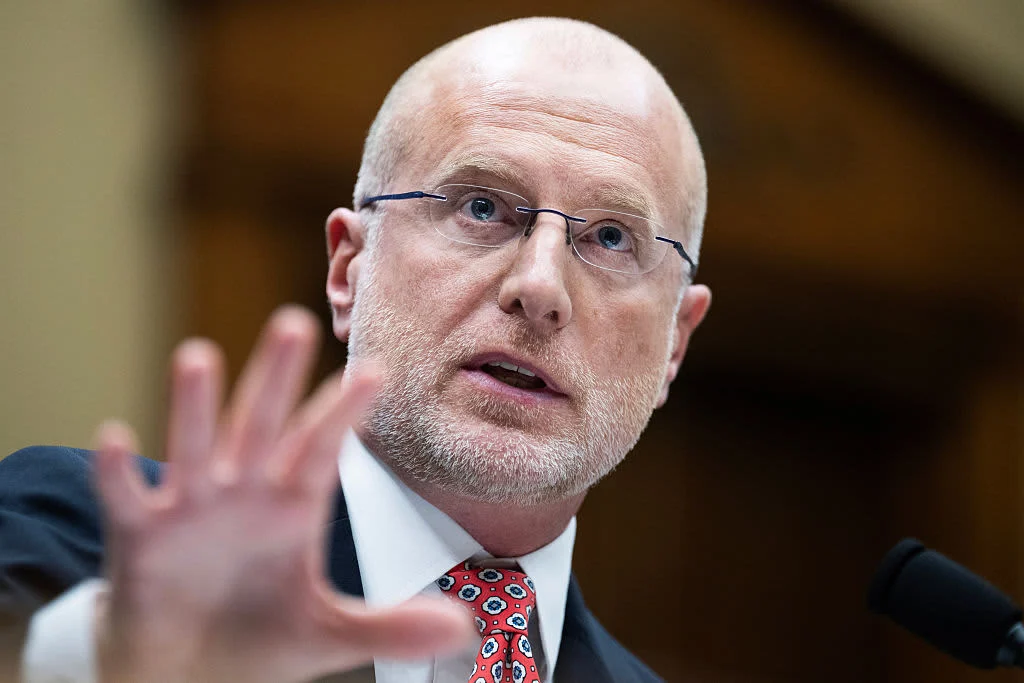
The landscape of the American media industry shifted significantly this week as Federal Communications Commission (FCC) Chairman Brendan Carr provided a roadmap for the regulatory approval of the proposed merger between Paramount and Warner Bros. Discovery (WBD). Speaking from the sidelines of the Mobile World Congress in Barcelona, Spain, Carr characterized Paramount’s bid as a "cleaner" alternative to a previously considered proposal from Netflix, suggesting that the transaction could move through the oversight process with relative speed. His comments come at a critical juncture for WBD, which has been the subject of intense bidding interest as it seeks to navigate a volatile streaming market and a heavy debt load.
According to Carr, the Paramount-Skydance offer avoids many of the anti-competitive pitfalls that had plagued the Netflix discussions. "There’s a lot of concerns when Netflix was the potential buyer there," Carr told CNBC. "That particular combination raised a lot of competition concerns." In contrast, the FCC Chairman noted that the Paramount bid "does not raise at all the same types of concerns" and emphasized the potential for "real consumer benefits" to emerge from the consolidation of the two media giants.
The Shift from Netflix to Paramount: A Financial and Strategic Pivot
The transition from a potential Netflix acquisition to the Paramount-Skydance deal represents a significant escalation in the valuation of Warner Bros. Discovery’s assets. Last week, Paramount Skydance submitted a revised offer to acquire the entirety of WBD at $31 per share, a notable increase from its previous $30-per-share offer. This valuation proved high enough for the WBD board to officially deem the proposal "superior" to the existing Netflix bid.
Netflix had originally positioned itself to acquire WBD’s prestigious studio assets and its streaming infrastructure for $27.75 per share. However, as the bidding war intensified and the regulatory climate grew colder toward Big Tech expansion into traditional media, Netflix eventually conceded that the deal was "no longer financially attractive." The withdrawal of Netflix cleared the path for Paramount, which had already solidified its own internal structure following its merger with Skydance last year.
To facilitate the transition, Paramount has already settled the $2.8 billion breakup fee that WBD owed to Netflix for canceling their preliminary agreement. Furthermore, Paramount has signaled its confidence in the regulatory outcome by offering a staggering $7 billion breakup fee of its own, should the deal fail to gain the necessary government clearances. This financial commitment is seen by analysts as a signal to shareholders that the company is fully prepared to navigate the Department of Justice (DOJ) and FCC review processes.
Regulatory Perspectives: Why the Paramount Deal is Deemed "Cleaner"
The distinction between the Netflix and Paramount bids lies primarily in the nature of market concentration. A Netflix-WBD merger would have combined the world’s largest streaming platform with HBO Max, a primary competitor. Regulators feared this would create a "streaming superpower" with the leverage to dictate consumer prices and squeeze out smaller independent creators.
Chairman Carr’s assessment that the Paramount deal is "cleaner" stems from the fact that it is viewed more as a horizontal consolidation within the traditional media space rather than a dominant tech firm absorbing a content library. While Paramount and WBD both operate major streaming services (Paramount+ and HBO Max), their combined market share is viewed as less disruptive to the overall ecosystem than a Netflix-led consolidation.
"If there’s any FCC role at all, it’ll be a pretty minimal role," Carr noted, explaining that the FCC typically focuses on the transfer of broadcast licenses. Since Paramount already owns CBS and successfully cleared a merger with Skydance, the framework for oversight is already well-established. Carr’s optimism suggests that the primary scrutiny will shift away from the FCC and toward the DOJ’s antitrust division, which will examine the broader implications for the theatrical and television markets.
Chronology of the WBD Bidding War
The path to the current Paramount-WBD agreement has been marked by several months of high-stakes negotiations and political interventions:

- December 2025: Rumors of a Netflix-WBD tie-up first surface, drawing immediate fire from antitrust advocates. President Donald Trump comments that the deal "could be a problem" due to market share concerns.
- January 2026: Netflix formalizes a $27.75-per-share offer for WBD’s studio and streaming divisions. Meanwhile, Hollywood figures, including director James Cameron, express concern via letters to lawmakers regarding the preservation of the theatrical experience.
- February 19, 2026: Paramount-Skydance enters the fray with an initial bid, leveraging its recent successful internal merger to present a "total company" solution rather than a piecemeal acquisition.
- February 26, 2026: Paramount raises its offer to $31 per share. WBD’s board pivots, citing the higher price and "reduced regulatory risk" as reasons for favoring Paramount.
- March 2026: FCC Chairman Brendan Carr publicly backs the Paramount deal at the Mobile World Congress, signaling a green light from one of the primary oversight bodies.
Content and Theatrical Implications: The 30-Film Pledge
One of the most contentious issues surrounding the merger has been the future of the American film industry. Critics of media consolidation often point to "smaller film slates" and the "death of the mid-budget movie" as consequences of large-scale mergers. To preempt these concerns, Paramount executives announced on Monday a commitment to release at least 30 films annually—roughly 15 per studio—ensuring that both the Paramount and Warner Bros. banners remain active in multiplexes.
This commitment is seen as a direct response to the scathing critiques leveled by industry veterans and lawmakers like Senator Elizabeth Warren (D-Mass.), who warned that the merger could be an "antitrust disaster" resulting in "fewer choices for American families." By guaranteeing a robust theatrical output, Paramount aims to satisfy the "public interest" requirements often cited by regulators during the review of media acquisitions.
Furthermore, the company plans to merge Paramount+ and HBO Max into a single, unified streaming platform. This move is intended to create a service with enough scale to compete effectively with Netflix and Disney+, potentially lowering churn rates and providing a more comprehensive value proposition for subscribers.
Financial Backing and Foreign Investment Scrutiny
Despite the optimism from the FCC, the deal faces a unique hurdle in the form of its financing. Paramount’s $31-per-share offer is supported by approximately $24 billion in capital from Gulf state sovereign wealth funds. This infusion of international capital has raised eyebrows among some members of Congress, leading to questions about whether the Committee on Foreign Investment in the United States (CFIUS) will intervene.
While the FCC focuses on broadcast and domestic competition, CFIUS examines whether foreign investment poses a threat to national security. Given that WBD owns CNN, a major global news organization, the involvement of foreign sovereign wealth funds in the ownership structure will likely undergo rigorous review. Analysts from Raymond James noted that while the deal is "meaningfully easier" than the Netflix bid from a domestic antitrust perspective, the "political standing" of the deal and its international funding sources remain the primary variables.
Market Reaction and Analytical Outlook
Financial analysts remain divided on the long-term implications of the merger. Paren Knadjian, a partner at advisory firm EisnerAmper, suggested that the path forward is more nuanced than Chairman Carr’s "cleaner" assessment might imply. Knadjian pointed out that because the Paramount deal includes pay TV networks like CNN, TBS, and TNT, it represents a "horizontal consolidation" of news and sports that could give the new entity unprecedented pricing power over cable providers.
"The regulatory pressure, the political pressure, those are the things that will certainly delay the deal and will make it more complicated," Knadjian told CNBC. "I think there’s going to have to be significant concessions for it to go through."
However, the prevailing sentiment in Washington seems to favor the Paramount bid as a necessary step to ensure the survival of legacy media in the digital age. By allowing Paramount and WBD to combine, regulators may be betting that a stronger, consolidated domestic player is better for the market than allowing the "streaming giants" of Silicon Valley to absorb the remaining pillars of Hollywood.
As the formal filing process begins, the industry will be watching closely to see if the DOJ shares Chairman Carr’s optimistic timeline. If the deal proceeds as Carr expects, the combined Paramount-WBD entity could become a reality by late 2026, fundamentally reshaping the entertainment, news, and sports broadcasting landscape for decades to come.