
Long before Jeff Probst utters the iconic phrase, "Come on in!" signaling the start of a grueling challenge for Survivor contestants, a dedicated, unseen force has already navigated every obstacle, performed every task, and endured every physical demand. This clandestine collective, known simply as the "Dream Team," comprises individuals who are not vying for a million-dollar prize but are, in fact, among the most critical players in the enduring success of the venerable reality competition series. What began as a practical solution to test elaborate obstacle courses has blossomed into an indispensable pillar of Survivor‘s operation, serving as a dynamic training ground, a tight-knit backstage family, and an unparalleled pipeline for behind-the-scenes talent, launching careers from camera operators to co-executive producers.
The Genesis of a Reality TV Phenomenon’s Secret Weapon
When Survivor first premiered in 2000, it revolutionized the landscape of reality television, captivating audiences with its unique blend of strategic gameplay, physical endurance, and social dynamics. The show’s format, which strands contestants in remote locations to outwit, outplay, and outlast one another, immediately set a new standard for production complexity. A core element of this complexity lies in its intricately designed challenges, which test everything from physical prowess and mental acuity to sheer willpower. It quickly became apparent that a dedicated team was needed to rigorously test these challenges before the contestants ever set foot on them. This necessity gave birth to the Dream Team.
Initially conceived as a logistical workaround under the guidance of co-executive producer John Kirhoffer, who oversees the show’s challenges, the Dream Team’s primary function was to ensure the safety, fairness, and viability of each challenge. Producers could not realistically test every demanding physical course themselves without risking injury or exhaustion, potentially compromising their ability to manage the intricate production. Thus, a group of agile, resilient individuals was assembled to run, jump, swim, and climb through every iteration of a challenge, identifying potential flaws, assessing difficulty levels, and ensuring that each element functioned as intended. This initial role was crucial for maintaining the integrity and spectacle that became Survivor‘s hallmark.
Evolution into an Industry Model
Over more than two decades, as Survivor cemented its status as one of television’s longest-running and most celebrated reality shows, the Dream Team’s role expanded dramatically. It evolved from a purely operational unit into a comprehensive talent development program, providing an entry point for aspiring television professionals. This unique model of internal growth has garnered significant attention within the industry, offering a stark contrast to traditional internship or entry-level positions often found in entertainment. The opportunity to learn the multifaceted aspects of a major television production from the ground up, in a demanding and immersive environment, proved invaluable.
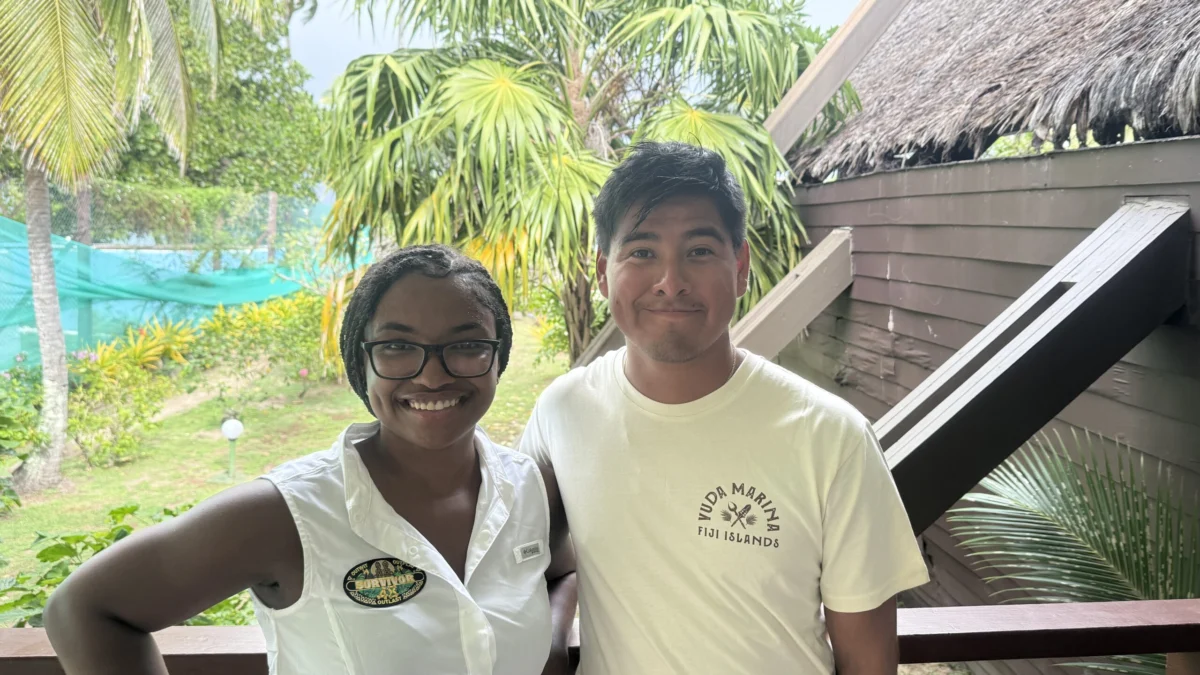
The Hollywood Reporter recently gained exclusive insight into this crucial component of Survivor‘s production while on location in Fiji, ahead of the landmark 50th season. Interviews with current Dream Team members Skylar Williams and Kevin Martinez, alongside notable alumni who have ascended to key production roles, illuminated the depth of the team’s impact. Among the alumni were Zach Sundelius, now a supervising producer; Brittany Crapper, who rose to co-executive producer; and brothers Tim Barker, a camera operator, and Chris Barker, the Director of Aerial Photography, whose contributions are vital to capturing the show’s breathtaking scale. Their journeys underscore the Dream Team’s efficacy as a launchpad for diverse career paths within the industry.
Pathways to Production: Joining the Elite Ranks
The paths to joining the Dream Team are varied but often share a common thread of passion, persistence, and personal connection within the tight-knit Survivor community. Brittany Crapper, now a co-executive producer, describes her initial entry as "the best job I’ve ever had," learning about the opportunity through a family friend. Her audition video, which she self-deprecatingly calls "atrocious," highlights Kirhoffer’s willingness to see potential beyond conventional presentations. This speaks to a culture that values dedication and a willingness to learn.
Kevin Martinez found his way to the Dream Team through supervising producer Chris Marchand, with whom he had previously worked on Big Brother. Martinez initially had no prior experience with Survivor, but quickly became "hooked" after familiarizing himself with the show. Similarly, Skylar Williams leveraged a family connection—her uncle, a former producer on the show—to learn about the opportunity. Her background in sports and a declared interest in television production, coupled with two years of persistent communication, ultimately secured her a spot upon turning 21. For Williams, the moment she learned she made the team was "the most exciting day of my life," underscoring the deep personal significance of this role for many.
The story of Zach Sundelius exemplifies the power of persistence. A devoted fan since day one, Sundelius encountered a behind-the-scenes video about Dream Teamers during college but found no formal application process. He spent years sending unsolicited emails and resumes to CBS, even creating a Twitter account dubbed "Future Dream Team" to connect with others. His dedication eventually led him to Survivor writer Gordon Holmes, who forwarded Sundelius’s information, resulting in a call from Kirhoffer and a spot on the team in Samoa. This narrative highlights the often unconventional but ultimately rewarding avenues for entry into this unique program.
The Barker brothers, Tim and Chris, also entered through connections. Tim joined in season 19 after his brother, Chris, who had joined the year prior through a friend working in the challenge department, urged him to apply. These accounts collectively illustrate a recruitment model built on trust, networking, and a shared enthusiasm for the demanding yet exhilarating world of Survivor.
The Daily Grind: More Than Just Challenge Testing
The day-to-day responsibilities of a Dream Teamer extend far beyond simply running challenges. As Skylar Williams details, a typical day is a demanding 11- to 12-hour commitment, beginning early in the morning. When not physically testing obstacle courses, Dream Teamers are deeply involved in the art department, meticulously painting and assembling challenge pieces. The sheer scale and detail of Survivor‘s challenges mean that tasks like painting a single wooden post can consume days, requiring precision and artistic dedication. This involvement ensures a deep understanding of the challenges from a foundational level.
Brittany Crapper further elaborates on their diverse roles, describing Dream Teamers as "stand-ins" and "stunt doubles of sorts." During tribal council preparations, they occupy the contestant seats while camera and lighting setups are meticulously adjusted, ensuring every shot and shadow is perfect for broadcast. This hands-on experience provides invaluable exposure to the technical complexities of television production, from camera angles to sound design and lighting cues. This multifaceted engagement means Dream Teamers gain practical knowledge across various departments, fostering a holistic understanding of the production process. The close collaboration with the art department, alongside their physical duties, positions them as versatile contributors essential to every aspect of the show’s visual and narrative presentation.
A Powerful Launchpad for Professional Careers
Perhaps the most significant evolution of the Dream Team is its transformation into an unparalleled career incubator within the entertainment industry. The immersive environment allows individuals to explore various production facets and discover their true calling, often leading to rapid advancement within the Survivor family itself.
Brittany Crapper’s journey from Dream Teamer to co-executive producer exemplifies this pipeline. By exploring different departments and shadowing producers, she identified her passion for producing. Her trajectory—from nighttime segment producer to daytime, then producer, supervising producer, and finally co-executive producer—showcases a clear and supportive pathway for internal promotion. Skylar Williams, currently a Dream Teamer, expresses a similar interest in producing, noting how the show fosters success: "At Survivor, everyone wants you to succeed and teaches you to be the best in your field. We learn the show’s details and are prepped for long-term roles here."

Kevin Martinez harbors ambitions in assistant directing (AD) or camera operating, roles he has actively engaged in during his time on the Dream Team. He views AD as a direct step towards his ultimate dream of directing, appreciating Survivor‘s commitment to promoting from within. This internal growth model not only retains institutional knowledge but also cultivates a deeply loyal and invested workforce.
The Barker brothers illustrate the technical career opportunities. Tim Barker, who harbored a passion for cameras before joining Survivor, found invaluable mentorship. "Joining Survivor meant meeting pros who took me under their wing, showing me gear and teaching me," he recounts, highlighting the collaborative learning environment that enabled his transition from camera assistant to camera operator. Chris Barker, his brother, became a pioneer in aerial photography for the show. He recalls how the emergence of drones led him and others to experiment, eventually securing approval to replace helicopters with drones, transforming the show’s visual storytelling. The first drone season, Ghost Island (2017), marked a significant shift, and today, Survivor utilizes approximately 15 drones, a testament to the team’s innovative spirit.
Zach Sundelius, with his journalism background, was naturally drawn to storytelling and producing. After his Dream Team tenure, he gained experience on The Jeff Probst Show before returning to Survivor as a night segment producer, then daytime, then producer, eventually rising to his current role as challenge producer/supervising producer. His story, like many others, highlights how the Dream Team experience provides a foundational understanding that proves adaptable and valuable across various production roles.
The Unbreakable Bond: "The Survivor Family"
Beyond professional development, the Dream Team fosters an extraordinary sense of community that resonates throughout the entire Survivor crew, transforming colleagues into a surrogate family. Kevin Martinez articulates this unique camaraderie, stating, "I’ve never felt this kind of camaraderie on other shows. Here, it’s like, ‘We got you, we’ll help you.’" He envisions staying with the show "until I’m 80," reflecting the profound loyalty and belonging the environment inspires. Skylar Williams echoes this sentiment, describing the crew as "a huge happy family," emphasizing that the 24/7 proximity in remote locations naturally strengthens these bonds.
Zach Sundelius delves deeper into the institutional community that defines Survivor. He notes that being in close quarters, pursuing a common goal, creates an environment where "people really care not only about the show but about each other." This shared purpose, coupled with the daily interactions outside of work, cultivates a rare culture that is "more than a job." Brittany Crapper emphasizes that this family dynamic is largely due to the show’s consistent policy of promoting from within. "Dream Team isn’t just an entry level internship at a company, it is so much more than that. It is the start of becoming a part of this family, and what this beautiful show is," she states.
The familial atmosphere extends beyond professional relationships, often leading to personal connections that reshape lives. Crapper herself met her husband on the show, then a standby props team member, while she was a Dream Teamer. Three years later, they married and now have three daughters, cared for by her husband on location while she works. This is not an isolated incident; Crapper notes that the number of "Survivor babies" is "creeping on the 50s or 60s," alongside numerous marriages. The intensive experience of traveling and spending months abroad, particularly in the show’s earlier days when stints on location were longer, makes such deep bonds "inevitable," yet profoundly "cool." This phenomenon speaks volumes about the human connection fostered by Survivor‘s unique production model.
John Kirhoffer: The Heartbeat and Mentor
At the core of the Dream Team’s success and its enduring familial spirit is co-executive producer John Kirhoffer. Consistently described as a father figure, Kirhoffer’s leadership style blends professional guidance with genuine paternal care, making him the emotional and operational heartbeat of the challenge department.
Skylar Williams highlights his genuine investment in the team: "He’s genuinely a father figure. He wants the best for all of us. He’s always looking out for us, making sure we’re all okay." Kevin Martinez shares this perspective, appreciating that Kirhoffer "doesn’t feel like your typical boss." Crucially, Kirhoffer prioritizes safety above all else, always reminding Dream Teamers, "If you’re uncomfortable, don’t do it." This empathetic approach acknowledges individual fears and limitations, fostering an environment of trust and psychological safety, especially important given the demanding nature of the challenges.
Brittany Crapper emphasizes Kirhoffer’s profound impact as a mentor, describing how he "really takes these Dream Teamers in as his own children." She credits him with providing invaluable advice and unwavering support, even years after moving beyond the Dream Team. Chris Barker aptly likens Kirhoffer to a "camp counselor," a figure who guides, bonds, and inspires in the unique, immersive environment of Survivor‘s production. Tim Barker reflects on the initial overwhelming experience of joining a 300-person crew, quickly alleviated by Kirhoffer’s introductions and the welcoming nature of the wider team. Fifteen years later, these initial colleagues have become lifelong friends and family, a testament to the inclusive culture Kirhoffer has helped cultivate.
Broader Implications and Legacy
The Survivor Dream Team model offers valuable lessons for the broader entertainment industry, particularly for long-running, complex productions. Its success in developing talent from within provides a compelling alternative to more traditional, often transient, entry-level programs. By offering hands-on experience across multiple departments, fostering mentorship, and cultivating a strong sense of community, Survivor has not only ensured the smooth operation of its challenges but also built a resilient, loyal, and highly skilled workforce.
Industry observers often commend Survivor‘s approach as a rare example of sustained internal talent development, particularly within the demanding realm of reality television. This model contributes significantly to institutional knowledge retention, ensuring that the show’s unique production standards and creative vision are passed down through generations of crew members. It also speaks to a commitment to employee welfare and career longevity that is not always prevalent in freelance-heavy production environments. The economic impact of such a program extends beyond the immediate crew, as it creates a stable, experienced pool of professionals who can contribute to other projects within the industry.
As Survivor continues its remarkable run, approaching its 50th season, the Dream Team stands as a quiet but powerful force behind its enduring popularity. It is a testament to innovation in production management, a beacon of community in a competitive industry, and a proving ground for the next generation of television professionals. The "best thing that’s ever happened to me," as one former Dream Teamer still calls it, is more than just a job; it is a foundational experience that shapes careers, forges lifelong bonds, and ultimately, ensures the spectacle of Survivor continues to captivate millions.
Survivor airs new episodes on Wednesdays at 8 p.m. on CBS and Paramount+.