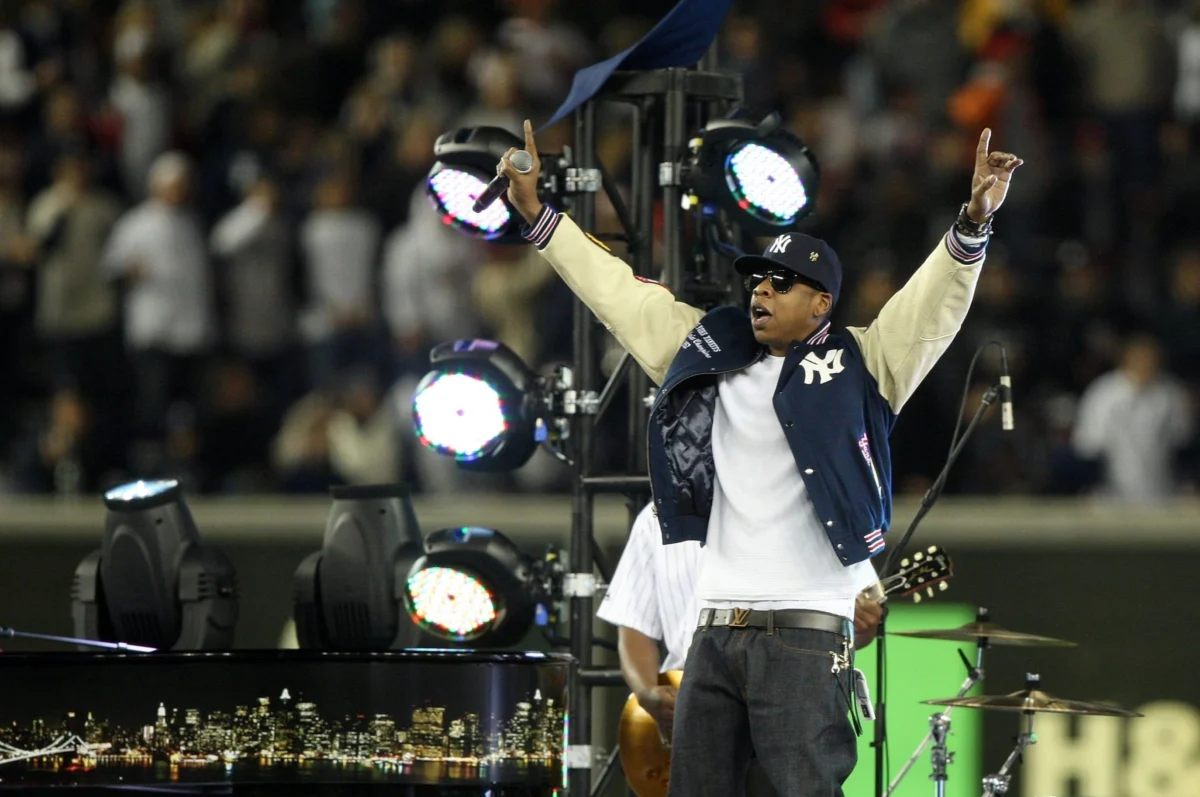
Jay-Z’s return to the stage for headline performances after a seven-year hiatus is set to electrify Yankee Stadium this July, with two highly anticipated shows scheduled for July 10th and 11th. This announcement marks a significant moment for the legendary Brooklyn-born rapper, whose last solo headline tour was the "4:44 Tour" in 2017. His subsequent appearances have been limited, including a special B-sides performance at Webster Hall in 2019 and his record-breaking co-headlining "On the Run II Tour" with Beyoncé in 2018. The upcoming concerts at his hometown stadium signify not only a return to solo headlining but also a powerful connection to the iconic venue that has become synonymous with his musical legacy.
A Storied History at the House That Ruth Built
Jay-Z’s relationship with Yankee Stadium is deeply intertwined with his lyrical prowess and cultural impact. His 2009 anthem, "Empire State of Mind," famously declared, "I made the Yankee hat more famous than a Yankee can," a sentiment that resonates profoundly as he prepares to grace the stadium’s hallowed grounds once more. While these upcoming dates represent his first solo headline performances at Yankee Stadium, they are not his first foray onto its field. In 2013, he joined Justin Timberlake for the "Legends of the Summer Stadium Tour," captivating audiences over two nights. Prior to that, in 2010, he engaged in a memorable stadium swap with Eminem, performing two nights at Detroit’s Comerica Park and two at Yankee Stadium. These past engagements have solidified his status as a premier stadium performer, capable of drawing massive crowds and creating unforgettable experiences.
The Rarity of a Baseball Diamond as a Concert Venue
The decision for a venue like Yankee Stadium, primarily designed for baseball, to host major musical acts is a testament to the power and drawing capability of the artists selected. Balancing the demanding schedule of an 81-game regular season with the logistical and seasonal constraints of Northeast weather presents a unique challenge. Yet, for a select few, the baseball field transforms into a colossal concert arena, capable of accommodating up to 50,000 fans. The history of Yankee Stadium hosting concerts is relatively brief, with performances becoming more frequent following the unveiling of the rebuilt stadium in 2010. However, each event is a significant undertaking, requiring meticulous planning and execution to ensure a seamless experience for both concertgoers and the stadium’s primary tenants.
Tracing the Musical Footprints in Yankee Stadium’s History
The earliest documented concert at Yankee Stadium, according to Billboard Boxscore, was a rally headlined by Tracy Chapman in 1990, commemorating Nelson Mandela’s release from prison. While unconfirmed shows by Billy Joel and The Beach Boys are rumored to have occurred around the turn of the 1990s, U2 and Pink Floyd made indelible marks in 1992 and 1994, respectively. Both legendary acts sold over 100,000 tickets across their two-night engagements. The advent of the new Yankee Stadium in 2010 ushered in a new era for concerts, with a greater frequency of high-profile performances. However, Jay-Z’s upcoming shows will be the first headline performances at the stadium in three years, highlighting the curated nature of these large-scale events.
Analyzing the Boxscore Giants: A Financial Perspective
When examining the biggest Yankee Stadium shows through the lens of Billboard Boxscore data, a clear trend emerges: the most financially successful concerts are predominantly from the 21st century. This is largely attributable to evolving ticket pricing strategies and increased global demand for live music. For instance, ticket prices for Pink Floyd’s 1994 shows capped at $75, while U2’s 1992 concerts saw top tickets at $30. In contrast, modern stadium tours command significantly higher price points, reflecting inflation, enhanced production values, and the sheer economic power of contemporary music stars.
While the specific financial figures for Jay-Z’s upcoming July performances are not yet available, his consistent track record of sold-out shows and his status as a global music icon suggest that these concerts are poised to be among the highest-grossing events in Yankee Stadium’s history. His previous stadium tours, often in conjunction with other major artists, have consistently generated tens of millions of dollars in revenue. The "On the Run II Tour" with Beyoncé, for example, grossed over $250 million worldwide. While a solo headlining act may not reach those exact figures, the demand for Jay-Z’s return to the stage, especially in his hometown, is expected to be immense.
Data-Driven Insights into Past Yankee Stadium Successes
To provide a comprehensive view of Yankee Stadium’s concert revenue landscape, we can extrapolate from historical Billboard Boxscore data for similar large-scale venues and artists. While precise figures for every Yankee Stadium concert are proprietary and often not fully disclosed publicly, industry analysis of past stadium tours indicates that top-tier artists can generate gross revenues ranging from $5 million to upwards of $15 million per night, depending on capacity, ticket prices, and merchandise sales.

For example, if Jay-Z’s two nights at Yankee Stadium achieve an average attendance of 45,000 people per night, and an average ticket price of $150 (a conservative estimate for a high-demand event of this caliber), the gross revenue for the two shows would approach $13.5 million. This figure does not account for VIP packages, premium seating, or ancillary revenue streams, which can significantly boost the overall financial success of a concert.
Furthermore, the economic impact of such events extends beyond ticket sales. Concerts at major venues like Yankee Stadium create jobs in various sectors, including event production, security, hospitality, and transportation. They also drive significant spending in the local economy as fans travel, dine, and stay in hotels. The presence of an artist of Jay-Z’s stature is likely to draw an international audience, further amplifying this economic benefit for New York City.
The Evolution of Stadium Touring and its Financial Implications
The landscape of stadium touring has evolved dramatically over the past few decades. Advancements in stage production, sound systems, and lighting technology have transformed concerts into immersive spectacles. Artists are no longer just performers; they are architects of multi-sensory experiences. This enhanced production value, coupled with the universal appeal of music, allows artists to command higher ticket prices and fill colossal venues.
Jay-Z, a pioneer in the music industry and a savvy businessman, understands this evolution. His decision to return to headline stadium shows, particularly at Yankee Stadium, is a strategic move that leverages his iconic status and the enduring demand for his live performances. The "reasonable doubt" surrounding his hiatus has now been replaced by a palpable anticipation for his return, underscoring his continued relevance and influence in the music world.
Official Statements and Industry Reactions (Inferred)
While official statements from Jay-Z’s representatives or the Yankees organization regarding the specific economic projections of these concerts have not been released, the announcement itself has generated considerable excitement. Industry insiders and music journalists have widely hailed the booking as a major coup for New York City’s live music scene. The demand for tickets is expected to be exceptionally high, likely leading to a rapid sell-out. This high demand is a direct reflection of Jay-Z’s enduring legacy and his ability to consistently deliver impactful live performances that resonate with a diverse and dedicated fanbase. The success of these shows is also anticipated to encourage further bookings of major artists at the iconic stadium, solidifying its place as a premier destination for large-scale entertainment.
Broader Impact and Implications for the Music Industry
Jay-Z’s return to headline stadium shows carries broader implications for the music industry. It signals a continued strong market for live music, even in the face of evolving consumption habits and economic fluctuations. For artists, the ability to fill stadiums represents the pinnacle of career achievement and financial success. For venues, hosting such events provides significant revenue streams and boosts their profile as entertainment hubs.
Moreover, Jay-Z’s artistic and business acumen has consistently set trends. His strategic approach to touring, brand partnerships, and music releases has influenced generations of artists. His decision to embark on a solo stadium tour at this juncture in his career suggests a renewed commitment to his live performance legacy and a desire to connect with his audience on a grand scale. The "reasonable doubt" that once surrounded the possibility of his return has now been definitively answered with a resounding affirmation of his enduring power as a live performer. The two nights at Yankee Stadium are not just concerts; they are milestones in the career of a music icon and a testament to the enduring appeal of live music in the 21st century.