



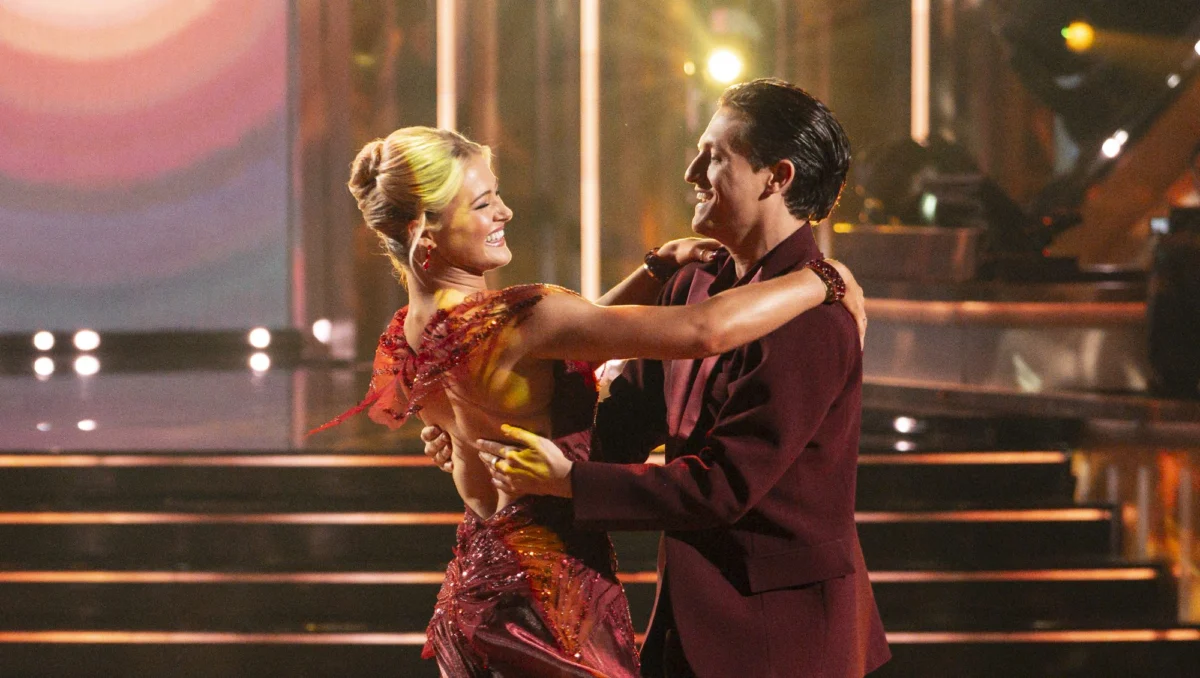
The ballroom at Dancing With the Stars underwent a haunting transformation this week as the hit reality competition embraced the spirit of the season with Horror Movie Night. With Halloween approaching, the remaining ten couples traded their standard performance attire for thematic costumes and choreography inspired by the cinematic world of terror. However, the atmosphere behind the scenes remained tense, as the competition reached a critical juncture: the show prepared to execute its first double elimination of the season, effectively thinning the field as the finale draws near.
The eighth episode of the thirty-fifth season serves as a pivotal moment for the contestants. Following a non-elimination event during the previous week—designated as Dedication Night—the pressure has compounded significantly. The contestants are now facing a cumulative scoring system that incorporates both their most recent performances and the scores from the prior week, alongside the weight of viewer votes. This structure is designed to heighten the stakes, ensuring that consistency across multiple genres is rewarded while leaving little room for error.
The Return of Val Chmerkovskiy
A significant development during the lead-up to this week’s broadcast was the return of professional dancer Val Chmerkovskiy. Chmerkovskiy had been absent from the previous week’s episode following a disciplinary suspension issued by the production team. The suspension followed an incident in which Chmerkovskiy, during a live critique of judge Carrie Ann Inaba, made a reference to the 2022 Oscars incident involving Will Smith and Chris Rock.
The production’s decision to pause Chmerkovskiy’s participation underscored the show’s emphasis on maintaining a professional environment, particularly concerning the conduct of its veteran performers toward the judging panel. His return to the ballroom to perform with his partner, Jenna Dewan, was closely watched by both fans and industry observers. His reintegration into the cast serves as a test of the show’s ability to move past the controversy and focus on the technical merits of the remaining performances.
A Night of Cinematic Terror and Technical Precision
The theme for this week’s episode drew inspiration from a diverse range of horror sub-genres, from psychological thrillers to contemporary slasher hits. The production design team integrated elements from films such as Sinners, Black Swan, and Joker to provide a cohesive visual narrative. For the professional dancers and their celebrity partners, the challenge lay in translating the intense, often jarring rhythms of horror-themed soundtracks into the precise, rhythmic requirements of ballroom dance.
The current roster of celebrities includes a mix of athletic and entertainment talent: Tatyana Ali, Tyler Cameron, Jenna Dewan, Ezra Frech, Amber Glenn, Maura Higgins, Jackson Olson, Harry Shum Jr., Julia Stiles, and Connor Wood.
Among the standout moments, Julia Stiles and her partner, Ezra Sosa, opened the night with a performance that earned a score of 26 out of 40. While the score suggests a strong effort, the competitive nature of the leaderboard remains fluid. With double eliminations on the horizon, the gap between the top performers and those at the bottom is narrowing, creating a scenario where a single misstep or a slight dip in viewer engagement could result in an early departure.
Scoring Dynamics and the Voting Process
The elimination criteria for Dancing With the Stars Season 35 rely on a dual-input system. The judges—a panel that includes seasoned professionals—assign scores based on technical proficiency, artistic interpretation, and synchronization. These scores are then aggregated with the total volume of viewer votes cast during the live airing of the show.
Voting is restricted to the duration of the East Coast broadcast, which poses a unique logistical challenge for West Coast viewers. To ensure fairness, the production mandates that Pacific Time viewers cast their votes within a tight window, typically between 5:00 p.m. and 6:45 p.m. PT. This ensures that the voting data is finalized in real-time, allowing the production to tabulate the results and announce the bottom-scoring couples before the conclusion of the episode.
The introduction of Shirley Ballas as a guest judge this week has also added a new variable to the scoring. Known for her technical rigor as a lead judge on Strictly Come Dancing, Ballas’s presence has provided the contestants with a fresh perspective on their footwork and posture. Her inclusion is indicative of the show’s commitment to raising the technical standard as the season progresses.
Analyzing the Competitive Landscape
As the season enters its final stages, the competition is beginning to reflect the differing strengths of the participants. Athletes like Ezra Frech bring a high level of physical discipline, while performers with backgrounds in acting or dance, such as Jenna Dewan and Harry Shum Jr., possess an inherent advantage in stage presence and narrative delivery. However, the history of the show has repeatedly demonstrated that technical skill alone does not guarantee a path to the mirrorball trophy.
The "Horror Movie Night" serves as a microcosm for the season’s broader challenges. Each week requires the couples to adapt to new styles—ranging from the Argentine Tango to the Jive—often under the constraints of a high-concept theme. This requires a rapid assimilation of technique that can be taxing, especially as the physical toll of the competition accumulates over eight weeks of intense rehearsal.
The Implications of the Double Elimination
The decision to implement a double elimination this week is a calculated move to accelerate the timeline toward the season finale. By removing two couples at once, the show effectively raises the stakes for the remaining eight competitors. In past seasons, the transition from the mid-point to the final rounds is often where the most significant shifts in public opinion occur.
Analysts of the reality competition genre often note that double eliminations act as a "pressure cooker" for the cast. It forces a change in strategy; contestants who may have been playing it safe in earlier weeks must now take calculated risks with their choreography to impress the judges and secure a higher volume of viewer votes. For the production, this format shift is essential to maintaining viewership numbers, as it ensures that every episode retains a sense of urgency and unpredictability.
Looking Ahead: The Path to the Finale
As the dancers pack away their horror-themed costumes and prepare for the next genre, the focus shifts to the resilience of the remaining couples. The technical feedback provided by the judges—particularly with the added rigor of guest judges—will be instrumental in how the contestants refine their craft in the coming weeks.
The integration of streaming platforms like Disney+ and Hulu into the show’s distribution model has also changed how the audience engages with the content. With the show airing live on ABC and Disney+, and subsequently available on Hulu, the demographic of the viewership has expanded, allowing for a broader base of support for the contestants. This accessibility is crucial, as the voting process is heavily reliant on the "fan-favorite" dynamic that often overrides pure technical scoring.
As of this week, the leaderboard remains tightly contested. While scores were not immediately finalized for all participants at the time of the initial assessment, the disparity between the top and bottom of the field is expected to be slim. The coming days will be defined by the aftermath of the double elimination, as the remaining couples attempt to calibrate their performances for the final stretch.
For the production team, the success of Horror Movie Night is measured not just in ratings, but in the show’s ability to continue evolving while maintaining its core identity. By balancing the spectacle of themed nights with the traditional rigors of ballroom dance, the show remains a cornerstone of prime-time television. As the season approaches its conclusion, the focus will inevitably tighten on which pair can best handle the physical, mental, and emotional demands of the ballroom.
For the contestants, the message is clear: the margin for error has effectively vanished. Every performance must now be delivered with the precision of a professional and the charisma of a performer, as they vie for the chance to be crowned the season 35 champion. With the competition narrowing, the next several weeks promise to be the most demanding yet in what has already been a highly competitive season.