




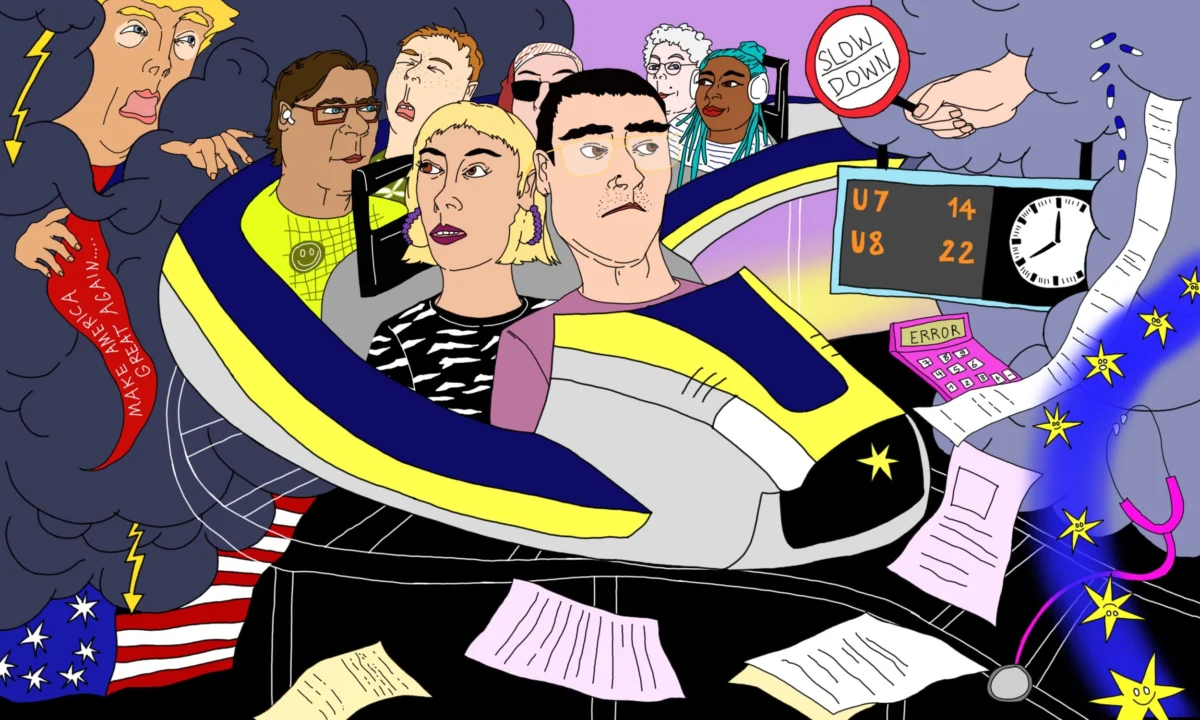
In the autumn of 2024, a young American couple living in the southern United States made a life-altering decision. With no children and an eager desire to experience life outside of their home country, they seized the opportunity when the husband received an unexpected job offer just outside of London. Like many of their peers, they envisioned an idealized European lifestyle: historic architecture, walkable communities, efficient public transportation, and a slower, more culturally enriching pace of existence far removed from the constant professional grind of the United States.
Yet, within months of their relocation, the romanticized version of British life sold across platforms like TikTok, Instagram, and Reddit collided with a stark, often frustrating reality. Facing higher-than-expected costs of living, a strained healthcare system, and cultural friction that caught them entirely off guard, the couple began drafting an exit plan to return to America at the earliest contractual opportunity.
They are far from alone. Over the past few years, a massive wave of American emigration to Europe has swept across the Atlantic, driven by a mixture of wanderlust, a search for alternative lifestyles, and, crucially, a profound political flight following the lead-up to Donald Trump’s second presidential term. However, as the initial dust settles, a growing counter-migration trend is emerging. A significant number of American expats are quietly packing their bags, admitting that the European dream often fails to match the hype, and plotting their returns to the United States.
The Push Factors: Political Anxiety and the Post-Pandemic Expat Boom
The modern surge of Americans moving to Europe cannot be understood without examining the sociopolitical climate of the United States from 2020 onward. The convergence of pandemic-era lifestyle changes, the widespread adoption of remote work, and intense political polarization created an unprecedented appetite for relocation. For many left-leaning Americans, the prospect of Trump’s return to the White House acted as an emotional and ideological breaking point.
Media narratives and online expatriate communities frequently painted Europe as a progressive, gentle, and morally enlightened refuge. High-profile figures and celebrities amplified this sentiment; public figures like Ellen DeGeneres, Portia de Rossi, and Rosie O’Donnell departed the United States, while musician Courtney Love announced her pursuit of British citizenship, citing a "frightening" domestic political climate.
Simultaneously, European nations rolled out digital nomad visas and streamlined residency pathways, making the logistical leap easier than ever. The results were immediate and measurable. Official statistics and private data reveal that the number of U.S. citizens moving abroad skyrocketed. In the first quarter of 2025, the number of U.S. migrants doubled compared to the previous year. Spain recorded a historic high in American residents by 2026, while Ireland’s Foreign Births Register saw a staggering 63 percent increase in applications between 2024 and 2025. Similarly, the UK Home Office reported record-breaking numbers of American residency applications during the early months of 2025—the highest figures since record-keeping began in 2004.
Private data compiled by expatriate advisory platforms underscored these motivations. A comprehensive report released in spring 2026 by Expatsi revealed that 71 percent of 58,000 respondents explicitly cited the political climate in the United States as a primary catalyst for wanting to relocate.
Cracking the Façade: The Shock of European Realities
Despite the high-minded ideals fueling the exodus, the day-to-day reality of living abroad frequently introduced severe friction. Expats accustomed to the robust consumer infrastructure, high disposable incomes, and default optimism of the United States often found themselves struggling to adapt to European economic and social structures.

For Annie and her husband, the disillusionment began almost immediately upon arrival in the United Kingdom. Relying on digital forums that painted British suburban life as idyllic, they were unprepared for the stark financial realities. Lower average salaries in the UK contrasted sharply with high tax burdens and a cost of living that squeezed disposable income. Furthermore, items considered standard baseline conveniences in American households—such as in-unit clothes dryers and dishwashers—were revealed to be far less common or viewed as luxuries.
Healthcare also proved to be a major point of contention. Having moved while pregnant with her first child, Annie anticipated a seamless transition into the British National Health Service (NHS). Instead, her experience with maternity care fell drastically short of the private insurance standards she was accustomed to in the U.S. Moreover, she discovered that the NHS is far from free for tax-paying non-citizens who must also pay mandatory immigration healthcare surcharges.
"Things in the UK that are considered luxury items are very common in America," Annie notes, pointing to a broader cultural dissonance. Beyond economics and infrastructure, cultural clashes weighed heavily on incoming Americans. Many reported encountering unexpected anti-American sentiment, ranging from casual microaggressions about accents in the workplace to open mockery of American cultural traits.
Cultural Friction: Work Styles, Bureaucracy, and Social Isolation
The professional environment in Europe presented yet another hurdle for professionals accustomed to the fast-paced, collaborative corporate culture of the United States.
Sarah Wood González, a journalist and consultant who recently returned to New York after spending three years living in Spain and Edinburgh, observed a profound difference in professional velocity. While she praised the intellectual curiosity and education levels of the people she met abroad, she found the slower pace of European business life to be a significant professional drawback.
"Something I had taken for granted is the American outgoingness and default to action, where the question is ‘how can we collaborate?’" González explains. "Generally speaking, I also found that the American work style, for better or for worse, moves much faster and can get to a yes or no in less time."
This sentiment was echoed by other repatriated expats. Josh, an American who moved to Berlin in 2023 ahead of the political cycle and seeking an escape from post-pandemic stagnation, found himself bogged down by notorious German bureaucracy and labor market stagnation. Despite speaking fluent German and having previous ties to the country, he found that social integration had hard limits.
"Finding work was so hard, and the endless bureaucracy had grown worse since I’d left," Josh says. "I missed the friendlier people, freedom of speech, and ease of daily life in the US. If you aren’t born and raised there, and don’t look German, you’ll never be fully accepted."
Influencers and content creators have also begun reckoning publicly with the limits of expatriate life. Kate Glavan, a prominent digital creator focused on leftist politics, relocated from New York to London in late 2024. She quickly encountered commercial roadblocks, as British brands saw little value in partnering with a creator speaking to a primarily American audience. By early 2025, Glavan announced her return to New York, prompting intense online scrutiny and social media backlash regarding the perceived privilege of her migration.

The Digital Echo Chamber and Online Backlash
For those daring to voice their discontent, online expat forums—such as Reddit’s r/expats, r/AmerExit, and regional communities—have become battlegrounds. Expats seeking advice on how to move back home or simply expressing homesickness are frequently met with aggressive pushback from digital peers.
Commentators on these forums often accuse returning expats of political apostasy, assuming that anyone missing the United States must be politically conservative, lack resilience, or fail to try hard enough to assimilate. Moderators of these spaces have increasingly had to intervene as discussions devolve into polarized shouting matches, where the United States is cast as irredeemably flawed and Europe is romanticized as an uncritical utopia.
Jen Barnett, co-founder of Expatsi Go, notes that while the majority of clients are well-intentioned individuals seeking safety and meaning amidst political turbulence, the transition requires clear-eyed preparation. With the right tools and realistic expectations, expats are far more likely to stay and thrive—yet many arrive burdened by unrealistic expectations of finding a societal paradise.
The Political Irony: Europe’s Rightward Shift
Perhaps the most sobering realization for politically motivated expats is that Europe is not the left-wing sanctuary it is often perceived to be. Across the continent, populist and right-wing political movements have gained substantial ground.
Italy is governed by Prime Minister Giorgia Meloni, a vocal conservative aligned with right-wing platforms on migration, abortion, and family policy. Right-wing factions and nationalist parties have seen significant surges in the UK, Germany, Greece, and Poland.
Nick, an art director from New York who relocated to Kraków, Poland, with his Polish wife to escape American right-wing populism, found himself facing a similar political landscape abroad. Despite having strong personal and familial ties to the region, he struggled with local cultural norms and bureaucracy, ultimately feeling politically trapped in a country where conservative nationalism holds immense sway.
Looking Forward: A Reassessment of Home
For those who have already completed the journey back across the Atlantic, the return home brings a mixture of relief and reflection. After months back in the United States, Josh reports feeling a renewed sense of belonging, final acceptance, and ease in daily life. In retrospect, he believes many Americans caught up in the 2024 political anxiety may have fundamentally overreacted, treating geographic relocation as a panacea for systemic global anxieties.
As thousands of Americans continue to weigh their options abroad, the myth of the effortless European escape is giving way to a more nuanced reality: while international relocation can offer adventure and personal growth, it rarely solves internal political grievances, nor does it replace the deep, often under-appreciated comforts of home.