

Bleecker Street and distributor Greenwich Entertainment have officially unveiled the primary United States promotional trailer and theatrical release schedule for The Friend’s House is Here, an acclaimed independent feature film directed by the creative partnership of Maryam Ataei and Hossein Keshavarz. Filmed covertly on location within Iran, the production has emerged as a significant milestone in contemporary transnational cinema, capturing widespread critical acclaim following its debut on the international festival circuit. The narrative focuses on the precarious realities of Tehran’s underground creative communities, offering a deeply intimate look at artistic expression under systemic censorship. Scheduled for a targeted theatrical rollout in major North American markets starting December 4, 2026, the film enters the competitive awards season positioned as a vital voice in independent world cinema.
Main Facts and Plot Overview
Set against the backdrop of contemporary Tehran, The Friend’s House is Here chronicles the lives of two inseparable women and creative partners: Pari, a theater director, and Hanna, a professional dancer. Sharing a home, the two artists navigate the rigorous demands of underground rehearsals, clandestine performances, and the quiet, often tense rituals of everyday survival under a stringent socio-political regime. Within the confines of their hidden apartment, they cultivate a sanctuary of artistic freedom and sisterhood, blurring the boundaries between theatrical performance and lived experience.

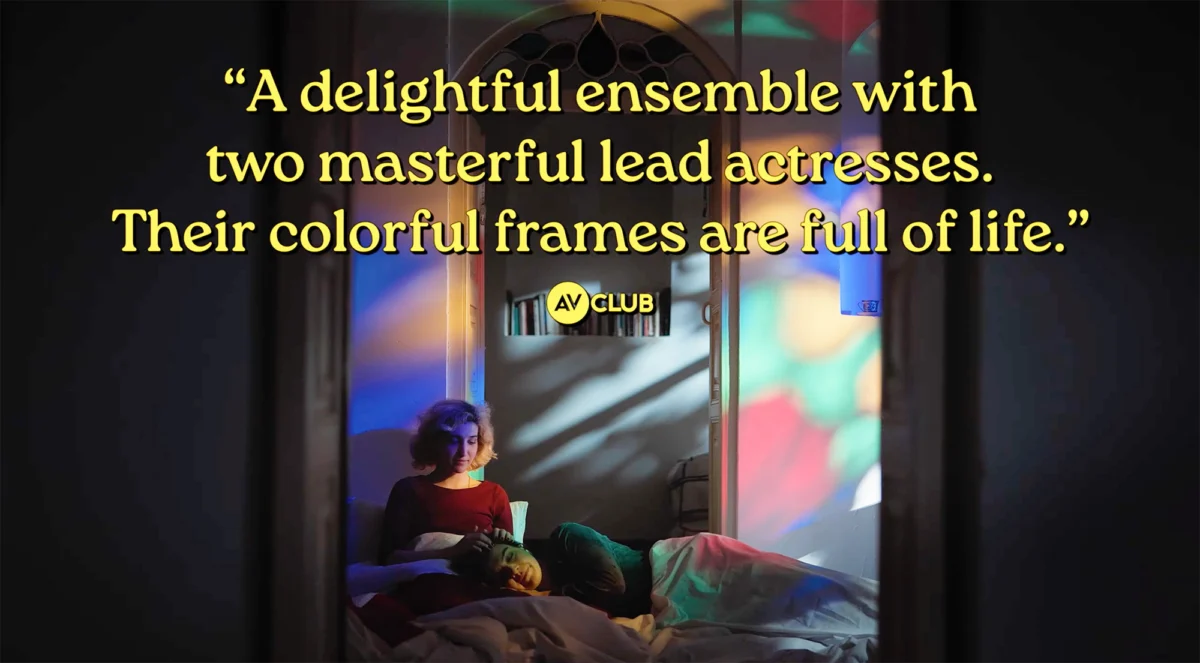
The central conflict of the narrative ignites when their secret creative circle is abruptly exposed to outside authorities. What begins as a joyous celebration of autonomy quickly transforms into a high-stakes struggle for survival, where both women must fight not only to protect their life’s work but to save each other from severe repercussions. The ensemble cast features compelling breakout performances by Mahshad Bahram, Hana Mana, Farzad Karen, and Zohreh Pirnia. According to early critical reviews, the film distinguishes itself by avoiding standard, melodramatic tropes associated with Middle Eastern cinema, opting instead for a luminous, highly observant portrait of modern resistance where even the smallest creative choice becomes an act of defiance.
Chronology and Festival Circuit Journey
The trajectory of The Friend’s House is North American premiere at the prestigious Sundance Film Festival. Because the project was filmed entirely within Iran by a collaborative team carrying significant personal risk, festival organizers categorized and evaluated the picture within the rigorous parameters of the US Dramatic competition section.
During the award ceremonies at Park City, the film captured the US Dramatic Special Jury Award for Ensemble Cast, an accolade that immediately elevated its profile among international distributors and cinephiles. Following its Sundance triumph, the picture traveled through a select circuit of international film festivals, steadily building critical momentum. The release of the official US trailer in October 2026 marks the official commencement of its commercial distribution campaign in North America. Greenwich Entertainment has slated the film for a limited theatrical release starting December 4, 2026, strategically positioning the indie feature to capture attention during the height of the year-end awards season.

Supporting Data and Production Background
The production of The Friend’s House is Here represents a complex logistical and artistic achievement. Directed, written, and produced jointly by Maryam Ataei and Hossein Keshavarz—who previously collaborated on underground-leaning independent projects such as Dog Sweat and Eugenia and John—the film is their first narrative feature together. The filmmakers adopted a guerrilla-style production approach, shooting covertly on location in Tehran to maintain authenticity while evading the strict regulatory oversight of official state film boards.
Industry analysts have noted that the film’s unique production methodology places Ataei and Keshavarz squarely in the lineage of celebrated Iranian cinematic virtuosos such as Jafar Panahi and Abbas Kiarostami. Both masters historically utilized minimalist aesthetics, metacinematic narratives, and metaphorical storytelling to navigate state censorship while delivering profound social commentary. The budget for The Friend’s House is Here remains modest, funded primarily through independent grants and private international backers, reflecting the broader economic realities of transnational indie filmmaking.
Official Responses and Critical Reception

Critical reception following the film’s festival premieres has been overwhelmingly positive, with major trade publications and cultural critics praising its sophistication, bravery, and technical execution. Reviewers have consistently highlighted the seamless chemistry between lead actors Mahshad Bahram and Hana Mana, whose performances anchor the film’s tense second half.
While official state entities within Iran have not issued direct public statements regarding the production—largely due to its unauthorized, underground nature—independent artistic communities in exile and North American cultural critics have heralded the project as a heroic celebration of artistic perseverance. Festival juries praised the cast for their collective authenticity, noting that the ensemble work transcends traditional acting to reflect the genuine lived anxieties of artists operating in hostile environments. Representatives for Greenwich Entertainment have expressed confidence that word-of-mouth enthusiasm generated during the festival run will translate into strong arthouse box office performance during the December window.
Broader Impact and Industry Implications
The commercial and cultural arrival of The Friend’s House is Here carries significant implications for the landscape of global independent cinema, particularly concerning the distribution of dissident art from heavily regulated regions. As international scrutiny on freedom of expression in the Middle East intensifies, films produced under clandestine conditions serve as crucial cultural conduits, ensuring that marginalized voices retain a global platform.

Furthermore, the film’s success at Sundance and its subsequent acquisition by Greenwich Entertainment demonstrate that North American arthouse audiences maintain a robust appetite for intellectually challenging, foreign-language indie features that merge political urgency with high artistic merit. By positioning the release during the crowded December awards season, distributors are signaling their belief that the film possesses the critical weight necessary to compete with traditional studio contenders. Ultimately, The Friend’s House is Here stands as a testament to the resilience of the human creative spirit, proving that art can flourish even in the most restrictive environments and reminding global audiences of the heavy personal tolls paid by those who choose to create freely.