
Production Overview and Narrative Premise
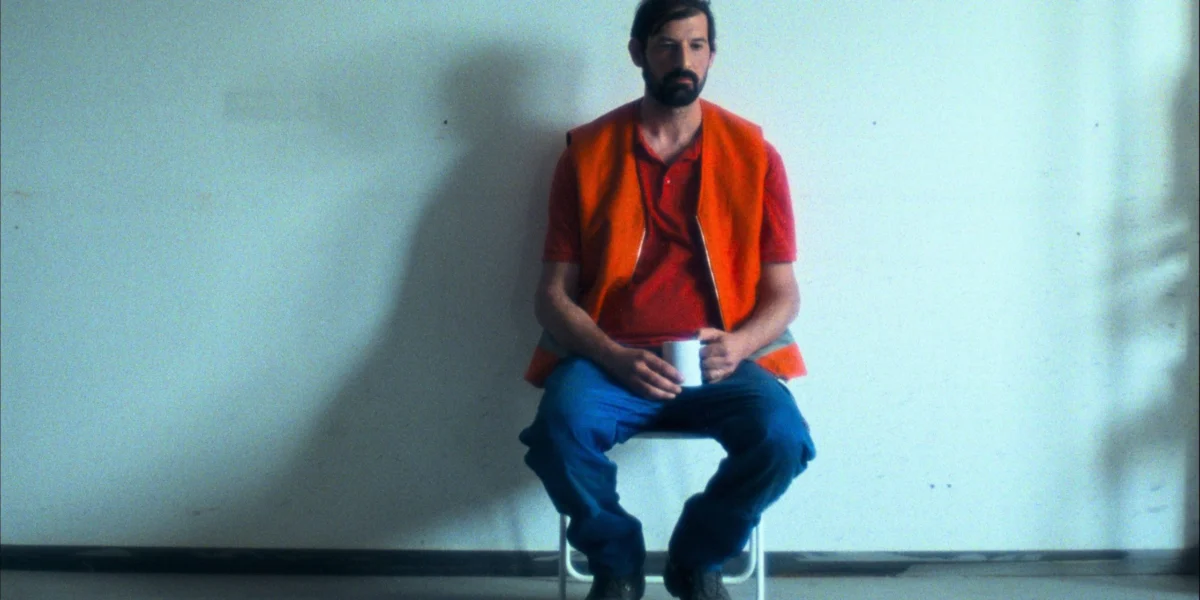
The film centers on Thomas, a 40-year-old crane operator whose routine is abruptly interrupted by a phone call from his wife, Carla. The narrative follows Thomas as he navigates the workplace environment—interacting with office staff while attempting to contact his spouse—before transitioning to a sequence where he discovers Carla in a state of profound distress.
The core conflict, revealed incrementally, involves an emotional affair between Carla and a participant from her dance class. This relationship culminated in a vehicular accident that resulted in the death of Carla’s partner, leaving Thomas to grapple with the realization that his wife harbors an interior life entirely separate from their shared domestic sphere. The film’s title, My Wife Cries, serves as both a literal description of the protagonist’s predicament and a metaphor for the pervasive, unresolved sorrow that characterizes the couple’s interactions.
Chronological Development and Structural Analysis
The narrative unfolds across a series of deliberately paced scenes that emphasize the mundane over the dramatic. The initial act establishes the baseline of Thomas’s professional life, utilizing long, static shots that force the viewer to observe the triviality of his workplace interactions. This structural choice serves to highlight the dissonance between the routine of the construction site and the impending emotional crisis.
Following the initial summons, the timeline shifts to focus on Carla. Her introduction, depicted as a solitary figure on a park bench, serves as the pivot point of the film. The subsequent sequences move away from the immediate aftermath of the accident, choosing instead to engage in long-form dialogue between characters on topics ranging from intergenerational friendship to the socioeconomic implications of domestic furnishings. This discursive approach is central to Schanelec’s directorial methodology, which seeks to externalize the internal malaise of the characters through tangential intellectualization.
Cinematic Technique and Stylistic Execution
Angela Schanelec’s approach to filmmaking is characterized by a rigorous commitment to formal composition. Her use of deep focus and fixed camera angles creates a clinical, almost observational perspective. In scenes involving office staff or social gatherings, the camera remains unmoving, allowing the dialogue to play out in its entirety without the interference of traditional shot-reverse-shot editing.
This stylistic choice has drawn comparisons to the "Berlin School" of cinema, a movement defined by its focus on objective reality and the slow accumulation of emotional weight through silence and stillness. By refusing to accelerate the pacing during moments of high emotional tension—such as the revelation of the affair—Schanelec subverts the typical tropes of the romantic drama. The inclusion of a spontaneous, awkward dance sequence set to Leonard Cohen’s "Lover, Lover, Lover" acts as the film’s tonal outlier, providing a brief, unself-conscious moment of levity that contrasts sharply with the preceding somber atmosphere.
Contextualizing the European Art House Movement
My Wife Cries belongs to a specific lineage of European cinema that favors ambiguity and philosophical inquiry. The film does not provide a roadmap for the audience to follow, nor does it offer the emotional closure typically found in commercial domestic dramas. Instead, it invites the viewer to reflect on the nature of communication and the inherent difficulty of truly knowing one’s partner.
The film’s dialogue, which often veers into abstract territory, acts as a barrier between the characters rather than a conduit for understanding. This serves as a commentary on the limitations of language in bridging the gap between individuals experiencing trauma. While some critics have noted that the dialogue occasionally lacks the cadence of naturalistic human speech, supporters argue that this intentional detachment reinforces the central theme of alienation.
Analysis of Thematic Implications
The film presents several implications regarding the structure of modern relationships and the definition of failure. By focusing on the "price of couches" and other mundane concerns amidst a life-altering crisis, the screenplay highlights the absurdity of daily life. The characters are depicted as being trapped in a cycle of performative engagement, where they speak at each other rather than with each other.
From a sociological perspective, the film examines the loss of a child—a topic mentioned in passing by Thomas—as a potential precursor to the couple’s emotional distance. This background detail provides a framework for understanding their lack of connection, suggesting that the affair and the subsequent accident are merely symptoms of a larger, pre-existing collapse of their partnership.
Critical Reception and Audience Impact
Since its debut, My Wife Cries has elicited polarized responses from both critics and festival audiences. Those who favor the minimalist, observational style of the Berlin School appreciate the film’s dedication to its aesthetic vision and its refusal to pander to populist narrative expectations. The meticulous framing of each shot, combined with the subdued performance of Vulević, creates a viewing experience that is as much about the observation of light, space, and posture as it is about the plot.
Conversely, some viewers have found the film’s lack of traditional pacing to be an obstacle to engagement. The reliance on long, discursive conversations that remain detached from the primary narrative arc has been described by some as an "endurance test." The challenge for the audience, therefore, is to determine whether the film’s formal achievements—its composition, its silence, and its structural rigidity—are sufficient to compensate for the deliberate opacity of its character motivations.
Summary of Key Personnel
- Director/Writer: Angela Schanelec, a prominent figure in contemporary German cinema known for her work in exploring the complexities of human relationships and the passage of time.
- Thomas (Vladimir Vulević): The protagonist, portrayed with a withdrawn, droll stoicism that anchors the film’s early scenes.
- Carla (Agathe Bonitzer): The wife, whose performance introduces an element of instability and unpredictability to the narrative.
- Supporting Cast (Birte Schnöink): Rounding out the ensemble, contributing to the film’s atmosphere of collective disaffection.
Final Assessment
My Wife Cries remains a significant entry in the 2026 festival circuit, exemplifying the ongoing dialogue between modern cinematic technique and traditional thematic exploration. While it does not reinvent the genre of the domestic drama, it offers a stark, uncompromising look at the distance that can grow between two people, even when they are physically present in the same room. For scholars of film theory and enthusiasts of the European art house tradition, the film provides ample material for analysis, particularly concerning the use of space and the deliberate subversion of narrative expectations. Whether the film succeeds as a compelling emotional journey or remains a distant, academic exercise in style is a question that largely depends on the viewer’s tolerance for ambiguity and the slow, methodical unfolding of cinematic time. Ultimately, the film stands as a testament to Schanelec’s influence as a filmmaker who prioritizes the integrity of the image over the convenience of a conventional story.