


Toho Co., Ltd. has officially released a high-definition 4K trailer for the upcoming theatrical re-release of Kazuhiko Hasegawa’s 1979 subversive masterpiece, The Man Who Stole the Sun. Originally premiering in Japanese cinemas on October 6, 1979, the film is scheduled to return to domestic screens in a meticulously restored 4K digital format on October 16, 2026. This new release arrives almost exactly 47 years after its initial debut, offering contemporary audiences a chance to experience one of the most daring and anarchic entries of the Japanese New Wave.
The announcement has ignited considerable enthusiasm among international film preservationists, cinephiles, and critics tracking the resurgence of classic Japanese cinema. Featuring a provocative narrative concerning a disgruntled high school physics teacher who successfully constructs a functioning nuclear weapon in a standard Tokyo apartment, the film remains as audacious today as it was during the waning years of the Shōwa era.
Main Facts of the Re-Release and Production Background
The upcoming 4K restoration brings back into the public eye a film widely regarded as a pinnacle of anti-establishment storytelling. Directed by Kazuhiko Hasegawa—who passed away in January at the age of 78—The Man Who Stole the Sun serves as the filmmaker’s second and final theatrical feature, following his critically acclaimed 1976 debut, The Youth Killer.
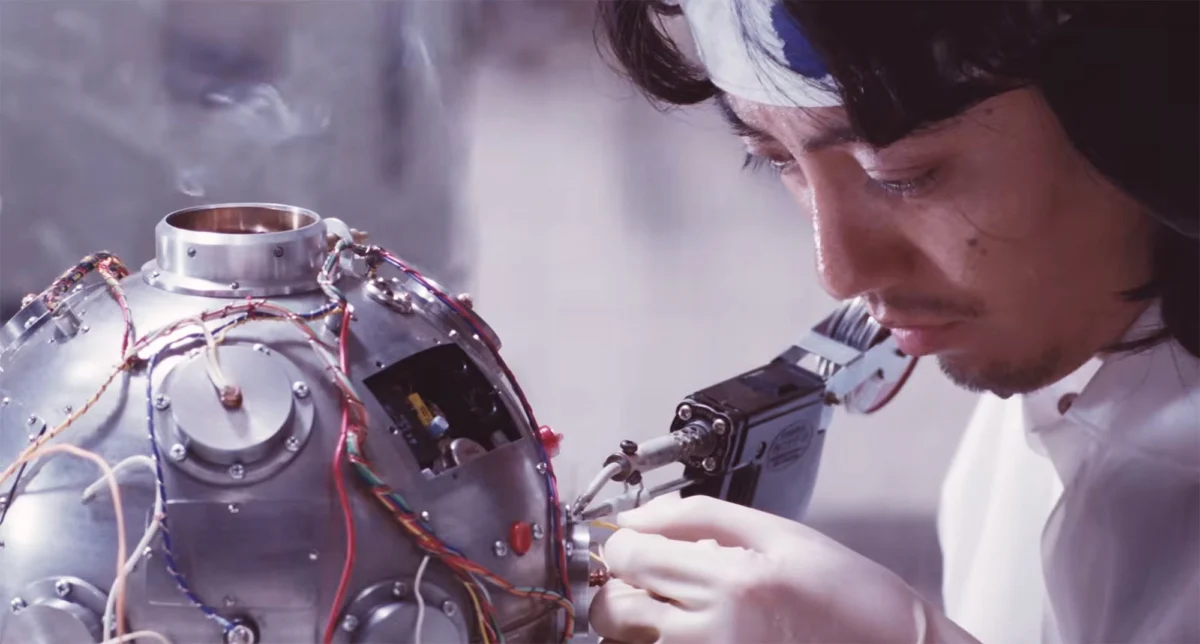
The narrative centers on Makoto Kido, played with frantic intensity by pop superstar Kenji Sawada. Kido is a cynical, unassuming high school science teacher who is routinely dismissed or mocked by his students. His mundane existence shatters when a school field trip bus is hijacked, an incident he navigates with chilling apathy. Unbeknownst to the authorities, Kido has successfully smuggled weapons-grade plutonium from a nuclear power plant and assembled an atomic bomb within the confines of his residential apartment. Armed with the ultimate threat, Kido begins a high-stakes psychological game of extortion against the Japanese government, demanding increasingly absurd concessions—ranging from the broadcast of a specific baseball game to the cessation of foreign military operations—while doggedly pursued by an unrelenting police inspector, played by legendary actor Bunta Sugawara.
The screenplay was co-written by Hasegawa and Leonard Schrader, an acclaimed screenwriter and scholar of Japanese cinema (and brother of filmmaker Paul Schrader). Schrader also provided the original story. The production was steered by veteran producers Mataichiro Yamamoto and Kei Ijichi, capturing an era of societal anxiety, rapid modernization, and youthful disillusionment in Japan.

Chronology of a Masterpiece: From 1979 to the 2026 Restoration
Understanding the cultural footprint of The Man Who Stole the Sun requires examining its timeline within the broader context of Japanese cinematic history and global nuclear anxiety:
- Early 1970s: Screenwriter Leonard Schrader, living and working in Japan, begins conceptualizing a story about an ordinary citizen exploiting the vulnerabilities of a modern state through atomic blackmail.
- October 6, 1979: Toho officially releases The Man Who Stole the Sun in Japanese theaters. The film achieves a status as a critical and cultural lightning rod, though its provocative themes prevent it from receiving widespread international distribution for decades.
- 1980s–2010s: Despite limited official availability abroad, the film builds a formidable underground reputation among international cinephiles, praised for its guerrilla-style filmmaking, chaotic tonal shifts, and prescient engagement with nuclear proliferation.
- January 2026: Director Kazuhiko Hasegawa passes away, prompting renewed critical retrospectives on his remarkably brief yet deeply influential filmography.
- September 27, 2026: Toho debuts the official 4K remaster trailer, highlighting the enhanced visual fidelity of the restoration and generating widespread digital traction across film-centric platforms.
- October 16, 2026: The newly minted 4K digital restoration of The Man Who Stole the Sun is scheduled to open in select Japanese cinemas under Reiwa-era distribution.
Supporting Data and Technical Scope of the Restoration
The decision by Toho to invest in a 4K digital restoration reflects a growing commercial and cultural appetite for the preservation of mid-to-late 20th-century Japanese cinema. While contemporary digital scanning techniques have frequently been applied to the works of classic auteurs like Akira Kurosawa, Yasujirō Ozu, and Kenji Mizoguchi, the physical restoration of late-1970s counter-culture films presents unique challenges.
The original production utilized daring guerrilla filmmaking techniques—including unauthorized location shooting in crowded Tokyo districts and complex practical effects—that placed significant strain on the original camera negatives. Toho’s restoration team utilized advanced digital stabilization, color grading, and grain management to preserve the gritty, authentic texture of the 35mm source material while enhancing the clarity of nighttime sequences and complex pyrotechnic displays.
The ensemble cast supporting Kenji Sawada and Bunta Sugawara includes prominent figures of Japanese film and television from the era, such as Kimiko Ikegami, Kazuo Kitamura, Shigeru Kamiyama, Kei Sato, Yunosuke Ito, Morio Kazama, Toshiyuki Nishida, and Yutaka Mizutani. This deep bench of talent lent significant dramatic weight to a narrative that easily could have devolved into pure exploitation.
Industry and Critical Responses

While the film was divisive upon its initial release due to its unsettling premise—arising at a time when global nuclear tensions were escalating—retrospective analysis has cast The Man Who Stole the Sun as a visionary precursor to modern psychological thrillers and anti-hero narratives.
Film historians have frequently noted the film’s structural audacity, as it seamlessly shifts between black comedy, social satire, apocalyptic sci-fi, and gritty police procedural. The trailer released by Toho emphasizes this kaleidoscopic tone, utilizing the promotional tagline: "This legendary masterpiece, born of extraordinary passion and madness, is reborn again in 2026."
The passing of director Kazuhiko Hasegawa earlier this year has further amplified interest in the re-release. Critics and academics have lamented that Hasegawa’s withdrawal from directing following this film robbed the industry of one of its most disruptive voices. By shepherding this 4K restoration, Toho has provided an opportunity for a new generation of film scholars to evaluate the totality of Hasegawa’s brief career.
Broader Impact and Cultural Implications
The return of The Man Who Stole the Sun to the big screen carries notable implications for the preservation and exhibition of physical media and archival cinema in Japan. Major studios like Toho have increasingly recognized that catalog titles—particularly those with cult or counter-cultural status—possess viable theatrical value through event-projections and limited-run restorations.
Furthermore, the film’s thematic resonance remains potent. In an era marked by renewed discourse surrounding nuclear deterrence, institutional distrust, and the vulnerability of urban infrastructure, Kido’s anarchic crusade against the state reads less like dated camp and more like a darkly prophetic warning.
As of publication, Toho has not announced plans for an international theatrical roll-out or a physical home video release outside of Japan, leaving global fans reliant on the newly launched official website and promotional trailers to gauge the quality of the restoration. Nevertheless, the high-profile campaign signals a welcome willingness by major Japanese distributors to champion the more dangerous, transgressive chapters of their national cinematic heritage.