Montreal-based film composer Judith Gruber-Stitzer has achieved a remarkable milestone in her decades-long career, securing three concurrent placements in the main competition at the prestigious Ottawa International Animation Festival (OIAF). Out of roughly 3,000 submissions across the globe, only 28 films were selected for this year’s main competitive slate, making Gruber-Stitzer’s triple representation a rare and notable feat within the international animation community.
The selected works—Georges Schwizgebel’s The Picture of Dorian Gray, Honami Yano’s Eri, and Diane Obomsawin’s National Film Board of Canada (NFB) production I Don’t Love You Anymore—represent a diverse cross-section of global artistry, visual storytelling, and distinct sonic landscapes. This convergence of projects highlights not only the composer’s versatility across multiple animation styles but also her enduring relationship with high-caliber independent cinema and the NFB.
Main Facts and Festival Context

The Ottawa International Animation Festival, currently celebrating its milestone 50th anniversary, stands as one of the world’s most prominent and longest-running animation events. Founded in 1976, OIAF has grown into a major international hub for animation professionals, critics, and enthusiasts, known for championing artistic innovation, avant-garde techniques, and uncompromising storytelling.
Having three distinct scores accepted into the festival’s highly selective main competition is viewed by industry peers as an exceptional achievement. The odds of a single composer landing three projects in an Oscar-qualifying festival of this magnitude in a single year are exceptionally slim. For Gruber-Stitzer, who has previously contributed to Emmy- and Oscar-nominated projects, this accomplishment marks a distinct high-water mark in an already distinguished career defined by cross-disciplinary collaboration between music and moving images.
Chronology of the Triple Triumph
The journey of these three films to the OIAF competition stage reflects distinct trajectories across the international festival circuit, culminating in their showcase during the Ottawa event, which runs through September 27.

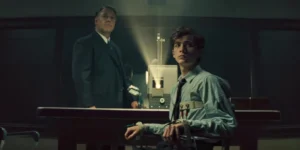
The first of the trio to enter the festival circuit was Georges Schwizgebel’s The Picture of Dorian Gray. Renowned for his fluid, painterly transitions and kaleidoscopic visual style, Schwizgebel’s latest work quickly garnered critical acclaim, securing immediate acceptance into the main competitions at both the Zagreb World Festival of Animated Films and the Annecy International Animation Film Festival.
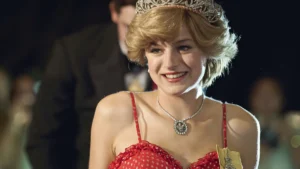
Following closely behind was Eri, produced by Koji Yamamura and directed by Honami Yano. The film traveled to Europe where it was selected for the prestigious Directors’ Fortnight (Quinzaine des Cinéastes) at the Cannes Film Festival, introducing its complex exploration of obsessive, unrequited love to a mainstream arthouse audience before heading to Ottawa.
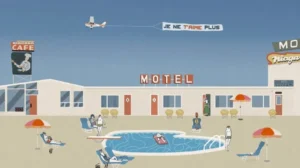
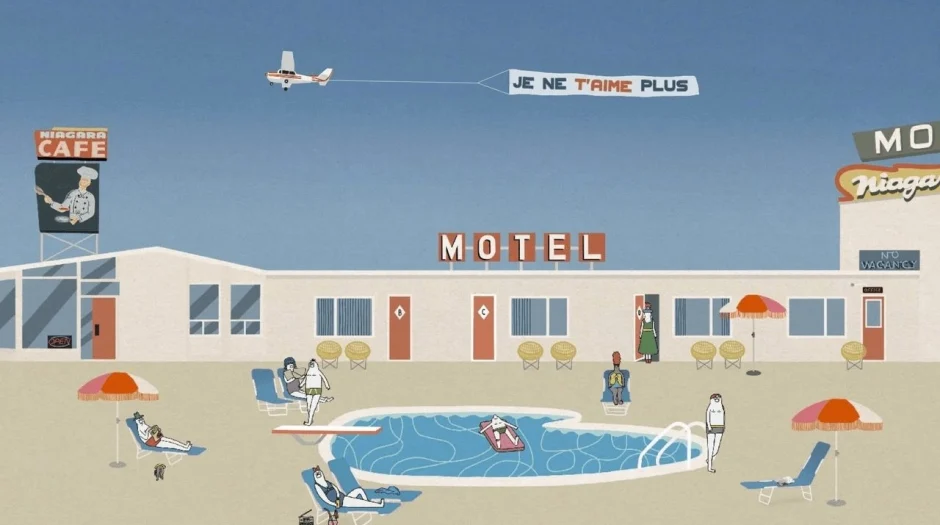
Rounding out the trio is Diane Obomsawin’s I Don’t Love You Anymore, produced through the National Film Board of Canada. Serving as OIAF as its world premiere festival debut, the film represents a bold thematic and stylistic departure for Obomsawin, blending her signature naive graphic style with the high-stakes tension of a psychological thriller.
Background and Evolution of a Composer

Gruber-Stitzer’s entry into the specialized world of animation scoring was unconventional. Before transitioning to film composition, she established herself as a working instrumentalist playing in various musical bands. Her entry into cinematic composition began when the NFB engaged her to score documentaries.
Her transition to animation materialized through a fortuitous chain of events involving renowned American director Robert Altman. While Altman was producing a feature in Montreal, an NFB editor recommended Gruber-Stitzer’s music to him, leading to a successful collaboration. Shortly thereafter, an invitation to a gathering at the apartment of celebrated animator Caroline Leaf sparked a conversation about Altman’s hiring. Impressed by her background, Leaf subsequently invited Gruber-Stitzer to score her upcoming NFB animated short, Two Sisters.
That inaugural animated project not only launched her career in the medium but also captured the Grand Prize at the Ottawa International Animation Festival. This early success was followed by a collaboration with Wendy Tilby and Amanda Forbis on the critically acclaimed NFB short When the Day Breaks. That project earned the Frederick Back Award for Best Canadian Film at OIAF, followed by numerous international accolades and an Academy Award nomination. Over the years, Gruber-Stitzer has continued to build an impressive catalog, including scoring Andrea Dorfman’s Flawed and Alison Snowden and David Fine’s Oscar-nominated Wild Life and Animal Behaviour.
Creative Process and Collaborative Methodology

Gruber-Stitzer approaches animation scoring through the lens of a live performer. Drawing on her background in musical bands, she often views the process as a collaborative dialogue where the animator’s instrument is graphic and visual, while her own is sonic. Rather than relying solely on traditional manuscript techniques, she frequently improvises on a keyboard while viewing the animation in real-time, allowing the abstract motion of the visual lines to dictate the unfolding musical phrasing.
This improvisational, highly intuitive method proved essential when tackling the distinct stylistic demands of her three most recent festival-bound projects. Each film presented unique creative hurdles that required tailored compositional strategies.
For The Picture of Dorian Gray, Schwizgebel’s intricate visual choreography and operatic framing demanded a sophisticated sonic counterpart. Drawing inspiration from impressionist piano compositions, Gruber-Stitzer collaborated with pianist Alexis Dumais to record multiple interpretations of the title sequence. By layering three distinct piano recordings simultaneously, she achieved a deliberate effect of controlled chaos, punctuated by the inclusion of abstract operatic vocal textures that functioned as source music within the narrative framework.
In scoring Eri, directed by Honami Yano, the composer navigated a delicate balance between visual charm and emotional turbulence. During early creative discussions with Yano and producer Koji Yamamura, the team referenced Jerskin Fendrix’s striking score for Yorgos Lanthimos’s feature Poor Things. Recognizing that a direct replication would clash with the film’s painterly aesthetics, Gruber-Stitzer instead focused on channeling the underlying psychological intensity of the narrative, counterbalancing the fluid, morphing imagery with moments of stark emotional resonance and tender, understated motifs.

The most lighthearted yet technically demanding challenge arose from Diane Obomsawin’s I Don’t Love You Anymore. Influenced by classic Hollywood cinema—specifically the 1953 film noir classic Niagara, scored by the 20th Century Fox orchestra with its dramatic string arrangements—Obomsawin sought a grand, cinematic Hollywood soundscape. The resulting score married a dramatic 1950s orchestral style with Obomsawin’s innocent pastel character designs, creating an intentional and humorous tonal contrast. The production culminated in the composition of an original 1950s-style love song performed by a close-harmony vocal quartet.
Industry Implications and Broader Impact
The simultaneous selection of three distinct scores at a premier, Oscar-qualifying event like the Ottawa International Animation Festival underscores the vital, symbiotic relationship between independent animation and original music composition. Festivals of this scale serve not only as platforms for artistic recognition but also as economic and cultural catalysts for the broader animation industry, validating the creative risks taken by directors and their collaborators.
As OIAF celebrates its semicentennial, the presence of works by veterans like Gruber-Stitzer alongside emerging voices highlights the festival’s enduring commitment to formal experimentation and narrative depth. By continually providing a space for projects that defy conventional industry formulas, events in Ottawa ensure that creators working within niche and independent sectors—such as the National Film Board of Canada—retain the creative autonomy necessary to push the boundaries of the medium.

For Gruber-Stitzer, this milestone reflects a career defined by longevity, adaptability, and an ongoing willingness to embrace unconventional artistic pairings. As these three films continue their international festival runs, her work remains a testament to the powerful role that innovative music plays in elevating contemporary independent animation.