


Few demographics command as universal a condemnation in contemporary society as individuals accused of predatory offenses against minors. Consequently, public figures who position themselves on the frontline of exposing such wrongdoings have frequently achieved a heroic status in the public eye. Figures such as Chris Hansen, the former NBC Dateline journalist who anchored the groundbreaking and culturally pervasive series To Catch a Predator, built enduring legacies on the premise of tracking down and publicly shaming suspected offenders. However, the boundaries separating legitimate investigative journalism, law enforcement protocols, and unmitigated vigilantism remain profoundly blurred.
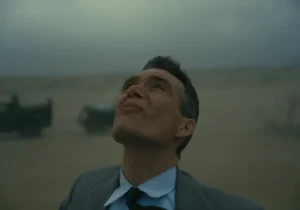
As explored in recent media analyses, including Lance Oppenheim’s dramatized A24 feature Primetime starring Robert Pattinson as Hansen, the mechanics of public-entertainment stings raise critical ethical questions and severe unintended consequences. While independent groups and digital creators frequently assert that online stings perform an essential public safety function, the convergence of viral fame, financial monetization, and real-world violence complicates these altruistic claims. The evolution of predator-catching from a televised broadcast segment into a decentralized internet phenomenon has transformed digital justice into a complex socio-legal challenge.
The Origins and Cultural Footprint of Televised Stings
To Catch a Predator debuted on NBC in 2004, capturing an immediate and intense national audience. The program’s formula relied on a collaboration between Hansen’s production team and Perverted Justice, a civilian watchdog organization. Adult decoys posed as minors in online chat rooms and direct messaging platforms to initiate contact with adult men. Once conversations escalated into explicitly sexual dialogue, the production coordinated an in-person trap at a residential home. Upon arrival, suspects were confronted by Hansen, whose trademark inquiry—“Have a seat”—became a ubiquitous part of modern pop culture lexicon.
Although suspects were technically permitted to walk away rather than participate in an on-camera interview, local law enforcement agencies were routinely stationed outside to execute immediate arrests. Despite NBC canceling the original broadcast iteration in 2007 amid shifting network priorities and legal controversies, the show’s footprint persisted. Active online communities, such as Reddit’s r/tcap subreddit, continue to maintain tens of thousands of weekly active users decades later, demonstrating the enduring public fascination with these confrontational stings.
The cultural legacy of the original program is examined in sharp relief through cinematic interpretations like Primetime. In the A24 film, the depiction of Hansen highlights the complex psychological motivations driving high-profile investigators, balancing an appetite for professional validation with the moral weight of their public platform. In contemporary reality, Hansen transitioned his investigative brand into digital spaces, co-founding the true-crime streaming platform Trublu in November 2022 to continue producing similar content independently.
The Rise of the Decentralized Digital Copycat
Hansen’s pioneering television format eventually spawned an extensive network of digital copycats operating across platforms such as YouTube, Kick, Facebook, and TikTok. Unlike traditional television productions, these modern independent creator-led groups operate with little to no structural oversight, regulatory compliance, or professional training.
An extensive investigative report published by The Washington Post identified at least 160 active civilian predator-hunting operations across the United States. Driven heavily by platform algorithms that reward high-engagement content and virality, these decentralized groups often prioritize sensationalism over due process. Defending the financial compensation associated with these operations, participants in contemporary documentaries—such as MTV’s 2025 project Predators—frequently draw parallels to traditional law enforcement compensation, arguing that generating entertainment revenue is a justifiable mechanism for sustaining their efforts.
However, legal and criminological experts emphasize a fundamental distinction: professional law enforcement officers operate under strict constitutional guidelines, rigorous evidentiary standards, and formal oversight, whereas independent streamers maintain no such accountability frameworks.
Collateral Damage, Profiling, and Escalating Violence
The lack of professional training among independent predator hunters has repeatedly resulted in catastrophic misidentifications, racial profiling, and severe physical violence. In April, prominent online streamer Vitaly Zdorovetskiy issued a public apology after ambushing and publicly accusing an innocent man of South Asian descent of soliciting a minor. During the confrontation, the streamer employed mock accents and targeted slurs, underscoring the reckless nature of unvetted public accusations.
Such incidents are not isolated anomalies. According to data compiled by The New York Times, more than 170 violent vigilante attacks perpetrated by independent predator-hunting groups have been documented since 2023. These operations frequently involve physical assaults, humiliation tactics, and public vigilantism outside the bounds of the legal system. Furthermore, multi-year investigative reporting by outlets like Vice into Canadian groups such as "Creep Catchers" revealed that targets of these amateur stings occasionally included vulnerable individuals suffering from severe intellectual and physical disabilities, raising profound human rights concerns.
Law Enforcement Condemnation and Legal Fallout
Law enforcement agencies across North America have repeatedly issued stern warnings against civilian vigilante operations, citing multiple systemic risks to public safety and criminal prosecutions.
First, the methods employed by independent groups frequently compromise the integrity of the evidentiary chain. Video recordings, online chats obtained without proper digital forensics protocols, and coerced on-camera confessions are regularly deemed inadmissible in court, effectively destroying legitimate state cases against actual offenders.
Second, premature public confrontations often allow sophisticated offenders to destroy digital evidence, alter their communications, or flee jurisdiction before law enforcement can intervene with proper warrants.
Third, the phenomenon occasionally exhibits severe institutional irony. In several documented legal cases, individuals who initially established themselves as independent predator hunters have subsequently been arrested and convicted of federal or state child exploitation and child pornography offenses themselves.
The Tragedy of Unintended Consequences: The Conradt Case
The most profound moral hazards of unmanaged public stings are illuminated by historical tragedies associated with the format’s peak era. In November 2006, a To Catch a Predator investigation targeted Louis William “Bill” Conradt Jr., a chief felony assistant district attorney in Rockwall County, Texas.
Unlike suspects who travelled to a designated decoy home, Conradt declined invitations to meet a minor. Consequently, both television production crews and local law enforcement arrived at his private residence. During the confrontation, Conradt retrieved a firearm and died by suicide. The incident ignited intense national debate regarding the ethics of broadcasting pre-trial accusations and the psychological pressure exerted by media-driven stings on individuals before any formal judicial adjudication.
In retrospective interviews regarding the incident, Hansen has maintained that he felt no legal or professional regret regarding the execution of the 2006 sting, though the event remains a stark reminder of the irreversible consequences accompanying public exposure campaigns.
Conclusion: An Unresolved Societal Dilemma
Modern media explorations of the vigilante justice ecosystem refuse to offer simplistic moral resolutions. Whether through dramatized cinematic narratives or the day-to-day realities of unregulated internet creators, the fundamental question posed by figures within these movements—"What would have happened if I wasn’t here?"—remains a central point of contention.
While public anxiety regarding child safety online remains a legitimate and urgent societal concern, the outsourcing of justice to algorithm-driven creators and untrained vigilantes introduces profound collateral damage. As legal authorities, journalists, and ethicists continue to grapple with the phenomenon, the boundary between community protection and harmful spectacle remains one of the most volatile intersections of modern digital culture.