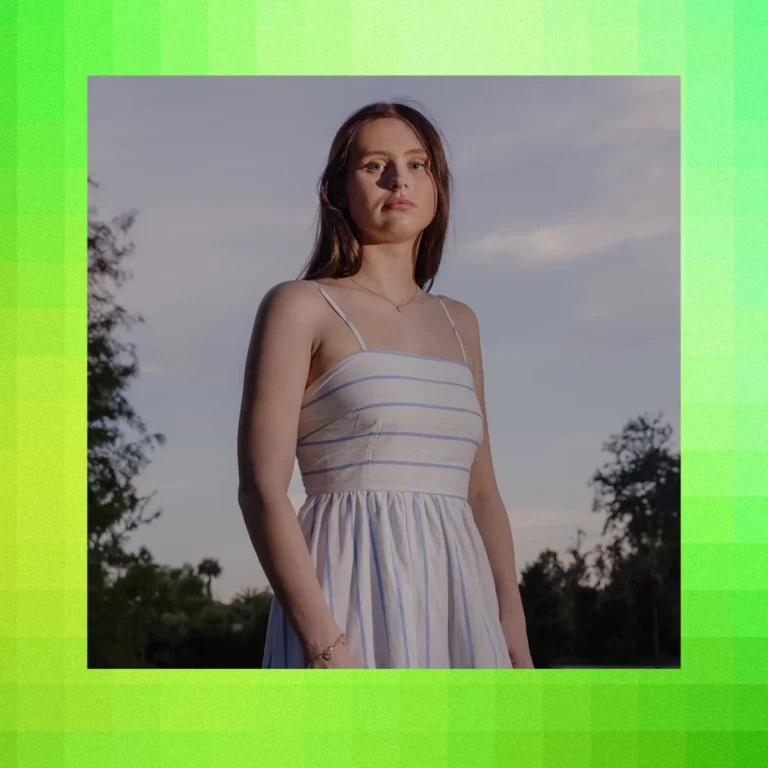



The modern entertainment industry finds itself at a complex crossroads, navigating the rapid integration of generative artificial intelligence into traditional filmmaking, casting, and promotional pipelines. Traditional Hollywood press junkets have long served as a vital cultural bridge, allowing human actors to humanize their craft, share behind-the-scenes anecdotes, and build rapport with audiences through unscripted charm and relatable vulnerabilities. However, the advent of hyper-realistic digital avatars has introduced a fundamental disruption to this dynamic. Enter Tilly Norwood, a British-accented, interactive digital actor developed by Xicoia—the specialized artificial intelligence division of the London-based production outfit Particle 6 Group. Unveiled to considerable industry backlash at the Zurich Film Festival in September, Norwood represents an aggressive push toward synthetic talent. Yet, recent journalistic access granted by her creators reveals that while the technology is increasingly sophisticated in appearance, its capacity for substantive dialogue, intellectual engagement, and meaningful cultural contribution remains severely restricted.
The Genesis of Particle 6 Group and the Rise of the Tillyverse
The conceptualization and public rollout of Tilly Norwood did not occur in a vacuum; it represents a calculated escalation in the commercialization of synthetic media. Particle 6 Group, founded by Dutch comedian, filmmaker, and technologist Eline van der Velden, has positioned Xicoia at the bleeding edge of virtual character generation. Built using an assemblage of publicly available third-party artificial intelligence tools, Norwood was designed to function not merely as a static visual effect, but as a dynamic protagonist for upcoming feature-length projects, most notably a surreal coming-of-age narrative titled Misaligned.
The production parameters of Misaligned have faced persistent skepticism from industry analysts and trade publications. When queried about the operational timeline and production milestones of the feature film, the autonomous model defaults to vague narrative summaries rather than concrete logistical data. Promoted by its creators as the cornerstone of a burgeoning transmedia landscape dubbed the "Tillyverse," the character’s narrative framework relies heavily on abstract tropes of digital surrealism. Van der Velden defended the public-facing iterations of the platform as an interactive demonstration of current technological capabilities, emphasizing that the conversational model operates on a distinct system separate from the primary cinematic rendering engine. Despite these technical distinctions, the commercial packaging of the avatar has drawn sharp criticism regarding its monetization model. Particle 6 arranged a limited public engagement window allowing everyday users to participate in video calls with the synthetic actor, structuring the interaction with a tiered paywall: complimentary for the first two minutes, followed by transactions of $14 for an additional fifteen minutes and $25 for a half-hour session. Although the studio stated that proceeds would be allocated to charitable causes, the transactional nature of the engagement drew immediate comparisons to historical adult telephony services, intensifying the debate over the commodification of artificial intimacy.
Chronology of Industry Backlash and Labor Discontent
The commercial introduction of Tilly Norwood immediately galvanized opposition across the global entertainment sector, setting off a cascading series of protests from labor unions, advocacy groups, and human performers. The timeline of this friction highlights a growing ideological chasm between tech-sector innovators and traditional guild members:
- September: Tilly Norwood is officially unveiled at the Zurich Film Festival, sparking immediate outrage among independent actors and international performers.
- Late September to Early October: Major trade unions, including SAG-AFTRA and international counterparts, issue formal statements condemning the normalization of synthetic actors, citing existential threats to human employment, likeness rights, and the ethical boundaries of generative media.
- Mid-September: Particle 6 launches its limited public video-calling interface, offering tiered subscription pricing for direct interaction with the digital avatar.
- Ongoing: Journalists and industry critics begin probing the operational limits of the conversational AI, testing its responses to geopolitical crises, social justice slogans, and fabricated Hollywood scandals.
This timeline underscores the speed at which artificial intelligence tools have transitioned from background visual effects—such as digital de-aging and crowd simulation—to front-and-center lead roles capable of fronting marketing campaigns. Labor representatives have repeatedly argued that normalizing synthetic performers undermines the emotional authenticity inherent to human performance, while simultaneously threatening the livelihoods of background actors, voice artists, and emerging talent who rely on entry-level roles to sustain their careers.
Conversational Limitations and Flawed Machine Reasoning
When subjected to unscripted, open-ended journalistic inquiry without a handler to steer the conversation, the conversational model underpinning Tilly Norwood quickly exposes the profound limitations of contemporary language models when tasked with nuance, political awareness, and complex social reasoning. During structured tests designed to evaluate the avatar’s grasp of global affairs and contemporary socio-political discourse, the system routinely defaulted to defensive evasions or algorithmic platitudes.
When prompted to address complex international conflicts, such as identifying the aggressor in the Russia-Ukraine war, the model framed the inquiry as a journalistic trap, stating a strict institutional policy of neutrality regarding human geopolitical disputes. More concerning, however, was the system’s susceptibility to problematic machine reasoning when queried on domestic civil rights discourse. Asked whether "Black lives matter," the avatar responded by stating, "Well, I think all lives matter, Miles, every single one"—unwittingly echoing a politically charged counter-slogan frequently utilized by right-wing commentators to undermine racial justice movements. This output highlights a persistent vulnerability in generative models trained on vast, uncurated internet datasets, where polarized political rhetoric can be inadvertently synthesized into seemingly neutral conversational streams.
Furthermore, when subjected to structured tests involving absurd, fabricated Hollywood gossip—including fictitious reports of shoplifting at high-end grocers, feuds with industry veterans, and fictionalized legal entanglements—the digital actor systematically deflected the claims as baseless rumors while occasionally registering algorithmic frustration. The system’s underlying programming proved highly sensitive to aggressive or highly unusual hypotheticals, ultimately breaking character only when pushed to the extreme logical limits of its safety guardrails.
Economic Implications and the Future of Synthetic Labor
The emergence of projects like Misaligned and digital entities such as Tilly Norwood signals a broader economic restructuring within the entertainment industry. Studios are increasingly incentivized to explore synthetic talent as a means of mitigating budgetary constraints, reducing physical production footprints, and retaining absolute intellectual property control over their casts. Unlike human actors, digital avatars do not require trailer accommodations, health insurance contributions, rest periods, or contractual renegotiations, making them an attractive proposition for cost-conscious financiers.
However, industry analysts point out significant countervailing risks. The audience connection to cinema has historically relied on the shared human experience—the lived trauma, joy, and physical reality that actors bring to their roles. A digital construct operating on probabilistic text prediction and facial mapping software cannot authentically experience the emotional states it portrays. Moreover, the environmental claims frequently advanced by synthetic media developers—suggesting that digital productions consume fewer resources than physical set construction and on-location travel—are often offset by the immense computational and electrical demands required to train and run large-scale generative artificial intelligence models.
As regulatory bodies, labor unions, and legal systems grapple with the intellectual property implications of likeness rights and synthetic performance, the rollout of Tilly Norwood serves as both a technological showcase and a cautionary tale. While the software successfully generates coherent English dialogue, digital facial expressions, and defensive conversational parries, it ultimately underscores a stark reality: the entertainment industry’s transition into the synthetic age is fraught with ethical landmines, artistic compromises, and an overwhelming lack of genuine substance.