



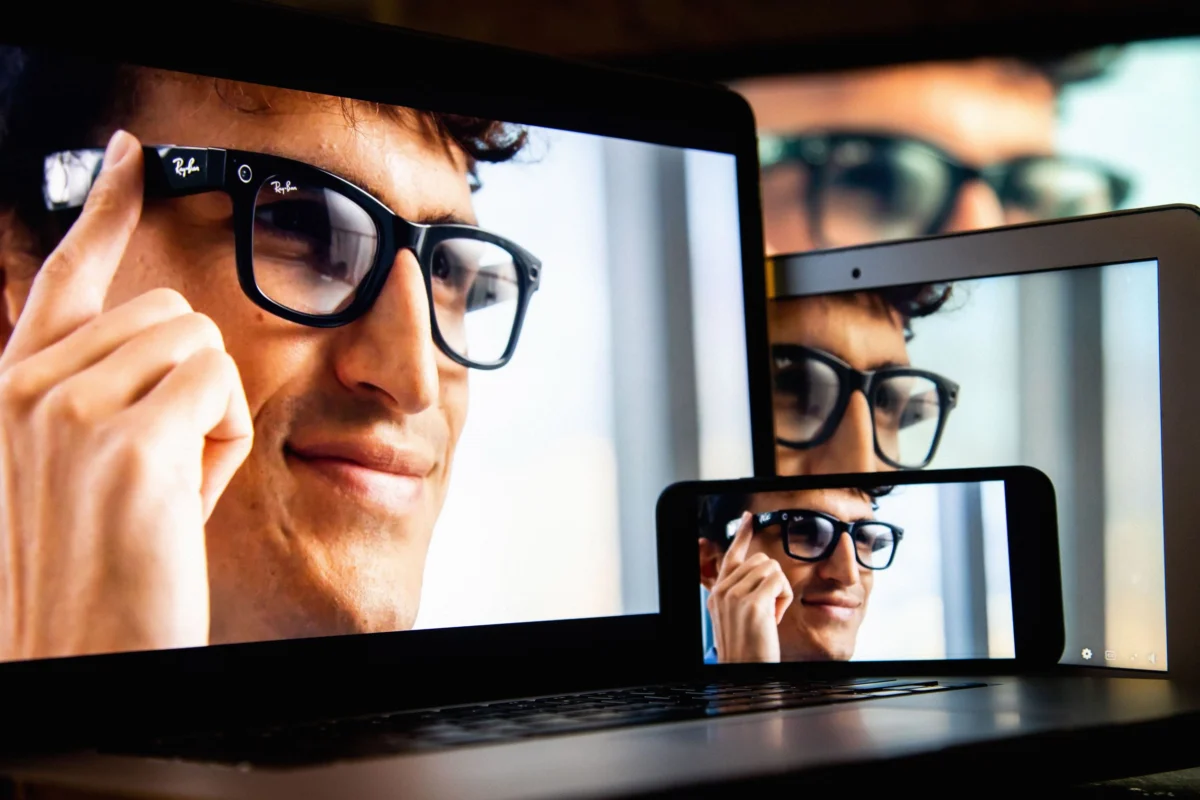
The intersection of wearable artificial intelligence technology and modern romance has given rise to a deeply troubling phenomenon: the covert filming of unsuspecting partners on dates using smart glasses. What began as a novelty product has rapidly escalated into a widespread crisis of privacy, fundamentally altering the calculus of trust for singles navigating the contemporary dating pool. As tech companies rush to expand their hardware footprints, everyday public spaces—ranging from midtown Manhattan cocktail bars to underground transit networks—are increasingly functioning as unregulated surveillance zones.
The Anatomy of a Surveillance Date
For Courtney McAnuff, a 28-year-old project manager originally from New York, the reality of this technological intrusion became painfully clear in the summer of 2024. Having recently exited a year-long relationship, McAnuff agreed to meet a prospective suitor for drinks at a bustling establishment in midtown Manhattan. Her date arrived wearing a baseball cap pulled low over his forehead and sporting a pair of thick, black-framed glasses.
Throughout the evening, as the conversation transitioned from the logistical challenges of living in New York City to reflections on past relationships, the man offhandedly mentioned that his eyewear consisted of Meta Ray-Ban smart glasses. At the time, McAnuff was unfamiliar with the capabilities of the device, which seamlessly captures high-definition images and video streams directly from the wearer’s point of view. Dismissing the remark, she accepted his offer to try the glasses on and glanced at a few previously recorded video files stored on the device. Once they moved past the topic, McAnuff assumed the matter was closed.
The true nature of the interaction, however, did not become apparent until the following day. While browsing her Instagram account, McAnuff discovered she had been tagged in a story post published by her date. The digital media consisted of unapproved footage capturing moments of them sitting together across a table at the bar, as well as candid clips recorded on the subway while they traveled uptown toward a basketball game. Captured from a high-angle perspective looking down directly at her, the video exposed her movements without prior warning or consent.
Confronted with the digital footprint of her private life broadcasted to an online audience, McAnuff experienced an acute sense of violation. When she subsequently confronted her date via text message, his apology minimized the infraction, indicating a fundamental disconnect regarding the gravity of unauthorized recording. The encounter terminated any potential for future connection, but it underscored a growing vulnerability inherent in modern interpersonal interactions.
A Mass Market Phenomenon and the Creep Glasses Moniker
The device used in McAnuff’s encounter represents a massive commercial success for its manufacturers. Meta Platforms, in partnership with eyewear giant EssilorLuxottica, reported explosive growth for the product line, selling more than 7 million pairs of the Meta AI glasses globally through 2025. Yet, alongside this commercial triumph has come a severe reputational backlash. Pranksters seeking viral fame on social media platforms, predatory actors, and aggressive pickup artists have increasingly repurposed the hardware for surreptitious recording in professional environments, retail spaces, and social venues. This widespread misuse has cemented a derogatory moniker within public discourse: creep glasses.
Within the dating community, particularly among women, the eyewear has transformed from a futuristic gadget into an omnipresent red flag. Online forums and social media networks are flooded with cautionary tales detailing similar violations. Users across platforms like Bluesky, TikTok, and Reddit have shared distressing accounts of discovering mid-date that their companions were recording them without their knowledge. In extreme instances, individuals have reported cutting dates short, abruptly ghosting partners upon discovering the eyewear, or finding themselves subjected to covert documentation that fundamentally reframes a romantic outing into an investigative exercise.
The legal and regulatory fallout from this technology has already begun to manifest globally. In July 2024, law enforcement authorities in Seoul, South Korea, initiated a formal investigation against a man accused of covertly filming four women during separate dates and subsequently uploading the captured clips to social media platforms, as reported by The Korea Herald. Similar legal actions and consumer protection measures are taking shape across Western jurisdictions as lawmakers scramble to address the regulatory void surrounding discrete wearable cameras.
The Psychology of Post-Date Analysis and the Erosion of Trust
The integration of recording devices into romantic pairings forces a re-examination of the foundational elements required for successful relationships. According to a comprehensive 2025 YouGov survey of American adults examining the core pillars of healthy partnerships, trust emerged as the single most critical factor, with 94 percent of respondents categorizing it as very important.
Dr. Gary Lewandowski, a professor of psychology at Monmouth University whose academic research centers on the science of romantic connections, notes that the introduction of covert cameras into early-stage dating presents a direct threat to the establishment of mutual trust. While acknowledging that some users may rationalize the practice through an engineering mindset—viewing the footage as game tape to analyze personal communication blind spots and optimize dating performance—Lewandowski suggests the underlying motivations are frequently more problematic.
"A lot of men out there are eternal optimizers. They want better, more efficient ways of doing things, so reviewing game tape allows them to learn from mistakes," Lewandowski observes. However, he raises fundamental concerns about whether the technology is being leveraged to build a legalistic case rather than an authentic human connection. When one party secretly records another to identify red flags or secure evidence of perceived fault, the dynamic shifts. Such surveillance fundamentally alters the purpose of a date, transforming an organic mutual exploration into an objective, data-gathering exercise.
This perspective is echoed by cultural commentators and relationship experts. Yue Xu, cohost of the Dateable podcast, argues that the presence of AI eyewear introduces an unwelcome third party into intimate spaces, signaling a profound disrespect for personal boundaries and privacy. Xu warns that normalization of such technology threatens to eliminate personal anonymity entirely, setting a dangerous precedent where public and private spheres completely merge without the consent of all participating parties.
Corporate Accountability, Litigation, and Regulatory Interventions
As public unease mounts, Meta and its manufacturing partners find themselves embroiled in escalating legal battles and intense regulatory scrutiny. Consumer advocacy groups and legal firms have targeted the companies through class-action lawsuits. Notable among these is a consumer litigation case led by firms such as Wolf Popper, which alleges that the Meta AI glasses systematically capture and store private data from unsuspecting individuals without explicit consent.
Furthermore, investigative journalism has repeatedly exposed the vulnerabilities inherent in the hardware’s design. Earlier this year, reports revealed the existence of an unreleased facial recognition feature code-named NameTag within Meta’s companion software applications—a discovery initially brought to light through an independent investigation by WIRED. Although Meta quickly scrubbed the code from its application and maintained that the feature was never deployed to consumer markets, the company faces additional proposed class-action lawsuits in states like Illinois and California. Plaintiffs allege that the development of such systems violates stringent state-level privacy statutes regarding the collection of biometric data from photographs without affirmative authorization.
Meta has consistently defended its compliance protocols. In statements addressing ongoing litigation, corporate representatives have characterized the legal challenges as baseless misrepresentations of their product development efforts. Company officials emphasize that they have maintained transparency regarding the integration of AI capabilities and user data. Furthermore, Meta representatives have asserted that they have no intention of constructing a universal facial recognition database.
To combat the illicit use of the hardware, Meta implemented structural safeguards. The glasses are equipped with a front-facing light-emitting diode (LED) intended to signal when video recording is active. Company policies dictate that if a user attempts to physically tamper with or obstruct this indicator light, the internal camera system is automatically disabled. Additionally, Meta’s content moderation teams are tasked with removing accounts and material that violate community standards regarding harassment or non-consensual sharing. In August, the platform launched an expansive public awareness campaign across social media channels, spearheaded by Instagram head Adam Mosseri, to educate the public on how to recognize the visual indicators of an active recording session.
Despite these corporate measures, international regulators remain skeptical. Legislative bodies are moving forward with binding legal mandates rather than relying on industry self-regulation. In California, lawmakers successfully passed Senate Bill 1130 through both legislative chambers, establishing strict requirements for visible, tamper-resistant recording indicators on smart devices. Concurrently, international oversight bodies, such as Australia’s eSafety Commissioner, have issued formal guidance calling on major technology manufacturers to implement mandatory facial blurring software for any captured recordings. Regulators warn that without automated privacy protections, smart devices will inevitably facilitate severe digital harms, ranging from image-based abuse to adult cyber harassment and the unauthorized livestreaming of private encounters.
The Future of Public Intimacy
For individuals like Courtney McAnuff, the proliferation of AI-enabled eyewear represents an exhausting evolution in the ongoing struggle for personal privacy in a hyper-connected world. Her experience highlights a sobering reality: technology designed to augment perception can simultaneously diminish the fundamental human right to exist unobserved in public spaces.
Despite apologizing for his actions upon being confronted, McAnuff’s date failed to grasp the deeper ethical breach implicit in his conduct, viewing the recording as a minor indiscretion rather than a profound violation of personal boundaries. The encounter has left a lasting impression, reinforcing her conviction that modern romance does not require technological mediation.
"Being in each other’s physical space is such a beautiful experience in itself. We don’t need to have gadgets around," McAnuff reflects, summarizing the sentiment of a growing number of singles who find themselves questioning the safety of contemporary dating environments. "I don’t think that every moment needs to be captured."
As the technology continues to evolve and infiltrate consumer markets, the burden increasingly falls upon society to establish new social norms, enforce rigorous legal standards, and demand accountability from technology giants. Until systemic protections effectively safeguard individual autonomy, the simple act of sharing a drink across a table will remain fraught with the quiet, unsettling hum of automated surveillance.