
The landscape of professional women’s basketball has undergone a profound transformation over the past three seasons, characterized by unprecedented viewership growth, record-breaking sponsorship deals, and a surging cultural profile. However, as the WNBA transitions into the mainstream spotlight, it has increasingly become a focal point for national debates regarding gender identity, inclusivity, and the role of athletes in social discourse. University of Connecticut head coach Geno Auriemma, a titan of the sport with 12 NCAA national championships to his name, recently injected himself into this conversation, advising WNBA leadership to steer the league’s public narrative back toward the court and away from polarizing cultural flashpoints.
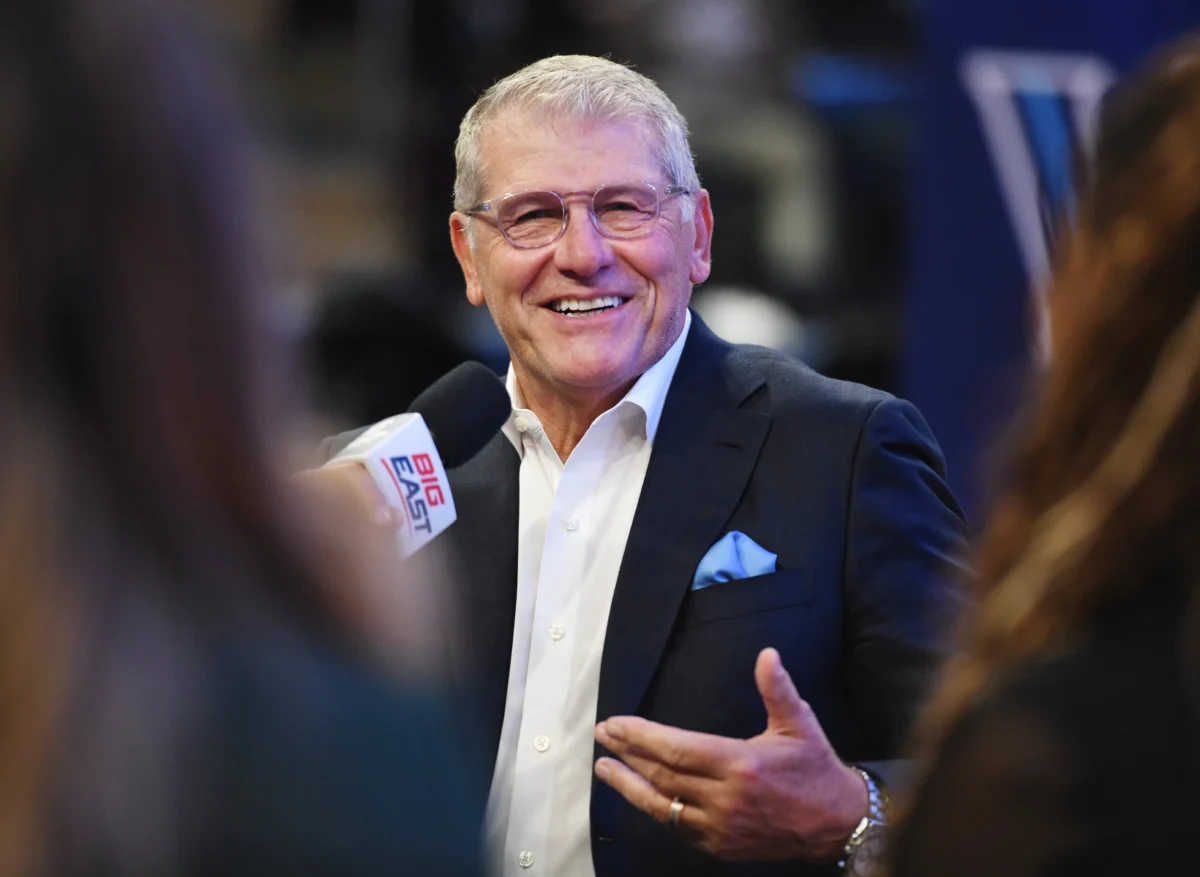
In a recent interview with CNBC, Auriemma expressed concern that the league’s burgeoning brand is being diluted by extracurricular political debates. "Nobody’s coming to watch another political statement," Auriemma stated. "They’re coming to watch a basketball game." His remarks underscore a growing tension within professional sports leagues: how to balance the social activism that has become synonymous with modern athlete identity against the commercial imperative of maintaining a broad, unified fan base.
The Evolution of the WNBA’s Public Profile
To understand the weight of Auriemma’s commentary, one must examine the rapid trajectory of the WNBA. Following the 2020 "Wubble" season, the league positioned itself as a vanguard of social justice, with players taking prominent roles in advocating for racial equity and voting rights. This era established a template for activism that resonated with a core demographic of younger, socially conscious fans.
However, the 2024 and 2025 seasons brought a different type of attention. As the league’s talent pool expanded and media coverage intensified, the WNBA became a battleground for the broader national debate concerning transgender participation in sports. Recent games, particularly those involving the Indiana Fever, have seen organized rallies outside arenas by groups both supporting and opposing transgender inclusion. These protests were ignited in part by public comments from players like the Fever’s Sophie Cunningham, who advocated for protecting the integrity of women’s sports from what she described as the participation of "biological men." Conversely, other figures, such as Minnesota Lynx head coach Cheryl Reeve, have utilized their platforms to signal support for trans rights, such as when she wore a shirt reading "Trans Kids Belong" during a televised game.
Auriemma’s Stance: A Call for Strategic Refocusing
Auriemma, whose career at UConn spans over four decades, argues that the current discourse is disconnected from the reality of the league’s operational environment. He noted that the debate often feels hypothetical, as there are no transgender athletes currently playing in the WNBA.
"I don’t know [of any trans players] that have tried to play in the league and have been denied playing in the league," Auriemma remarked. "It’s an issue that’s been made an issue that’s a non-issue. It doesn’t exist."
By characterizing the debate as a distraction, Auriemma is suggesting that the league’s leadership, led by Commissioner Cathy Engelbert, needs to take a more active role in managing the brand’s message. He posited that the WNBA, which was once "desperate for attention," now commands a massive audience—an audience that he believes is being alienated by the shift in focus.
"People have hijacked it," Auriemma said. "If you’re not talking about the game itself, if you’re not talking about the brilliance of the individual players, the teams that are playing incredible basketball… no, that’s not the kind of attention that you want for women’s sports."
Institutional Responses and Internal Deliberations
The WNBA has not remained silent as these tensions have simmered. A spokesperson for the league confirmed that a task force comprised of team presidents and general managers convened in late 2025 to discuss, among other things, the league’s stance on transgender eligibility and gender identity.

In a formal statement, the league maintained a balanced approach: "We will approach these important conversations thoughtfully and in alignment with the values of our league. There are no immediate eligibility matters affecting the WNBA, and we strongly denounce the bad-faith efforts to use these topics to demean or marginalize others."
This institutional stance suggests that while the league recognizes the volatility of the discourse, it remains committed to its core values of inclusivity. However, the challenge remains: how to maintain those values while mitigating the "bad-faith efforts" that Auriemma claims are distracting from the product on the floor.
Historical Context: Sports and Political Expression
The friction between athletic performance and political messaging is not unique to the WNBA. The history of American sports is replete with instances where leagues have been forced to navigate the social views of their athletes.
The most prominent example in recent memory remains the 2016 protest movement initiated by NFL quarterback Colin Kaepernick, who kneeled during the national anthem to protest systemic racism and police brutality. The ensuing national outcry eventually led to the NFL implementing policies that mandated standing for the anthem—a decision that was later softened, but which served as a cautionary tale for how cultural polarization can impact league revenue and viewership.
In contrast, the National Women’s Soccer League (NWSL) took a more permissive stance in 2020, allowing players to choose their form of expression during the national anthem. This decision was lauded by many as an empowering move for female athletes, yet it also highlighted the potential for fragmentation in the fan experience. The WNBA currently finds itself at a similar crossroads, attempting to determine whether it can remain a platform for social advocacy while simultaneously appealing to a mainstream audience that may be increasingly fatigued by political friction in their entertainment choices.
The Economic Implications of the Debate
Data from the 2024 and 2025 seasons show that the WNBA is in its most commercially successful era to date. Sponsorship revenue has hit record highs, and television viewership numbers have consistently outperformed previous years. However, market analysts suggest that as a league moves from a niche, values-driven product to a mass-market entertainment powerhouse, the "sensitivity threshold" of the average consumer shifts.
When a product enters the mainstream, it inevitably attracts a more diverse audience with varying political views. Auriemma’s argument is rooted in this economic reality: the "hijacking" of the WNBA’s narrative by external cultural debates risks stalling the momentum of the league’s growth. If the primary association with the WNBA becomes a series of political arguments rather than the high-level athleticism of players like A’ja Wilson or Caitlin Clark, the league may face a plateau in fan acquisition.
Future Outlook and Leadership Challenges
As the WNBA moves forward, the pressure on Commissioner Cathy Engelbert to synthesize these competing interests will only intensify. The league is currently balancing a complex ecosystem of stakeholders: the players, who have historically been the moral and political engine of the league; the corporate sponsors, who are sensitive to brand safety; and the fans, who represent a wide spectrum of the American populace.
Auriemma’s advice—to "constantly reiterate… how do we want to be perceived?"—is a call for a unified, intentional brand strategy. Whether the league can successfully pivot the conversation back to basketball remains to be seen. The upcoming seasons will be a litmus test for whether the WNBA can maintain its identity as an inclusive, socially conscious organization without allowing that identity to become the singular lens through which its basketball product is viewed.
For now, the debate serves as a stark reminder of the influence of sports in the 21st century. As athletes continue to occupy a central role in the national conversation, the leagues that employ them must decide how much room there is for the court to be both a place of competition and a place of contestation. For veterans of the game like Auriemma, the priority remains clear: the court should be, above all else, a stage for the game itself.