Night Nurse (2026), the provocative feature directorial debut from filmmaker Georgia Bernstein, stands as a distinct outlier in the contemporary independent cinema landscape. Premiering earlier this year in the NEXT competition at the Sundance Film Festival to critical intrigue, the film defies the conventional, risk-averse programming that frequently dominates major festival circuits. Scheduled for a wide theatrical release by IFC Films on July 10, 2026, the picture delivers a cerebral and unsettling exploration of isolation, vulnerability, and unorthodox power dynamics situated within the stifling confines of a suburban memory-care facility.
Main Facts and Narrative Premise
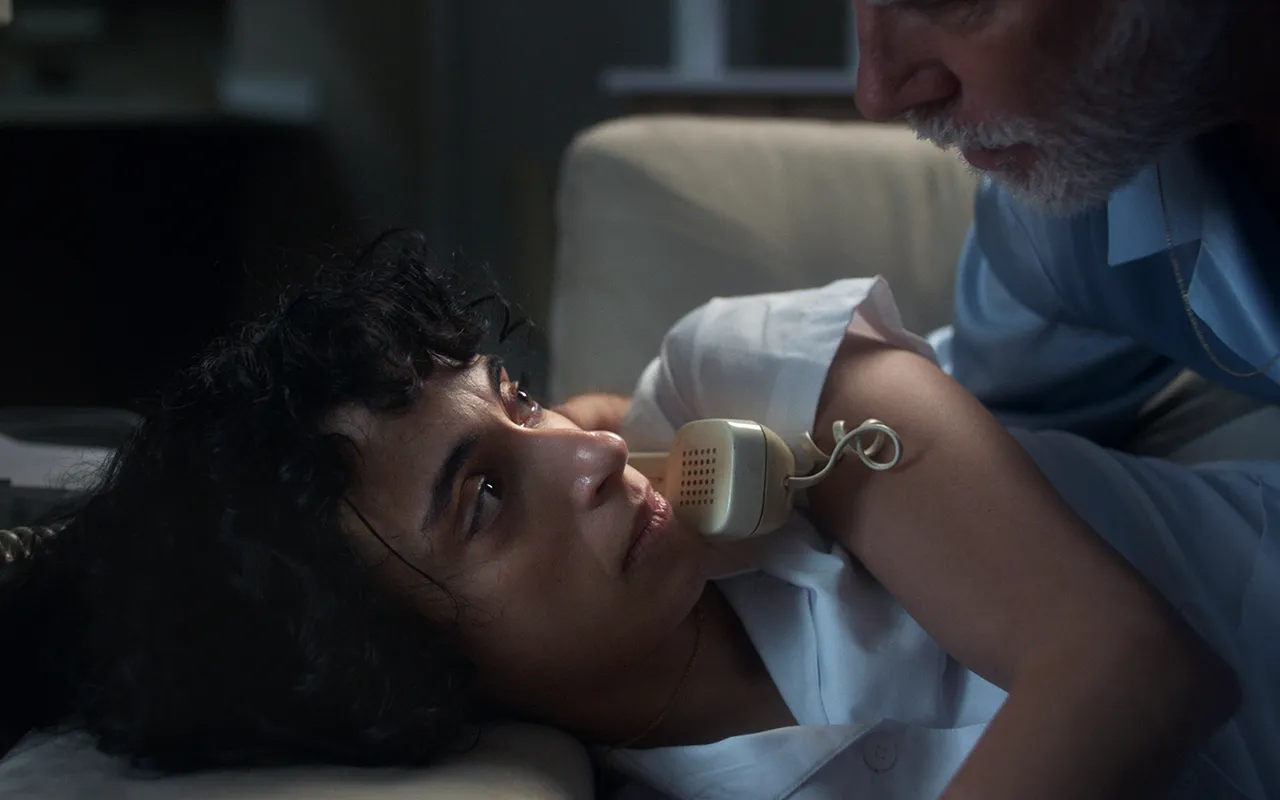
The narrative centers on Eleni, a newly hired night-shift nurse portrayed by Cemre Paksoy, who becomes professionally and personally entangled with Douglas, an older resident evaluated for early-onset Alzheimer’s disease, played by Bruce McKenzie. As Eleni navigates the monotonous, nocturnal hours of the retirement community, she gradually falls under Douglas’s psychological influence.
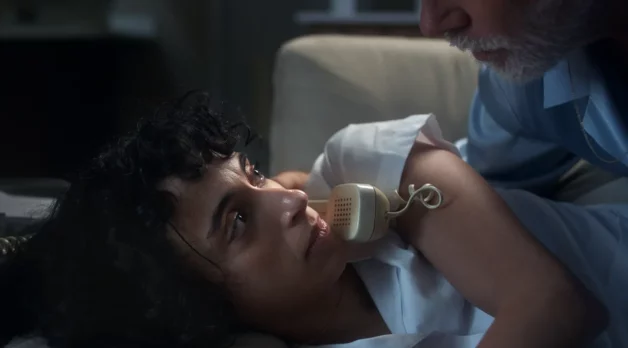
Rather than maintaining traditional patient-care boundaries, the pair becomes co-conspirators in an elaborate phone scam targeting other elderly individuals. Posing as distressed grandchildren in urgent need of financial assistance, Eleni and Douglas extract monetary gains from vulnerable victims. The confidence game evolves beyond simple financial exploitation, functioning as a mutual source of psychological stimulation and psychosexual thrill. Bernstein deliberately frames these illicit phone calls through prolonged, unbroken takes, obscuring Eleni’s facial reactions to heighten audience tension and emphasize the ambiguous distribution of power between the characters.
Chronology of Development and Production
The genesis of Night Nurse traces back to Bernstein’s established roots in the Chicago independent filmmaking community, where she previously served as a producer on features such as All Jacked Up and Full of Worms (2022) and Anything That Moves (2025). Following the completion of the latter project, producer Eddie Linker sought a practical curriculum subject for a class he was scheduled to teach at Northwestern University. Bernstein’s script for Night Nurse was selected for the course.
Collaborating with producers Linker, Liane Cunje, and Veronica Barbosa, Bernstein integrated the production into an educational framework. Throughout the academic quarter, students participated in hands-on preproduction tasks, including forming limited liability companies, drafting comprehensive budgets, and navigating state tax credit applications. This unique bridge between academia and practical indie filmmaking established the operational foundation for the shoot.
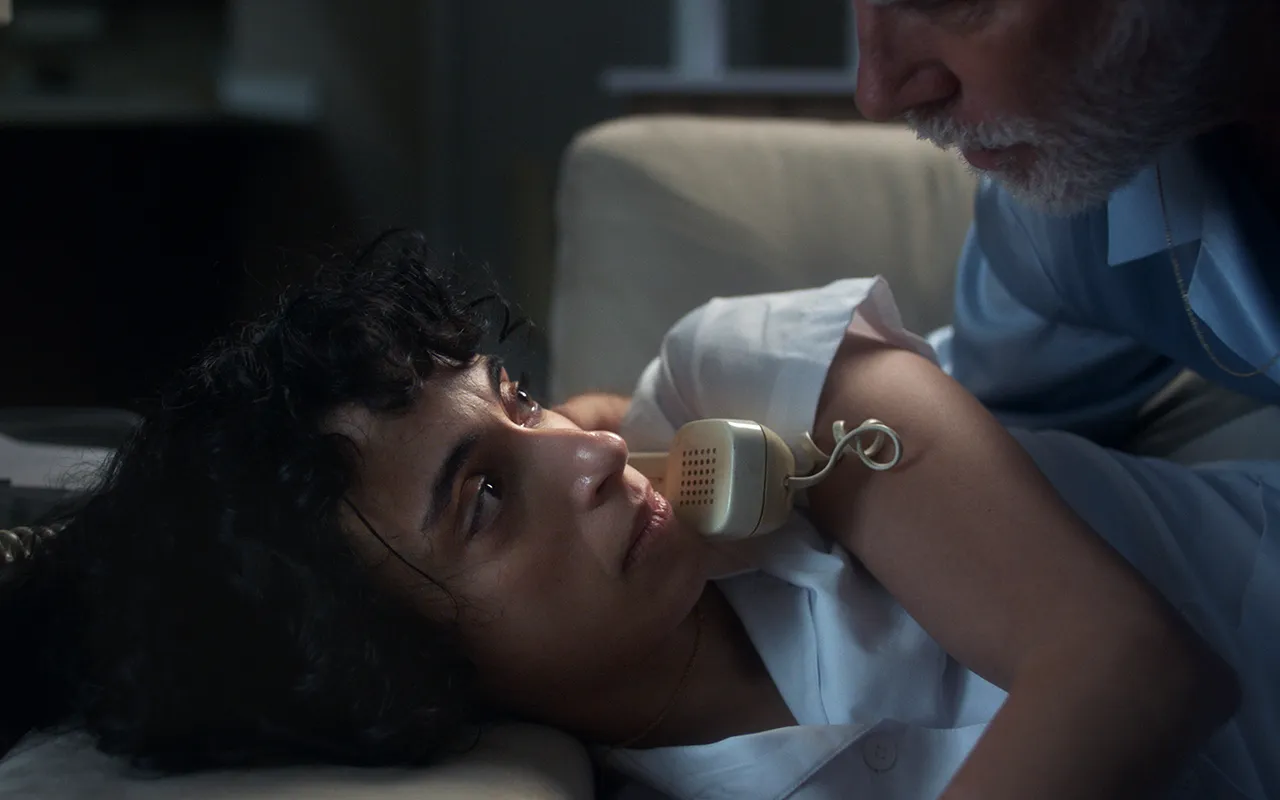
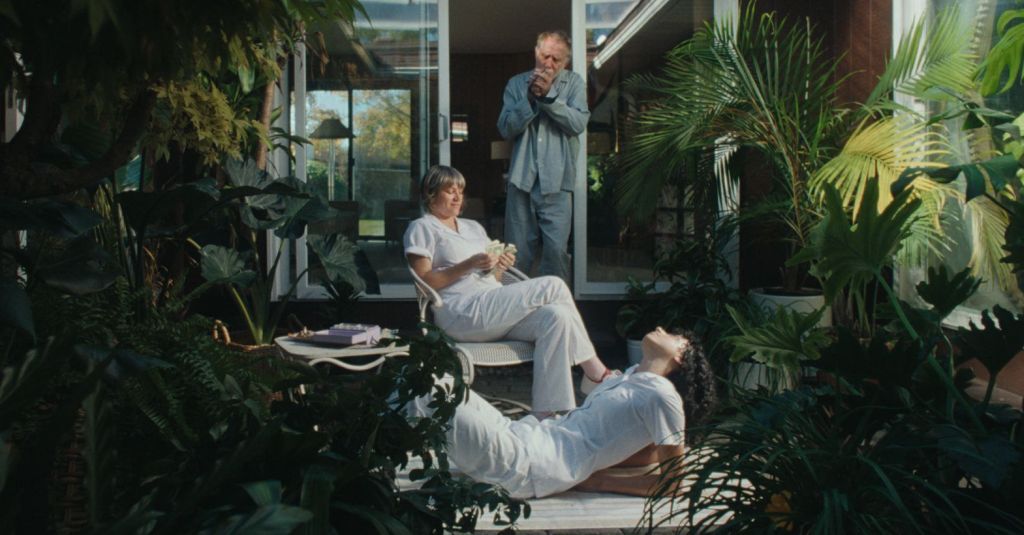
Principal photography was executed under highly resourceful constraints. Bernstein shot nearly the entirety of the film inside her grandmother’s suburban Chicago house, tailoring specific scenes to the architectural layout, ranging from adjacent corridors to an interior atrium. This logistical decision informed the film’s broader thematic atmosphere. The residence’s mid-century aesthetic—featuring 1970s wallpaper paired with outdated landline telephones—creates a deliberate temporal disorientation, deliberately omitting smartphones and contemporary markers to reinforce a sense of being detached from modern chronology.
Supporting Data and Technical Execution
To achieve the film’s distinctive visual grammar, Bernstein recruited cinematographer Lidia Nikonova, known for her work on Lucy Kerr’s Family Portrait (2024). Sharing a mutual artistic vision regarding low-key lighting and methodical pacing, the director and cinematographer rejected modern stabilization methods in favor of traditional heavy equipment.
Nearly all interior sequences were captured using a physical dolly, providing a measured, mechanical weight to the camera movements that echoes the stylistic rigor of European auteurs such as Rainer Werner Fassbinder, David Cronenberg, and Atom Egoyan. The sluggish, deliberate momentum of the tracking shots influences the physical performances, as characters navigate carpeted corridors through slow movements and crawling.
The auditory landscape of Night Nurse was constructed by composers Steven B. Jackson and Samm Clapp, who previously scored Bernstein’s produced works. Jackson and Clapp integrated a traditional scoring approach by utilizing live instrumentation—predominantly piano and flute—played in real-time synchronization with the picture. Inspired by the sonic design of Francis Ford Coppola’s The Conversation (1974), the musical theme underscores the narrative motif of characters trapped in repetitive, inescapable cycles.
Casting and Character Dynamics
While the majority of the principal roles were explicitly written with specific actors in mind—including Éléonore Hendricks as Mona and Colleen Rose Trundy—the role of Douglas underwent a traditional casting process. Bernstein initially envisioned an archetype reminiscent of mid-century cinema icons. Bruce McKenzie ultimately secured the part, introducing an unpredictable nuance that reshaped the character’s dynamic with Paksoy’s Eleni.
The film’s supporting characters further articulate the core philosophical inquiry of the narrative: the desperate human instinct to be needed. Dialogue exchanges within the memory-care unit interrogate the moral boundaries of validation. When Eleni experiences ethical reservations regarding their illicit financial schemes, fellow character Mona provides rationalization, framing the manipulation as a therapeutic intervention that restores purpose to otherwise stagnant lives.
Official Responses and Industry Reception
Critical reception at Sundance highlighted Night Nurse as a refreshing counterpoint to standard festival fare, drawing favorable comparisons to the provocative psychological dramas of Cronenberg and Breillat. Industry analysts note that IFC Films’ acquisition of the project signals a growing market appetite for high-concept, auteur-driven psychological thrillers that challenge traditional narrative boundaries.
The deliberate ambiguity surrounding Eleni and Douglas’s dynamic has generated significant discourse among critics. Rather than relying on clear-cut villainy or victimization, the film investigates institutionalized exhaustion and the blurred lines of consent within caregiving environments. By framing the exploitation through a lens of mutual revitalization, the narrative resists simple moral categorization.
Broader Impact and Implications
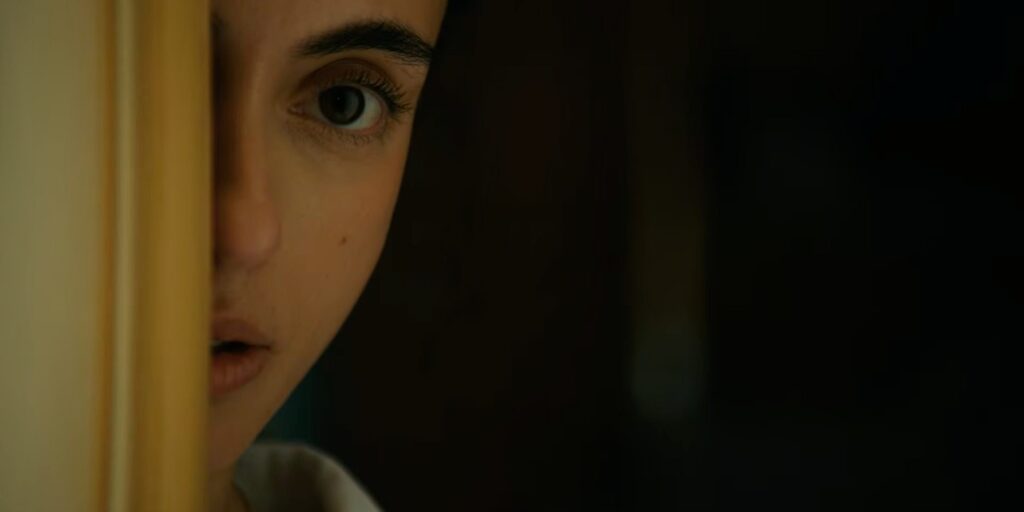
The distribution of Night Nurse by IFC Films on July 10, 2026, positions the independent feature for a broader commercial audience following its festival run. The film’s production model—utilizing academic partnerships, localized Chicago crew networks, and unconventional interior locations—serves as a practical case study for micro-budget filmmaking sustainability in regional American markets.
Furthermore, the project contributes to an ongoing cinematic conversation surrounding female gazes in psychosexual thrillers. By subverting traditional tropes associated with nurse exploitation cinema and noir narratives, Bernstein and Nikonova establish a distinct stylistic syntax that prioritizes atmospheric malaise over conventional exposition. As the release date approaches, industry observers anticipate that the film’s uncompromising tone and formal precision will cement Georgia Bernstein’s trajectory as a formidable voice in contemporary independent cinema.