

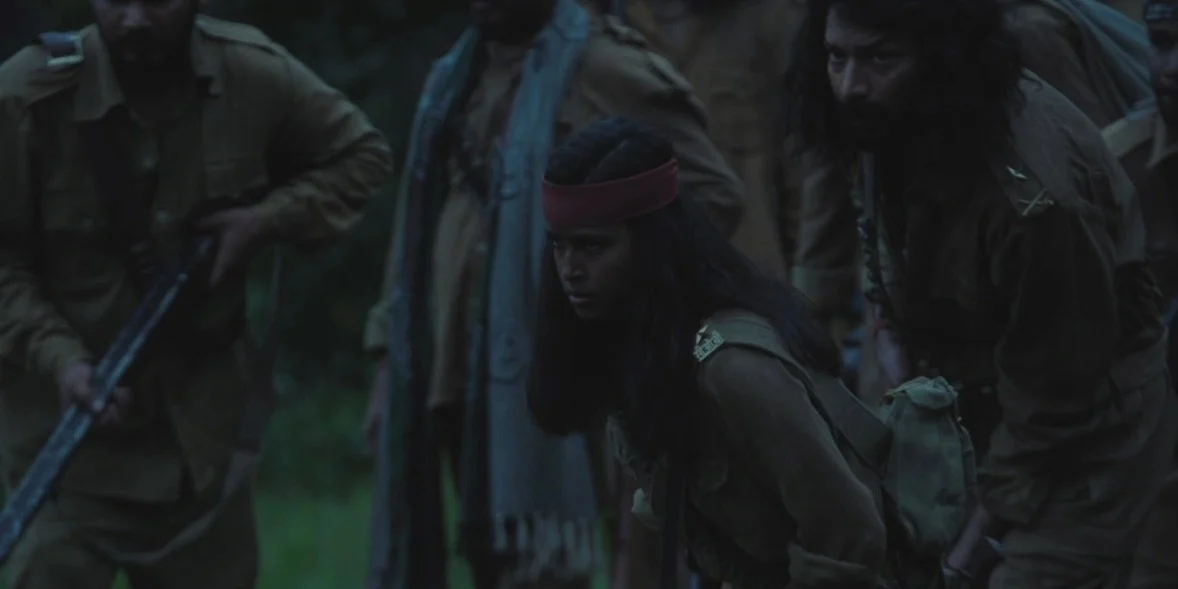
The cinematic landscape often struggles to reconcile the complexities of historical figures with the constraints of a two-hour runtime, yet the latest feature film, Phoolan, directed by Richie Mehta and co-written with Anu Singh, opts for a focused, high-stakes approach. By narrowing the scope of the legendary outlaw’s life to a definitive 48-hour siege in the heartland of India, the production seeks to capture the volatility of a woman who challenged the rigid hierarchies of the Indian caste system. Starring Sneha Kumari, the film provides a visceral look at the 1981 manhunt that pitted a singular revolutionary against an overwhelming force of 2,000 armed police personnel.
The Historical Context: The Rise of the Bandit Queen
To understand the gravity of the events depicted in the film, one must examine the socio-political climate of the Chambal Valley during the late 1970s and early 1980s. Phoolan Devi, born into the marginalized Mallah subcaste, became a symbol of resistance against the systemic exploitation that characterized rural life in the region. Her trajectory from a victim of severe social and gender-based violence to a leader of an armed gang was not an anomaly but a response to the institutionalized patriarchy and caste-based discrimination that denied her and her community basic human dignity.
The 1981 siege was not merely a tactical police operation; it was a manifestation of the state’s attempt to assert control over a region that had long operated outside the reach of formal law. For the villagers of the Chambal, Phoolan represented a proxy for their own grievances against a system that had systematically impoverished them. The solidarity observed during this period remains a subject of sociological interest, highlighting the deep-seated mistrust between rural populations and law enforcement agencies of that era.
A Chronology of the 48-Hour Siege
The film utilizes a narrative structure that alternates between the kinetic, real-time chaos of the 1981 confrontation and reflective flashbacks that contextualize Phoolan’s motivations.
- Phase One: The Encirclement: The narrative begins with the rapid mobilization of over 2,000 police officers tasked with the eradication of Phoolan and her associates. The sheer scale of the deployment signifies the perceived threat the state assigned to the outlaws.
- Phase Two: The Resistance: As the perimeter tightened, the film captures the tactical maneuvers employed by Phoolan. Her ability to navigate the rugged terrain and maintain the loyalty of her cadre underscores the guerrilla warfare tactics that became her hallmark.
- Phase Three: The Turning Point: Interspersed throughout the action sequences are moments of psychological reflection. These scenes, according to lead actress Sneha Kumari, were essential in portraying the human cost of the violence. The film posits that the siege was a crucible, forcing Phoolan to reconcile her past trauma with her present existential threat.
- Phase Four: The Aftermath: The conclusion of the siege in the film mirrors the historical ambiguity of the event, leaving the audience to grapple with the legacy of a woman who, despite being labeled an outlaw, commanded significant public sympathy.
Production and Technical Execution
Under the direction of Richie Mehta, the production team—including cinematographer Pip White and editor Beverley Mills—sought to avoid the pitfalls of traditional biopic storytelling. By utilizing a handheld camera aesthetic, the film captures the visceral nature of the firefights. The technical commitment to realism is evident in the film’s 113-minute runtime, which maintains a high level of tension without relying on excessive exposition.
The performances, led by Sneha Kumari and supported by an ensemble including Anurag Thakur, Vikram Pratap Singh, and Aakash Dahiya, anchor the narrative in human emotion rather than mere spectacle. The inclusion of an opposing perspective, represented by a disillusioned police officer, provides a necessary critique of the state apparatus, illustrating the cyclical nature of violence. This narrative choice serves to elevate the film from a standard action drama to a more nuanced exploration of state-sanctioned force and individual rebellion.
Sociological and Political Implications
The enduring fascination with Phoolan Devi in Indian media is rooted in her complicated legacy. While state records and legal documents categorize her primarily through the lens of criminal activity, historical and sociological analysis often presents a more multifaceted image. Phoolan Devi eventually transitioned from the ravines to the halls of the Indian Parliament, a journey that complicates the simplistic "outlaw" narrative.
The film’s focus on the 1981 siege serves as a microcosm for the broader tensions that defined her life. The implication of the film is clear: the violence of the state and the violence of the individual are often inextricably linked in societies where institutional recourse is unavailable to the marginalized. The support she received from local villagers was not necessarily an endorsement of violence, but a rejection of the state’s failure to protect them from caste-based exploitation.
Critical Reception and Festival Impact
The film’s premiere at the Toronto International Film Festival has garnered significant attention from both international critics and South Asian audiences. Early reception suggests that the film’s success lies in its restraint; by refusing to provide a comprehensive life summary, it avoids the "Wikipedia effect" that often renders biopics stagnant. Instead, it invites the audience to interrogate the events of 1981 as a standalone, transformative experience.
Observers have noted that the film succeeds as a character study. By highlighting the psychological toll of constant evasion and the physical demands of survival, the production moves beyond the folklore that often surrounds the Bandit Queen. For viewers unfamiliar with the history of the Chambal region, the film acts as an entry point into a complex period of Indian history. For those already well-versed in the narrative, the film offers a fresh technical approach to a well-trodden subject.
Fact-Based Analysis of the Legacy
The historical figure of Phoolan Devi continues to influence contemporary discourse on gender and justice in India. Her life serves as a stark reminder of the consequences of institutional failure. While the film is a dramatization, its grounding in the real-world events of 1981 provides a necessary perspective on the volatility of the Chambal region.
The production team’s choice to focus on the 48-hour siege is a strategic narrative decision that aligns with modern trends in biographical cinema. By focusing on a "seminal moment," the creators are able to dive deeper into the internal motivations of the subject rather than providing a superficial overview of her entire life. This methodology, while challenging, allows for a more intense engagement with the subject matter.
Conclusion: The Future of the Historical Thriller
As Phoolan enters broader distribution, its impact on the portrayal of historical figures in Indian cinema will likely be analyzed for some time. The film demonstrates that when a filmmaker balances technical proficiency with a clear, focused narrative, the result is a compelling work that transcends the limitations of its genre. The story of Phoolan Devi remains a potent one, and this latest cinematic effort ensures that the questions she raised regarding justice, caste, and institutional power remain at the forefront of public consciousness.
The success of this production at major international platforms like TIFF underscores the global interest in stories that challenge traditional power structures. By framing the narrative around the struggle for survival, Phoolan effectively humanizes a figure who has often been reduced to a caricature, offering a nuanced reflection on the cost of revolution. As the film moves forward, it stands as a testament to the power of targeted storytelling in preserving the complexities of history for a new generation.