


The 15th edition of the Taiwan International Documentary Festival (TIDF) offered a comprehensive exploration of politically engaged nonfiction cinema from across Asia, highlighting both newly produced works and rare historical restorations. Established in 1998—a decade following the lifting of martial law in Taiwan—the festival has consistently served as a vital platform for independent video activism, regional documentary filmmaking, and alternative production models. Over the years, the TIDF has evolved into one of Asia’s premier showcases for non-fiction storytelling, maintaining dedicated competitive strands such as the Asian Visions Competition and the Taiwan Competition to champion regional voices that often remain outside mainstream commercial circuits.
This year’s program brought renewed focus to the intersections of colonial history, collective trauma, and modern sociopolitical realities. By examining the archival remnants of mid-century conflicts, the impact of rapid urban displacement, and the lingering psychological aftershocks of political violence, the festival’s curation underscored the enduring relevance of documentary cinema as a medium of historical inquiry and critical resistance.
Archival Recoveries and Colonial Legacies
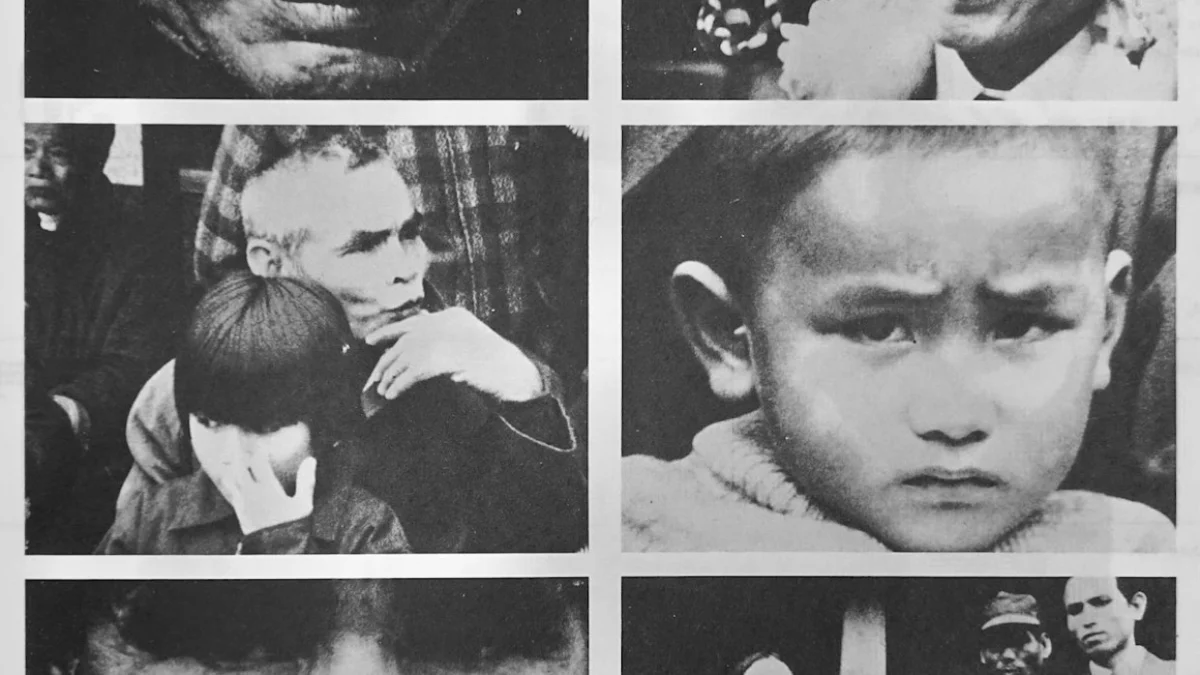
A central highlight of the festival was the screening of Archive: Li Guang-hui (1979/2024), a 30-minute archival compilation crafted from television newsreel outtakes by the late, renowned photographer Chang Chao-tang. Filmed between 1975 and 1979 while Chang worked as a photojournalist for the China Television Company (CTV), the work documents the return of Suniuo—also known by his Japanese name, Teruo Nakamura, and his assigned Mandarin name, Li Guang-hui.
Suniuo, an Indigenous Amis Taiwanese soldier, had been drafted into the Japanese Imperial Army during World War II and dispatched to the Indonesian island of Morotai. He was discovered living in complete jungle isolation 30 years after the war had ended, entirely unaware of Japan’s surrender. Upon his return, his story was swiftly incorporated into the Nationalist (KMT) narrative of the Republic of China, which framed him as a national hero who had resisted the Japanese empire, despite accounts suggesting he had merely deserted as imperial forces collapsed.
Chang’s film chronicles this trajectory chronologically, moving from family interviews prior to the reunion to the heavily staged public spectacles of his homecoming, and concluding with Suniuo’s battle with the lung cancer that resulted in his death in 1979. Notably, Chang restricts the footage to public appearances mediated by news reporters, withholding any direct audio of Suniuo’s own voice. Close-ups focus on Suniuo’s expressions, particularly during a sequence where Taiwanese folk singer Chen Da performs an epic recounting of his return. What initially reads as contemplation slowly registers as incomprehension, as Suniuo listens to a musical tradition entirely foreign to him.
Chang never publicly exhibited the work during his lifetime. The footage remained in his private archives until they were donated to the Taiwan Film and Audioval Institute (TFAI) following his death in 2024. The inclusion of Archive: Li Guang-hui alongside retrospective programs such as War Memories, Shifting Identities—which examines conscripted Taiwanese soldiers during the Japanese colonial period—highlights the complex, hybrid nature of Taiwanese identity forged through successive waves of colonial subjugation and collective resistance.
Confronting Urban Displacement and Erasure
In addition to historical retrospectives, the 15th TIDF featured contemporary documentary works addressing the human toll of rapid modernization and aggressive urban development. Among these, Hu Sanshou’s 150-minute feature Xiangzidian Village: The Stage (2026) offers a methodical observation of a rural community giving way to infrastructural expansion.
Filmed over a six-year period, the documentary avoids direct interviews with villagers, opting instead for sustained wide shots and a distanced voiceover narrated by the filmmaker. As earth, grass, and generational homes are gradually replaced by dust, crushed rock, and a multi-lane highway, the physical environment dwarfs the human subjects, positioning them against towering mounds of earth and looming construction machinery. Hu structures his observations around familial relations, capturing the emotional gravity of aging subjects whose lives are upended by state-driven real estate and transport projects.
The film’s patient methodology contrasts with standard independent documentary practices that often employ fast-paced cinéma vérité tropes tailored for international festival circuits. By mourning the subjects who passed away during production and culminating in a coda where elderly villagers watch one of Hu’s prior films at his father’s funeral, Xiangzidian Village foregrounds resilience and continuity amid systematic erasure.
Reassessing Trauma and Legal Redress
Contemporary political trauma and the challenges of institutional accountability were further examined through works addressing the aftermath of civil unrest in East and Southeast Asia. Anocha Suwichakornpong’s Narrative (2026) addresses the ongoing quagmire surrounding the 2010 military crackdown on pro-democracy Red Shirt demonstrators in Bangkok.
The film centers on a theatrical workshop involving family members of victims killed during the 2010 massacre, structured around three distinct exercises mimicking an abstract three-act dramatic narrative: describing a primal emotion without naming it, discussing legal strategies with an attorney, and articulating an experience of gratitude. Through this framework, the film exposes how legal systems and popular representations tend to disaggregate mass state violence into isolated, individualized cases, thereby obstructing collective reckoning and systemic restitution.
By interspersing workshop footage with intimate sequences from the participants’ everyday lives—such as a mother recording dreams of her deceased son—Suwichakornpong interrogates the limits of testimony, legal frameworks, and therapeutic narrative structures in addressing historical injustice.
Urban Exhaustion and Post-Pandemic Realities
The festival also engaged with the psychological contours of post-pandemic urban life in China through Luo Li’s Air Base (2025). Set in Wuhan in 2023 following the lifting of pandemic restrictions, the film acts as a loose city symphony populated by ordinary citizens engaged in seemingly futile, repetitive actions.
Portraying individuals who pretend to be traffic operators, collect sighs from passersby, fish in artificial ponds without success, or attempt to straighten public bus curtains, the film captures a pervasive sense of societal exhaustion. Rather than presenting overt political resistance, the subjects navigate public space with quiet compliance and a generalized apathy. However, through the accumulation of unscripted interactions and communal dialogues by the lake, the film constructs an alternative form of camaraderie, registering an exhausted populace that continues to persist without formal resolution.
Implications and Broader Analytical Context
The 15th Taiwan International Documentary Festival demonstrated how contemporary nonfiction filmmaking in Asia continues to negotiate the pressures of territorial nationalism, historical amnesia, and rapid economic restructuring. By programming archival restorations alongside contemporary observational cinema, the festival underscored the function of documentary as an active site of counter-memory.
The juxtaposition of local Taiwanese and mainland Chinese narratives with international solidarities—such as the spotlight on Palestinian archival struggles—reinforced the festival’s framing of regional histories within a global continuum of anti-imperial and anti-authoritarian struggle. As self-governance across the region faces mounting geopolitical pressures, the works showcased at TIDF provide critical documentation of the institutional and interpersonal mechanisms through which communities endure, remember, and resist.