

In the expansive literary landscape created by author Lee Child, Frances Neagley has long stood as the singular character to whom the wandering, enigmatic protagonist Jack Reacher offers his unwavering trust. Within a franchise defined by the protagonist’s transient nature—a nomadic existence where allies are usually discarded as quickly as they are found—Neagley remains a notable exception, appearing across multiple installments of the 30-book series. While the television adaptation of Reacher, spearheaded by showrunner Nick Santora, has solidified the character’s presence by featuring her in the first three seasons, the expansion of the mythos now culminates in a dedicated spinoff series titled Neagley.
Developed by Nick Santora and Nicholas Wootton, the new series arrives as the fourth season of Reacher concludes its run on Amazon. The project, which was bolstered by an announcement in July confirming that Child and collaborator Yasmin Angoe are penning at least two novels centered on the character, signifies a strategic shift for the franchise. By transitioning Neagley from a supporting military police comrade to a lead investigator, Amazon is attempting to replicate the successful, high-octane formula that turned the Reacher series into a cornerstone of its scripted content strategy.
Chronology and Narrative Framework
The narrative trajectory of Neagley begins with an incident of profound personal resonance for the protagonist. Following a brief prologue featuring a guest appearance by Alan Ritchson’s Reacher—designed to provide a symbolic, narrative blessing for the character’s independent venture—the story centers on the death of Tommy, a young man who was one of the few figures in Neagley’s life whom she considered family.
After a mysterious, fatal encounter at a Chicago transit station, Neagley, operating out of a private investigation firm in the city, initiates a solitary inquiry. Her investigation leads her to a series of precarious alliances. She is joined by Hudson Riley, a detective with the Chicago Police Department struggling with a fraught family legacy, and Keno, a street-smart youth whose knowledge of local criminal activity provides a critical bridge to the underworld. The investigation eventually directs the group to Echo Canyon, a farming community that masks its true nature as a sophisticated, high-security facility under the influence of Lawrence Cole, a charismatic figure whose persona blends the traits of a scholar, folk musician, and cult leader.
Character Evolution and Thematic Analysis
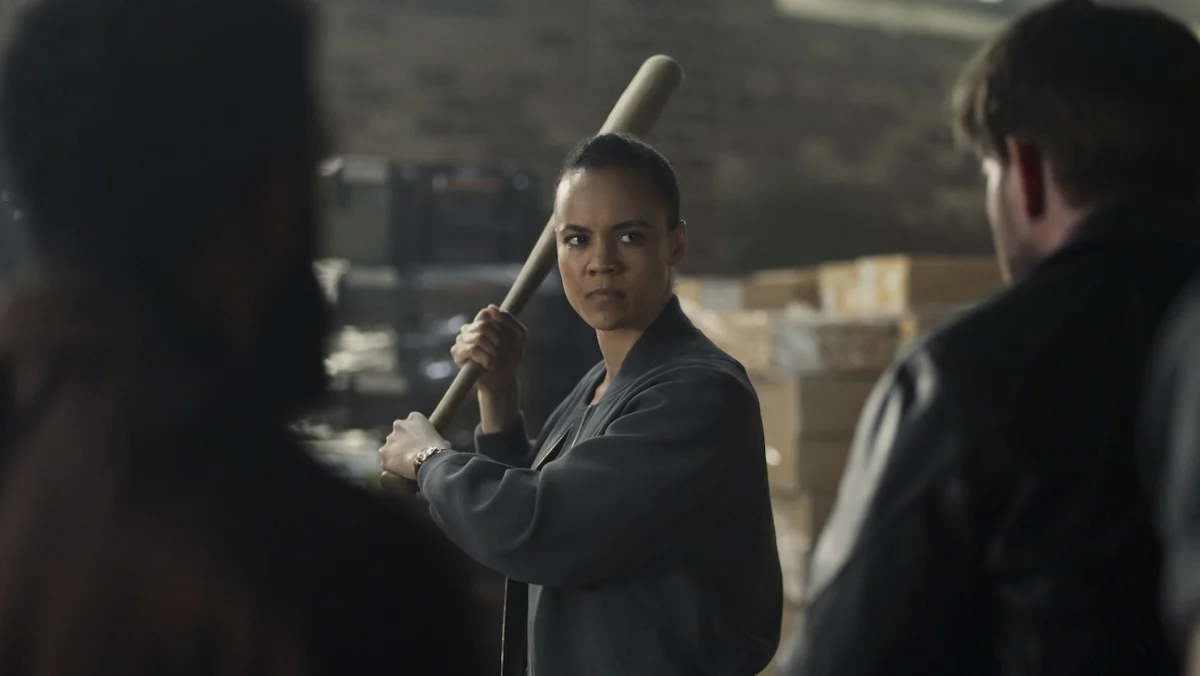
The series highlights the distinct physical and psychological contrast between Neagley and her former commander. While Reacher is defined by his imposing, "Mack truck" physicality and an almost mechanical approach to conflict, Neagley relies on precision, dexterity, and a specialized tactical awareness. Maria Sten, who reprises the role for the spinoff, is tasked with carrying the emotional weight of the series, a responsibility that requires navigating the character’s most defining, and historically enigmatic, trait: her haphephobia.
In the original novels, Neagley’s fear of physical contact serves as a functional barrier that maintains her independence and reinforces the platonic nature of her professional relationship with Reacher. However, the television series makes a deliberate creative decision to move beyond the "show, don’t tell" approach favored by Lee Child. By exploring the origins of this phobia, the show attempts to ground Neagley’s stoicism in past trauma. This narrative choice highlights a common trope in genre fiction: the tendency to attribute the capabilities of female protagonists to formative, often traumatic, events, whereas male counterparts are frequently afforded a more inherent or training-based competence.
Production Context and Industry Implications
The production of Neagley reflects the broader industrial trend of mining established intellectual property to create "shared universes." The series benefits from the participation of directing veterans Sam Hill, Gary Fleder, and MJ Bassett, all of whom have established a visual shorthand through their work on the parent series. Despite the setting of Chicago, the series was largely filmed in Toronto, a common practice in modern television production to leverage tax incentives and existing studio infrastructure.
The show follows a structure familiar to fans of the Reacher television universe: a tight, intense narrative arc that is occasionally stretched to accommodate a standard eight-episode season order. Critics and industry analysts have observed that the series, much like its predecessor, thrives during its kinetic action sequences—fights, chases, and tactical maneuvers—while occasionally losing momentum during moments of heavy exposition. The reliance on familiar genre elements, such as the climactic, slow-motion exit from an exploding facility, underscores a commitment to the "pulpy" aesthetic that has proven highly effective with the target demographic.
Performance and Ensemble Dynamics
The ensemble cast plays a vital role in balancing the narrative. Maria Sten’s portrayal of Neagley is complimented by the grounded performance of Greyston Holt as Detective Riley. The chemistry between the two anchors the more procedural elements of the script. Adeline Rudolph, playing the office receptionist Renee, undergoes a character arc that sees her evolve from a background contributor to a tactical partner, providing a sense of organic growth that contrasts with the more formulaic developments involving the primary antagonist.
Damon Herriman, cast as the antagonist Lawrence Cole, delivers a performance that leans into the "slick and slimy" archetype. While his work is technically proficient, his casting—having played Charles Manson in other high-profile projects—adds a layer of metatextual familiarity that some viewers may find predictable. The utilization of a cult compound as the central setting, while a staple of the thriller genre, creates a challenge for the writers to differentiate the stakes from those of similar productions.
Data and Market Reception
The success of the Neagley spinoff will be measured not only by critical reception but by its ability to maintain the high viewership numbers established by Reacher. As of the latest industry reports, the Reacher franchise remains one of Amazon’s most-watched original scripted series, consistently ranking in the top tier of Nielsen’s streaming charts during its release windows. By extending this into a second series, Amazon is mitigating the risk of content fatigue by diversifying the perspective of the narrative while keeping the "brand" intact.
The decision to publish novels specifically linked to the Neagley series suggests that the collaboration between Lee Child and Yasmin Angoe is intended to create a multi-platform synergy. This strategy is designed to ensure that the audience remains engaged with the characters between seasons of the television show. The addition of new literary canon provides a depth of lore that serves to justify the spinoff’s existence beyond simple brand expansion.
Broader Impact on the Action Genre
The release of Neagley serves as a case study in how modern franchises handle secondary characters. By elevating a character who was historically "a puzzle to be solved" into a protagonist, the series invites a conversation about the nature of character development in action-oriented television. There is a palpable tension between the desire to deepen a character’s internal life and the necessity of maintaining the "cool," enigmatic aura that made the character popular in the first place.
Ultimately, Neagley stands as a testament to the durability of the Reacher universe. It is a series that knows its audience, delivers on the promise of efficient, bone-crunching action, and successfully navigates the transition from a supporting player to a lead. While it faces the common pitfalls of genre television—occasionally over-explaining its mysteries and leaning on tropes—it provides a consistent, high-energy experience that satisfies the core requirements of its genre. As the series moves forward, the primary challenge will be to determine whether it can evolve beyond the trauma-based origin story and establish a new, independent identity that is as compelling as the character who inspired it.
For the average viewer, Neagley is a competent, well-executed addition to the streaming landscape, confirming that the appetite for grounded, high-stakes action remains robust. Whether the series can reach the cultural saturation of its predecessor remains to be seen, but its arrival marks a significant, calculated step in the ongoing expansion of Lee Child’s world.