


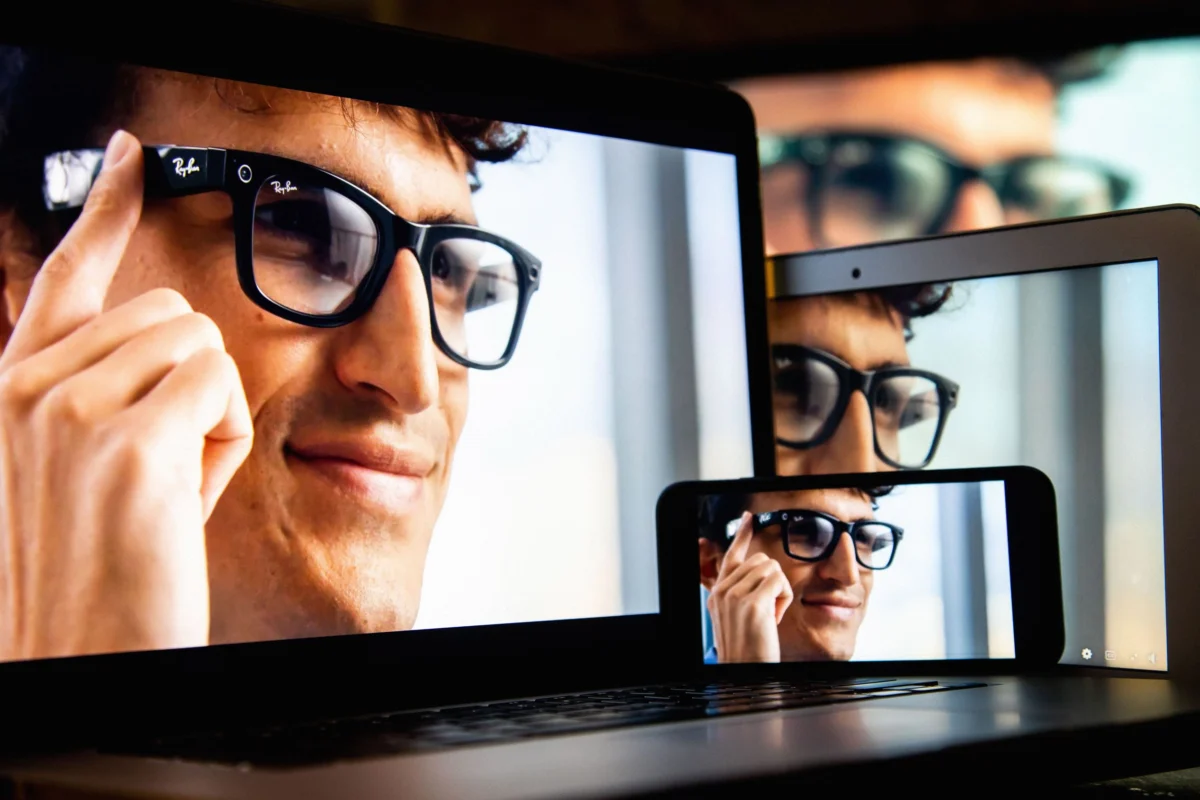
Dating in the digital age has long required individuals to navigate complex landscapes where technology intersects with human intimacy. From the algorithmic matching of dating applications to the conversational crutches of artificial intelligence wingmen, modern romance is rarely divorced from technological innovation. However, the proliferation of discreet, AI-powered smart eyewear—most notably the Meta Ray-Ban collaboration—has introduced an alarming dynamic to the dating scene: covert surveillance. As sales surge into the millions and hardware infiltrates everyday social settings, singles, relationship experts, and legal authorities are grappling with an unprecedented erosion of privacy that transforms intimate dates into unconsented recording sessions.
The Incident That Sparked a Wider Reckoning
The tension between modern connectivity and absolute privacy came into sharp focus for Courtney McAnuff during the summer of 2024. Emerging from a year-long relationship, McAnuff, a 28-year-old project manager then residing in New York City, agreed to meet a potential suitor for drinks at a midtown Manhattan bar. The encounter began conventionally enough. Her date arrived wearing a baseball cap pulled low and a pair of black-framed glasses. As the conversation meandered through the realities of living in New York and reflections on past relationships, the man mentioned offhand that his eyewear consisted of Meta Ray-Bans.
Unfamiliar with the technology, McAnuff listened as he explained the smart glasses’ capabilities, which include capturing point-of-view photographs and video footage. He even handed the glasses to her, allowing her to try them on and review a few previously recorded clips. Trusting that the demonstration was merely a novelty, McAnuff dismissed the gadget, assuming the topic was closed.
The true scope of the device’s utility became clear the following day. While browsing Instagram, McAnuff discovered she had been tagged in her date’s story post. The media file contained candid footage of the two at the bar, as well as moments captured on the subway en route to an uptown basketball game. In the video, McAnuff was filmed from an elevated angle across the table while her date held a drinking glass.
“I felt super violated,” McAnuff recalls. “Like, what if I don’t want everyone knowing what I’m up to? He felt so free to film me and post it. There was no conversation about it.”
When McAnuff confronted her date via text message, he offered an apology, yet downplayed the severity of the action, maintaining that he did not think it was a serious violation. McAnuff declined further contact, cutting off communication permanently. Her experience reflects a growing wave of discomfort sweeping across the dating world, where the integration of wearable cameras has turned a routine date into a psychological minefield.
A Market Boom and the Birth of a Moniker
The friction caused by Meta’s smart glasses is directly proportional to their commercial success. EssilorLuxottica, the manufacturer of Ray-Ban, reported a dramatic tripling of sales for Meta AI glasses, with more than 7 million pairs sold globally by the end of 2025. While marketing campaigns have positioned the hardware as a seamless blend of fashion and functional augmented reality, public adoption has frequently taken darker turns.
Pranksters chasing viral fame, content creators seeking sensational engagement, and individuals leveraging the anonymity of the lenses have integrated the glasses into workplaces, public transit, and romantic outings. The phenomenon has rapidly earned the hardware a cynical yet widespread moniker across social media platforms: “creep glasses.”
For single adults, particularly women, the presence of these devices has become a pervasive anxiety. Across platforms like Bluesky, Reddit, and TikTok, users have increasingly documented encounters with dates who wore smart glasses without disclosure. One widely shared account detailed a woman who realized mid-date that her companion had been secretly photographing her, while another individual admitted to ghosting a partner after discovering—only after leaning in for a kiss at the end of the evening—that the glasses had been recording the entire encounter.
The issue has transcended social media complaints, drawing international legal attention. In July 2025, authorities in Seoul, South Korea, placed a man under criminal investigation following allegations that he covertly filmed four separate women with whom he had gone on dates, subsequently uploading the footage to social media without their consent.
The Psychology of Surveillance Versus Connection
The proliferation of covert recording devices in romantic spaces raises fundamental questions about the nature of trust and connection. According to a 2025 YouGov survey of United States adults examining the foundational pillars of successful relationships, trust emerged as the single most critical factor, with 94 percent of respondents categorizing it as “very important.”
Gary Lewandowski, a professor of psychology at Monmouth University whose research centers on romantic relationships, notes that introducing secret cameras into dating environments fundamentally destabilizes the trust-building process. While Lewandowski acknowledges that some users may rationalize the behavior through a lens of self-improvement—such as reviewing interactions to identify behavioral blind spots or social awkwardness—he warns that the practice alters the core objective of a date.
“A lot of men out there are eternal optimizers. They want better, more efficient ways of doing things, so reviewing game tape allows them to learn from mistakes,” Lewandowski explains. However, he questions the underlying motivation, suggesting that recording devices may be utilized to “build a case instead of a connection—why they’re right and the other person is wrong—or to help better identify red flags.” Lewandowski concludes that such surveillance transforms an intimate social exchange from an organic mutual discovery into an exercise in sterile fact-gathering.
Yue Xu, co-host of the Dateable podcast, echoes these concerns, arguing that the technology breaches traditional social contracts of consent. “It’s bringing in a third party, which is disturbing,” Xu says. “It just shows that this person lacks respect for the integrity and privacy of the date.” Xu further warns that the normalization of wearable cameras risks steering society toward a future devoid of anonymity.
Corporate Responses and Legal Battles
As public pushback intensifies, Meta Platforms and its manufacturing partners find themselves embroiled in mounting legal and regulatory challenges. The companies face a proposed class-action lawsuit alleging that the smart glasses capture and store private user data without explicit consent.
Privacy concerns reached a peak earlier this year following investigative reporting by WIRED, which revealed that Meta had experimented with an unreleased facial recognition feature called NameTag within its AI app framework. Although Meta scrubbed the code from its application in June and insisted that no universal face database was being constructed, the company is facing additional litigation in California and Illinois for allegedly violating biometric privacy laws.
A Meta spokesperson defended the company’s trajectory, stating, “This lawsuit is without merit and misrepresents our work. We’ve been transparent about how we use people’s information to build and improve our AI products. As for NameTags, nothing has shipped to consumers, and no final decision has been made on what to do here, if anything. If we do decide to roll something out, we will take a thoughtful approach and do so with full transparency. One decision we can be clear about—we are not building a universal face database.”
EssilorLuxottica declined to comment on the ongoing controversies.
In response to hardware tampering—specifically users placing physical blockers or modifications over the front-facing LED indicator designed to signal when recording is active—Meta announced technical updates. The company disabled the recording functions on thousands of tampered devices and clarified that if the notification light is obstructed, the camera software will not engage. Furthermore, Meta launched a public awareness campaign in August aimed at helping consumers identify when smart glasses are actively recording.
“We don’t want people to be surreptitiously taking videos of other people and harassing them and then posting them on our platform. So we’re trying to fight that every way we can,” Adam Mosseri, head of Instagram, stated regarding platform moderation policies.
Regulatory Backlash and Legislative Action
Tech industry self-regulation has failed to pacify global lawmakers, who are increasingly moving to codify stricter digital privacy protections. In the United States, a newly passed California bill mandates that all consumer recording devices must feature prominent, unalterable visual indicators whenever recording takes place, explicitly banning any user modifications that disable these lights.
Internationally, bodies such as Australia’s eSafety Commissioner have urged technology developers to incorporate automatic facial-blurring protocols into smart eyewear architecture. Officials point out that as wearable devices advance, they risk facilitating severe forms of harm, including image-based abuse, adult cyber harassment, and the unauthorized livestreaming of sensitive personal interactions.
The Broader Implications for Human Interaction
For individuals navigating the contemporary romantic marketplace, the debate over smart glasses points toward a deeper philosophical dilemma regarding the digitization of everyday life. The convenience of augmented reality and instant content creation frequently clashes with the fundamental human right to unmonitored existence.
Courtney McAnuff’s experience serves as a cautionary narrative for a generation increasingly conditioned to document every passing moment. Though her date’s actions ended a nascent relationship before it could develop, the broader implications persist across social strata where the boundary between public space and private life continues to blur.
“Being in each other’s physical space is such a beautiful experience in itself. We don’t need to have gadgets around,” McAnuff reflects. “I don’t think that every moment needs to be captured.”