


The Television Academy has long maintained a reputation for shifting its structural regulations, but the merger of the variety talk and variety sketch series categories ahead of the upcoming Primetime Emmy Awards has manufactured one of the most unpredictable and politically charged competitive fields in recent television history. Scheduled for September 14, the upcoming ceremony will see major late-night players—including the newly canceled Stephen Colbert, Jimmy Kimmel, John Oliver, and NBC staple Saturday Night Live—collide in a single category. This convergence occurs against a backdrop of sweeping rule changes across the board, most notably a regulation that disqualifies performers from guest-actor contention if they have previously received nominations for the same role in lead or supporting capacities. That particular policy already forced high-profile exclusions, such as Jon Hamm’s removal from consideration for Apple’s The Morning Show. However, it is the revitalization of the consolidated variety category that commands the attention of industry analysts, serving as a focal point where artistic merit, institutional rule-making, and high-stakes political friction intersect.
The Evolving Architecture of the Variety Category
To understand the weight of the upcoming September 14 competition, one must examine the historical volatility of the variety category since its inception in 1951. Originally established to honor broad entertainment formats, the classification has frequently confounded the Television Academy as television production evolved. During the early 1970s, the Academy recognized the disparate nature of the genre, briefly dividing the category into distinct subgenres to separate talk-oriented programs like The Tonight Show with Johnny Carson from sketch-and-music revues such as Rowan & Martin’s Laugh-In.
By the mid-1970s, however, these distinctions were collapsed into a single catch-all category, creating decades of mismatched competition. Throughout the 1990s and 2000s, late-night talk shows steadily crowded out musical revues and traditional sketch comedy. This era was defined by the long-running dominance of programs hosted by figures like Jon Stewart, whose The Daily Show secured a record-breaking ten consecutive wins, alongside consistent runs by David Letterman, Conan O’Brien, and Bill Maher.
In 2015, the Academy attempted to restore structural fairness by splitting the field into two separate divisions: Variety Talk Series and Variety Sketch Series. This bifurcation provided a protected arena for sketch-based programs like Inside Amy Schumer and Key & Peele before Saturday Night Live established a commanding six-year winning streak. Concurrently, HBO’s Last Week Tonight with John Oliver dominated the talk category, securing seven consecutive victories before the Academy reclassified it into the scripted variety sector in 2023, where it accumulated three additional wins.
The decision to remerge the talk and sketch categories for the current cycle resets the competitive landscape. It forces John Oliver’s critically lauded HBO program back into direct competition with network late-night staples and Saturday Night Live, setting the stage for a dramatic showdown on Emmy night.
Political Pressures and Late-Night Turmoil
The compression of these categories arrives during a period of unprecedented administrative and corporate turbulence for the broadcast late-night industry. Over the past year, prominent hosts have found themselves at the center of intense public controversies and structural corporate realignments, injecting undeniable external pressures into the voting behavior of the Academy’s membership.
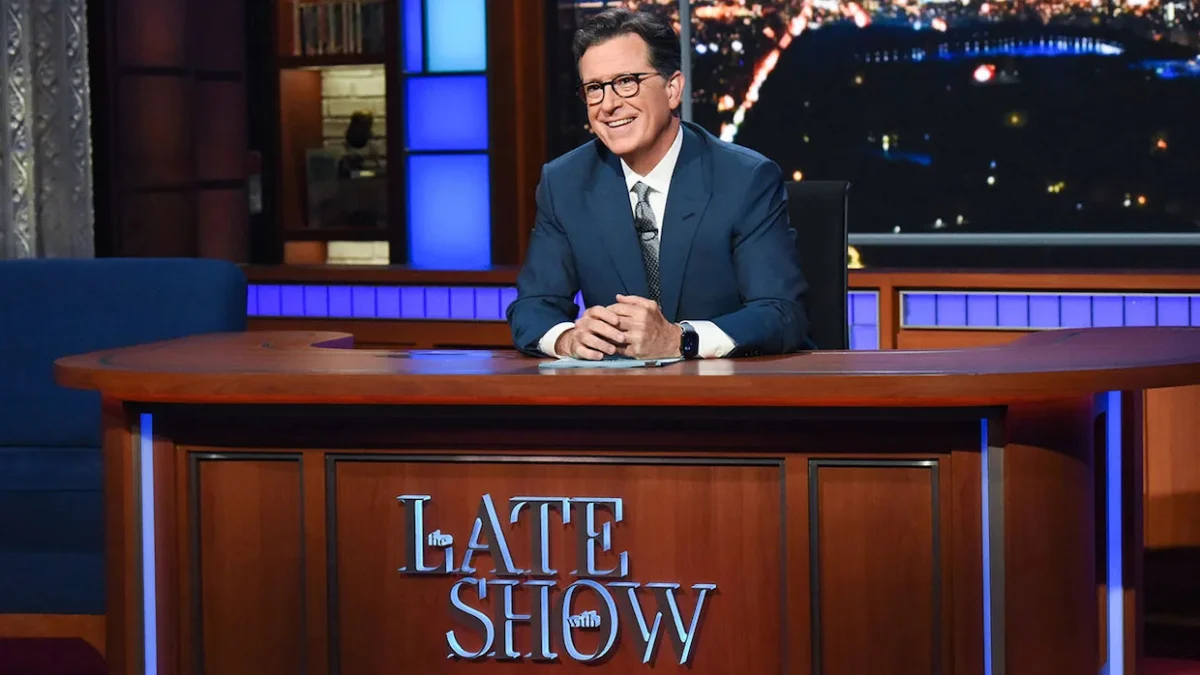
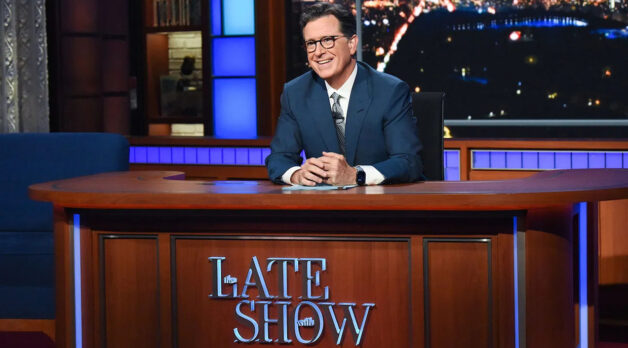
The most profound structural disruption occurred at CBS, where The Late Show with Stephen Colbert concluded its eleven-season run on May 21. The cancellation of the network cornerstone—which had occupied a vital place on the schedule for 33 years—followed the acquisition of parent company Paramount by Skydance Media, led by David Ellison. While corporate representatives cited ongoing financial losses amounting to approximately $40 million annually as the primary driver behind the cancellation, media critics and industry observers frequently highlighted Colbert’s sustained, sharp critiques of the administration and the amicable ties between the Ellison leadership and political figures.
Despite the abrupt termination, Colbert’s final season achieved historic resonance. Following its first victory in the talk series category last September, The Late Show enters the current race with significant emotional momentum. Industry analysts note that Academy voters may view the category as a final opportunity to honor Colbert’s body of work, transforming a standard competitive ballot into a referendum on his departure.
Simultaneously, ABC’s Jimmy Kimmel Live! weathered its own existential crisis in September. The program was temporarily pulled from the airwaves on September 17 amid intense pressure from regulatory bodies, specifically Federal Communications Commission Chairman Brendan Carr, following remarks made by Kimmel regarding a political figure during an opening monologue. With major broadcast groups such as Nexstar Media Group and Sinclair Broadcast Group threatening preemptions across their local affiliates, the future of the program appeared precarious.
However, an immediate public mobilization and extensive audience backlash prompted a rapid reversal. Kimmel returned to the airwaves on September 23, delivering a broadcast that drew a series-record 6.26 million linear viewers, while his returning monologue generated tens of millions of views across digital platforms. Despite being nominated in the broader variety category for twelve consecutive years, Jimmy Kimmel Live! has yet to secure a victory in the classification, positioning the program as a primary contender should voters choose to make a definitive statement regarding freedom of speech in broadcast media.
The Contenders: Analyzing the Field
Beyond the specific tumult surrounding Colbert and Kimmel, the remaining prospective nominees bring distinct institutional strengths and format advantages to the consolidated race.
Saturday Night Live continues to occupy a unique position within the ecosystem of American television. Riding the momentum of its landmark 50th-anniversary celebration, NBC’s flagship sketch institution navigated significant cast transitions during its 51st season, including the departure of fan-favorite performer Bowen Yang, who earned four individual acting nominations during his tenure. Under the guidance of creator Lorne Michaels, the program has maintained its cultural footprint by leaning into surrealist and absurdist humor, insulating itself somewhat from the direct partisan crosshairs that frequently target daily late-night talk programs. Furthermore, the successful international expansion evidenced by the debut season of SNL UK, broadcast live from London, reinforces the enduring global viability of the format.
The Daily Show represents another formidable presence in the category. Operating under a hybrid production model that features Jon Stewart anchoring Monday night broadcasts alongside a rotating collective of correspondents and guest hosts for the remainder of the week, the Comedy Central institution remains a favorite for nomination slots. Following the departure of Trevor Noah, the multi-host iteration earned a nomination last year, proving that the brand successfully retained its critical standing despite structural evolution.
Implications for the Primetime Ceremony
The convergence of these distinct formats into a single Emmy category introduces complex calculations for voting members of the Television Academy, a demographic historically characterized by progressive leanings. The ballot provides an explicit mechanism for industry professionals to register institutional solidarity with hosts who have faced corporate downsizing or political pressure.
If voters choose to prioritize narrative weight and the defense of political satire, Stephen Colbert’s final campaign for The Late Show possesses a distinct advantage, positioning the program as both a sentimental favorite and a symbolic proxy battle. Conversely, if the Academy opts to reward sustained institutional presence under duress, Jimmy Kimmel Live! stands to capture unprecedented support following its autumn scheduling crisis. Meanwhile, perennial powerhouses like Last Week Tonight with John Oliver and Saturday Night Live offer polished, structurally robust alternatives that bypass the volatile daily news cycle entirely.
As ballots are finalized ahead of the September 14 ceremony, the implications extend far beyond the conferral of a statuette. The outcome will serve as an indicator of how the television industry evaluates the intersection of art, corporate ownership, and political advocacy during a period of profound transformation for broadcast and cable media.