



The 79th Festival de Cannes concluded its annual run on the French Riviera, leaving industry critics and international trade analysts divided over its overarching artistic identity. While early festival commentary frequently characterized the 2026 edition as a transitional year lacking a singular, consensus-driven masterpiece, a deeper examination of the official selection reveals a cohesive, cumulative shift in contemporary global cinema. Rather than relying on high-stakes, nerve-wracking narratives that defined prior years, filmmakers in 2026 favored incremental emotional resonance, somatic storytelling, and quiet structural revolutions.
This year’s slate demonstrated an overarching preoccupation with geopolitical instability, shifting labor dynamics, historical reckoning, and the fragility of interpersonal communication in a digital age. From the grand competition to the sidebar sections, the festival functioned as a microcosm of global anxieties, highlighting how international auteurs are adapting their cinematic language to meet a rapidly changing world.
The Competition and Major Award Winners
The festival’s top honor, the Palme d’Or, was awarded to Cristian Mungiu for Fjord, a multilingual drama that scrutinizes the systemic overreach of Scandinavian child protective services. Mungiu’s return to the competition—nearly two decades after winning the Palme d’Or for 4 Months, 3 Weeks and 2 Days—drew intense debate among critics. While the film showcased Mungiu’s trademark technical precision and thematic focus on uncompromising solidarity, its stark critique of the modern nanny state drew comparisons to a polarized political climate, prompting discussions on the jury’s pivot toward institutional critique.
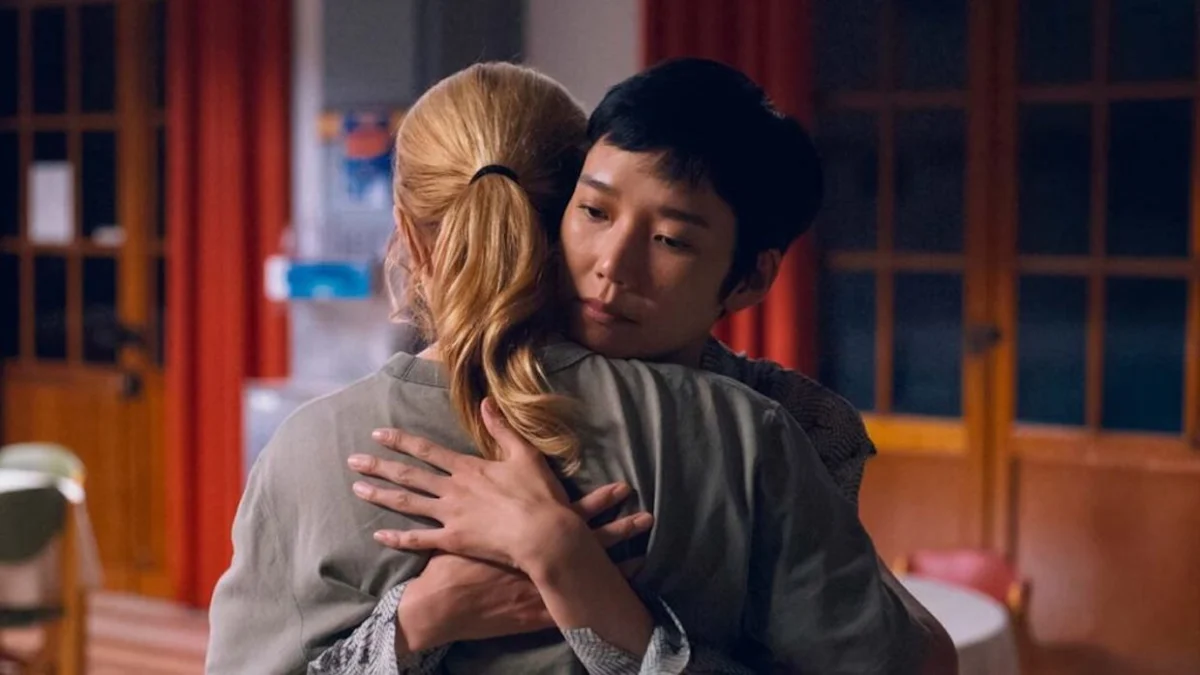
In contrast, Ryusuke Hamaguchi’s All of a Sudden explored systemic decline through an intimate, interpersonal lens. Centered on an extended dialogue between a Japanese playwright, Mari, and a French eldercare manager, Marie-Lou, the film examines chance encounters as psychological lifelines. The performances by Virginie Efira and Tao Okamoto earned them a joint Best Actress prize. The narrative’s thematic roots trace back to the intellectual correspondence between Japanese anthropologist Maho Isono and late philosopher Makiko Miyano, grounding the fiction in contemporary philosophical discourse surrounding mortality and global exhaustion.
Historical Reverberations and Period Dramas
History and its repeating cycles formed a major pillar of the 2026 competition, with several period features drawing explicit parallels to contemporary sociopolitical landscapes.
Pawel Pawlikowski returned with Fatherland, an austere road movie following writer Thomas Mann (Hanns Zischler) and his daughter Erika Mann (Sandra Hüller) during the author’s 1949 speaking tour across divided Germany. Pawlikowski’s minimalist approach compressed profound postwar philosophical questions into a sleek, fast-paced narrative, using 19th-century Enlightenment principles to interrogate the rising tide of European authoritarianism.

Simultaneously, Emmanuel Marre’s A Man of His Time utilized hard-lit 16mm cinematography to immerse viewers in the moral degradation of a municipal bureaucrat in Nazi-occupied Vichy France. Based on archival letters written by Marre’s great-grandfather and starring Swann Arlaud, the film served as a stark examination of complicity, bureaucratic fascism, and the banality of evil.
Breakthrough Debuts and Sidebar Recognition
While the main competition attracted considerable media attention, the festival’s sidebar selections and debut features provided some of the most critically praised cinematic discoveries of the year.
In the Critics’ Week section, Marine Atlan’s debut feature, La Gradiva, emerged as a critical darling. Filmed on location in Pompeii, the film follows a group of French students on a school excursion, observing adolescent psychology with precise, empathetic framing. The project secured immediate North American distribution through 1-2 Special, underscoring the commercial viability of independent first-time features outside the traditional main competition hierarchy.
The prestigious Camera d’Or for best debut feature was awarded to Clarissa, a post-colonial reinterpretation of Virginia Woolf’s Mrs. Dalloway directed by Nigerian filmmakers Arie and Chuko Esiri. By infusing the modernist text with a sharp critique informed by the literary theories of Chinua Achebe, the sibling directing duo expanded the geographical and cultural boundaries of adaptation.
In the Un Certain Regard section, Sandra Wollner’s Everytime captured the top prize. Shot by cinematographer Gregory Oke with a distinctive spatial intimacy and layered sound design, the film investigated the unpredictable trajectories of human grief. Meanwhile, Jane Schoenbrun’s Teenage Sex and Death at Camp Miasma opened the sidebar with a high-concept, parasocial exploration of desire, further cementing Schoenbrun’s position as a singular voice in contemporary genre-adjacent cinema.
Geopolitical Statements and Closing Sentiments
True to the Festival de Cannes’ history as a platform for political discourse, the 2026 edition concluded with pointed statements from its laureates. Andrei Zvyagintsev, accepting the Grand Prix for Minotaur—his first feature in nearly a decade—delivered an impassioned public appeal directly addressing the ongoing war in Ukraine. Filmed in Latvia, Minotaur adapts Claude Chabrol’s The Unfaithful Wife into a critique of contemporary Russian corruption, demonstrating the enduring utility of genre adaptation for political dissent.
Despite initial reservations from critics regarding the festival’s star power and perceived absence of an overarching artistic consensus, the 2026 edition ultimately solidified its place as a robust showcase for international authorship. By prioritizing films that build emotional and structural momentum over immediate spectacle, Cannes reaffirmed its commitment to challenging, reflective storytelling that resonates long after the festival curtains close.