The global release of Christopher Nolan’s latest cinematic epic, The Odyssey, on July 17, 2026, has not only captivated audiences worldwide with its grand narrative and immersive visuals but has also brought renewed attention to the intricate, often unseen, artistry of 70mm film projection. Filmed entirely on 70mm IMAX film and presented in this premium format across select cinemas, the film stands as a testament to Nolan’s unwavering commitment to celluloid, simultaneously shining a spotlight on the dedicated professionals who ensure these monumental prints grace the silver screen. In the wake of the film’s debut, a revealing video by YouTuber and seasoned projectionist "Radioactive Drew" has offered an unprecedented look into the meticulous process of assembling, rigging, and projecting a 70mm film print, underscoring the craft’s complexity and its enduring relevance in a largely digital age.
The Odyssey: A New Benchmark for Cinematic Immersion
Christopher Nolan, a director synonymous with pushing the boundaries of cinematic experience, chose The Odyssey as his next canvas for the 70mm IMAX format, a decision that has become a hallmark of his most ambitious projects. Following the critical and commercial success of Oppenheimer, Dunkirk, and Interstellar, all of which prominently featured large-format film, The Odyssey was destined to be an event. The film recounts the legendary journey of Odysseus (portrayed by Matt Damon), the cunning Greek king of Ithaca, as he navigates a treacherous path home after the fall of Troy. His epic odyssey is fraught with encounters with mythical creatures, from the monstrous Cyclops Polyphemus to the seductive Sirens and the powerful witch-goddess Circe, all culminating in his long-awaited, poignant reunion with his wife, Penelope.
Nolan’s adaptation, penned by himself from Homer’s iconic ancient Greek epic poem, promised a visual and auditory spectacle. The choice of 70mm film, particularly the 70mm IMAX variant, is central to this promise. This format offers unparalleled resolution, dynamic range, and a depth of field that digital projection, despite its advancements, struggles to replicate. Cinematographer Hoyte van Hoytema, a frequent collaborator with Nolan, was once again behind the camera, meticulously crafting each frame to exploit the expansive canvas of the 70mm medium. Complementing the visual grandeur is the score by Oscar-winning composer Ludwig Göransson, whose previous work on Nolan’s films has demonstrated a profound understanding of how music can elevate the immersive qualities of large-format cinema. Produced by Emma Thomas and Christopher Nolan through their company Syncopy, and distributed by Universal Pictures, The Odyssey was positioned not just as a movie, but as a definitive cinematic experience. Its July 17, 2026 release was meticulously planned to maximize its impact, coinciding with the peak summer movie season and drawing cinephiles eager for an authentic, large-format presentation.
Behind the Screen: The Intricate Art of 70mm Projection

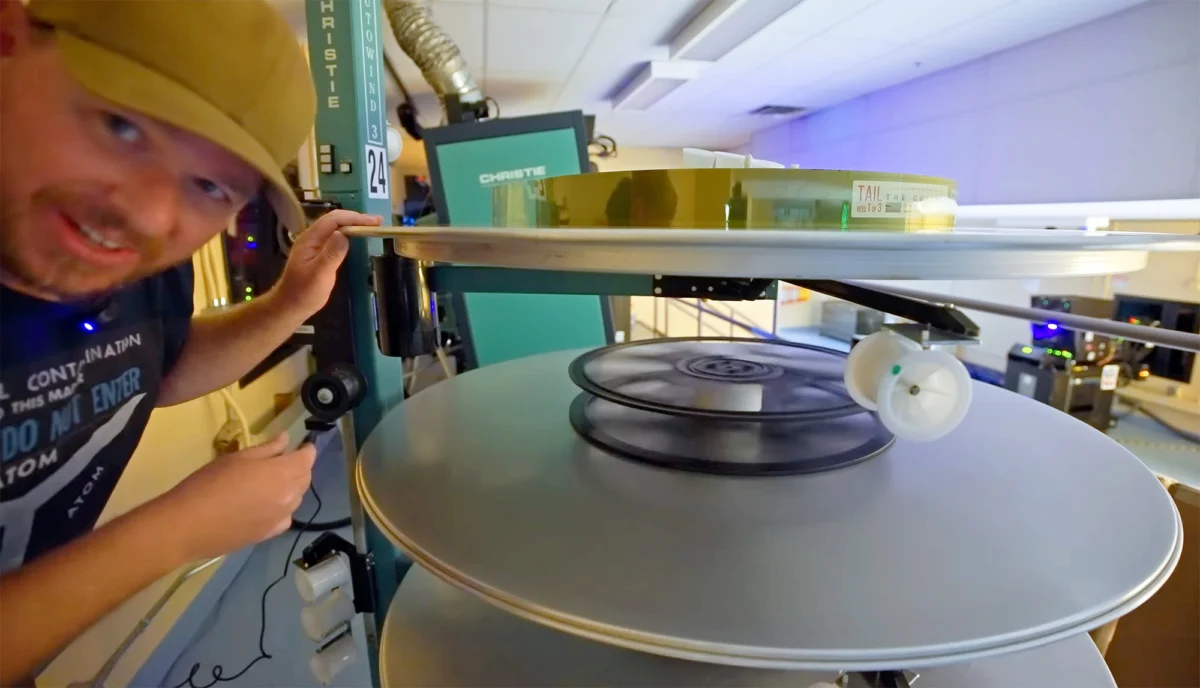
The decision to present The Odyssey in 70mm globally necessitates a robust, albeit specialized, infrastructure of cinemas equipped with the requisite projectors and highly skilled projectionists. It is this rarely seen aspect of filmmaking that "Radioactive Drew," a projectionist at the Regal Bridgeport Village in Tigard, Oregon, illuminated in his viral video. Drew, known for his unconventional explorations of radioactive locations, peeled back the curtain on his "other" profession, providing a detailed walkthrough of preparing a 70mm film print for screening. His video, a homemade yet profoundly informative piece, captures the essence of a craft that many in the digital age might mistakenly believe to be obsolete.
The process detailed by Drew is far from trivial. It begins with the delivery of the film print, which, for a feature-length film like The Odyssey, arrives in multiple large reels, often weighing hundreds of pounds. Unlike the digital age where a film arrives on a small hard drive, a 70mm print is a tangible, physical entity. Drew demonstrates the laborious task of "building the print" – meticulously splicing together these individual reels onto massive platters. These platters, often six feet in diameter, are designed to hold the entire film, allowing it to run continuously without the need for reel changes during the show. This assembly requires immense precision; even a slight misalignment or a poorly executed splice can lead to visible jumps or tears during projection, marring the audience’s experience.
Once the film is consolidated onto the platter, the next critical step is rigging it for the projector. Drew guides viewers through the intricate path the film must take – through various rollers, tension arms, sound heads, and ultimately, the projector gate. He then threads the film through the Christie 70mm film projector, a robust piece of machinery that represents a significant investment for any cinema. The threading process itself is a delicate dance, demanding a thorough understanding of the projector’s mechanics and an almost surgical touch. A single misstep can result in a damaged film, leading to costly repairs and potential disruption of screenings. The constant refrain, "Those scratches never, ever go away," echoed by projectionists, serves as a stark reminder of the film’s fragility and the immense responsibility placed upon its handlers.
The Projectionist: Unsung Heroes of the Cinematic Experience
The profession of a film projectionist, particularly one skilled in 70mm, represents a specialized niche in the modern cinematic landscape. With the widespread adoption of digital cinema projection (DCP) over the past two decades, the demand for traditional projectionists dramatically declined. Digital projection, while offering convenience, consistency, and reduced logistical overhead, lacks the hands-on, artisanal quality inherent in film projection. The digital transition led to the closure of many projection booths and the retirement of countless experienced projectionists, making the current cadre of 70mm specialists a rare and invaluable resource.
For a film like The Odyssey, the availability of such skilled individuals is paramount. The meticulousness demonstrated by Radioactive Drew is not an anomaly but a standard for this craft. A projectionist must possess not only technical acumen but also an acute sensory awareness – listening for subtle changes in the projector’s hum, watching for any deviation in the film’s path, and even smelling for potential overheating. They are the final gatekeepers of the filmmaker’s vision, ensuring that the image and sound are presented exactly as intended. Nolan himself has often lauded the dedication of projectionists, recognizing their critical role in delivering the full impact of his large-format productions. Inferred statements from industry veterans suggest that a resurgence in 70mm releases has created a minor, yet significant, demand for training new projectionists, passing down knowledge that was on the verge of being lost. This revival also highlights the significant financial commitment required from cinemas, not only for the projectors themselves, which can cost hundreds of thousands of dollars, but also for ongoing maintenance, parts, and the skilled labor to operate them.

The Broader Context: Nolan’s Advocacy and the Future of Film
Christopher Nolan has been a vocal proponent of film preservation and the celluloid experience for years. His persistent use of large-format film, often at considerable logistical and financial expense, is not merely a stylistic choice but a philosophical stance. He views film as a superior medium for capturing and presenting images, arguing that its organic nature and higher resolution provide a richer, more immersive experience than digital. This advocacy has been instrumental in keeping 70mm and IMAX film relevant in an era dominated by digital formats.
The journey of a 70mm print from studio to screen is a complex logistical ballet. After the film is shot and edited, the negative is sent to a specialized lab for printing. Each 70mm print is a unique, physical artifact, produced through a photochemical process. These prints are then carefully packaged and shipped to equipped cinemas globally. Given their size, weight, and fragility, transportation and handling require specialized care to prevent damage. Upon arrival at the cinema, the projectionist takes over, assembling and preparing the print, as demonstrated by Drew. This entire chain of custody, from creation to projection, is a testament to the collaborative effort required to bring a large-format film to life.
The impact of The Odyssey extends beyond its box office performance. It reinforces the notion that there is a significant audience appetite for premium, immersive cinematic experiences that transcend what can be achieved at home. In an era of ubiquitous streaming, films like The Odyssey, presented in 70mm, serve as a powerful argument for the communal, theatrical event. This trend aligns with broader industry efforts to differentiate the cinema experience through premium large formats (PLFs) such as IMAX, Dolby Cinema, and other specialized auditoriums. While digital PLFs offer stunning visuals and sound, the unique aesthetic and historical gravitas of 70mm film maintain a distinct appeal for discerning cinephiles.
Furthermore, Nolan’s dedication to 70mm fuels a quiet but important movement in film preservation. As digital archival becomes the norm, the physical film print remains a robust, long-term storage medium that does not suffer from format obsolescence in the same way digital files might. The continued production and exhibition of 70mm films contribute to maintaining the infrastructure, expertise, and appreciation for this historical and artistic medium.
Implications for the Industry and Audiences

The success of The Odyssey and the widespread interest in videos like Radioactive Drew’s signal several key implications for the film industry. Firstly, it reaffirms that quality and unique experiences can still draw audiences to cinemas, even for complex, lengthy features. Secondly, it underscores the value of the "event" film – a movie that warrants a pilgrimage to a specific type of cinema to be fully appreciated. This could encourage other filmmakers, particularly those with a strong visual style, to explore large-format film, albeit within niche parameters given the high costs and limited exhibition capabilities.
For audiences, the 70mm presentation of The Odyssey offers a chance to engage with cinema on a deeper, more visceral level. The sheer scale, the visible grain of the film, and the occasional, almost romantic, flicker that distinguishes film from digital, all contribute to a unique viewing experience. It’s an opportunity to connect with the art form in its most authentic, uncompressed state, reminding viewers of the magic that first drew them to the movies.
In conclusion, Christopher Nolan’s The Odyssey is more than just a film; it is a cultural phenomenon that has reignited conversations about the art and science of filmmaking and exhibition. By embracing the grandeur of 70mm film, Nolan has not only delivered an epic narrative but has also inadvertently championed the unsung heroes of the projection booth. The viral attention garnered by projectionists like "Radioactive Drew" highlights the enduring human element in an increasingly automated world, celebrating a craft that is both technically demanding and profoundly artistic. As The Odyssey continues its global run, it serves as a powerful reminder that while technology evolves, the timeless allure of celluloid and the dedication of those who bring it to life will always hold a special place in the heart of cinema.