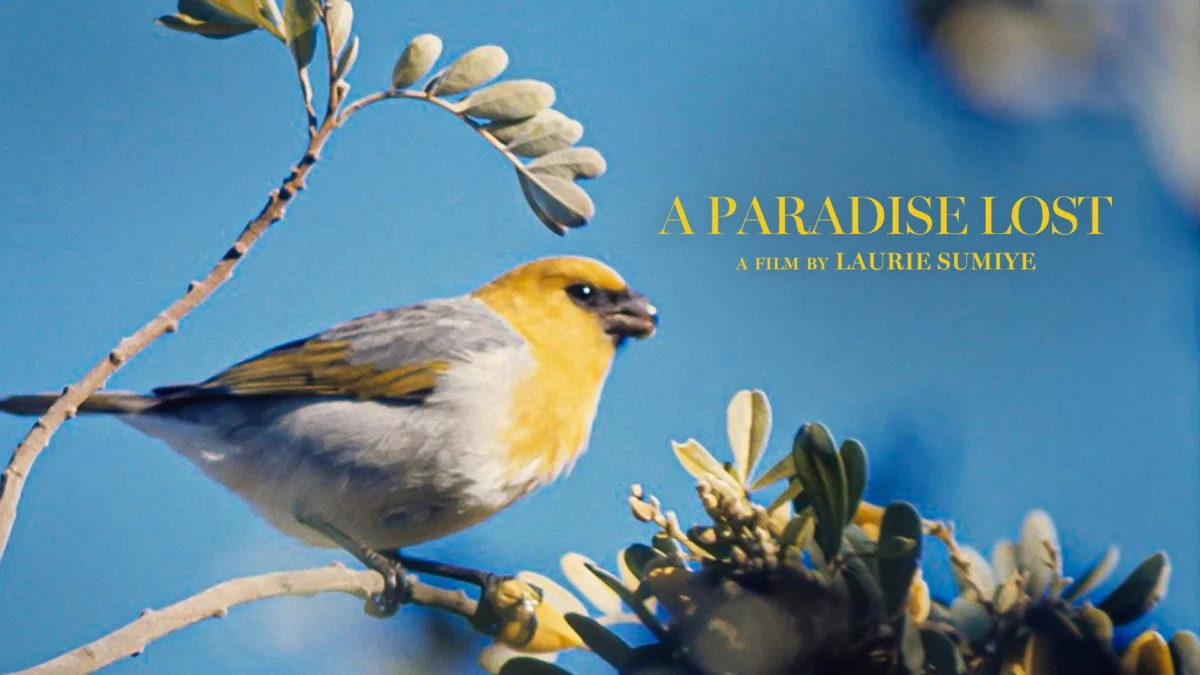
A groundbreaking documentary film, A Paradise Lost, is set to bring to the forefront the compelling and historically significant struggle of the Palila bird, a critically endangered Hawaiian honeycreeper, through its theatrical release on July 31st, 2026, followed by a PBS debut later this year. Directed by Hawaiian nature artist Laurie Sumiye, the film delves into the unprecedented 1979 landmark lawsuit, Palila v. Hawaii Department of Land and Natural Resources, where an endangered animal, represented by a stuffed specimen in court, symbolically sued humans to prevent its extinction. This powerful narrative, woven with a blend of interviews, archival footage, vérité filmmaking, and evocative animation, promises to offer a unique perspective on conservation, ecological justice, and the intricate web of life on Hawaii Island, often referred to as the "Bird Extinction Capital of the World."
The Genesis of a Legal Landmark: Palila v. Hawaii
At the core of A Paradise Lost is the retelling of Palila v. Hawaii Department of Land and Natural Resources, a case that fundamentally redefined the application and scope of the Endangered Species Act (ESA) of 1973. Filed by the Sierra Club Legal Defense Fund on behalf of the Palila (scientific name: Loxioides bailleui), the lawsuit targeted the State of Hawaii for its management of populations of feral sheep and goats on the slopes of Mauna Kea on Hawaii Island. These introduced ungulates were severely degrading the critical mamane-naio forest ecosystem, which constitutes the Palila’s sole remaining habitat. The legal argument hinged on the premise that the state’s promotion of hunting for these non-native game animals directly contributed to the destruction of the Palila’s habitat, thereby constituting a "taking" under the ESA, which prohibits any act that harms an endangered species, including habitat modification.
The court proceedings were notable for the literal presence of a taxidermied Palila bird, which served as the lead plaintiff, symbolizing the voiceless species fighting for its very existence. In a monumental ruling in 1979, the U.S. District Court found in favor of the Palila, mandating the removal of feral sheep and goats from its critical habitat on Mauna Kea. This decision was a watershed moment, affirming that habitat destruction caused by introduced species falls under the purview of the ESA’s "take" prohibition, even if the destruction is not direct and immediate. It set a critical precedent, establishing that government agencies have an affirmative duty to protect endangered species and their habitats, even against competing interests such as recreational hunting.
Hawaii’s Fragile Ecosystem: A History of Vulnerability
Hawaii’s unique biodiversity, characterized by a high degree of endemism, stems from its extreme isolation in the Pacific Ocean. Over millions of years, species evolved in the absence of many predators and competitors found on continental landmasses, leading to highly specialized and often vulnerable ecological niches. This isolation, however, also made the islands exceptionally susceptible to the impacts of introduced species. Since human arrival, particularly following European contact in the late 18th century, Hawaii has experienced an unparalleled rate of species extinction, earning it the grim title of the "Extinction Capital of the World."

The introduction of non-native ungulates, such as feral sheep (Ovis aries), mouflon sheep (Ovis aries orientalis), and feral goats (Capra hircus), has been particularly devastating. Brought to the islands for food, fiber, or sport, these animals quickly proliferated in the absence of natural predators. Their voracious grazing habits and destructive trampling profoundly altered native forest ecosystems. The mamane (Sophora chrysophylla) and naio (Myoporum sandwicense) forests of Mauna Kea, the Palila’s lifeline, were particularly vulnerable. Mamane seeds are the primary food source for the Palila, and the trees themselves provide nesting sites. As sheep and goats consumed young mamane and naio seedlings, they prevented forest regeneration, effectively shrinking the Palila’s habitat and severing its food supply, pushing the bird to the brink of annihilation. Historical data indicates that prior to significant human impact, the Palila inhabited much larger areas of dry forest across Hawaii Island. By the mid-20th century, its range had dwindled dramatically, coinciding with the proliferation of these introduced grazers.
A Decade in the Making: The Filmmaker’s Vision and Narrative Approach
Filmmaker Laurie Sumiye, a Hawaiian nature artist, has dedicated a decade to bringing the story of the Palila and its enduring struggle to the screen. A Paradise Lost marks Sumiye’s feature film directorial debut, building upon a body of work that often explores environmental themes through art. Her deep connection to the Hawaiian landscape and its unique challenges is evident in the film’s approach. Sumiye employs a multifaceted narrative style, integrating intimate interviews with key figures, extensive archival footage that transports viewers back to the era of the lawsuit, vérité moments capturing the current conservation efforts, and distinctive animation. This animated component is particularly innovative, giving voice to the non-human perspectives of nature, allowing the Palila itself to "weave an epic tale" as the first animal to sue humans.
The film features compelling insights from individuals deeply involved in the Palila’s story and broader Hawaiian conservation. Kalā Lindsey-Asing, a cultural practitioner, likely provides an indigenous perspective on the stewardship of the land, the cultural significance of native species, and the intergenerational impact of ecological degradation. Michael Sherwood, potentially a biologist or conservationist, and Marjorie Ziegler, a prominent environmental advocate (known for her work with the Conservation Council for Hawaii), offer expert analysis and firsthand accounts of the challenges and triumphs in the fight to save native species. Kaipo Schwab lends his voice as the voice of ‘Ānuenue, presumably a symbolic representation within the film’s animated sequences, further enriching the non-human narrative.
Sumiye’s stated goal is to present a "timely fable" from a region grappling with the most severe biodiversity crisis globally, making the plight of the Palila a microcosm for the universal struggle against extinction. The poetic weaving of non-human perspectives, alongside interconnected stories of life, death, rebirth, and recovery, seeks to evoke empathy and understanding for the natural world, prompting viewers to confront the fundamental question posed in the trailer: "What species has the right to exist?"
The Legal Landscape: Strengthening the Endangered Species Act
The victory in Palila v. Hawaii had profound and lasting implications for environmental law in the United States. It solidified the understanding that habitat modification, even if indirect, constitutes a "taking" under Section 9 of the ESA. This interpretation vastly expanded the reach and effectiveness of the Act, providing a more robust legal framework for protecting endangered species beyond direct harm. Subsequent legal challenges and rulings continued to reinforce this precedent. For instance, the Hawaii Department of Land and Natural Resources (DLNR) faced ongoing legal battles and pressure to comply with the court orders to remove ungulates from critical Palila habitat. These legal skirmishes highlighted the persistent tension between conservation mandates and entrenched interests, including those of the hunting community.

Legal scholars often cite Palila v. Hawaii as a foundational case that demonstrated the power of citizens and environmental organizations to enforce federal environmental laws. It empowered conservation groups to utilize litigation as a crucial tool to compel state and federal agencies to fulfill their responsibilities under the ESA. The case also brought into sharp focus the complex administrative and ecological challenges involved in managing invasive species and restoring degraded ecosystems on a large scale.
Conservation in Action: Ongoing Efforts and Emerging Threats
Despite the landmark legal victory, the struggle for the Palila’s survival remains an ongoing battle. The removal of feral ungulates from Mauna Kea’s dry forests has been a continuous and resource-intensive effort, involving extensive fencing and eradication programs. While these efforts have allowed for some regeneration of the mamane-naio forest, the recovery is slow, requiring decades for the ecosystem to regain its former resilience.
The Palila population, though no longer facing the immediate threat of habitat destruction by ungulates in its core range, continues to be critically endangered. Estimates place the current population at a few thousand individuals, a fraction of historical numbers. Conservation efforts now extend beyond ungulate control to include active reforestation programs, reintroducing native mamane and naio seedlings to accelerate habitat recovery. Scientists are also engaged in captive breeding programs and exploring potential translocation efforts to establish new Palila populations in suitable, protected habitats, recognizing the vulnerability of having the entire population confined to a single, albeit protected, area.
However, new and formidable threats have emerged, underscoring the dynamic nature of conservation challenges. Climate change poses a significant long-term risk to the Palila. Increased frequency and intensity of droughts can stress the mamane trees, impacting seed production and water availability. Altered fire regimes, exacerbated by the presence of invasive grasses that dry quickly, present a constant danger to the already fragile dry forest ecosystem. Furthermore, avian malaria, spread by introduced mosquitoes, is a pervasive threat to native Hawaiian birds. While the Palila’s high-elevation habitat has historically offered some refuge from mosquitoes, warming temperatures could allow mosquitoes to expand their range upslope, exposing the Palila to this deadly disease. These compounding threats necessitate adaptive management strategies and sustained vigilance from conservationists.
Cultural Resonance and a Call to Action
A Paradise Lost transcends the boundaries of a simple environmental documentary; it delves into the profound ethical questions surrounding humanity’s role as stewards of the planet. The film’s exploration of the Palila’s plight resonates deeply with indigenous Hawaiian perspectives on mālama ‘āina—caring for the land—and the interconnectedness of all living things. The cultural narrative woven into the film, potentially through figures like Kalā Lindsey-Asing, emphasizes that the health of the land, the forests, and the native birds is intrinsically linked to the well-being of the Hawaiian people and their cultural identity. The destruction of native ecosystems is not merely an ecological loss but a cultural impoverishment.

By bringing this decades-long struggle to a wider audience, Sumiye’s film aims to foster a deeper appreciation for Hawaii’s unique natural heritage and inspire action. The story of the Palila is a powerful reminder that conservation is not a finite project but an ongoing commitment requiring sustained effort, legal vigilance, scientific innovation, and community engagement. The film’s message extends beyond the specific case of the Palila, serving as a cautionary tale and a call to action for other endangered species and ecosystems worldwide facing similar threats from habitat loss, invasive species, and climate change. It challenges viewers to consider their own responsibilities toward the natural world and to contemplate the enduring question of what species have the right to exist, and what collective efforts are required to secure that right.
Release and Accessibility
After its premiere at the 2025 Hawai’i Film Festival, A Paradise Lost is poised for a significant release schedule. It will debut in select U.S. theaters starting on July 31st, 2026, offering audiences a cinematic experience of this vital story. Following its theatrical run, the documentary will reach a broader audience through its broadcast on PBS later the same year, ensuring accessibility for viewers across the nation. Further details and resources, including opportunities to engage with the film’s message, can be found on its official website, aparadiselostmovie.com.
In conclusion, A Paradise Lost is more than a historical account; it is a poignant and urgent narrative for our times. Through its compelling storytelling and unique blend of artistic and journalistic approaches, Laurie Sumiye’s documentary stands as a testament to the resilience of nature, the power of legal advocacy, and the enduring human responsibility to protect the planet’s irreplaceable biodiversity. It invites audiences to reflect on the legacy of Palila v. Hawaii and to consider their role in shaping a future where all species, great and small, can thrive.