


The 1970s marked a pivotal decade for actor Tomisaburo Wakayama, a period defined by his indelible portrayal of Itto Ogami in the immensely popular cult classic "Lone Wolf and Cub" film series. However, the groundwork for this iconic role was meticulously laid years prior through his gripping performance as Shikoro Ichibei, the titular bounty hunter and physician. In 1972, the same year that witnessed the cinematic release of "Lone Wolf and Cub: Sword of Vengeance," Wakayama delivered his final, commanding appearance as the morally ambiguous Shikoro Ichibei in "Eight Men to Kill." This installment also signaled the return of director Shigehiro Ozawa to the helm of the "Bounty Hunter" franchise, steering it towards a conclusion that leaned heavily into the grittier, more visceral aspects of its narrative.
"Eight Men to Kill" stands as a stark departure from the relatively heroic tone of its predecessor, "The Fort of Death" (1969). Instead, it embraces a significantly bleaker, more violent, and overtly exploitative aesthetic, a deliberate choice that mirrors the increasingly perilous and morally compromised "path of hell" trodden by Wakayama’s shogun executioner. Despite this intensified darkness, the film masterfully synthesizes the strengths of the preceding entries, offering a deeply satisfying, albeit unsettling, conclusion to the trilogy. It is widely regarded as showcasing Wakayama’s most nuanced and compelling performance as Shikoro Ichibei, solidifying his legacy in this complex character.
The Genesis of a Cult Icon: Wakayama and the "Bounty Hunter" Series
Tomisaburo Wakayama, born in 1932, emerged from a family deeply entrenched in the Japanese film industry, with his elder brother, actor Kenjiro Sano, and his son, actor Takao Hori, also making their marks. Wakayama’s own career spanned decades, but it was his foray into the "Bounty Hunter" series, and subsequently "Lone Wolf and Cub," that cemented his international fame. The "Bounty Hunter" trilogy, comprising "The Fort of Death" (1969), "Killer’s Mission" (1969), and "Eight Men to Kill" (1972), served as a crucial crucible for the character of Shikoro Ichibei and Wakayama’s interpretation of a stoic, highly skilled, yet often morally compromised warrior.
The initial film, "The Fort of Death," established the character as a physician struggling to make ends meet, forced into bounty hunting to support his family. This premise offered a compelling blend of action and pathos. "Killer’s Mission," directed by the prolific Shigehiro Ozawa, delved further into the darker aspects of Ichibei’s profession and the corrupt world he inhabited. By 1972, with "Eight Men to Kill," Ozawa returned to guide the narrative, and the franchise reached its thematic and tonal apex, pushing the boundaries of violence and narrative complexity. The release of "Lone Wolf and Cub: Sword of Vengeance" in the same year, adapted from Kazuo Koike and Goseki Kojima’s manga, marked Wakayama’s ascendancy to global stardom, with Itto Ogami often seen as a spiritual successor to the complexities explored in the "Bounty Hunter" films.
Plotting the Descent: The Narrative of "Eight Men to Kill"
"Eight Men to Kill" finds Shikoro Ichibei (Tomisaburo Wakayama) in a familiar predicament: his medical clinic, while a testament to his healing profession, is a financial liability. This dire economic reality compels him to reluctantly accept bounty hunting assignments to sustain his practice. The plot is set in motion when the Tokugawa shogunate commissions him for a particularly lucrative task: the recovery of a significant shipment of stolen gold from a notorious group of bandits. The substantial reward proves too tempting to decline, especially given Ichibei’s financial straits. However, the mission comes with a critical time constraint; he must retrieve the gold before an impending solar eclipse, a deadline that leaves little room for thorough investigation and offers ample opportunity for unforeseen complications.
As Ichibei embarks on his perilous journey into the mountains where the bandit leader is believed to be hiding, the narrative swiftly unravels into a complex tapestry of political intrigue and personal vendettas. Omon (Noriko Maki), the enigmatic owner of a local inn, proves to be a pivotal, manipulative figure. She seduces one of the bandits, aiming to seize the gold for herself, thus introducing a layer of duplicity and personal ambition into the hunt. Simultaneously, the treacherous samurai Yajuro (Shigeru Amachi) orchestrates a scheme against Ichibei. He dispatches his own men to eliminate the bounty hunter and intends to frame him for fabricated crimes, further complicating Ichibei’s already precarious situation. Adding another layer of conflict is Tatsu (Minoru Oki), a character driven by years of exploitation under the shogunate, who harbors his own aspirations to claim the treasure for himself. Caught in this intricate web of deceit and betrayal, with enemies emerging from every direction, Ichibei is forced to rely not only on his formidable combat skills but also on his sharp intellect and resourcefulness to navigate the treacherous landscape and survive.
Thematic Resonance: Pessimism and the Corrosive Power of Greed
While the earlier film in the trilogy, "The Fort of Death," explored themes with a more universally relatable resonance, "Eight Men to Kill" delves into considerably more pessimistic territory. The pervasive darkness that permeates the film is not merely an aesthetic choice; it serves as a potent reflection of a world where even those striving to act virtuously find themselves rendered powerless against the overwhelming forces of violence and systemic injustice. The narrative’s somewhat circuitous opening effectively establishes the vital role of gold, sourced from two key mines, as the economic lifeblood of the shogunate. This financial dependency forms the bedrock of the intricate network of betrayal and manipulation that soon ensnares Ichibei.
Throughout his arduous journey, Ichibei repeatedly encounters individuals whose motivations are clearly distorted by avarice, a phenomenon he memorably encapsulates with the observation that they are "distorted with gold fever." This stark commentary on the corrosive nature of greed underscores the film’s bleak outlook. The shocking and unflinching finale, a hallmark of Ozawa’s uncompromising directorial vision, reinforces this pessimism, arguably surpassing even the grimness witnessed in "Killer’s Mission" (1969). The film unflinchingly portrays a world where moral compromise is not just a possibility but an inevitability, and where the pursuit of wealth can lead to utter moral bankruptcy.
Wakayama’s Masterful Performance: The Anti-Hero’s Evolution
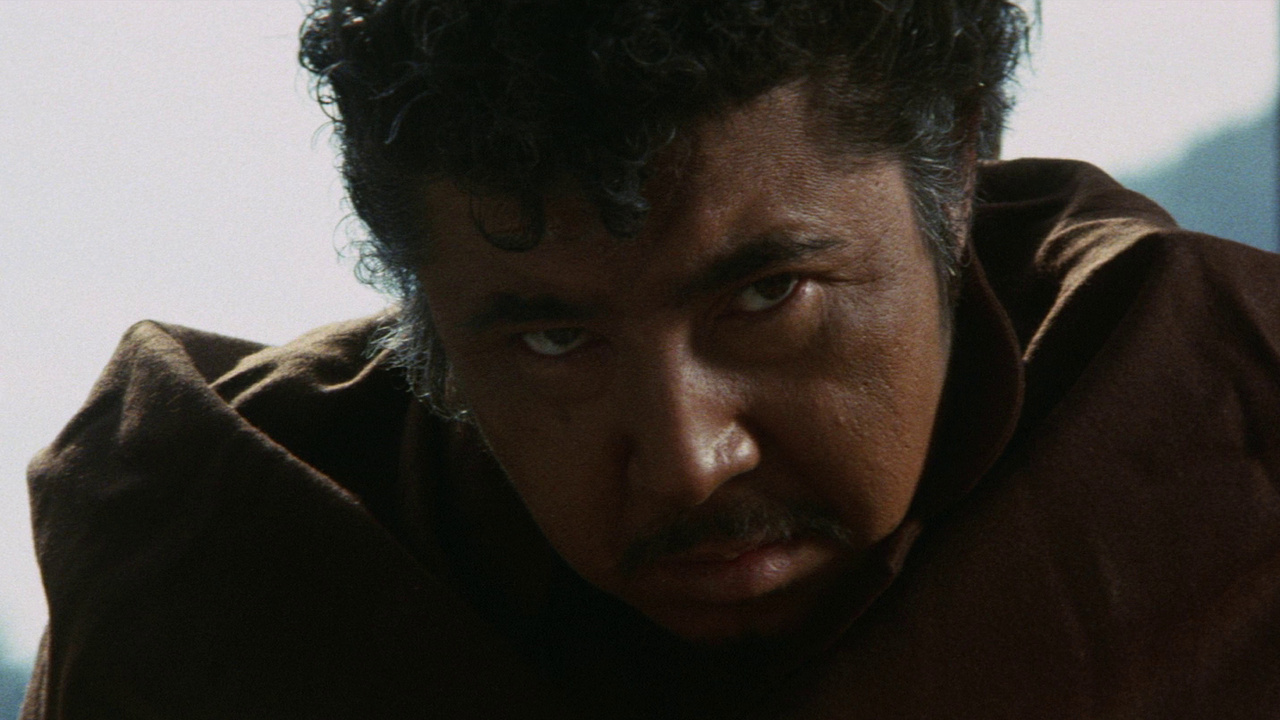
Tomisaburo Wakayama delivers a multifaceted performance as Shikoro Ichibei in "Eight Men to Kill," presenting a nuanced evolution of the character. His third and final portrayal benefits immensely from his deepening familiarity with the role and his extensive experience with similar complex characters. This allows him to expertly balance Ichibei’s inherent compassion with his often unpredictable and ruthlessly pragmatic nature. Wakayama achieves this through a potent combination of sheer charisma and remarkable restraint, making Ichibei a compelling and unforgettable figure.
A particularly striking example of this balance is evident in Ichibei’s intimate scene with Omon. The sequence, which includes more explicit moments, is artfully intercut with imagery inspired by traditional Japanese erotic art, known as shunga. This stylistic choice adds a layer of artistic sophistication to the scene while also reflecting the underlying sensuality and potential danger of the encounter. Ichibei, despite his astute understanding of the duplicitous intentions of those offering him assistance, cannot resist the allure of the "hell of lust" that Omon presents. This scene encapsulates his internal conflict, showcasing his capacity for both deep suspicion and human desire.
Furthermore, Wakayama’s performance consistently highlights Ichibei’s enduring compassion for the vulnerable and disenfranchised. This is poignantly illustrated when he reflects on how even a small portion of the missing gold could significantly improve the lives of ordinary people. Yet, he remains the quintessential resourceful bounty hunter, possessing the uncanny ability to survive seemingly insurmountable odds. This survival is often facilitated by his impressive arsenal of ingenious gadgets, a signature element of the series that returns in "Eight Men to Kill" with satisfyingly visceral and bloody effect, underscoring the film’s commitment to its action roots.
A Fitting, Uncompromising Conclusion
"Eight Men to Kill" undeniably provides a fitting and powerful conclusion to the "Bounty Hunter" trilogy. It successfully synthesizes the distinct strengths of its predecessors, creating a cohesive and impactful cinematic experience. The film marks Shigehiro Ozawa’s adept return to the franchise, re-embracing the darker atmosphere and exploitation elements that had defined its earlier iterations. This directorial vision, combined with Tomisaburo Wakayama’s finest performance as Shikoro Ichibei, creates a definitive cinematic statement. Wakayama’s portrayal perfectly encapsulates the character’s complex duality, artfully balancing his heroic qualities with the unpredictable darkness that has always been an intrinsic part of his identity. The film stands as a testament to the enduring appeal of the samurai and ronin genre, offering a gritty, mature, and ultimately unforgettable exploration of honor, greed, and survival in a brutal world. The legacy of "Eight Men to Kill" is intrinsically linked to its willingness to confront the darker aspects of human nature and the corrupt systems that perpetuate them, solidifying its place as a significant entry in the annals of Japanese exploitation cinema.