Eighteen years after the groundbreaking animated series concluded its run, the highly anticipated cinematic feature, "Avatar Aang: The Last Airbender," has finally premiered, albeit after a protracted and challenging development path. This animated film, which was initially slated for a theatrical release and prominently showcased at industry events like CinemaCon, underwent a significant strategic shift, ultimately finding its home on the Paramount+ streaming platform. This decision, made by Paramount Pictures, surprised many given the enduring popularity of the "Avatar" franchise and the robust box office performance of animated features in recent years. The film’s journey was further complicated by an unfortunate complete leak earlier this year. Despite these considerable hurdles, "Avatar Aang: The Last Airbender" emerges as a testament to dedication and passion, presenting a visually stunning experience that effectively captures the spirit of its source material, making the return to Aang’s world a worthwhile endeavor for dedicated fans.
A Legacy Rekindled: Plot and Character Continuity
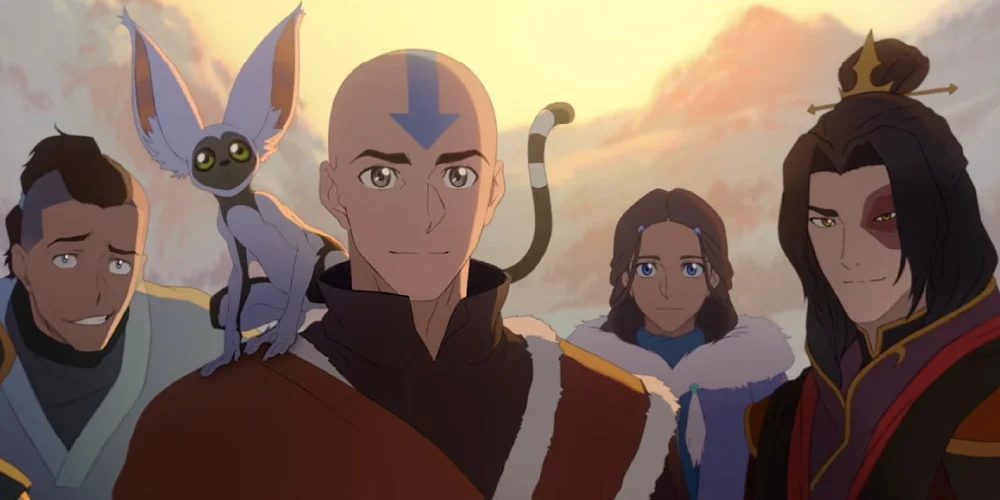
While "Avatar Aang: The Last Airbender" is designed as a continuation, the narrative thoughtfully incorporates a concise recap, ensuring that viewers unfamiliar with the original series can grasp the fundamental concepts. The film meticulously explains the existence of the four elemental bending arts, introduces the core group of protagonists—Aang (voiced by Eric Nam), Katara (Jessica Matten), Sokka (Román Zaragoza), Toph (Dionne Quan), and Zuko (Steven Yeun)—and contextualizes the overarching narrative of the original series. This narrative framework is crucial as the film picks up thirteen years after the finale of the television show.
The central conflict is ignited when Aang faces an assault from a radical faction known as The Denied. This group comprises individuals who, lacking the ability to bend any element, harbor deep resentment and seek retribution for their perceived marginalization. Their immediate objective is to acquire a map leading to a legendary artifact rumored to grant immense power. Through consultations with the wisdom of past Avatars, Aang uncovers that The Denied are likely pursuing the staff of a mysterious and ancient Avatar named Sonam, whose whereabouts have been unknown for centuries. Sonam’s staff is reputed to possess profound spiritual energy, making it a highly coveted prize for those seeking to upset the established order. In response, Aang rallies his trusted friends, rekindling the spirit of their past adventures as they embark on a global quest to secure the artifact before it can be exploited.
A Feature-Length Homage: Capturing the Essence of the Series
The film often evokes the feeling of an extended episode from the original television series, a characteristic that will undoubtedly resonate positively with long-time followers. The writers, Tim Hedrick and Christopher Yost, alongside director Lauren Montgomery, have masterfully preserved the familiar dynamic between the characters. Despite their progression in age and experience, their interactions retain the authentic banter and camaraderie that defined their relationships in the series. The film successfully recaptures the vibrant energy and lightheartedness, while also acknowledging the immense responsibility that weighs upon Aang as the Avatar.
Acknowledging the existence of "The Legend of Korra," which chronicles Aang’s later life and the establishment of Republic City, the film’s narrative inherently possesses a sense of foreknowledge regarding the ultimate trajectory of Aang’s story. This can lead to a perception of reduced stakes for the primary characters. However, the film compensates for this by delving deeper into the rich lore of the Avatar cycle and the historical significance of Sonam and her staff. The focus on uncovering this ancient history provides a compelling narrative arc, shifting the emphasis from immediate peril to the exploration of a forgotten legacy and the immense power it represents.
A New Generation of Voices: Performances and Character Reimagining
The entirely new voice cast has seamlessly stepped into these iconic roles, allowing the characters to age naturally while ensuring a smooth transition in performance. Eric Nam imbues Aang with the characteristic optimism and the profound sense of duty that comes with being the last Airbender. Steven Yeun proves to be an inspired choice for Zuko, bringing a nuanced depth to a character known for his complex journey of redemption.
Beyond the core group, the film introduces a compelling roster of new characters. Dave Bautista lends his distinctive voice to Togah, an ancient Air Nomad who has been preserved in ice for centuries. Bautista infuses Togah with a warmth and gravitas, offering Aang a crucial opportunity to connect with an individual who possesses an intimate understanding of his heritage and the Air Nomad culture. Freida Pinto takes on the role of Sonam, the enigmatic ancient Airbender whose immense power remains a central element of the narrative.
Cinematic Vision: Direction and Animation Excellence
Director Lauren Montgomery, drawing upon her extensive experience with "The Legend of Korra," elevates "Avatar Aang: The Last Airbender" from a television-style production to a truly cinematic spectacle. The animation, a collaborative effort that bridges traditional 2D artistry with modern 3D techniques, is nothing short of breathtaking. Every frame is imbued with remarkable depth and detail, designed to captivate viewers on the largest possible screen. The expansive landscapes unfold with a grandeur that amplifies the perceived scale of the "Avatar" world.
While remaining faithful to the aesthetic sensibilities of the original series, the animation has matured, exhibiting a refined quality that enhances the visual storytelling. The lighting, in particular, is a standout element, with scenes bathed in warm, golden hues that evoke the natural beauty of the world. The integration of hand-drawn animation with CG elements draws a compelling parallel to the artistic achievements of films like "Klaus," showcasing the enduring power of traditional animation when reimagined for contemporary audiences. The visual execution of "Avatar Aang: The Last Airbender" achieves a remarkable feat by not only matching but in many aspects, surpassing the visual artistry of its esteemed predecessor.
Thematic Resonance: Enduring Messages of Balance and Responsibility
Crucially, "Avatar Aang: The Last Airbender" continues to explore the profound themes of marginalization and power that were central to the original series. The film poses critical questions about the societal impact of ostracization and the responsibilities that accompany great power. As Aang and Katara embark on the monumental task of establishing Republic City, they face the ongoing challenge of maintaining peace and fostering societal growth. This is juxtaposed with Aang’s internal struggle and the constant temptation to wield his abilities on a grander scale.
These thematic explorations gain particular significance in the current global context, where the rise of authoritarianism and the persistent struggle against oppression are matters of significant concern. The film’s depiction of individuals grappling with power imbalances and the insidious nature of evil, even without supernatural intervention, resonates deeply with contemporary societal challenges. It serves as a powerful allegory for the ongoing need for vigilance and ethical leadership in navigating complex geopolitical landscapes.
A Niche Appeal for Dedicated Fans
The question of whether "Avatar Aang: The Last Airbender" will resonate with newcomers to the franchise is a valid one. The film’s structure and narrative immersion strongly suggest that its primary audience will be those already invested in the world of Avatar. This is not a reflection of the film’s quality or its adherence to its intended goals, but rather its nature as a direct continuation of a well-established and beloved narrative. It would be challenging to recommend this film as a starting point for unfamiliar viewers, given the wealth of backstory and character development that precedes it.
However, it is precisely this deep connection to the original series that makes "Avatar Aang: The Last Airbender" so effective for its intended audience. The film succeeds as a brilliant continuation, evolving alongside its characters rather than attempting a radical departure from established continuity. After nearly two decades since the conclusion of the original series, this new installment stands as a remarkably faithful and satisfying tribute, poised to deeply resonate with the enduring fanbase.
Key Personnel and Production Details:
- The Story: Avatar Aang, the world’s last Airbender, discovers an ancient power that could prevent his culture’s extinction. Aided by his friends, he undertakes a global quest to retrieve it before it falls into the wrong hands.
- The Cast: Eric Nam, Dave Bautista, Jessica Matten, Román Zaragoza, Dionne Quan, Taika Waititi, Geraldine Viswanathan, Ronny Chieng, Ken Jeong, Dee Bradley Baker, Steven Yeun, Freida Pinto, & Ke Huy Quan.
- The Team: Lauren Montgomery (Director), Tim Hedrick & Christopher Yost (Writers).
- The Running Time: 99 Minutes.
- Production Studio: Paramount Pictures.
- Distribution Platform: Paramount+.
The protracted development and eventual shift to streaming underscore the evolving landscape of film distribution, particularly for animated features with established fan bases. While the theatrical disappointment may linger for some, the film’s successful execution as a streaming release highlights the platform’s capability to host high-quality, franchise-driven content. The leak earlier in the year, though unfortunate, did not diminish the anticipation for the official release, demonstrating the resilience of fan interest and the commitment of the production team to delivering a polished final product. The film’s journey mirrors the resilience of its protagonist, overcoming adversity to emerge as a significant contribution to the "Avatar" canon.