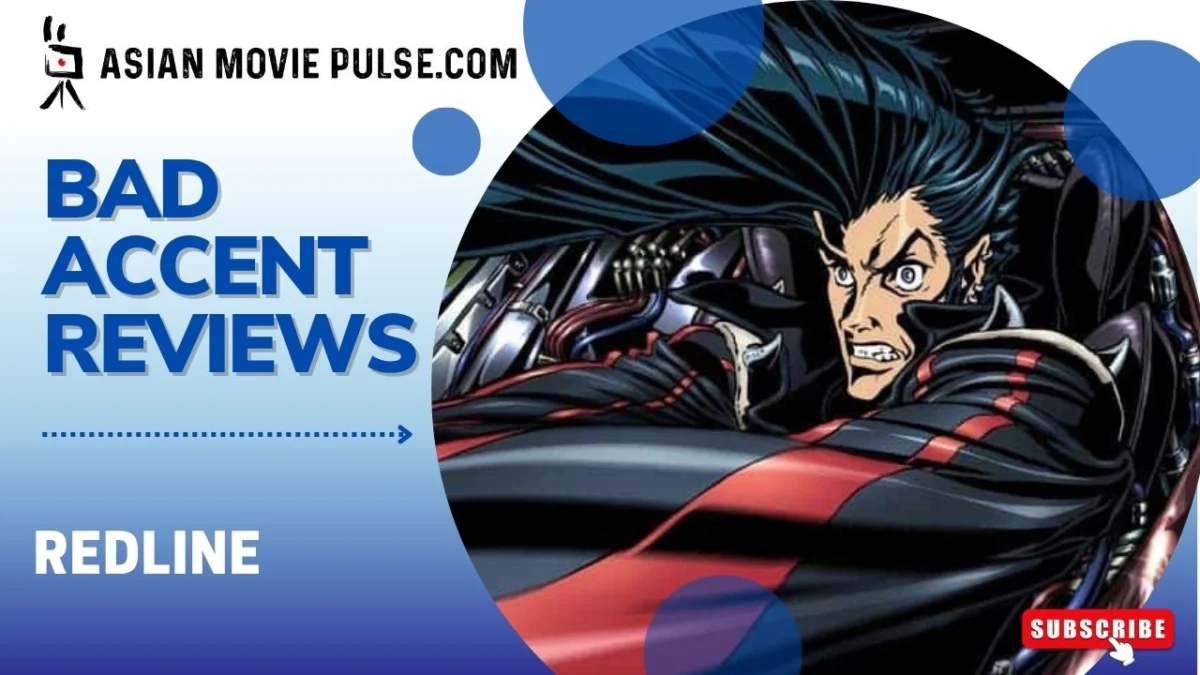
Fifteen years after its initial electrifying debut at the Fantasia International Film Festival, Takeshi Koike’s seminal science-fiction racing anime, Redline, has once again captivated audiences at the prestigious Montreal-based festival. This resurgence offers a timely opportunity to re-examine a film that has cemented its status as a cult masterpiece and a benchmark in hand-drawn animation, pushing the boundaries of visual storytelling in the anime medium. The Bad Accent Video Review by Asian Movie Pulse delves into the enduring power of this cinematic marvel, exploring the meticulous craftsmanship and audacious creativity that define its legacy.
A Decades-Long Labor of Love and Artistry
The genesis of Redline is a testament to unparalleled dedication and artistic vision. Produced by the renowned Madhouse animation studio, the film’s creation spanned an astonishing seven years, a period characterized by an extraordinary commitment to traditional animation techniques. This extended development cycle resulted in the meticulous hand-drawing of over 100,000 individual images. In an era increasingly dominated by computer-generated imagery, Redline stands as a defiant celebration of the tactile, organic beauty of hand-drawn animation. This painstaking process imbues every frame with a unique vibrancy and fluidity, a stark contrast to the often sterile perfection of digital animation. The sheer volume of hand-drawn frames not only underscores the immense labor involved but also directly contributes to the film’s signature frenetic energy and hyper-detailed visual style.
The Premise: A Galactic Gauntlet on a Militarized World
At its core, Redline chronicles the daring exploits of Sweet JP, a charismatic rockabilly racer with an unyielding spirit. His ambition leads him to enter the galaxy’s most perilous and prestigious racing competition. However, this is no ordinary race. The event is scheduled to take place on Roboworld, a heavily militarized planet with a chilling mandate: to eliminate all participating drivers before they can cross the finish line. This inherent danger elevates the stakes beyond mere victory, transforming the race into a desperate fight for survival against both formidable opponents and the planet’s hostile defenses. The narrative structure, while seemingly straightforward, serves as a potent vehicle for the film’s true stars: its breathtaking visuals and relentless action.
A Symphony of Sensory Overload: Analyzing the Core Elements
The enduring appeal of Redline lies in its masterful fusion of multiple artistic disciplines, creating an experience that is as much a visceral assault on the senses as it is a narrative journey.
Unprecedented Visual Spectacle
The animation in Redline is, without hyperbole, extraordinary. Koike and his team pushed the limits of what was thought possible with traditional cel animation. The character designs are wildly eccentric and memorable, from the grizzled veteran Sweet JP to the enigmatic and dangerous Sonya. The vehicular designs are equally imaginative, showcasing a diverse array of futuristic machines, each imbued with a distinct personality. The action sequences are choreographed with an astonishing level of detail and dynamism. Speed is conveyed not just through motion blur, but through the sheer intensity of lines, the explosive impact of collisions, and the frenetic camera work that simulates the dizzying perspective of a racer hurtling at impossible speeds. The use of color is bold and saturated, contributing to the film’s high-octane, almost psychedelic aesthetic. This visual density, achieved through exhaustive hand-drawn effort, creates an immersive environment that draws the viewer directly into the chaos of the race.
The Rhythmic Heartbeat of the Soundtrack
Complementing the visual frenzy is a pulsating, rock-heavy soundtrack that acts as the film’s relentless heartbeat. Composed by Yasuharu Takanashi and featuring contributions from artists like DJ Krush, the music is not merely incidental; it is an integral component of the film’s identity. The energetic rock anthems and electronic beats perfectly underscore the adrenaline-fueled races, amplifying the sense of speed, danger, and rebellion. The soundtrack’s aggressive and raw soundscape mirrors the film’s unapologetic aesthetic, creating a synergistic effect that elevates the overall viewing experience. This sonic landscape is crucial in conveying the raw, untamed energy of the racing world depicted.
Eccentric Voices, Unforgettable Characters
The voice performances in Redline are as unconventional and captivating as the animation itself. The Japanese voice cast, led by Takuya Kimura as Sweet JP, delivers performances that are imbued with a distinct flair and personality. These are not the polished, often subdued performances found in many anime; they are raw, energetic, and often exaggerated, perfectly aligning with the film’s over-the-top nature. The eccentricities of the voice acting contribute significantly to the memorable nature of the characters, making them feel larger than life and deeply ingrained in the film’s unique universe. This bold approach to voice acting further distinguishes Redline from its contemporaries.
A Layer of Political Satire
Beneath the surface of hyper-kinetic racing and vibrant visuals, Redline harbors a subtle yet potent layer of political satire. The very premise of Roboworld, a planet prepared to annihilate its guests, can be interpreted as a commentary on xenophobia, oppressive regimes, and the dangers of unchecked militarization. The film critiques the arbitrary nature of power and the dehumanizing effects of authoritarian control, even within the context of a fictional racing competition. This underlying social commentary adds a surprising depth to the film, inviting viewers to consider broader themes beyond the immediate spectacle. The presence of diverse alien species, each with their own motivations and struggles, further enriches this thematic tapestry.
The Creative Synergy: Koike and Ishii’s Vision
The distinctive artistic signature of Redline is deeply rooted in the creative collaboration between director Takeshi Koike and writer Katsuhito Ishii. Ishii, known for his eclectic and visually driven directorial style in films like "Funky Forest: The First Contact," brought his unique sensibilities to the screenplay, which was then translated into a visual tour de force by Koike. Koike, a veteran animator with a distinctive style, served as the chief director, meticulously overseeing the animation process and ensuring that Ishii’s audacious vision was realized with unparalleled visual flair. This partnership was crucial in forging Redline’s singular identity, a blend of Ishii’s offbeat storytelling and Koike’s masterful command of animated motion and design. Their synergy is evident in the film’s consistent tone and its unwavering commitment to a bold, experimental aesthetic.
Redline’s Enduring Impact and Legacy
The return of Redline to the Fantasia International Film Festival is a testament to its enduring appeal and its significant impact on the landscape of anime filmmaking. Its uncompromised artistic vision and its dedication to hand-drawn animation have inspired a generation of animators and filmmakers. In a cinematic world increasingly reliant on digital shortcuts, Redline serves as a powerful reminder of the unique artistic possibilities inherent in traditional animation.
Supporting Data and Context: The Rise of the "Cult Classic"
The classification of Redline as a "cult classic" is supported by its critical reception and its dedicated fanbase. While it may not have achieved mainstream blockbuster status upon its initial release, its unique artistic merits and its unabashed individuality have resonated deeply with a discerning audience. The film’s journey from its original release in 2009 to its reappearance at festivals like Fantasia fifteen years later is a narrative in itself, showcasing how certain works of art can transcend initial commercial performance to achieve lasting cultural significance. The meticulous production timeline of seven years and over 100,000 hand-drawn images is a concrete data point that highlights the extraordinary effort invested, distinguishing it from typical production cycles.
Chronology of Significance: From Production to Festival Circuit
- Early 2000s: Development of Redline begins, with a commitment to extensive hand-drawn animation.
- 2009: Redline premieres at the Venice Film Festival, followed by screenings at other international festivals, including its initial debut at the Fantasia International Film Festival.
- Post-2009: The film garners a dedicated cult following, celebrated for its unique animation style and energetic presentation.
- 2024: Redline is revisited and screened at the Fantasia International Film Festival, marking a significant return and reaffirming its status as a beloved piece of cinematic art.
This timeline illustrates a trajectory from a daring production to a lasting artistic statement that continues to captivate new audiences.
Broader Implications: The Future of Hand-Drawn Animation
The continued appreciation for films like Redline has significant implications for the future of hand-drawn animation. It demonstrates that there is a strong audience appetite for meticulously crafted, visually ambitious animated features that prioritize artistic expression over purely commercial considerations. The film’s success in inspiring and captivating viewers suggests that the investment in traditional animation techniques, while demanding, can yield unparalleled artistic rewards and foster a deep connection with audiences. It serves as a beacon for animators seeking to push creative boundaries and preserve the art of hand-drawn storytelling.
Conclusion: A Timeless Spectacle of Animation
Takeshi Koike’s Redline remains an unparalleled achievement in animated filmmaking. Its return to the Fantasia International Film Festival is a welcome event, offering a fresh opportunity for audiences to experience its breathtaking visual spectacle, its exhilarating soundtrack, and its unique brand of rebellious storytelling. The film’s legacy as a visually explosive, hand-drawn masterpiece is not only secure but continues to inspire and captivate, proving that dedication to craft and audacious artistic vision can create art that truly stands the test of time. The question of whether it is the "most visually explosive racing anime ever made" is a subjective one, but the evidence presented by its enduring impact and its technical brilliance strongly supports its claim to that title.