

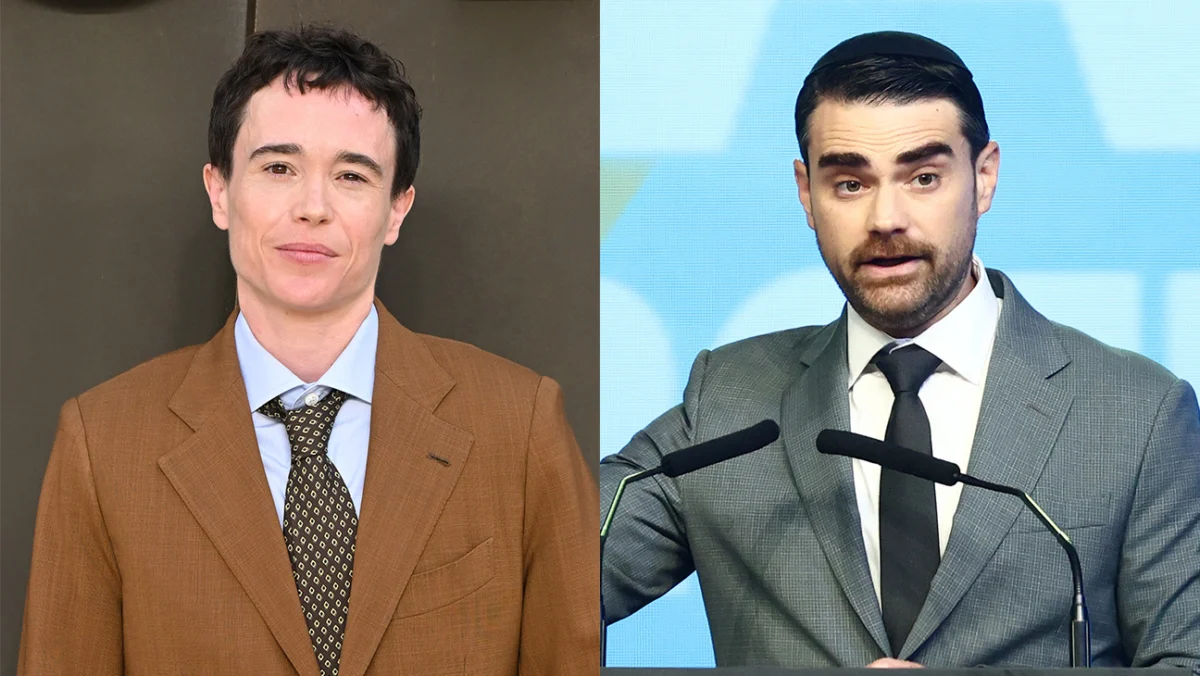
Despite Christopher Nolan’s ambitious cinematic adaptation of Homer’s epic poem, The Odyssey, facing significant pre-release backlash from certain segments of the "MAGA-verse" over perceived progressive casting choices, prominent right-wing influencer Ben Shapiro has emerged as an unexpected champion of the film. In an extensive YouTube review, Shapiro declared the movie a "masterpiece," assigning it an impressive 8.5 out of 9 on a 10-point scale. His endorsement, however, was not without caveats, specifically singling out the casting of Elliot Page as Sinon as an "unforced error" that detracted from his viewing experience. This nuanced, yet critical, reception from a figure often at the forefront of conservative cultural commentary highlights the complex interplay between artistic interpretation, identity politics, and audience reception in contemporary cinema.
The Genesis of Backlash and Nolan’s Vision
Christopher Nolan, renowned for his intellectually challenging narratives, intricate visual effects, and commitment to practical filmmaking, ventured into classical mythology with The Odyssey. The announcement of the film, and subsequent casting reveals, immediately ignited discussions and, in some quarters, fervent criticism. Prior to its release, a vocal contingent within conservative media and online communities expressed displeasure, primarily centered on what they perceived as "woke" casting decisions that prioritized diversity over historical or mythological accuracy. Specific concerns often revolved around actors of color portraying traditionally Hellenic characters, fueling a broader culture war narrative that posits Hollywood is sacrificing artistic integrity for political correctness.
Nolan’s decision to tackle The Odyssey, one of the foundational texts of Western literature, placed him in a unique position. The epic poem, attributed to Homer, recounts the arduous ten-year journey of the Greek hero Odysseus as he struggles to return home to Ithaca following the Trojan War. Its themes of perseverance, loyalty, cunning, and the human condition have resonated for millennia, leading to countless adaptations across various media. Nolan’s interpretation was anticipated to bring his signature blend of grand spectacle and psychological depth to this ancient narrative, but the casting choices became an early focal point of controversy.
Ben Shapiro’s Unexpected Endorsement and Detailed Review
Ben Shapiro, a prolific commentator, author, and host of The Ben Shapiro Show, commands a significant platform within conservative media, with millions of followers across YouTube, podcasts, and social media. His foray into film criticism, particularly for a major studio release like The Odyssey, carries considerable weight within his demographic. His 18-minute YouTube review, published shortly after the film’s release, offered a detailed breakdown of his appreciation and points of contention.
Shapiro lauded the performances of the lead actors, praising Matt Damon as Odysseus, Robert Pattinson as Antinous, and Tom Holland as Telemachus. He found "little issue" with Zendaya as Athena and Lupita Nyong’o as Helen of Troy, two casting choices that had previously drawn fire from some of the film’s conservative detractors. Addressing the criticism directly, Shapiro remarked, "I know a lot of people were like, ‘Oh my God, Lupita Nyong’o is supposed to look like Diane Kruger.’ I don’t know. Diane Kruger doesn’t look very Greek. She’s German." This statement directly challenged the premise of racialized historical accuracy often invoked by critics, suggesting that a strict adherence to modern racial categories for ancient figures might be misplaced. He further dismissed concerns about Zendaya’s portrayal of Athena, stating, "Casting Zendaya in that role doesn’t change anything… Zendaya does a fine job, doesn’t bother me at all." Even the casting of rapper Travis Scott as Bard, which Shapiro found "a bit jarring," was downplayed due to the character’s minor role.
These comments from Shapiro are particularly noteworthy as they run counter to the prevailing sentiment among some of his peers and audience members who had previously condemned the film’s diverse casting as an affront to traditional interpretations. His willingness to assess individual performances and artistic merit, rather than simply dismissing the film based on casting demographics, offered a more nuanced perspective than much of the pre-release commentary.
The Singular Point of Contention: Elliot Page as Sinon
However, Shapiro’s glowing review took a sharp turn when discussing Elliot Page’s portrayal of Sinon. Sinon, a pivotal character in the Trojan War narrative, is the Greek spy who persuades the Trojans to bring the Wooden Horse inside their city walls. For Shapiro, this particular casting choice transcended a minor quibble and became a significant detractor. "I know there are a lot of conservatives who are getting pre-whipped up about the film. Because it’s stupid to cast Elliot Page as a dude. It’s just stupid," he asserted.
Shapiro’s criticism was explicitly tied to Page’s gender identity. Elliot Page, who came out as transgender in 2020, transitioning from Ellen Page, is an openly trans man. Shapiro’s critique delved into personal characteristics, stating, "Elliot Page was a woman with mental issues who believes that she is a man and has had surgeries to make her appear more man-like, but still she is about five foot two inches and 105 pounds, soaking wet, and has the voice of a woman. It doesn’t work." This direct and highly personal criticism of Page’s physical appearance and gender identity immediately shifted the discussion from artistic interpretation to a debate over trans representation and perceived biological realities.
He characterized the casting as an "unforced error," speculating on Nolan’s motivations, despite initially claiming he wouldn’t. Shapiro suggested possibilities ranging from Nolan’s personal friendship with Page (stemming from their collaboration on Inception) to an attempt at "Oscar bait." These speculative theories, often echoed in right-wing podcasting circles, imply that the casting was driven by external factors rather than purely artistic merit, thereby undermining the film’s creative choices in the eyes of some viewers.
The Broader Implications: Art, Identity, and the Culture Wars
Shapiro’s selective criticism highlights a crucial fault line in contemporary cultural discourse: while some forms of diversity in casting (e.g., racial diversity) may be tolerated or even accepted by certain conservative commentators when performances are strong, transgender representation often remains a significant point of contention. This distinction underscores the varying degrees of acceptance and resistance encountered by different identity groups in mainstream media.
The debate surrounding The Odyssey‘s casting, particularly regarding Elliot Page, taps into larger conversations about "wokeness," artistic freedom, and the role of identity in storytelling. For proponents of inclusive casting, the goal is to reflect the diversity of the modern world on screen, challenge traditional homogenous portrayals, and provide opportunities for underrepresented groups. They argue that classical stories are universal and can be reinterpreted through diverse lenses without diminishing their core themes. For critics like Shapiro, however, certain casting decisions are perceived as ideological impositions that disrupt immersion and cater to specific political agendas, potentially at the expense of what they consider "authenticity" or traditional aesthetics.
This dynamic is not unique to The Odyssey. Films and television series that feature diverse casting, particularly those involving LGBTQ+ characters or actors, frequently become battlegrounds in the ongoing culture wars. The reactions often mirror broader societal debates about gender, sexuality, and identity, transforming artistic choices into political statements.
Nolan’s Track Record and Industry Trends
Christopher Nolan, known for his meticulous approach to filmmaking, has historically cast a diverse array of actors in his films, though not always with the explicit aim of challenging traditional racial or gender norms in historical contexts. His focus has typically been on assembling ensembles of highly talented actors. Elliot Page’s previous collaboration with Nolan on Inception (2010), where Page played Ariadne, an architecture student who designs dreamscapes, established a professional relationship that could logically extend to future projects. Nolan’s casting of Page in The Odyssey, therefore, might be seen by the director as a choice based on talent and previous working relationships, rather than an "Oscar bait" maneuver or a political statement, as Shapiro speculates.
The film industry itself is grappling with evolving audience expectations and calls for greater representation. Studio diversity initiatives, increased awareness of unconscious bias in casting, and the commercial success of films with diverse casts have all contributed to a shift in Hollywood’s approach. However, this shift is often met with resistance from segments of the audience who prefer traditional portrayals or view these changes as politically motivated.
Box Office Implications and Shapiro’s Call to Action
Despite his strong criticism of Page’s casting, Shapiro ultimately urged conservatives not to dismiss The Odyssey outright. He argued against wishing for the film’s box office failure, stating, "No, the movie’s not going to bomb because of that. It turns out that when people are willing to be entertained, they’re willing to entertain even bad flaws in the teeth, if it turns out the smile is nice." This pragmatic view suggests that a film’s overall quality and entertainment value can often transcend specific points of contention for a broad audience.
He concluded by emphasizing the film’s broader thematic resonance with conservative values: "The broader theme of the movie is actually very much in line with many things that conservatives think. If you let Elliot Page kill that for you, I think you’re missing out on an incredible moviegoing experience." This final call to action encourages his audience to engage with the film’s narrative and themes, even if they disagree with specific casting choices, highlighting a potential pathway for engagement across ideological divides within the realm of art.
The success of The Odyssey at the box office and among general audiences will ultimately provide further insight into the impact of these cultural debates. While pre-release "backlash" can create significant buzz, it does not always translate into box office failure, especially for films directed by established auteurs like Nolan, who command a loyal following. The critical reception beyond Shapiro’s review, from mainstream critics and other influencers, will also contribute to shaping the film’s legacy.
Conclusion: A Microcosm of Cultural Conflict
Ben Shapiro’s review of Christopher Nolan’s The Odyssey serves as a compelling microcosm of the ongoing cultural conflicts surrounding art, identity, and politics. His enthusiastic praise for the film’s overall quality, juxtaposed with his sharp, personal criticism of a single casting choice rooted in gender identity, illustrates the complex and often contradictory ways in which audiences engage with contemporary media. It underscores that while calls for diversity in Hollywood continue to grow, the acceptance of such changes remains uneven, particularly when it touches upon deeply held beliefs about gender and identity. For The Odyssey, its journey through the cinematic landscape will undoubtedly be as epic and fraught with challenges as Odysseus’s own legendary voyage home.