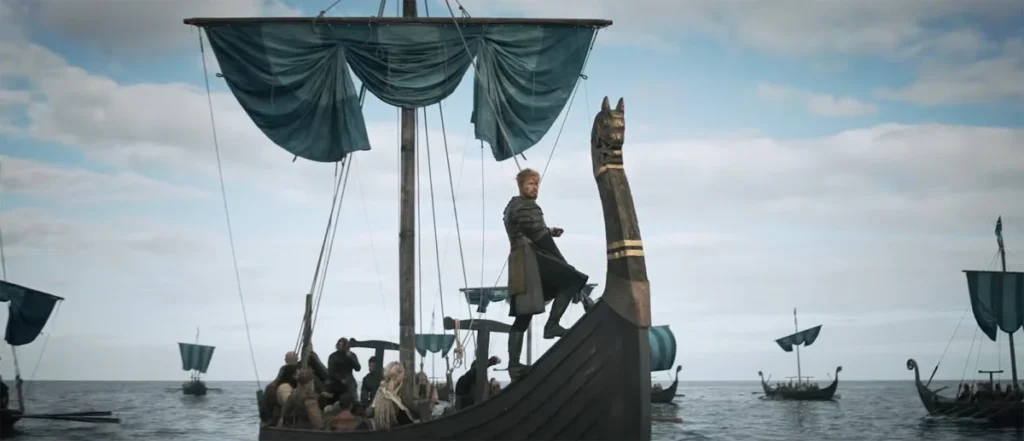
Focus Features has officially unveiled the gripping first trailer for The Uprising, an ambitious historical action film helmed by acclaimed English filmmaker Paul Greengrass. Scheduled for a theatrical release on September 11, 2026, the film plunges audiences into the tumultuous landscape of plague-ravaged 14th-century England, charting the genesis and ferocity of the iconic Peasants’ Revolt of 1381. Starring Andrew Garfield as a pivotal farmer-peasant who ignites the rebellion against King Richard II, the movie promises a visceral and historically informed portrayal of a seminal moment in British history, a signature approach for Greengrass known for his immersive, docu-drama style.
The trailer, released on July 16, 2026, offers a potent glimpse into the film’s epic scale and intense dramatic stakes. Images of widespread poverty, oppressive feudal lords, and the gathering storm of an enraged populace are interwoven with powerful dialogue, including the resonant declaration, "It is time to set the world on fire," and the defiant vow, "There will be no peace until we are free." Andrew Garfield, portraying a character identified as "the Ploughman," appears as a reluctant but resolute leader, standing alongside Wat Tyler, the historical folk hero brought to life by Cosmo Jarvis. The ensemble cast also features a formidable lineup of British talent, including Jamie Bell, Stephen Dillane, Tom Hollander, Thomasin McKenzie, Jonny Lee Miller, Woody Norman, Katherine Waterston, Stanley Townsend, Jamie Maclachlan, and Sky Yang, ensuring a rich tapestry of performances to underpin this grand historical narrative.
The Historical Crucible: England in 1381
To fully appreciate the narrative thrust of The Uprising, an understanding of the historical context of the Peasants’ Revolt is essential. The rebellion of 1381, also known as Wat Tyler’s Rebellion or the Great Rising, was a cataclysmic event that shook the foundations of medieval English society. Its roots were deeply embedded in a confluence of socio-economic, political, and religious tensions that had been festering for decades.
The Shadow of the Black Death
A primary catalyst for the unrest was the devastating impact of the Black Death, which swept through Europe in the mid-14th century, particularly between 1347 and 1351. England lost an estimated one-third to one-half of its population to the plague. While horrific, this demographic collapse inadvertently created a profound shift in the balance of power between landlords and laborers. With a drastic shortage of workers, surviving peasants found themselves in a stronger bargaining position, demanding higher wages and better working conditions.

However, the ruling elite, clinging to the feudal system, responded by attempting to suppress these newfound freedoms. Parliament enacted legislation such as the Statute of Labourers in 1351, which sought to fix wages at pre-plague levels and restrict the mobility of workers. This legislative crackdown, perceived as unjust and exploitative by the peasantry, fueled widespread resentment and a sense of betrayal. The Crown and aristocracy were seen as actively undermining the economic advantages that the plague had, paradoxically, afforded the common folk.
Taxation and the Hundred Years’ War
Adding to the economic grievances was the incessant drain of the Hundred Years’ War with France (1337-1453). The protracted conflict, costly in both lives and treasure, necessitated ever-increasing taxation. By the late 1370s, the English government, under the regency council of the young King Richard II (who was only 14 at the time of the revolt), resorted to a series of regressive poll taxes. Unlike traditional taxes based on wealth or property, the poll tax was levied uniformly on every adult, regardless of their ability to pay.
The first poll tax in 1377 was met with grumbling, but it was the third, imposed in 1380, that proved to be the breaking point. This tax was set at a shilling per head, a significant sum for a peasant family, and its collection was notoriously corrupt and brutal. Tax collectors often employed coercive tactics, leading to widespread evasion. When commissioners were sent out in the spring of 1381 to investigate the arrears, their aggressive enforcement triggered the eruption of localized protests into a full-blown rebellion.
Socio-Political Instability and Religious Stirrings
Beyond economics, there was a growing sense of social injustice and political disenfranchisement. The local leadership in London, often perceived as corrupt and self-serving, further alienated the common people. The influence of dissenting religious figures, particularly the Lollards inspired by John Wycliffe, also played a role. Preachers like John Ball, known for his radical sermons questioning social hierarchy ("When Adam delved and Eve span, who was then the gentleman?"), provided an ideological framework for the revolt, suggesting that God had intended for all men to be equal, a stark contrast to the rigid class structure of medieval England. This religious fervor imbued the rebellion with a moral righteousness that transcended mere economic grievance.
The Chronology of the Revolt: A Swift and Brutal Uprising
The Peasants’ Revolt was remarkable for its speed, scale, and the audacity of its participants.

- May 1381: The revolt began in the villages of Brentwood, Essex, after a tax collector attempted to enforce the poll tax with undue severity. Resistance quickly spread throughout Essex and Kent.
- June 1381 – The March to London: Led by figures like Wat Tyler and an enigmatic "Jack Straw," large contingents of rebels from Essex and Kent converged on London. Their grievances were manifold: the abolition of serfdom, an end to the poll tax, the removal of corrupt officials, and a fairer justice system.
- June 13, 1381 – Entry into London: The rebels, numbering in the tens of thousands, entered London, where they were largely welcomed by sympathetic elements within the city’s populace. They targeted symbols of royal authority and aristocratic power. The Savoy Palace, the opulent residence of John of Gaunt (Richard II’s uncle and the most powerful man in England), was systematically destroyed, along with other properties belonging to unpopular figures. The rebels also freed prisoners from various jails and attacked legal records, hoping to dismantle the legal instruments of their oppression.
- June 14, 1381 – Mile End and the King’s Promises: King Richard II, advised by his councillors, met with the rebels at Mile End. Despite his youth, Richard displayed remarkable courage. At this meeting, he acceded to many of the rebels’ demands, including the abolition of serfdom and the granting of charters of freedom. Many rebels, believing their objectives achieved, began to disperse.
- June 14, 1381 – Tower of London Killings: However, a more radical faction remained. They stormed the Tower of London, then a royal fortress, and executed Simon Sudbury, the Archbishop of Canterbury and Chancellor, and Robert Hales, the Lord High Treasurer – both seen as architects of the hated poll tax. John Ball, the radical preacher, delivered another sermon further inciting the rebels.
- June 15, 1381 – Smithfield and Tyler’s Demise: Richard met the remaining rebels at Smithfield. During negotiations, Wat Tyler made further demands, including the disendowment of the Church and the establishment of a new legal system. Accounts differ, but a confrontation ensued between Tyler and royal officials, culminating in Tyler being struck down by William Walworth, the Mayor of London. With their charismatic leader dead, the rebels were momentarily stunned.
- Suppression and Aftermath: Seizing the moment, Richard II famously rode forward and addressed the leaderless rebels, proclaiming, "I am your captain, and I will be your leader!" He promised to grant them all their demands if they returned home. However, once the rebellion had dissipated, the royal authorities launched a brutal crackdown. The charters of freedom were revoked, and thousands of rebels were hunted down, tried, and executed. Despite the violent suppression, the revolt sent a clear message to the English ruling class. While it did not immediately abolish serfdom or fundamentally alter the social structure, it profoundly influenced future governance. No further poll taxes were levied, and the pace of serfdom’s decline subtly accelerated in the decades that followed, as landlords increasingly opted for monetary rents over forced labor.
Paul Greengrass: Master of Gritty Realism
Paul Greengrass is an exceptionally fitting director to tackle a subject as volatile and historically significant as The Uprising. Known for his distinctive documentary-style approach, characterized by handheld camerawork, rapid-fire editing, and an unvarnished realism, Greengrass excels at immersing audiences directly into the heart of intense, often politically charged events. His filmography is replete with examples of this style, from the visceral immediacy of Bloody Sunday (2002), which depicted the 1972 Derry shootings, to the harrowing real-time intensity of United 93 (2006), chronicling the events aboard the hijacked plane on 9/11.
His ability to blend meticulous research with compelling dramatic storytelling was further demonstrated in films like Captain Phillips (2013), a taut thriller based on the 2009 Somali pirate hijacking, and 22 July (2018), a somber portrayal of the 2011 Norway attacks. Even his entries into the Bourne franchise (The Bourne Supremacy, The Bourne Ultimatum, Jason Bourne) redefined the action genre with their grounded, kinetic energy. More recently, News of the World (2020) and The Lost Bus (2025) showcased his versatility within historical and dramatic narratives, while retaining his signature commitment to authentic, character-driven storytelling.
For The Uprising, Greengrass’s stylistic choices are poised to deliver a uniquely authentic and immersive experience of the Peasants’ Revolt. His signature approach will likely eschew romanticized portrayals, opting instead for a gritty, often chaotic depiction of medieval life and the brutal realities of rebellion. This will allow the film to convey the desperation and raw courage of the peasants, as well as the political maneuvering and stark power dynamics within the monarchy, with an almost documentary-like immediacy.
Andrew Garfield and the Stellar Ensemble Cast
The casting of Andrew Garfield in a leading role as "the Ploughman" immediately elevates The Uprising to a highly anticipated cinematic event. Garfield has consistently demonstrated a remarkable range and an intense commitment to his roles, moving seamlessly between blockbuster fare (the Spider-Man series) and critically acclaimed dramas. His performances in films such as Hacksaw Ridge (2016), for which he received an Oscar nomination, Silence (2016), The Social Network (2010), and Tick, Tick… Boom! (2021) showcase his capacity for embodying characters grappling with profound moral dilemmas, spiritual crises, and extraordinary courage. His ability to convey both vulnerability and fierce determination makes him an ideal choice for a character who transitions from an ordinary farmer to an unlikely leader of a ferocious rebellion. Garfield’s "Ploughman" character, while potentially a composite figure, will likely serve as the emotional anchor, representing the collective aspirations and suffering of the common people.
Crucially, the film features Cosmo Jarvis as the historical figure Wat Tyler. Jarvis, known for his intense and often brooding performances in films like Lady Macbeth (2016) and Calm with Horses (2019), possesses the gravitas and raw intensity required to portray a figure as enigmatic and pivotal as Tyler. Tyler’s leadership was instrumental in galvanizing the Kentish rebels, and his confrontational stance at Smithfield marked a critical turning point in the revolt. Jarvis’s portrayal is expected to capture the complexity of a man who emerged from obscurity to challenge the might of the Crown.

The supporting cast further strengthens the film’s dramatic potential. Jamie Bell, a versatile actor with a history of impactful performances, adds another layer of talent. Stephen Dillane and Tom Hollander, both acclaimed for their work in historical dramas and character-driven narratives (Dillane in Game of Thrones, Hollander in The Night Manager), will undoubtedly bring depth to their respective roles, likely portraying members of the aristocracy, clergy, or royal court. Thomasin McKenzie, a rising star known for her nuanced performances in Jojo Rabbit and Last Night in Soho, alongside seasoned actors like Jonny Lee Miller and Katherine Waterston, ensures a rich ensemble dynamic. The strategic choice of such a powerful and diverse cast underscores the film’s ambition to offer a comprehensive and deeply human exploration of the Peasants’ Revolt.
Trailer Analysis and Thematic Resonance
The trailer for The Uprising skillfully establishes the film’s tone and narrative direction. It opens with stark visuals of a ravaged landscape and desperate villagers, immediately grounding the story in the grim realities of 14th-century England. The quick cuts and intense close-ups, characteristic of Greengrass’s style, convey a sense of urgency and impending chaos. Dialogue snippets, such as "It is time to set the world on fire," spoken with fervent conviction, signal the revolutionary spirit at the heart of the narrative. The promise of "no peace until we are free" and the demand for retribution – "For all you’ve taken from us, all that we’ve lost – time to pay" – articulate the deep-seated grievances that propelled the rebellion.
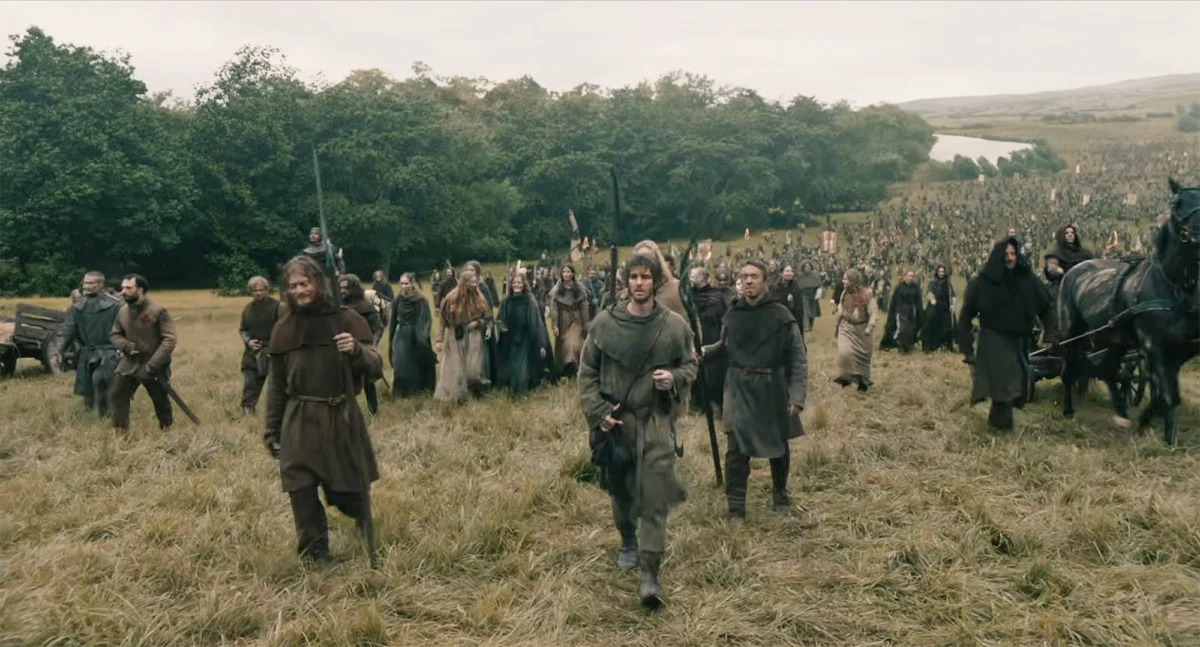
Visually, the trailer suggests a significant scale, with vast peasant armies marching, burning manor houses, and confrontations with heavily armored knights. The juxtaposition of the young King Richard II, depicted as a mere boy facing an existential threat to his kingdom, against the hardened faces of the common folk, underscores the David-and-Goliath struggle at play. The film appears to be tackling profound themes of social justice, the abuse of power, the origins of popular rebellion, and the enduring human quest for freedom and dignity. These themes, while rooted in a specific historical event, resonate powerfully with contemporary issues of inequality and resistance, ensuring the film’s relevance beyond its historical setting. The final rallying cry, "Rise or die," encapsulates the desperate stakes faced by the rebels, who had everything to lose but believed they had no other choice.
Production Details and Industry Expectations
The Uprising is being brought to the screen by a robust production team, including Jason Blum, Paul Greengrass, Gregory Goodman, Joanna Kaye, Joe Neurauter, and Lars Sylvest. The involvement of Blumhouse Productions, renowned primarily for its highly successful horror films, might initially seem surprising for a historical epic. However, Blumhouse has also garnered critical acclaim for producing compelling dramas and thrillers, such as Whiplash and BlacKkKlansman, demonstrating a commitment to quality storytelling across genres. Their participation suggests a potential for a film that is not only historically accurate and dramatically rich but also possesses a commercial appeal and a willingness to explore narratives with a distinct edge.
Focus Features, the film’s US distributor, has a strong track record of releasing prestige dramas and independent films that often become significant contenders during awards season. Their backing of The Uprising positions the film as a potentially serious awards contender for late 2026. The September 11, 2026, release date places it strategically in the early fall, a prime window for films aiming for critical recognition and audience engagement before the year-end rush.

Industry observers anticipate that The Uprising will be more than just a historical recount. With Greengrass’s signature intensity and a cast led by Andrew Garfield, the film is expected to offer a timely reflection on the nature of power, class struggle, and the human spirit’s capacity for resistance in the face of overwhelming odds. Historians will be keen to see how the film balances dramatic license with factual accuracy, particularly in its portrayal of key figures and the motivations behind the revolt. Critics are likely to praise Greengrass’s ability to render historical events with a raw, contemporary sensibility, making the 14th century feel immediate and resonant.
In conclusion, The Uprising is shaping up to be a compelling and important cinematic experience. Paul Greengrass’s unique directorial vision, combined with a powerful narrative drawn from a pivotal historical event and a stellar cast led by Andrew Garfield, positions this film as a must-watch for audiences seeking both epic historical drama and incisive social commentary. As the trailer suggests, it is a story of desperation, defiance, and the enduring quest for freedom that continues to echo through the ages.