

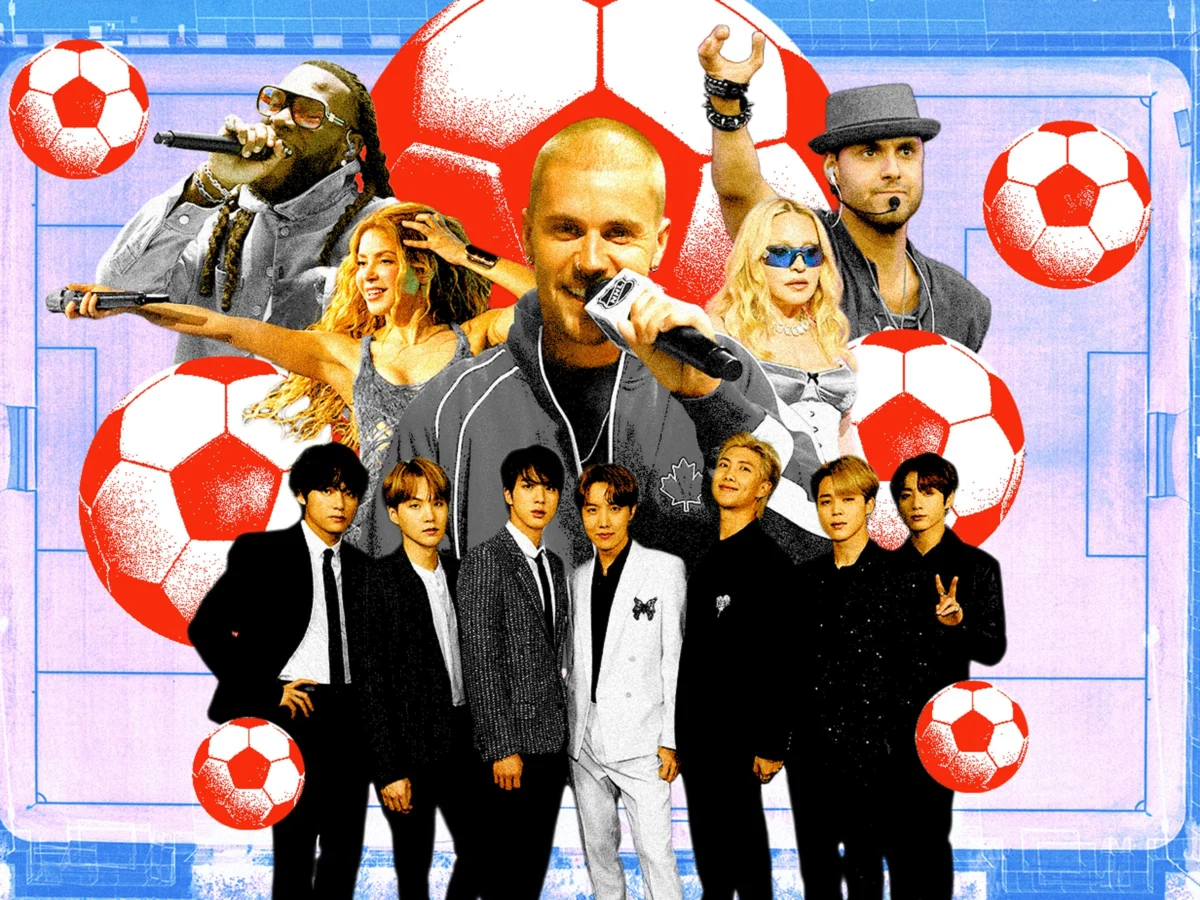
When the whistle blows for halftime at the 2026 FIFA World Cup final at the New York New Jersey Stadium, the world will witness a departure from nearly a century of sporting tradition. For the first time in the history of the tournament, FIFA will host a massive, high-production halftime show, a format long synonymous with the American Super Bowl but previously alien to the "beautiful game." This 11-minute spectacle, curated in partnership with the international advocacy organization Global Citizen, represents a calculated evolution of the World Cup’s cultural identity, blending elite athletics with global pop stardom and a massive humanitarian fundraising initiative.
The initiative was born from a high-level collaboration between the music industry and sporting governance. During the 2022 World Cup in Qatar, Coldplay frontman Chris Martin contacted Hugh Evans, the CEO of Global Citizen, with a proposal to introduce a halftime performance to the final match. Martin, who serves as the curator for the annual Global Citizen Festival, envisioned a platform that could leverage the World Cup’s multi-billion-person viewership for charitable ends. Evans subsequently met with FIFA President Gianni Infantino at the organization’s headquarters in Zurich, Switzerland. The proposal found an immediate ally in Infantino, who had independently harbored similar ambitions to modernize the tournament’s entertainment offerings and was a self-professed admirer of Coldplay’s work.
The Performance Lineup and Production Structure
The 2026 halftime show is designed as a fast-paced, multi-act "chapter" sequence. Despite the brevity of the 11-minute window, the production features an ambitious roster of international talent intended to reflect the global footprint of soccer. The lineup includes Canadian pop star Justin Bieber, American icon Madonna, South Korean juggernaut BTS, and Colombian superstar Shakira. These headliners will be joined by Coldplay and a youth chorus from Staten Island’s PS22 public school.
According to producer Lee Rolontz, the show’s structure is divided into segments of approximately one minute and 45 seconds per artist. This "chapter" approach is a logistical necessity, allowing for a diverse range of musical styles and cultural representation within a timeframe that does not disrupt the mandatory rest period for the athletes. The inclusion of BTS is particularly notable, as the group’s massive "Army" of fans has already demonstrated significant digital engagement, contributing approximately $40,000 to the associated charity fund within the first week of the announcement without a formal solicitation.
The closing ceremony, which takes place separately from the halftime show, will also feature a high-profile appearance by actor Tom Cruise. This follows his participation in the 2024 Paris Olympics closing ceremony, signaling a trend of utilizing Hollywood star power to bridge the gap between major international sporting events.
Logistical Engineering: Protecting the Sacred Pitch
One of the primary hurdles in bringing a halftime show to the World Cup was the technical requirement of the playing surface. FIFA maintains some of the most stringent regulations in the world regarding turf quality, as the trajectory of the ball and the safety of the players depend on the integrity of the grass. Unlike American football fields, which often utilize synthetic turf or can withstand heavy equipment, a World Cup pitch is a delicate ecosystem.
To address these concerns, the production team, led by Rolontz, consulted with Nick Pappas, the NFL’s field director. Pappas, who has decades of experience managing the rapid deployment of stages for the Super Bowl, shared best practices for protecting the surface. The 2026 production involves custom-built, lightweight staging materials and camera dollies designed to distribute weight evenly and prevent soil compaction.
The logistical window is incredibly tight: the crew has between three and four minutes to deploy the entire stage and audio setup, and an equally short window to strike the equipment before the players return for the second half. "Everything has been constructed to move quickly and leave zero footprint," Rolontz noted, emphasizing that the integrity of the match remains the priority.
The Humanitarian Objective: A $100 Million Goal
Beyond the entertainment value, the halftime show serves as the centerpiece of a major fundraising campaign. Global Citizen and FIFA have set a target of raising $100 million to support youth education efforts worldwide. The financial model for this initiative is multi-pronged:
- Ticket Levies: FIFA has committed to donating one dollar from every ticket sold throughout the duration of the 2026 tournament to the Global Citizen fund.
- Royalty Contributions: Shakira, a long-time advocate for global education, is donating the royalties from "Dai Dai," her World Cup anthem recorded with Nigerian artist Burna Boy.
- Corporate Partnerships: Private sector sponsors are being leveraged to close the gap toward the $100 million goal, utilizing the halftime show as a high-visibility marketing vehicle for corporate social responsibility.
Hugh Evans has emphasized that the show is "entertainment with a purpose," aiming to provide resources for children in conflict zones and underserved communities. This philanthropic angle is intended to differentiate the World Cup show from purely commercial ventures like the Super Bowl.
The "Americanization" Controversy and Cultural Resistance
Despite the charitable goals and the star-studded lineup, the introduction of a halftime show has met with significant pushback from traditionalist soccer fans. For many, the 45-minute halves of soccer are considered a continuous narrative that should not be interrupted by "spectacle."
Critics argue that the halftime show is a symptom of the "Americanization" of the sport. The 2026 World Cup is being hosted across the United States, Canada, and Mexico, and there is a perception among some international fans that the U.S. is imposing its "made-for-TV" production model on a global institution. This skepticism extends to other recent innovations, such as "hydration breaks," which some fans view as thinly veiled opportunities for additional commercial advertisements.
Tiffany Naiman, director of the Berry Gordy Music Industry Center at UCLA, suggests that while the production model is American, the content is intentionally global. She argues that FIFA is borrowing the "language" of the Super Bowl—the scale, the broadcast style, and the pacing—but filling it with artists who represent the geography of the global audience rather than just the American market. However, the move still represents a shift from the traditional World Cup musical identity, which usually centered on a single iconic anthem and an opening ceremony focused on the host nation’s heritage.
Economic Projections and Prediction Markets
the scale of the event is also reflected in the financial markets. Prediction platforms like Kalshi and Polymarket have seen tens of billions of dollars in trading volume related to the World Cup, with specific markets emerging for the halftime show. Bettors are wagering on everything from the opening song of the setlist to whether specific guest stars will make unannounced appearances.
At present, prediction markets favor "Dai Dai" as a primary performance piece, given its status as the official anthem, though Shakira’s classic "Hips Don’t Lie" remains a high-probability contender for the setlist. The massive volume of these markets underscores the immense global interest in the event, extending far beyond the traditional sports betting community into the realms of pop culture and entertainment speculation.
Geopolitical Implications and the 2026 Context
The 2026 World Cup takes place against a complex geopolitical backdrop. It is the first tournament to be held under the current U.S. administration’s immigration and security policies, which has already created challenges regarding visas for players and fans from certain nations, such as Iran. Furthermore, the increased use of biometric surveillance at stadiums has raised concerns among civil liberties advocates.
The halftime show’s theme of "unity" is seen by some as a soft-power attempt to smooth over these political tensions. Producer Lee Rolontz has stated the show is "not meant to be political in any way," but academics like Isra Ali of NYU Steinhardt suggest that the "pall of the outside world" is unavoidable. Ali notes that the hyper-commercialization of the 2026 tournament may lead to a cultural "rubber-band effect" in future cups, where host nations like Morocco, Portugal, and Spain (the 2030 hosts) might emphasize a return to traditional, less commercialized formats.
Future Outlook: A Permanent Shift in the Sporting Landscape?
As the 2026 final approaches, the success or failure of this 11-minute experiment will likely determine the future of entertainment in global soccer. If the halftime show succeeds in raising $100 million and garners record-breaking viewership without damaging the pitch or alienating the core fanbase, it could become a permanent fixture of the FIFA World Cup.
For now, the organizers are focused on the immediate task: delivering a flawless transition from sport to song and back again. With billions of eyes fixed on New York New Jersey Stadium, the 2026 halftime show stands as a high-stakes gamble on the future of global entertainment, attempting to prove that the world’s most popular sport can coexist with the world’s most aggressive production model. Whether the "Army," the "traditionalists," and the "casual viewers" can all be satisfied remains the tournament’s most pressing question outside of the match itself.