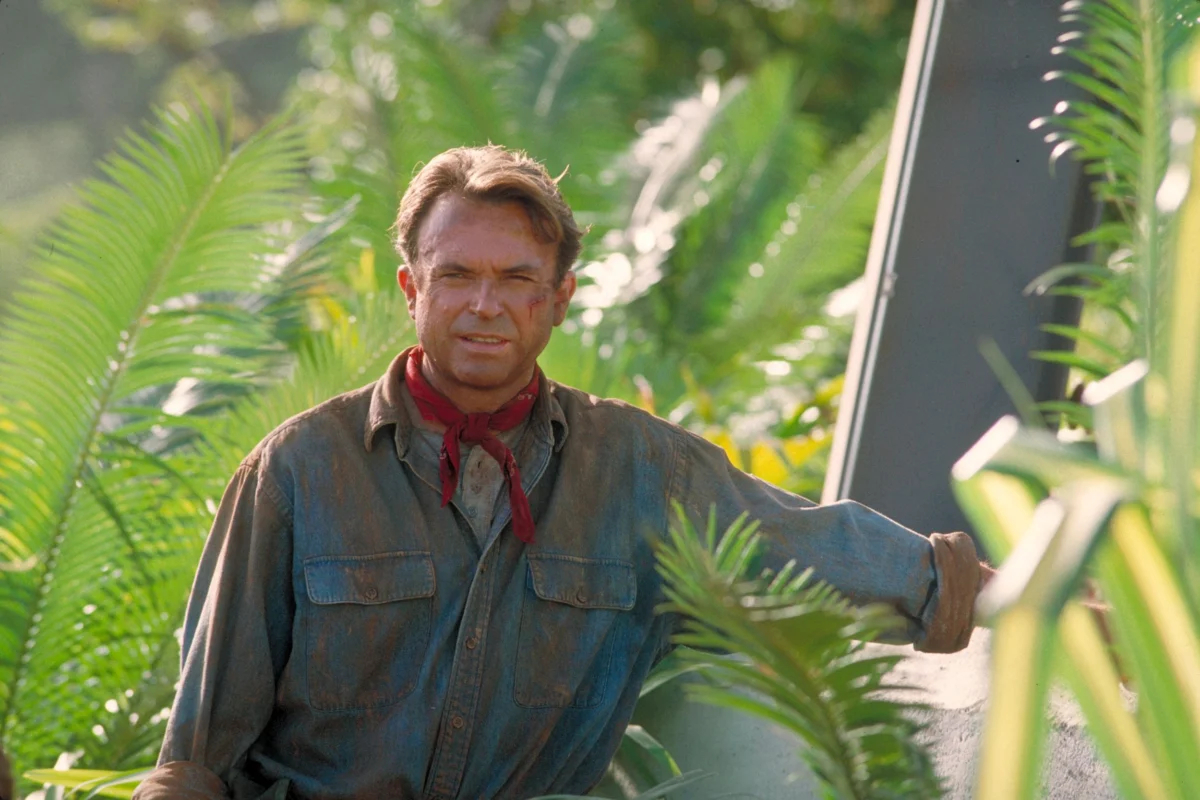
The global film community and the scientific world are mourning the loss of Sam Neill, the venerable New Zealand actor who passed away at the age of 78 in Sydney, Australia, this past Monday. Neill, whose career spanned over five decades, left behind an expansive and eclectic filmography that showcased a rare versatility, allowing him to inhabit roles ranging from supernatural antagonists to grounded, intellectual heroes. While he was celebrated for his performances in cult classics like Possession and prestige television dramas such as Peaky Blinders, it was his portrayal of Dr. Alan Grant in the 1993 blockbuster Jurassic Park that cemented his status as a cultural icon. Beyond the box office receipts and cinematic accolades, Neill’s work as the rugged, principled paleontologist is credited with inspiring an entire generation of students to pursue careers in science, technology, engineering, and mathematics (STEM).
A Life Defined by Range and Depth
Born Nigel John Dermot Neill in Omagh, Northern Ireland, in 1947, and raised in New Zealand, the actor who would become known to the world as "Sam" initially found his footing in the burgeoning New Zealand film industry of the 1970s. His early breakthrough in Sleeping Dogs (1977) helped put Oceanic cinema on the map, leading to a prolific international career. Neill’s filmography was notable for its lack of pigeonholing. He was as comfortable playing the literal spawn of the devil in Omen III: The Final Conflict as he was portraying the legendary wizard Merlin or a determined detective chief inspector in the gritty post-WWI world of Peaky Blinders.
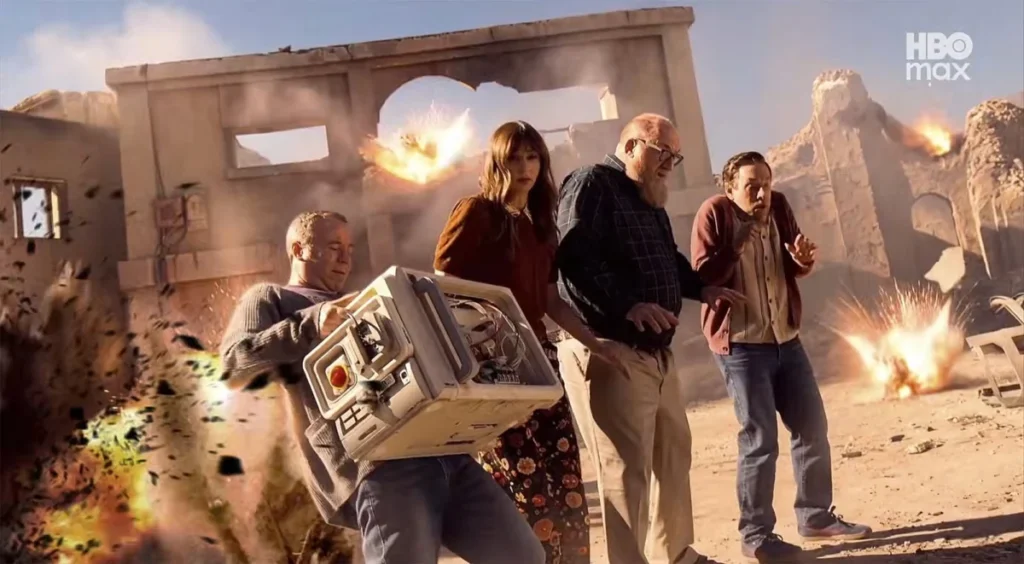
However, a recurring motif in Neill’s career was the "man of science." Whether he was playing a technician in the Australian satellite comedy The Dish or a theoretical physicist in the sci-fi horror Event Horizon, Neill possessed a natural gravitas that made intellectual pursuits seem both heroic and accessible. This trend reached its zenith in 1993 when director Steven Spielberg cast him as the lead in the adaptation of Michael Crichton’s Jurassic Park. As Dr. Alan Grant, Neill provided the emotional and moral center of a film that would go on to redefine the summer blockbuster and the capabilities of visual effects.
The Cultural Seismic Shift of Jurassic Park
The release of Jurassic Park in June 1993 represented a watershed moment in cinematic history. At the time, the film was a massive undertaking, blending cutting-edge animatronics by Stan Winston with revolutionary computer-generated imagery (CGI) by Industrial Light & Magic. While the dinosaurs were the primary attraction, the film’s enduring success was rooted in its human characters. Dr. Alan Grant, as portrayed by Neill, was not a traditional action hero. He was a field researcher—gruff, dusty, and more interested in the stratigraphic layers of the Badlands than the bright lights of corporate venture capitalism.
The film arrived at a time when the "action hero" archetype was dominated by the hyper-muscular personas of the 1980s. Neill’s Grant offered a stark contrast. He was a hero who succeeded through observation, expertise, and a deep-seated respect for the natural world. This portrayal resonated deeply with audiences, particularly young people who saw in Dr. Grant a version of adulthood that valued intellect over brawn.
Analyzing the Alan Grant Archetype
The appeal of Dr. Alan Grant lay in his authenticity and his evolution. Throughout the film, Neill portrayed Grant as a man with a "clarity of purpose," as noted by former neuroscience researcher Kevin Holloway. Grant was a scientist whose convictions were absolute, yet he remained open to the wonder of discovery. This was most poignantly illustrated in the scene where Grant and Dr. Ellie Sattler (played by Laura Dern) encounter a sick Triceratops. Neill’s performance transitioned from clinical observation to childlike awe, a moment that Richard Ferro, a family medicine physician, describes as a lesson that "intelligence and wonder can and should coexist."
Furthermore, Neill’s Grant served as a "counterexample to the violent, macho action stars" of the era. Jamie Anderson, who earned a DPhil in archaeological sciences, points to Grant’s relationship with his colleague, Dr. Sattler, as a key factor. Grant treated Sattler as a true professional equal, and his eventual protection of the children in the film—despite his initial vocal dislike of them—demonstrated a "gruff kindness" and a sense of responsibility that avoided the tropes of toxic masculinity.
The Jurassic Park Effect on STEM Education
The impact of Neill’s performance extended far beyond the walls of movie theaters. Sociologists and educators have long noted the "Jurassic Park Effect," a phenomenon where interest in paleontology and earth sciences spiked dramatically following the film’s release. Data from various universities and museums in the mid-to-late 1990s showed a significant uptick in enrollment for geology and biology programs, as well as record-breaking attendance at natural history museums.
The testimonials from the scientific community following Neill’s passing confirm this lasting influence. Lucky Tran, director of science communication at Columbia University Irving Medical Center, credited the duo of Grant and Sattler with inspiring a generation to enter the lab. Similarly, Thomas Ronge, a marine geologist at Texas A&M University, noted that while his career eventually veered into oceanography, he remains "Dr. Grant at heart."
For many, Neill’s portrayal provided a blueprint for what a scientist could be: someone who is level-headed, uses their wits to overcome obstacles, and maintains a moral compass in the face of "opportunistic monetization." Jim Porter, an environmental scientist, recalled reading Crichton’s novel during a geology field camp in the western United States. Seeing Neill bring that character to life reinforced his commitment to understanding and revering Earth’s history.
Beyond the Screen: The Vineyard and the Man
While his professional life took him to the far corners of the globe, Sam Neill remained deeply rooted in his home country of New Zealand. Away from the cameras, he was a celebrated vintner, founding Two Paddocks in the Central Otago region in 1993—the same year Jurassic Park was released. His vineyard became a passion project, known for producing high-quality Pinot Noir and reflecting Neill’s own dedication to the land.
Fans often found solace and charm in Neill’s social media presence, where he frequently shared updates about his farm animals, often naming them after his famous co-stars. This "life away from Hollywood" added a layer of relatability to the actor. He was seen not just as a distant star, but as a man who valued the simple complexities of nature, much like the characters he played.
Global Reactions and the Enduring Legacy
The news of Neill’s passing has prompted a wave of tributes from both the entertainment industry and the scientific world. Colleagues have described him as a "consummate professional" and a "gentleman of the old school." Steven Spielberg, in a statement released through his production company, praised Neill’s ability to bring "quiet strength and intellectual curiosity" to every frame.
From a professional standpoint, Neill’s death marks the end of an era for the "character-lead"—actors who could carry a massive franchise while maintaining the integrity of a character actor. His ability to navigate the transition from the VHS and DVD eras to the modern streaming landscape ensured that his work remained accessible to new generations.
The implications of Neill’s work continue to manifest in the current scientific workforce. The "kids" who watched Jurassic Park in 1993 are now the senior researchers, doctors, and engineers of today. As James, a civil engineer in Florida, noted, the character of Dr. Grant taught him that one could be brilliant and accomplished without being arrogant. "It’s clear he knows his shit, but he’s not an asshole about it," James remarked, highlighting a value system he now applies to his engineering projects.
A Guiding Light for Future Generations
As the film industry reflects on Sam Neill’s 78 years, the consensus remains that his contribution to culture was twofold: he was a master of his craft and a silent recruiter for the sciences. While the technology used to create the dinosaurs of Jurassic Park has been surpassed, the humanity Neill brought to Dr. Alan Grant remains timeless.
The actor’s legacy is now being passed down to a new generation. Parents who were once captivated by the thumping water in a plastic cup and the roar of a T-Rex are now introducing their children to Neill’s work. Despite the "scary" elements of his more intense films, the enduring image of Sam Neill remains that of a man in a straw hat, kneeling in the dirt, looking at the past with a sense of wonder, and inviting the rest of us to do the same.
In the final analysis, Sam Neill did more than play a scientist; he validated the pursuit of knowledge as a heroic endeavor. As the world says goodbye to the man, the "man of science" he created will continue to inspire those who look at the world not for what they can take from it, but for what they can understand about it. His death is a significant loss to the arts, but his influence remains etched in the careers of thousands of scientists who, once upon a time, saw a man on a screen and decided they wanted to be just like him.