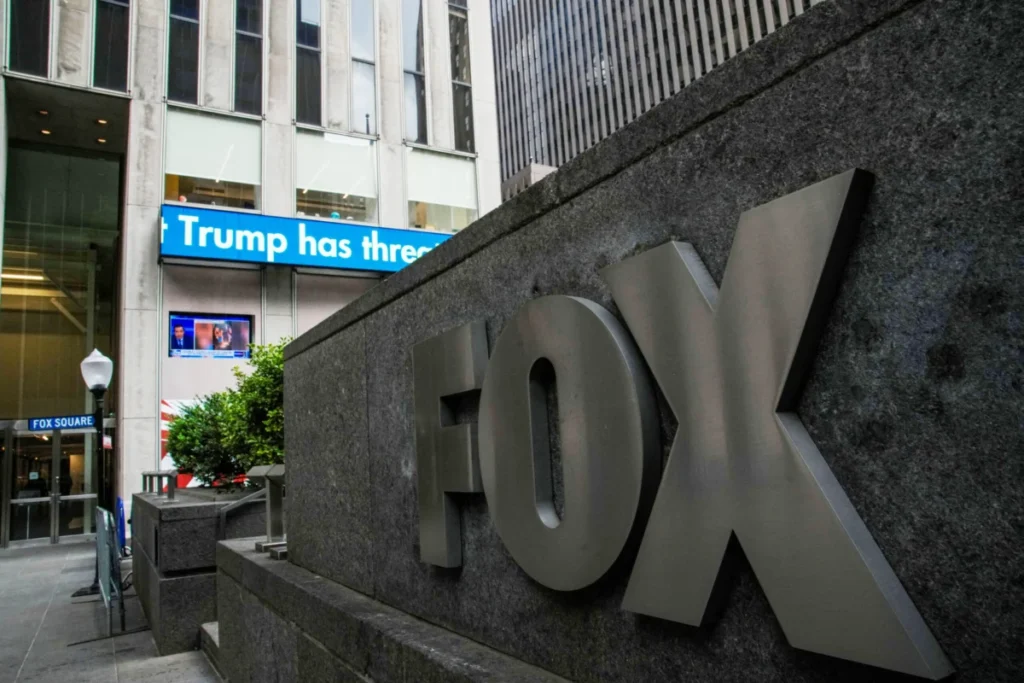

The Walt Disney Company has formally escalated its legal and regulatory confrontation with the Federal Communications Commission (FCC), filing license renewal applications for eight of its primary broadcast stations under a "vigorous protest." This move follows an unprecedented order by the federal regulator to move up the license expiration dates for Disney’s ABC-owned stations by several years, a decision Disney characterizes as an unconstitutional and arbitrary exercise of government power. The conflict represents a significant flashpoint in the intersection of corporate governance, broadcast regulation, and the escalating national debate over diversity, equity, and inclusion (DEI) initiatives.
In its filings submitted on Thursday, Disney’s legal counsel asserted that the company was complying with the FCC’s directive only to avoid the immediate forfeiture of its broadcasting rights, while maintaining that the order lacks any legitimate regulatory purpose. The licenses for the eight stations in question—which include major market hubs such as WABC-TV in New York, KABC-TV in Los Angeles, and WLS-TV in Chicago—were originally slated for renewal between 2028 and 2031. By forcing an early review, the FCC has thrust Disney into a high-stakes administrative process that could, in theory, lead to the revocation of the company’s right to broadcast over public airwaves.
The FCC’s Investigation into DEI Practices
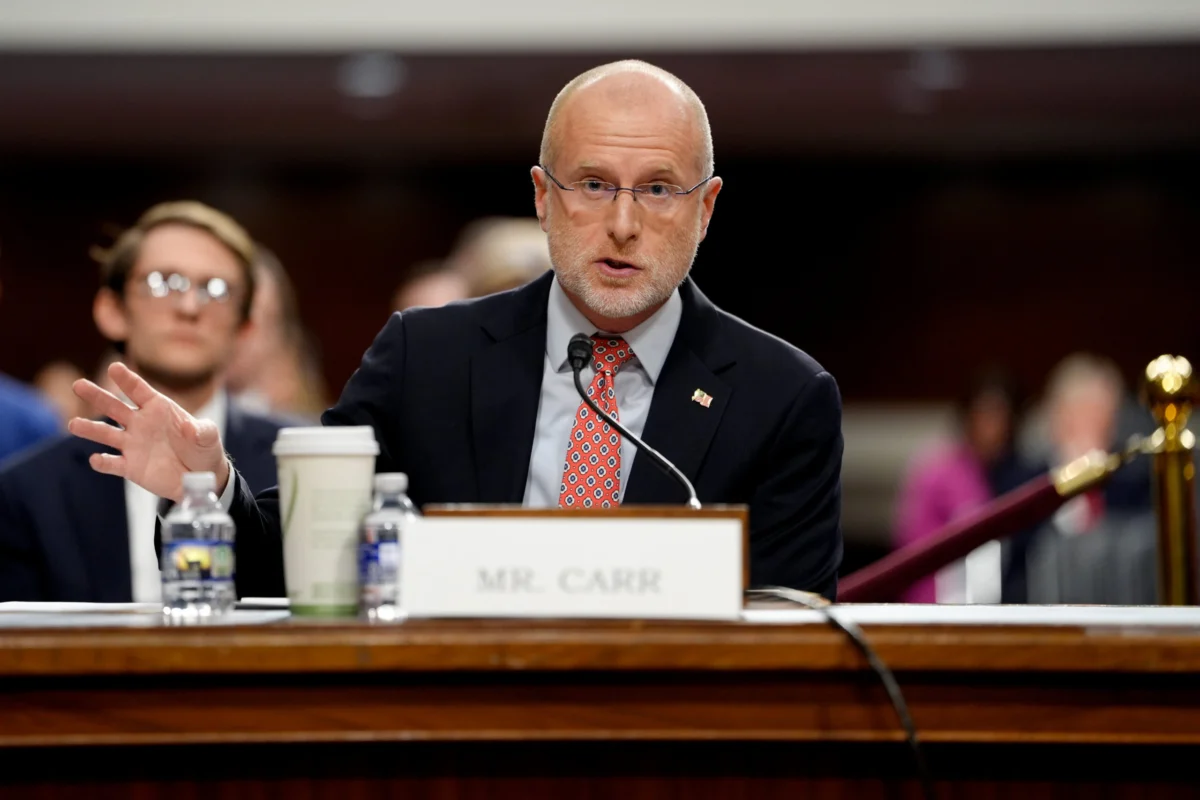
The catalyst for this regulatory acceleration is a focused investigation by the FCC into the internal hiring and management practices of the Disney-owned ABC Television Station Group. According to FCC Commissioner Brendan Carr, who has been a vocal proponent of the probe, the agency is examining whether Disney’s DEI programs constitute "invidious forms of discrimination" that violate the Communications Act of 1934 and established FCC rules regarding non-discriminatory employment.
The investigation, which began in early 2025, originally sought information regarding how Disney’s diversity mandates influenced casting, hiring for newsrooms, and executive promotions. However, the relationship between the regulator and the media giant soured quickly. In a recent interview on CNBC’s "Squawk on the Street," Carr indicated that the decision to trigger early license renewals was a direct consequence of what he described as Disney’s lack of transparency.
"We have been signaling for a long time that we want Disney to take seriously our investigation," Carr stated. He characterized Disney’s previous responses as "disingenuous," "incomplete," and "nonresponsive." Carr argued that the early renewal process is a necessary investigative tool to ensure the company is held accountable to the public interest standards required of all broadcast licensees. He dismissed Disney’s claims that the move was a violation of the First Amendment, asserting that the focus remains strictly on employment law and regulatory compliance rather than content or speech.
A Chronology of Regulatory Escalation
The current impasse is the result of a series of events that have unfolded over the past 18 months, reflecting a shift in the FCC’s enforcement priorities under the current administration’s oversight.
- March 2025: The FCC officially opens an inquiry into the DEI practices of major media conglomerates, with Disney identified as a primary subject of interest. The agency cites the Communications Act’s prohibition on unlawful discrimination as the legal basis for the probe.
- December 2025: Commissioner Brendan Carr testifies before the Senate Commerce, Science, and Transportation Committee. During this oversight hearing, Carr highlights concerns that corporate DEI policies may be infringing upon the civil rights of employees and applicants, signaling that the FCC would use its licensing authority to compel compliance.
- January – March 2026: Disney and the FCC engage in a series of document exchanges. The FCC alleges that Disney is withholding key data regarding its internal diversity quotas and hiring matrices.
- April 2026: In a rare procedural move, the FCC issues an order requiring Disney to file for license renewals for eight of its stations years ahead of schedule. The order effectively shortens the standard eight-year license term.
- May 2026: Disney files the renewal applications "under protest," setting the stage for a public comment period and potential legal challenges in federal court.
Disney’s Legal Defense and First Amendment Arguments
Disney’s response to the FCC has been both procedural and philosophical. In its Thursday filing, the company noted that the FCC has not utilized an early renewal mandate in more than 50 years, suggesting that the sudden use of this "ancient" mechanism is evidence of a targeted campaign against the company.
"The order has no legitimate purpose," Disney stated in its filing. The company argues that the FCC already possesses the authority to request information through standard investigatory channels and that forcing a license renewal—which carries the threat of total business cessation—is a disproportionate response.
Furthermore, Disney’s legal team is framing the FCC’s actions as a violation of the First Amendment. They contend that the government is using regulatory "strong-arm tactics" to punish a media organization for its corporate values and, by extension, the culture of its broadcast content. By targeting ABC-owned stations, Disney argues the FCC is creating a "chilling effect" that could discourage other broadcasters from pursuing social or corporate initiatives that do not align with the political preferences of the commission’s majority.
The Political Dimension: Trump, Kimmel, and Allegations of Retaliation
The timing of the FCC’s crackdown has not escaped the notice of political analysts or internal agency critics. The order for early renewal followed a series of public attacks on Disney and its broadcast network, ABC, by President Donald Trump. These attacks were largely centered on the content of "Jimmy Kimmel Live!", ABC’s late-night talk show, where the host has been a persistent and sharp critic of the administration.
Critics of the FCC’s recent moves, including sitting FCC Commissioner Anna Gomez, have suggested that the DEI investigation is a "pretext" for political retaliation. In social media posts and internal memos, Gomez has raised concerns that the agency’s independence is being compromised to serve an executive branch agenda aimed at "punishing" perceived political enemies in the media.
The Trump administration has frequently criticized Disney for its "woke" corporate culture, and the FCC’s focus on DEI practices aligns with a broader executive effort to dismantle diversity programs across both the public and private sectors. However, Brendan Carr has pushed back against these allegations, insisting that the agency is merely following the "facts and the law" and that the investigation is a routine exercise of the FCC’s mandate to ensure that public airwaves are not used by entities that engage in discriminatory practices.
Understanding the Stakes: The 8 Stations at Risk
The eight stations forced into this early renewal cycle represent the backbone of Disney’s local broadcast reach. They serve some of the most populous and influential media markets in the United States:
- WABC-TV (New York, NY)
- KABC-TV (Los Angeles, CA)
- WLS-TV (Chicago, IL)
- WPVI-TV (Philadelphia, PA)
- KGO-TV (San Francisco, CA)
- KTRK-TV (Houston, TX)
- WTVD (Raleigh-Durham, NC)
- KFSN-TV (Fresno, CA)
If the FCC were to deny these renewals, it would be a catastrophic blow to Disney’s linear television business. While Disney has shifted much of its focus to streaming services like Disney+ and Hulu, its broadcast stations remain highly profitable through local advertising and retransmission consent fees paid by cable and satellite providers. Furthermore, these stations provide the local news infrastructure that supports the national ABC News brand.
Analysis of Regulatory and Industry Implications
The battle between Disney and the FCC could have far-reaching consequences for the entire telecommunications industry. Historically, the FCC has focused its broadcast oversight on technical compliance, indecency standards, and localism requirements. An expansion into auditing corporate DEI policies as a condition for license renewal marks a significant shift in the agency’s role.
If the FCC successfully uses the "public interest" standard to penalize companies for their internal diversity strategies, other media giants—such as Warner Bros. Discovery, Paramount Global, and NBCUniversal—could find their own broadcast licenses under similar scrutiny. This creates a new era of "regulatory risk" where corporate HR policies become a matter of federal licensing.
Legal experts anticipate that this case will eventually reach the U.S. Court of Appeals for the D.C. Circuit. The central question for the court will be whether the FCC has the statutory authority to define DEI practices as "invidious discrimination" under the Communications Act, and whether the procedural move of early renewal constitutes an "abuse of discretion."
Next Steps in the Renewal Process
With the applications now filed, the FCC will issue a public notice, likely as early as Friday. This triggers a formal "cycle" where the public, advocacy groups, and political organizations can file petitions to deny the renewals. This process is expected to be highly contentious, with conservative advocacy groups likely to provide testimony against Disney’s DEI practices, while First Amendment advocates and civil rights groups are expected to file in support of the broadcaster.
Disney will have the opportunity to file an opposition to any petitions to deny, leading to a period of administrative adjudication. While the actual pulling of a license remains a "nuclear option" that the FCC has rarely exercised in its history, the mere existence of the proceeding places Disney in a defensive posture that could last for years.
As the 2026 election cycle approaches, the Disney-FCC conflict is likely to remain a central talking point, serving as a case study for the broader debate over the role of government in regulating corporate culture and the limits of free speech in the modern media landscape. For now, the "House of Mouse" remains in a state of regulatory siege, fighting a battle that is as much about the future of the First Amendment as it is about the right to broadcast.