

The Narrative Core and Character Dynamics
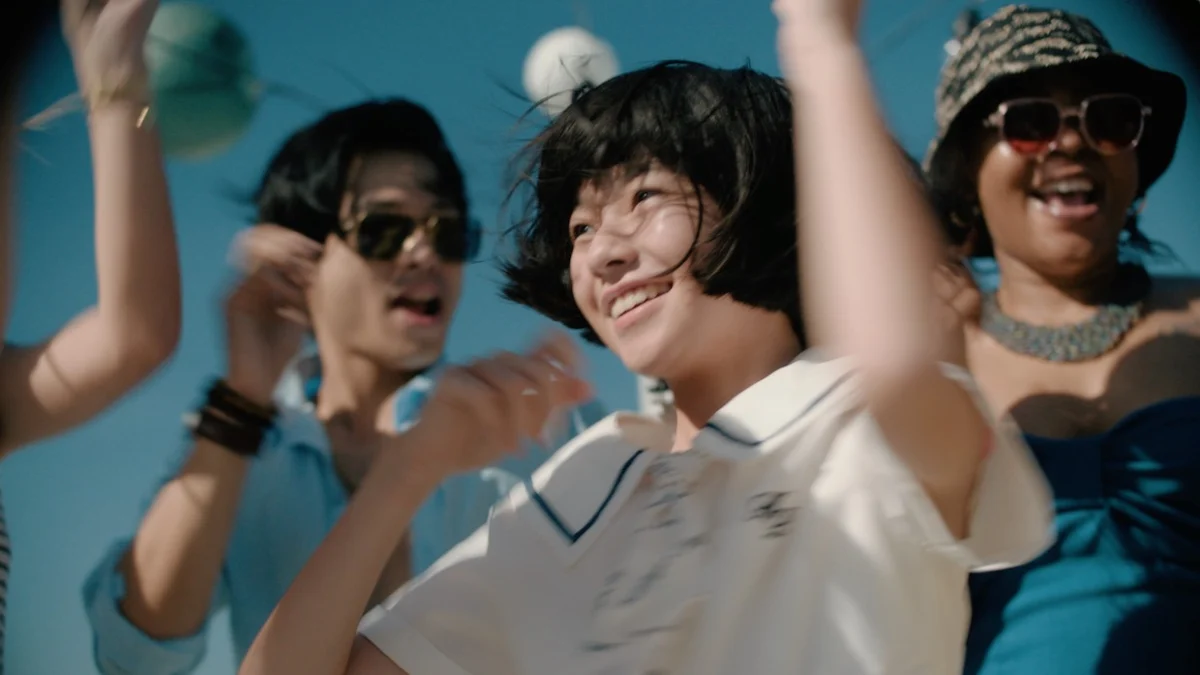
The film follows Fuki during a transformative year as she navigates the mundane expectations of late childhood while grappling with the impending death of her father. Unlike many coming-of-age stories that rely on sentimental tropes, Renoir adopts a more complex psychological approach. Fuki is depicted with an interest in the macabre, a trait that serves as a coping mechanism for the grim reality unfolding in her home. This internal curiosity is contrasted with the external rituals of 1980s Japanese life: school camps, television psychics, and the burgeoning "phone chat" culture of the era.
A central element of Fuki’s development is her fixation on a reproduction of Pierre-Auguste Renoir’s 1880 portrait, Irène Cahen d’Anvers. The painting, often referred to as "The Little Girl with the Blue Ribbon," becomes a symbol of Fuki’s emerging identity and her desire for a sense of grace and permanence in a world defined by decay. This fixation reflects a broader cultural trend in 1980s Japan, where the acquisition of Western art—even in the form of mass-produced replicas—signified a connection to a global elite and a departure from the hardships of the immediate post-war years.
Historical Context: Japan’s Bubble Economy
The setting of 1987 is essential to the film’s thematic resonance. This period marked the early stages of Japan’s "bubble economy," a time of unprecedented real estate and stock market speculation. Following the "miraculous" economic recovery of the 1960s and 70s, the mid-80s represented a peak of Japanese optimism and global influence. However, beneath the surface of this prosperity lay a growing sense of alienation.
During this era, Japanese society was characterized by an intense drive to "catch up" with the West. This resulted in a unique cultural synthesis where traditional Japanese values collided with American and European consumerism. Hayakawa captures this through subtle signifiers: the popularity of Yellow Magic Orchestra, the prevalence of VHS tapes, and the "gaudy, Gothic frames" used to house cheap art reproductions. The film suggests that while the nation was looking toward a brighter, more affluent future, individuals were often left to process personal tragedies in isolation.
A Comparative Analysis of Hayakawa’s Work
Renoir serves as a companion piece to Hayakawa’s previous film, Plan 75, which depicted a government-sponsored euthanasia program for senior citizens. While Plan 75 was frequently categorized as science fiction or dystopian horror by international audiences, Hayakawa has stated that she views it as a parallel to contemporary society. Both films explore the concept of "productivity" and how society values or marginalizes individuals based on their age and health.
In Plan 75, the elderly are viewed as a socioeconomic burden, leading to a state-sanctioned erasure of the population. In Renoir, the focus shifts to the beginning of life and the way children are taught to process loss. Both films avoid "cheap sentimentality," instead opting for a sober, objective lens. Hayakawa’s work consistently investigates how the Japanese government and corporate structures influence personal autonomy and emotional expression. The "anger-management" course attended by Fuki’s mother in Renoir is a prime example of this, illustrating how even the most private emotions—such as grief and rage—are subjected to institutional regulation.
Production and Artistic Collaboration
The film’s visual language is the result of a second collaboration between Hayakawa and cinematographer Hideho Urata. Urata, who also shot Plan 75, utilizes a deliberate and composed style that emphasizes the physical spaces inhabited by the characters. While Plan 75 utilized handheld camerawork to convey the "liveliness" of certain characters, Renoir relies on more static, thoughtful compositions to reflect Fuki’s internal state.
The casting of Yui Suzuki was a pivotal moment in the production. Hayakawa noted that Suzuki’s performance was characterized by a lack of hesitation and a unique ability to blend childlike innocence with a mature understanding of her surroundings. This duality is central to the film’s effectiveness, as it allows the audience to see the world through the eyes of a child who is rapidly losing her naivety.
Societal Implications and the Aging Population
Renoir arrives at a time when Japan is facing a significant demographic crisis. It is estimated that by 2050, one-third of the Japanese population will be over the age of 65. This "aging society" has led to a widespread sense of helplessness and anxiety regarding the future. Hayakawa’s films tap into this national psyche, addressing the discrimination faced by the elderly and the isolation felt by those left behind by the rapid pace of globalization.
The director has described herself as an "optimistic pessimist," a sentiment that permeates Renoir. While the film deals with death and the collapse of the nuclear family, it also acknowledges the possibility of empathy and the formation of new, albeit fragile, connections. The film’s refusal to offer easy answers reflects the reality of grief, which Hayakawa describes as "one of the loneliest periods in human existence."
The State of the Japanese Film Industry
The production of Renoir also highlights the challenges facing independent filmmakers in Japan. Hayakawa has observed that a significant majority of domestic "hit" films are based on preexisting intellectual property, such as manga, anime, or best-selling novels. For original scripts, funding is often difficult to secure within the traditional Japanese studio system.
To circumvent these obstacles, Hayakawa has utilized international co-productions, seeking grants and support from European institutions. This approach has allowed her to maintain creative control and produce films that deviate from the commercial norms of the domestic market. By working with international crews and targeting global film festivals, Hayakawa is part of a new generation of Japanese directors whose work transcends national borders, addressing universal themes of mortality and social structure.
Chronology of Events and Release
The development of Renoir can be traced back to Hayakawa’s own childhood experiences, though the film’s formal journey began following the success of Plan 75 at the 2022 Cannes Film Festival.
- 1987: The year in which the film is set, representing the height of Japan’s economic bubble.
- 2018: Hayakawa releases the short film version of Plan 75 as part of an omnibus project.
- 2022: Plan 75 premieres at Cannes, receiving a Special Mention for the Caméra d’Or.
- 2023: Renoir premieres at major international festivals, including Cannes, where it receives critical acclaim for its nuanced portrayal of childhood.
- 2026: The film begins its theatrical rollout in the United States, opening at the IFC Center in New York and the NuArt in Los Angeles.
Conclusion and Broader Impact
Renoir is a significant contribution to contemporary Japanese cinema, offering a rigorous examination of how history and personal tragedy intertwine. By revisiting the 1980s, Chie Hayakawa provides a critique of the era’s unchecked optimism and its lasting impact on the Japanese psyche. The film suggests that the "carefree" belief in a brighter future was a luxury that many, including children like Fuki, could not afford.
As the film expands to additional cities through Film Movement, it is likely to spark further discussion regarding the nature of grief and the societal structures that dictate how we live and die. Through the eyes of Fuki and the lens of a Renoir painting, Hayakawa invites viewers to confront the complexities of the human condition with the same "sober element" that defines her unique cinematic voice. The film stands as a testament to the power of original storytelling in an industry increasingly dominated by established franchises, proving that intimate, character-driven narratives still possess the power to resonate on a global scale.