
The 15th edition of the Taiwan International Documentary Festival (TIDF), held in May 2024, underscored the festival’s enduring role as a critical hub for politically engaged cinema in Asia. Established in 1998, just a decade after the lifting of martial law in Taiwan, the TIDF emerged during a transformative period characterized by a surge in independent video activism and the development of alternative media structures. While the Yamagata International Documentary Film Festival in Japan had pioneered the championing of regional nonfiction since 1989, the TIDF carved out a unique space by balancing an Asian Visions Competition with a dedicated Taiwan Competition, fostering a dialogue between local narratives and broader continental struggles. The 2024 program continued this tradition, presenting a sophisticated array of new releases and meticulously restored archival works that challenge established historical narratives and explore the complexities of contemporary identity.
Historical Context and the Archival Discovery of Chang Chao-tang
The TIDF has long functioned as a repository for the collective memory of a nation transitioning from authoritarianism to democracy. The lifting of martial law in 1987 is frequently cited as the genesis of Taiwanese documentary cinema; however, the 15th edition’s archival screenings provided evidence that the roots of the medium are deeper and more complex. A central highlight of the festival was the world premiere of Archive: Li Guang-hui (1979/2024), a 30-minute work by the late photographer and filmmaker Chang Chao-tang. Compiled from television newsreel outtakes captured between 1975 and 1979 during Chang’s tenure at the China Television Company (CTV), the film offers a searing look at the repatriation of Suniuo, an Indigenous Amis soldier.
Suniuo, known variously by his Japanese name Teruo Nakamura and his Mandarin name Li Guang-hui, was a member of the Japanese Imperial Army who was discovered on the Indonesian island of Morotai in 1974, thirty years after the end of World War II. Having lived in isolation in the jungle, Suniuo was unaware the conflict had concluded. Upon his return to Taiwan, his story was promptly co-opted by the Kuomintang (KMT) administration to serve a nationalist agenda, framing him as a hero of the Republic of China who had evaded Japanese capture. Chang’s film, which remained in his private archives until his death in early 2024, deconstructs this myth. By utilizing outtakes and raw footage rather than the polished propaganda of the era, Chang highlights the profound disconnect between the state-mandated narrative and Suniuo’s personal trauma.
The film’s chronological structure documents the media circus surrounding Suniuo’s homecoming, including a poignant sequence where the legendary folk singer Chen Da performs an epic ballad of return. Chang’s camera lingers on Suniuo’s face, capturing a sense of profound alienation as he listens to a Mandarin song—a language and cultural tradition entirely foreign to his Amis upbringing. The donation of Chang’s archives to the Taiwan Film and Audiovisual Institute (TFAI) by his son has provided scholars with a vital resource for re-evaluating the history of Taiwanese media during the martial law era.
Chronology of Identity: War Memories and Shifting Allegiances
The 15th TIDF organized its archival offerings into thematic strands that probed the hybridity of Taiwanese identity. The "Reel Taiwan" program focused on the social movements of the 1980s, while the "War Memories, Shifting Identities" strand examined the experiences of conscripted soldiers during the Japanese colonial period. These programs collectively addressed the island’s contested relationship with Sinocentrism and its suppressed Indigenous histories.
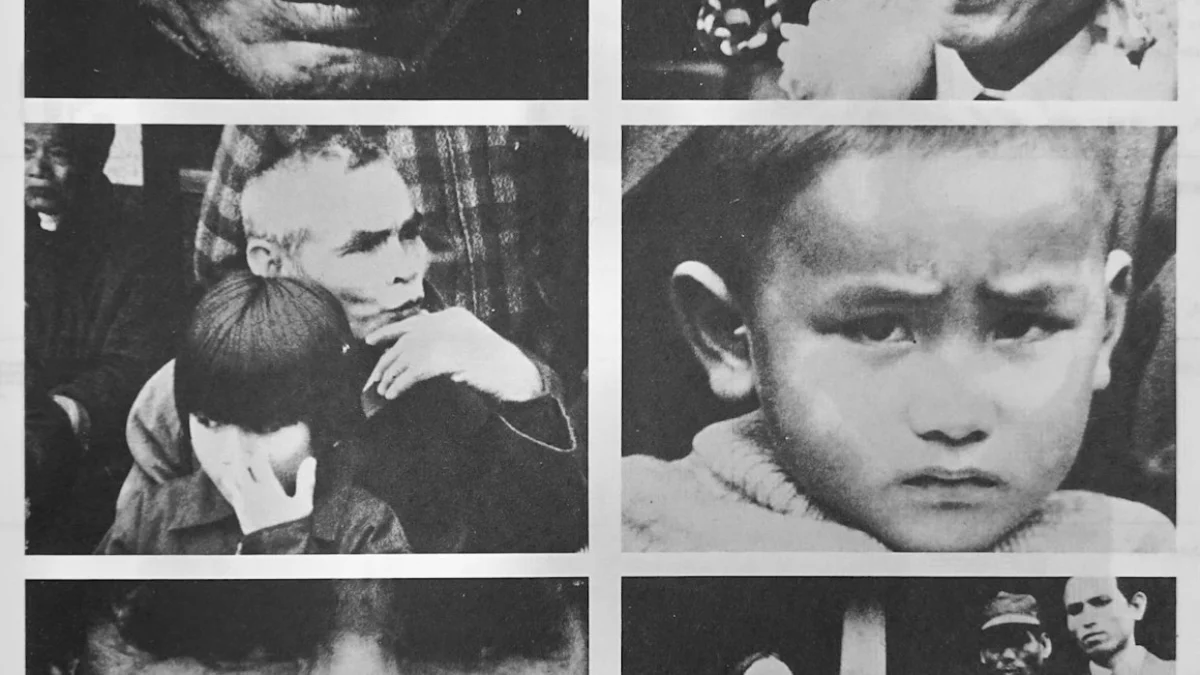
A significant inclusion in this category was Asia Is One (1973), produced by the leftist collective NDU. The film serves as an ethnographic and political map of the Pacific, weaving together the testimonies of Taiwanese fishermen in Okinawa, Okinawan miners in mainland Japan, and members of the Tayal Indigenous communities in Taiwan. By documenting these "seasonal laborers" and their varying degrees of loyalty or resistance to Japanese colonialism, the film illustrates a "prismatic" view of history. It rejects a monolithic national identity in favor of an archipelagic perspective, highlighting how individuals were caught between the territorializing forces of Japan, China, and the United States. This historical inquiry is particularly relevant in the current geopolitical climate, where Taiwan’s self-governance is frequently discussed in the context of competing imperial interests.
Urban Development and the Individual: Hu Sanshou’s Longitudinal Study
The festival also turned its attention to the physical transformation of the landscape through the lens of urban development. Hu Sanshou’s Xiangzidian Village: The Stage (2026) stands as a monumental 150-minute observation of a village’s erasure. Filmed over six years, the documentary tracks the encroachment of heavy machinery and the eventual replacement of natural landscapes with a gray expanse of highway.
Hu, who previously gained acclaim for his film Resurrection (2025), adopts a more detached, storytelling approach in this latest work. Rather than relying on direct interviews, he uses voiceover to provide vignettes of the villagers, whom he describes through their familial connections. This method emphasizes the destruction of "interlocking webs" of community. The film is notable for its patience, mourning the elders who passed away during the production process and capturing the "Sisyphean" nature of rural life in the face of state-mandated progress. Analysts suggest that Hu’s work reflects a broader trend in independent Chinese and Taiwanese documentary filmmaking that moves away from the "ravenous" pace of European festival circuits toward a more contemplative, localized form of mourning.
Political Trauma and the Failure of Resolution: Suwichakornpong and Luo Li
The 15th TIDF did not shy away from the complexities of contemporary political revolt and its aftermath. Anocha Suwichakornpong’s Narrative (2026) addresses the 2010 Bangkok massacre of Red Shirt pro-democracy activists. The film is structured as a theatrical workshop involving the families of the victims, divided into three acts that mimic a traditional narrative arc: memory, legal discussion, and gratitude.
However, Suwichakornpong uses this structure to critique the way trauma is commodified and "resolved" in cinema. By silencing the participants’ expressions of gratitude with a score by Eiko Ishibashi, she suggests that state-sanctioned reconciliation often overwrites the actual needs of the victims. The film highlights how Thai law disaggregates collective tragedies into isolated legal cases, preventing a comprehensive reckoning with military state violence.
In a similar vein of investigating the "exhaustion" of the modern state, Luo Li’s Air Base (2025) offers a "city symphony" of post-pandemic Wuhan. The film depicts a series of absurd, staged interventions in public spaces—a man directing traffic from an overpass, another straightening curtains on buses, and a woman collecting recordings of sighs. These "Beckettian" sequences provoke unscripted reactions from the public, ranging from apathy to suspicion. The film captures a sense of "limp time," where narrative propulsion is replaced by a suspended duration. It reflects a society that has acquiesced to authority not through conviction, but through a profound, collective exhaustion.
Broader Impact and Implications for the Documentary Movement
The programming of the 15th TIDF serves as a rebuttal to the notion that Taiwanese documentary is a relatively recent phenomenon born solely from the democratic transition of 1987. By showcasing works like those of Chang Chao-tang and the NDU collective, the festival asserts that a sophisticated, avant-garde documentary movement existed even under the constraints of censorship.
Furthermore, the festival’s focus on international solidarity, particularly through the "Palestine and Its Archiveless Archive" program, positions the struggles of East Asia within a global continuum of anti-imperialist efforts. This alignment suggests that the TIDF is not merely a regional showcase but a significant player in the global discourse on human rights and historical preservation.
As Taiwan continues to navigate its precarious position on the global stage, the TIDF remains a vital venue for "defiantly prismatic" storytelling. The films presented in 2024 and those projected for 2025 and 2026 indicate a shift toward works that find resilience in the "specific textures of physical and emotional worlds," avoiding easy answers in favor of a deeper investigation into how individuals and communities endure when the "good life" remains elusive. The festival concludes that while cinema may not "change the world" in an immediate, revolutionary sense, its ability to archive the "prickly forms" of resistance ensures that history cannot be easily rewritten by those in power.