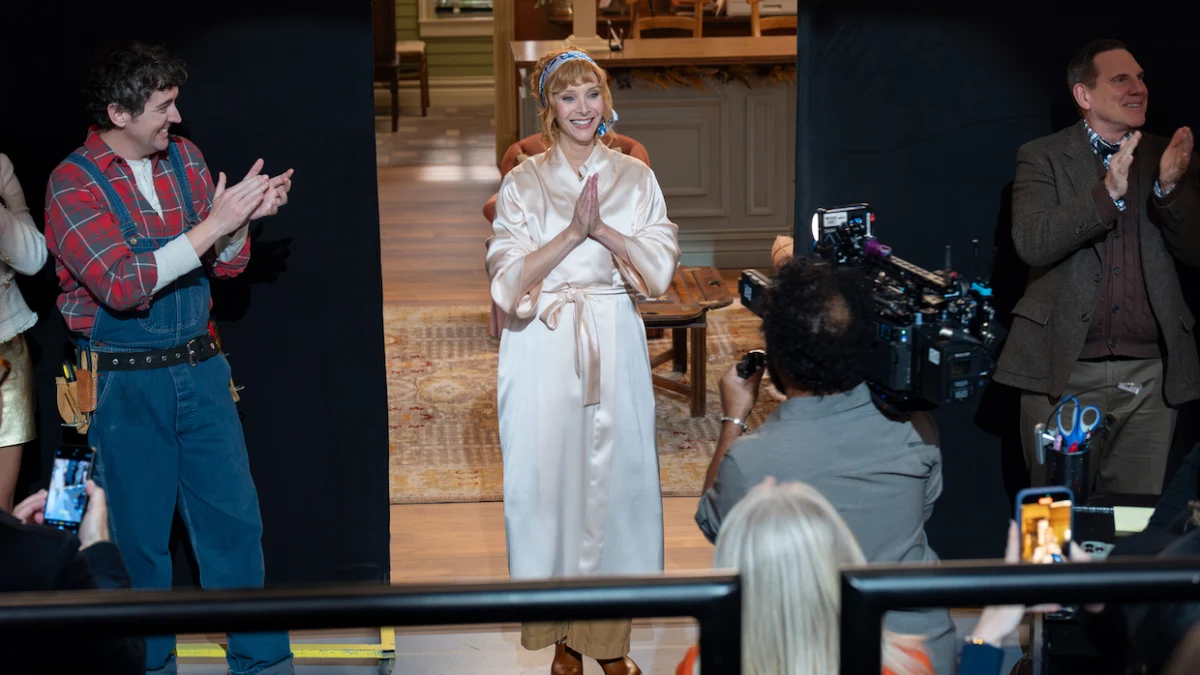
The return of the HBO comedy series The Comeback has historically aligned with pivotal shifts in the television landscape, serving as a barometer for the medium’s recurring existential anxieties. Originally debuting in 2005, the series—co-created by Michael Patrick King and Lisa Kudrow—offered a caustic critique of the burgeoning reality television era, which at the time was perceived as a threat to scripted programming due to its low production costs and reliance on manufactured drama. After a nine-year hiatus, the show returned in 2014 to satirize the "prestige TV" boom and the nascent streaming wars. Now, twelve years after its second iteration, The Comeback has returned for its third and final season, positioning its protagonist, Valerie Cherish, at the center of the industry’s most significant technological disruption to date: the integration of generative artificial intelligence in creative writing.
The Narrative Shift: Valerie Cherish vs. Generative AI
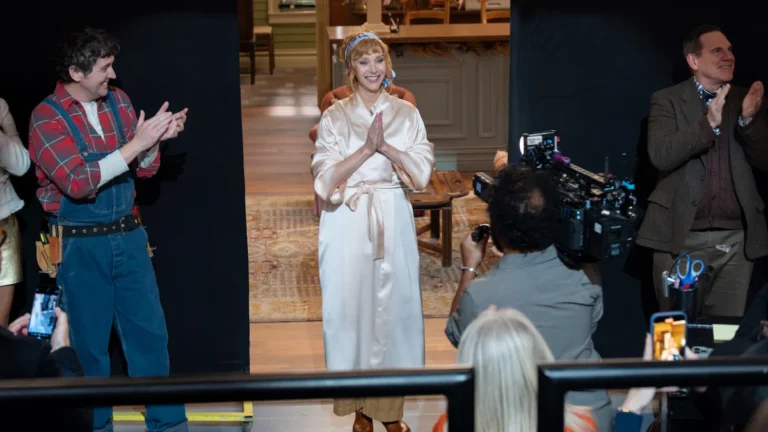
In the final season of The Comeback, Valerie Cherish, the resilient yet perpetually desperate sitcom veteran portrayed by Kudrow, secures a lead role in a groundbreaking but controversial project: the first multi-camera sitcom written entirely by artificial intelligence. Titled How’s That?!, the show is produced for NuNet, a fictionalized tech-conglomerate-funded network. Valerie, who also serves as an executive producer, finds herself navigating an ethical minefield. While she is desperate for the professional resurgence the role provides, she is simultaneously confronted by the reality that the technology powering her show is built upon the plagiarized legacies of her peers.
The scripts produced by the proprietary AI, known as "Allassist," are depicted as stale and derivative. In a meta-commentary on the current state of industry labor, Valerie’s fellow veteran actors frequently recognize dialogue and joke structures lifted directly from their past work. When a joke fails to land during a live taping, the AI generates hundreds of "alts" (alternative lines) instantaneously—a process that underscores the machine’s efficiency while highlighting its lack of comedic timing and human nuance. This narrative choice reflects real-world concerns raised during recent labor disputes regarding the "cannibalization" of creative intellectual property by Large Language Models (LLMs).
A Departure from Form: The End of the Mockumentary
A significant stylistic change in the third season is the abandonment of the mockumentary format that defined the show’s first two runs. Previously, the series was presented as raw footage for a reality show or a behind-the-scenes documentary, emphasizing Valerie’s performative nature and her awareness of the camera. The transition to a traditional narrative structure allows for a more propulsive and focused exploration of Valerie’s agency. No longer just the "butt of the joke" or a victim of the industry’s ageism and sexism, Valerie emerges as a more proactive figure. She is forced to choose between her own career longevity and the survival of the writing profession—a group that has historically served as her chief antagonist within the show’s universe.
Parallel Trajectories: The Case of Hacks and Deborah Vance
The thematic concerns of The Comeback are mirrored in the fifth and final season of the Emmy-winning Max series Hacks. Created by Lucia Aniello, Paul W. Downs, and Jen Statsky, Hacks follows the professional and personal evolution of legendary stand-up comic Deborah Vance (Jean Smart) and her millennial head writer, Ava Daniels (Hannah Einbinder). Much like Valerie Cherish, Deborah Vance represents a "legacy" entertainer fighting for relevance in a rapidly consolidating corporate environment.
In the fourth season finale, Deborah’s lifelong ambition of hosting a late-night talk show was derailed by network interference, leading to her departure after refusing to fire Ava. The fifth season finds Deborah sidelined by a restrictive non-compete clause, preventing her from performing for a year. This plotline echoes real-world industry trends where corporate censorship and contract rigidities have increasingly stifled creative autonomy.
Hacks also addresses the AI threat directly. In a pivotal sequence, Deborah is approached by venture capitalists seeking to license her likeness and comedic library for an AI tool called "QuikScribbl." The proposal highlights the commodification of "voice" and the tech industry’s push to replace seasoned artists with algorithmic approximations. The show uses Ava’s character to articulate the creative community’s resistance, framing AI not as an inevitability, but as a product of corporate interests prioritizing scalability over artistry.
Chronology of Television’s Existential Crises
To understand the impact of these series, one must examine the timeline of industry shifts they have documented:
- 2005 (The Comeback Season 1): The rise of unscripted "reality" programming. The industry feared the displacement of professional actors and writers by non-union participants.
- 2014 (The Comeback Season 2): The explosion of "Prestige TV" and the entry of streaming giants like Netflix and Amazon. The era was defined by "peak TV," where the sheer volume of content began to dilute the meaning of quality.
- 2023–2024 (Real World): The dual WGA and SAG-AFTRA strikes, which lasted 148 and 118 days respectively. These strikes were primarily fought over streaming residuals and protections against AI.
- 2025–2026 (The Comeback Season 3 & Hacks Season 5): The "Post-Contraction" era. Following the strikes and a period of overspending, Hollywood entered a phase of severe corporate contraction, resulting in fewer greenlit projects and a heightened reliance on cost-saving technology.
Supporting Data: The State of the Industry
The thematic focus on AI and industry collapse is supported by sobering data from the 2023-2024 production cycles. According to reports from ProdPro and various industry guilds, scripted television production in the United States saw a decline of nearly 40% in 2024 compared to the peak years of 2021-2022. This "Great Contraction" has led to what many call a "survivor’s market," where only established IP or low-cost productions are prioritized.
Furthermore, a 2024 survey of entertainment professionals indicated that over 70% of writers and visual effects artists view generative AI as a direct threat to their long-term employment. The Comeback’s depiction of "Allassist" reflects the reality of current industry experiments, such as AI-assisted script coverage and automated "punch-up" tools, which aim to reduce the size of writers’ rooms—a practice the WGA successfully fought to limit in their most recent contract.
Official Responses and Creative Perspectives
While the shows are fictional, they incorporate real-world figures to lend authenticity to their critique. In The Comeback, veteran director James Burrows appears as himself, offering a poignant defense of the human element in comedy. Burrows tells Valerie that "surprising" comedy only emerges from a room of writers "beating themselves up to beat out a better joke." This sentiment aligns with public statements made by WGA leadership during the 2023 strikes, emphasizing that AI lacks the "lived experience" necessary to create resonant art.
Creators of Hacks have similarly expressed that their show is a tribute to the "labor of comedy." In various press junkets, Jen Statsky has noted that the show seeks to highlight the "invisible work" of writing, which is often the first thing corporate entities attempt to automate or undervalue.
Broader Implications: The Future of the TV Icon
The conclusion of both The Comeback and Hacks marks the end of an era for the "female-fronted showbiz satire." Valerie Cherish and Deborah Vance are presented as endangered species—icons who survived the transition from linear television to the digital age, only to face a final boss in the form of an algorithm.
The critical reception of these final seasons suggests a shift in the Emmy landscape. While Hacks has been a consistent juggernaut—securing 12 wins, including multiple Best Actress awards for Jean Smart—The Comeback has remained a cult favorite with limited awards success. However, the industry’s current preoccupation with its own survival may lead to a renewed appreciation for The Comeback’s prescient satire.
As the television industry continues to grapple with the fallout of corporate mergers and technological advancements, these series offer a form of "comedy-fueled resistance." They argue that while a machine can replicate the structure of a joke, it cannot replicate the desperation, resilience, and inherent "human messiness" that defined stars like Valerie Cherish and Deborah Vance. The final episodes of these shows serve as both a eulogy for a passing era of television and a cautionary tale for the one currently being programmed.