

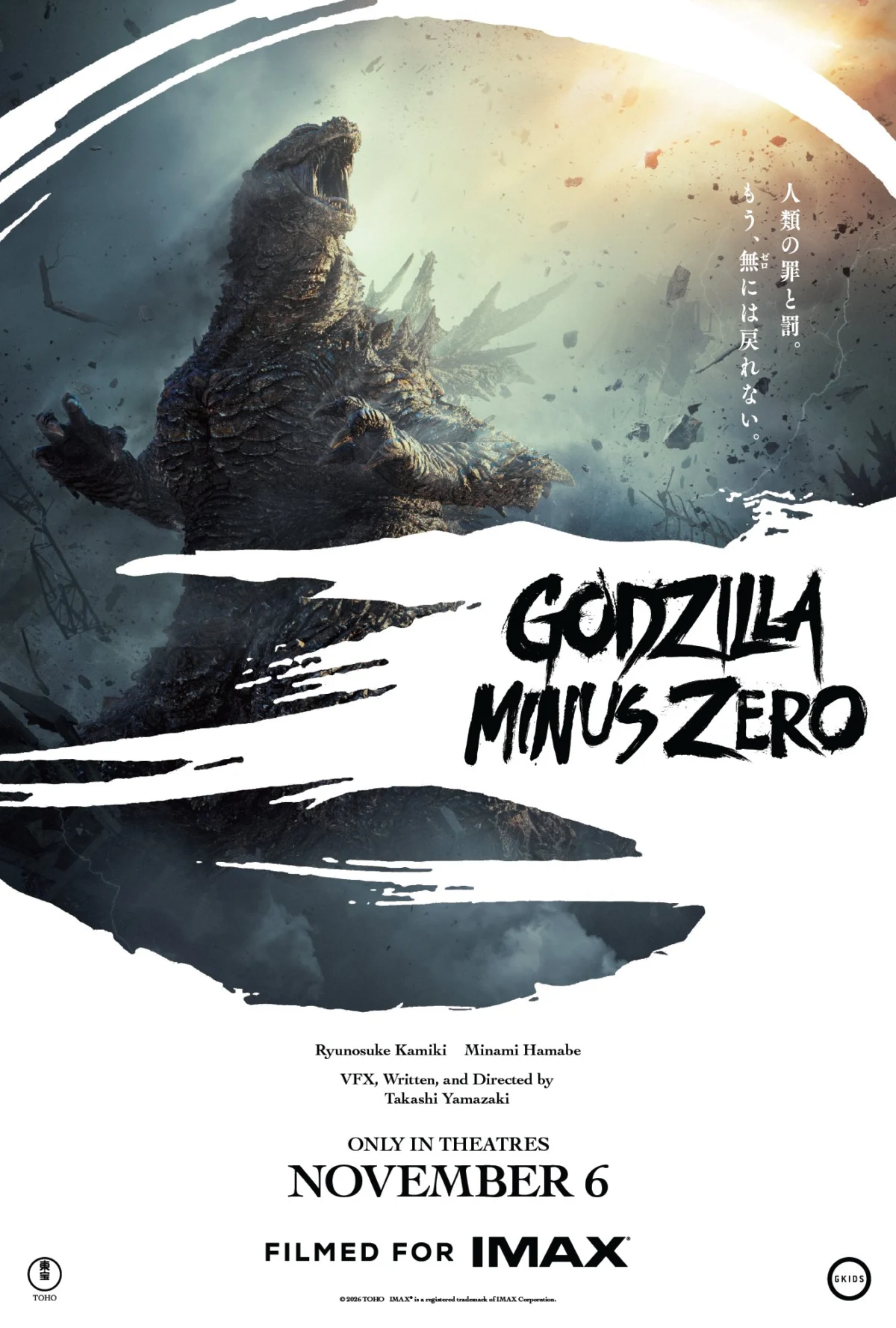
The highly anticipated teaser trailer for Takashi Yamazaki’s “Godzilla Minus Zero” has been officially released by TOHO & GKIDS, offering audiences a first glimpse into the latest installment of the legendary kaiju franchise. Starring Ryunosuke Kamiki and Minami Hamabe, reprising their roles from the critically acclaimed “Godzilla Minus One,” the film is slated for a simultaneous theatrical debut in Japan on November 3rd and in the United States on November 6th. This release strategy underscores the global appeal of Godzilla and the strategic partnership between TOHO, the originator of the franchise, and GKIDS, a leading distributor of animation and international cinema in North America.
A Nation Scarred, A Monster’s Shadow
"Godzilla Minus Zero" plunges viewers back into a post-war Japan grappling with the aftermath of devastation. The film’s synopsis paints a grim picture: "War reduced Japan to zero, and Godzilla plunged it into minus." The narrative unfolds two years after the cataclysmic events of "Godzilla Minus One," with the nation engaged in a desperate struggle for recovery and a return to normalcy. Just as a fragile peace begins to take hold, a new existential threat emerges, poised to shatter the hard-won stability. This narrative framing immediately establishes a sense of pervasive dread and urgency, suggesting that "Godzilla Minus Zero" will explore the profound psychological and societal impact of the kaiju’s presence on an already vulnerable population.
Takashi Yamazaki, the visionary filmmaker behind the Oscar-winning "Godzilla Minus One," returns to helm "Godzilla Minus Zero," serving as Director, Screenwriter, and VFX lead. His previous work not only garnered critical acclaim but also achieved significant box office success, demonstrating his ability to connect with modern audiences while honoring the franchise’s legacy. The film is a collaborative effort between Toho Studios and ROBOT, with visual effects expertly crafted by SHIROGUMI Inc., the same team that delivered the groundbreaking visuals for "Godzilla Minus One." The fact that the film is currently in production suggests a meticulous approach to its creation, aiming to deliver a visually stunning and emotionally resonant experience.
Echoes of the Past, The Dawn of a New Calamity
The narrative of "Godzilla Minus Zero" is set in 1949, a deliberate temporal placement that allows it to directly follow the events of "Godzilla Minus One," which itself was set in the immediate post-World War II era. This chronological continuity is crucial, as it allows for the exploration of the lingering trauma and the slow, arduous process of rebuilding a nation shattered by both war and a monstrous force. The return of Ryunosuke Kamiki as Koichi Shikishima, the hero who bravely confronted Godzilla in the previous film, provides a familiar anchor for audiences. His character’s journey, having faced unimaginable terror, is now poised to confront a new crisis, hinting at a deeper exploration of his resilience and the psychological toll of his previous encounter.
Minami Hamabe also reprises her role as Noriko Shikishima, who, against all odds, survived Godzilla’s initial onslaught. Her survival, once a beacon of hope, now positions her within a narrative where that hope is once again threatened. The dynamic between Koichi and Noriko, forged in the crucible of destruction, is likely to be a central emotional pillar of "Godzilla Minus Zero," exploring themes of love, loss, and the enduring human spirit in the face of overwhelming adversity.
New Faces, Familiar Scars: Expanding the Ensemble
"Godzilla Minus Zero" introduces new characters while drawing upon the established ensemble from its predecessor. Legendary actor Min Tanaka joins the cast in the pivotal role of Kanji Murakami, a biologist burdened by the deep psychological scars of the war. Tanaka’s established presence in Japanese cinema, particularly his celebrated performance in the 2025 Japanese blockbuster "Kokuho," suggests that his portrayal of Murakami will bring a gravitas and complexity to the film, likely serving as a scientific or philosophical counterpoint to the unfolding crisis.
The return of several key cast members from "Godzilla Minus One" further strengthens the film’s narrative continuity and emotional resonance. Hidetaka Yoshioka reprises his role as Kenji Noda, a character who actively collaborated with Koichi Shikishima in the previous film. Now serving as the director of the Disaster Response Bureau, Noda’s position places him at the forefront of the nation’s efforts to combat the new Godzilla threat, highlighting the transition from individual heroism to organized defense.
Yuki Yamada returns as Shiro Mizushima, the courageous young crew member of the Shinseimaru, who fought valiantly on the front lines. Kuranosuke Sasaki reprises his role as Seiji Akitsu, the captain of the same vessel, suggesting a continued focus on the maritime community that played a significant role in "Godzilla Minus One." Sakura Ando returns as Sumiko Ota, Shikishima’s neighbor and now the proprietor of a local orphanage, underscoring the film’s focus on the civilian population and the impact of Godzilla on ordinary lives. Miou Tanaka, who previously portrayed Tatsuo Hotta, the former captain of the destroyer Yukikaze, also returns, indicating a broad spectrum of characters who have survived the initial devastation and are now called upon to face Godzilla once more. The collective return of these characters signifies a commitment to exploring the long-term consequences of Godzilla’s reign of terror and the resilience of those who have endured it.

A Legacy of Roars: The Significance of Release Dates
The release dates for "Godzilla Minus Zero" carry significant weight within the franchise’s rich history. The November 3rd release in Japan is particularly poignant, as it marks "Godzilla Day," the anniversary of the original "Godzilla" film’s premiere in 1954. This deliberate choice not only honors the franchise’s origins but also solidifies "Godzilla Minus Zero" as a cornerstone event in the ongoing legacy of the iconic monster. Seventy-two years after the birth of the creature that redefined cinematic spectacle, and just three years after the global phenomenon of "Godzilla Minus One" (which also premiered on November 3rd, 2023), the new film is poised to continue this powerful trajectory.
The November 6th release in North America, handled by GKIDS, signifies a concerted effort to capture the massive international fanbase that "Godzilla Minus One" cultivated. The distribution partnership with Cineplex Pictures for the Canadian rollout further emphasizes the broad theatrical strategy. Moreover, the announcement that "Godzilla Minus Zero" will also be released internationally across Latin America, Europe, Asia, the Middle East, Australia, and New Zealand within the same week of its North American debut underscores TOHO’s ambition to make this a truly global cinematic event. The staggered release of specific territory dates will undoubtedly be a point of anticipation for fans worldwide.
A Technological Leap: Filmed for IMAX
"Godzilla Minus Zero" is set to make history as the first-ever Japanese production to be "Filmed For IMAX." This technological commitment signifies a dedication to delivering an unparalleled visual and auditory experience. Shot entirely in Japan with high-definition digital cameras certified by IMAX, the film has been optimized for the unique immersive capabilities of IMAX screens. This includes advancements in sound design and image clarity, promising to elevate the terrifying presence of Godzilla to new, awe-inspiring heights. The decision to film for IMAX suggests that Yamazaki and his team are not only focused on narrative and character but also on pushing the boundaries of cinematic presentation, aiming to create a spectacle that demands to be seen on the largest possible screen. This move aligns with the trend of major blockbusters leveraging IMAX technology to enhance audience engagement and create a sense of event cinema.
A Tale of Two Distributors: GKIDS and TOHO’s Evolving Partnership
The distribution of "Godzilla Minus Zero" marks GKIDS’s second major collaboration with TOHO on a Godzilla franchise film for the North American market. This partnership follows TOHO’s acquisition of GKIDS in 2024, a significant development that solidifies their relationship and streamlines their joint ventures. This acquisition hints at a long-term strategy to leverage GKIDS’s expertise in distributing animated and international films to expand the reach of TOHO’s iconic properties within the Western market.
Last year, GKIDS successfully spearheaded a new 4K remaster and theatrical re-release of TOHO’s acclaimed "Shin Godzilla." Directed by Hideaki Anno and co-directed by Shinji Higuchi, "Shin Godzilla" was a critical and commercial success, holding the record as the highest-grossing Japan-produced entry in the franchise for seven years, earning $78 million worldwide before being surpassed by "Godzilla Minus One." The re-release of "Shin Godzilla" introduced the landmark 2016 film to a new generation of audiences outside of Japan, demonstrating GKIDS’s capability in revitalizing and promoting classic films within the franchise. The success of "Godzilla Minus One" and the continued efforts with "Shin Godzilla" underscore a strategic approach to reintroducing and reinforcing the Godzilla brand in North America, with "Godzilla Minus Zero" now poised to build upon this momentum.
Analyzing the Implications: A Franchise Reimagined
The continued success of Japan-produced Godzilla films, particularly "Godzilla Minus One," has re-energized global interest in the character and the franchise. "Godzilla Minus One" achieved an unprecedented feat by winning the Academy Award for Best Visual Effects, becoming the first Asian film to secure this prestigious award. This victory not only validated Yamazaki’s artistic vision and the technical prowess of the Japanese filmmaking industry but also significantly elevated the profile of the Godzilla franchise on the international stage. The film’s worldwide gross of over $116 million shattered previous records for Japan-produced Godzilla films, proving that a compelling narrative, strong character development, and stunning visual effects can resonate deeply with a global audience, even without the backing of a major Hollywood studio.
The narrative direction of "Godzilla Minus Zero," as suggested by its synopsis, appears to lean into the existential and societal anxieties that have long been a hallmark of the Godzilla franchise, particularly in its Japanese iterations. By setting the film in the immediate aftermath of war and further devastation, Yamazaki is tapping into a rich vein of thematic material that explores human resilience, the destructive nature of unchecked power, and the struggle for survival. The film’s potential to delve into the psychological toll of such experiences on individuals and society could offer a more nuanced and profound exploration of the kaiju genre.
The partnership between TOHO and GKIDS, coupled with the global release strategy and the IMAX filming, signals a clear intent to position "Godzilla Minus Zero" not merely as another monster movie, but as a significant cinematic event. The focus on returning cast members suggests a desire to build on the emotional investment audiences have in the characters, while the introduction of new talent like Min Tanaka promises fresh dynamics and perspectives.
The implications of "Godzilla Minus Zero" are far-reaching. For the Godzilla franchise, it represents an opportunity to further solidify its global appeal and demonstrate its continued relevance in contemporary cinema. For Takashi Yamazaki, it is a chance to build upon his Oscar-winning success and further cement his reputation as a master storyteller. For the Japanese film industry, it is a testament to its growing technical capabilities and its ability to produce films that can compete on a global scale. The success of "Godzilla Minus One" has undeniably set a high bar, and the anticipation for "Godzilla Minus Zero" suggests that audiences are eager to witness the next chapter in this iconic monster’s enduring legacy. The film’s release on "Godzilla Day" further reinforces its symbolic importance, marking a new milestone in the 70-year history of this beloved cinematic icon.