
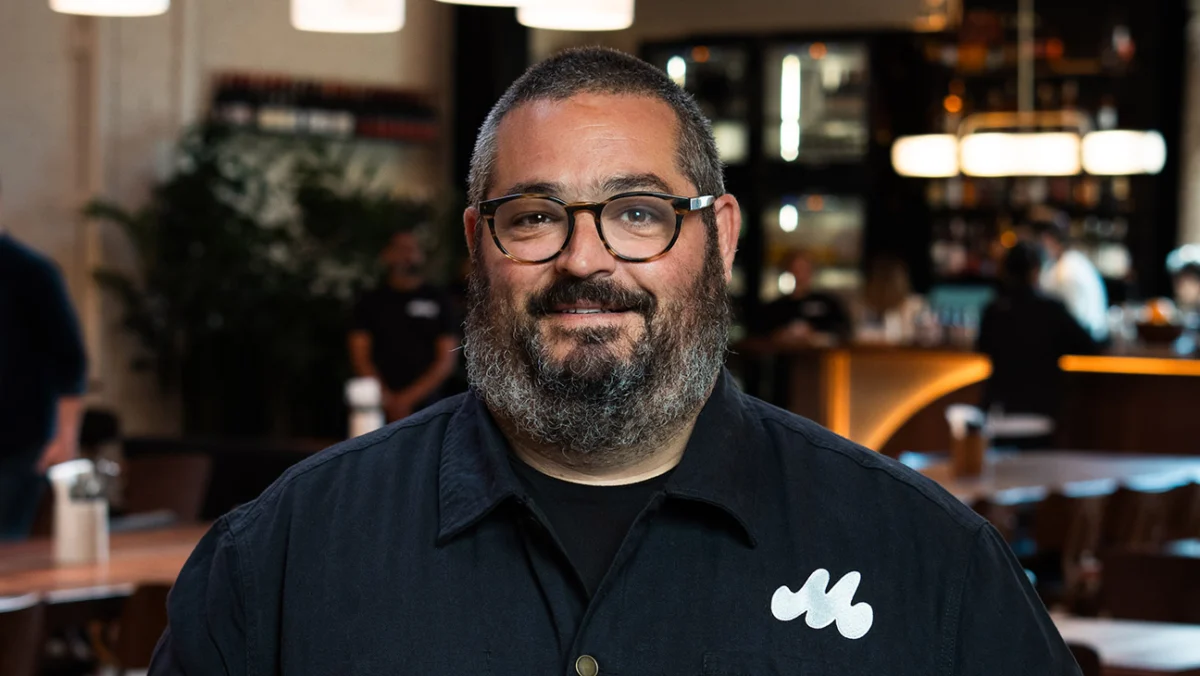
Los Angeles, California – Acclaimed Chef Eric Greenspan, a familiar face on the national food television circuit and a seasoned restaurateur, has officially debuted Mish, his ambitious and modern reinterpretation of the classic Jewish deli, located in the bustling Mid City district. This venture marks a profound personal and professional shift for the James Beard Foundation finalist, who candidly admits, "I’ve always been jealous of chefs who’ve explored their own personal culinary memories as children and their own family culinary traditions. I’ve never done that in my career — until now." Greenspan’s latest endeavor is poised to not only honor the rich heritage of Jewish cuisine but also to boldly propel it into the 21st century, appealing to a new generation of diners while simultaneously making a poignant cultural statement.
A Culinary Pedigree Meets Deep-Rooted Passion
Greenspan’s culinary journey has been distinguished by a rigorous foundation and a penchant for innovation. His formative years in the kitchen saw him training under some of the world’s most revered culinary masters, including the legendary French chef Alain Ducasse, the Spanish avant-garde pioneer Ferran Adrià, and Los Angeles’ own Joachim Splichal. This elite background, spanning classical French techniques to molecular gastronomy, has equipped Greenspan with a unique versatility that has defined his career. His local culinary resume in Los Angeles is extensive and diverse, having previously helmed Silverlake’s seafood specialist Mare and the sophisticated New American restaurant The Foundry along Melrose Avenue. A decade ago, he even ventured into the deli concept with the brief L.A. run of the kosher establishment Fleishik’s, demonstrating a long-standing interest in the genre. Beyond his own kitchens, Greenspan has lent his expertise as a consultant, notably scaling up the operations for the viral sensation MrBeast Burger.
However, parallel to his professional ascent, Greenspan has maintained a lifelong devotion to the delicatessen. He describes himself as a "student of the game," meticulously studying the intricacies of deli culture through "pilgrimages" to iconic institutions like Katz’s Delicatessen in Manhattan. This deep appreciation for the genre’s legacy is coupled with a keen observation: he believes the traditional deli, while beloved, is in dire need of an overhaul to resonate with contemporary palates. "I love the legacy Jewish delis: I stand on the shoulders of giants," he affirms. "But not much has changed in the past 65 years. And yet the perception of Jewish food has changed, including in L.A."
Redefining the Deli for a New Generation

At 51, Greenspan is acutely aware of his target demographic. "I’m cooking for 20-, 30- and 40-year-olds and their kids — not 60-, 70- and 80-year-olds," he states, emphasizing a conscious effort to modernize the deli experience without sacrificing its soul. This vision is not entirely isolated in Los Angeles; Greenspan cites the burgeoning landscape of "next-gen" Jewish food establishments that have successfully blended tradition with contemporary flair. He specifically references the acclaimed Belle’s Bagels in Highland Park and Courage Bagels in Virgil Village as examples of local innovators. Furthermore, he points to the broader shift in how "Jewish food" is perceived, highlighting the success of Levantine-inspired local hits such as Bavel in downtown L.A. and Avi Cue in Studio City. His ultimate aspiration for Mish, he reveals, was succinctly captured in his "elevator pitch": "I wanted Gjusta, but J-E-W," referring to the wildly popular Venice restaurant known for its artisanal baked goods, sandwiches, and vibrant, community-focused atmosphere. This encapsulates Mish’s ambition to marry traditional Jewish flavors with a modern, high-quality, and aesthetically appealing approach.
Mish: A Culinary Tapestry of the Jewish Diaspora
Located on La Brea Blvd., just south of 1st St., Mish’s non-kosher menu is a meticulously crafted homage to the diverse culinary traditions of Jewish communities worldwide, extending beyond the Ashkenazi roots typically associated with American delis. While the menu proudly features cherished Eastern European and Americanized Eastern Seaboard standards, it consciously widens its aperture to embrace the broader diaspora of Mizrahi and Sephardic Jewry.
Diners can expect to find exquisitely prepared Ashkenazi staples that evoke nostalgia and comfort. The chopped liver, a quintessential deli appetizer, is prepared with meticulous care, offering a rich, savory spread. Fried kreplach, savory dumplings, present a textural and flavor delight. The matzah ball soup, a benchmark of any good deli, promises a deeply flavored broth and light, fluffy matzah balls. Potato latkes, crispy and golden, are served with traditional accompaniments, while noodle kugel offers a sweet or savory baked delight. Greenspan’s commitment to authenticity and flavor is evident in details like the Reuben sandwich, which he assures, "When you order a Reuben it’s griddled in schmaltz," underscoring the use of rendered chicken fat for unparalleled richness and flavor.
However, Mish truly distinguishes itself by its embrace of the wider Jewish culinary landscape. The menu introduces diners to innovative riffs on dishes from various Sephardic and Mizrahi traditions. Guests can anticipate a creative take on the Persian frittata, kuku sabzi, a vibrant herb-filled omelet. A variant of the classic British "toad in the hole" is reimagined with shakshuka, the spicy North African and Middle Eastern tomato and egg dish, creating a hearty and flavorful fusion. The Israeli street food staple, sabich, typically a pita sandwich with fried eggplant, egg, and tahini, is reconceived in an ingenious bagel form, making it accessible and contemporary. Greenspan highlights further examples of this cross-cultural culinary dialogue: "My chicken salad has amba," he notes, referencing the tangy, savory mango pickle condiment popular in Middle Eastern Jewish cuisine. "My pastrami’s rub brings in cardamom," introducing an aromatic spice often found in Middle Eastern and Indian cooking, adding a new dimension to a deli classic. A hummus bowl also features prominently, reflecting the widespread popularity of this Levantine staple.
An Ambiance of Modernity and Community

Mish’s commitment to a contemporary experience extends beyond its culinary offerings. The establishment boasts a serious cocktail program, meticulously crafted by the noted barman Julian Cox. Known for his innovative approach to mixology, Cox’s contributions ensure that Mish is not just a daytime eatery but also a vibrant evening destination. The beverage menu includes unique daytime matcha offerings, with intriguing flavor profiles such as lemon halva with salted tahini cream and a banana Einspanner infused with turmeric and saffron, catering to diverse tastes and modern preferences.
Further enhancing the evening atmosphere, Greenspan and his operating partner Bill Chait are planning to open late, transforming Mish into "Bar Mitzvah," a concept designed to evoke a lively, communal gathering space. Under this moniker, vinyl records will spin on a DJ rig, creating a dynamic backdrop for socializing. Greenspan describes this as "kind of like a Kibbitz Room situation," alluding to the venerable annex at Canter’s Deli, a long-standing institution on Fairfax Avenue known for its late-night community hub feel. Chait, a veteran restaurateur whose impressive portfolio includes seminal L.A. establishments like Republique and Tartine, brings invaluable operational expertise to Mish, promising a seamlessly executed vision. This multifaceted approach aims to cultivate Mish as a true community center, a place where people of all ages and backgrounds can gather, connect, and enjoy exceptional food and drink.
From Tesla Diner to Deli: A Journey of Contrasts
Greenspan’s most recent high-profile — and notably controversial — project prior to Mish was the opening of the Tesla Diner in Hollywood. This endeavor saw Chait bringing Greenspan in as a consultant while they were simultaneously conceptualizing Mish. Greenspan describes the Tesla Diner job as "the craziest f**ing thing I’ve done in my time," drawn to the immense logistical challenge and the intense public scrutiny it entailed. His motivation was clear: "Who wants to stand in the middle of a tornado and control it? I do*. It’s about attention, emotion, effort, challenge."
However, the Tesla project came with unexpected political baggage. Greenspan recalls that Tesla’s executives were "not the easiest people to work with," and he did not anticipate being caught in the blowback against CEO Elon Musk’s increasingly hard-right political stances. The diner opened at a time when Musk was taking on a prominent role as a senior advisor to President Donald Trump, leading to significant public discourse and criticism. Greenspan reflects on his initial mindset: "I had started the project with the hubris of a standard liberal Democrat who thought that there’s no way Trump’s going to win this goddamn thing again," referring to the 2024 presidential election. This experience, while challenging, likely sharpened Greenspan’s awareness of the broader sociopolitical context in which businesses operate, especially those with a public face.
A Deli for Our Time: Responding to a Shifting World

The decision to debut a Jewish deli in 2026 carries significant weight, particularly amidst a historic spike in antisemitism globally and within the United States. Recent reports from organizations like the Anti-Defamation League (ADL) have documented a concerning rise in antisemitic incidents, from harassment to vandalism and assault, creating a climate of apprehension for many Jewish communities. Greenspan is acutely aware that opening Mish might be perceived as a political act, and he confronts this notion directly. "People ask me, ‘Is now the time to do a Jewish restaurant?’ I say, ‘Now is exactly the time to do it.’"
He is unreserved in his assessment of the current climate, describing the "terrible sh*t going on in this country right now towards my people." In this context, Mish transcends its function as merely a restaurant; it becomes an act of cultural affirmation and resilience. Greenspan views the deli as an opportunity to "bring into the world, in my own way, what’s beautiful about Jews and Jewish life." For him, a deli is inherently a space for connection and solidarity. "A deli brings people together. It’s a center for community. Not just for Jewish community, but community as a whole." He eloquently frames Mish’s mission with a powerful metaphor: "It’s a culinary multi-state solution." This evocative phrase suggests that through the universal language of food, Mish can bridge divides, foster understanding, and celebrate the richness of Jewish culture in a world that often seeks to marginalize it. His ambition to replicate Mish underscores his belief in its potential not just as a successful culinary concept, but as a replicable model for cultural engagement and community building in challenging times.
Mish stands as a testament to Eric Greenspan’s culinary prowess, his deep personal connection to his heritage, and his unwavering belief in the power of food to unite. By honoring tradition while boldly innovating, Mish aims to redefine the Jewish deli experience for a new era, serving as both a vibrant culinary destination and a beacon of cultural pride and community in Los Angeles.