


CD Projekt Red has officially confirmed the development of a third major expansion for its 2015 masterpiece, The Witcher 3: Wild Hunt, titled Songs of the Past, a move that coincides with the game surpassing a monumental sales milestone of 65 million units worldwide. This announcement, delivered during the company’s Q1 2026 financial earnings presentation, marks a significant departure from standard industry lifecycles, as the studio returns to a decade-old title to bridge the narrative gap between the current trilogy and the highly anticipated next installment, colloquially known as The Witcher 4. The news has sent ripples through the gaming industry, signaling a strategic effort by the Polish developer to leverage its most successful intellectual property while transitioning its internal technology and narrative focus toward a new era of storytelling.
A Decadelong Legacy Reaches New Heights
The disclosure of 65 million copies sold places The Witcher 3: Wild Hunt in the upper echelon of the most successful video games in history. For context, the title reached 50 million units in May 2023, meaning it has moved an additional 15 million copies in less than three years—a feat largely attributed to the release of the "Next-Gen" update, consistent presence on subscription services like Xbox Game Pass, and the enduring popularity of The Witcher franchise across other media, including the Netflix television series.
Joint CEO Michał Nowakowski emphasized that this massive installed base represents a unique commercial opportunity. The decision to develop a third full-fledged expansion, nearly ten years after the release of Blood and Wine in 2016, is unprecedented for a single-player RPG of this scale. "The return of Geralt after more than one decade will be an excellent adventure and a trip down memory lane," Nowakowski stated during the earnings call. He further noted that the project is currently in an "advanced stage of development," suggesting that the studio has been working on this secret project in parallel with its transition to Unreal Engine 5 for future titles.
Unveiling Songs of the Past: Geralt’s Final Solo Trail
While specific plot details for Songs of the Past remain closely guarded, CD Projekt Red has confirmed that the expansion will once again place players in the boots of Geralt of Rivia. This is a notable distinction, as the studio has simultaneously confirmed that the upcoming The Witcher 4 (codenamed Project Polaris) will see the "passing of the baton" to Ciri, the Child of Destiny.
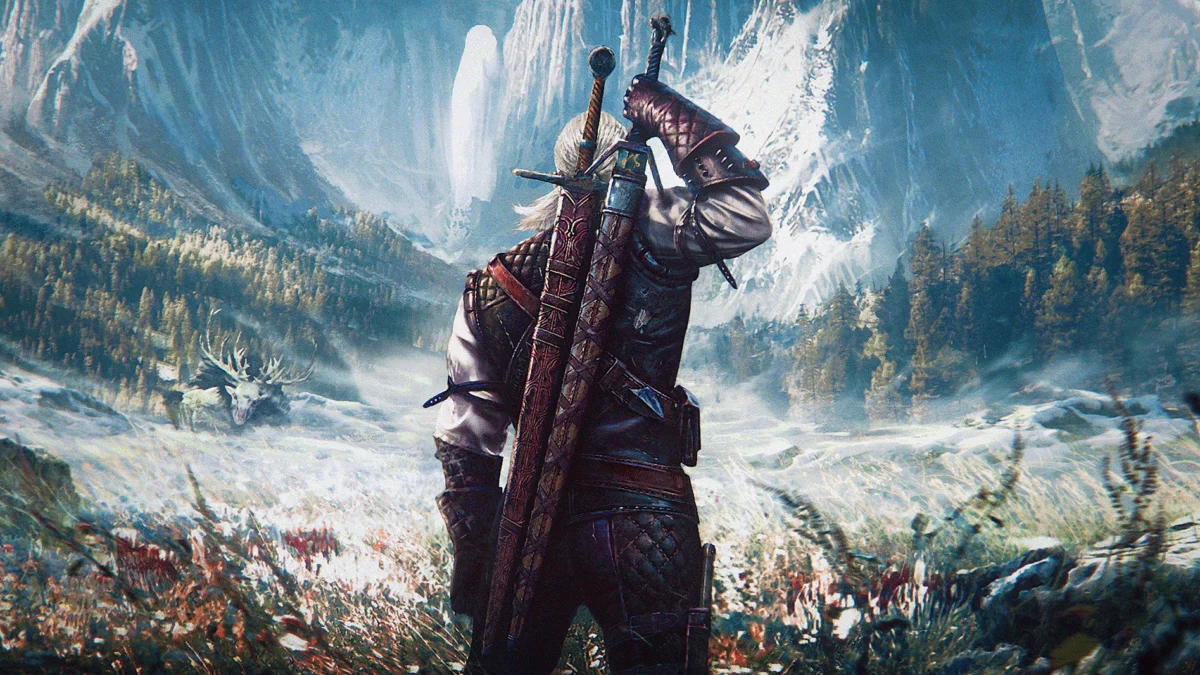
The promotional artwork released alongside the announcement has already become a subject of intense scrutiny among the franchise’s dedicated fanbase. The image depicts Geralt unsheathing a sword against a backdrop of snowy peaks and wildflower fields. Analytical fans have noted that the hilt of the sword appears to differ from the traditional Witcher steel and silver blades seen in the base game, leading to speculation that Songs of the Past may introduce new gear tiers or explore a previously unvisited region of the Continent.
The expansion is positioned not only as a nostalgia-driven return for veteran players but also as a potential entry point for newcomers. CD Projekt Red’s leadership suggested that the expansion could serve as a "first encounter" with the universe for those who have yet to play the original game, implying that the content may be accessible early in the game’s timeline or function as a standalone experience similar to how Hearts of Stone was integrated.
Evolution of the REDengine and Shifting Technical Requirements
One of the most critical technical revelations accompanying the announcement is the adjustment of minimum PC requirements for The Witcher 3: Wild Hunt. Despite the game’s age, the new expansion and the associated technical updates are pushing the boundaries of the aging REDengine. CD Projekt Red confirmed that the baseline hardware needed to run the game will increase significantly starting next year to accommodate modern graphical techniques, including enhanced ray tracing, updated asset streaming, and improved foliage density.
This technical pivot reflects the studio’s commitment to maintaining The Witcher 3 as a "living" legacy title. By updating the requirements, the developers are ensuring that Songs of the Past can visually compete with modern current-gen titles, even while built on a foundation laid in 2015. This strategy aligns with the "Complete Edition" philosophy, where the game acts as a showcase for evolving hardware capabilities.
Chronology of The Witcher 3: A Decade of Expansion
To understand the weight of this announcement, one must look at the timeline of the game’s post-launch support:
- May 2015: The Witcher 3: Wild Hunt launches to critical acclaim.
- October 2015: Hearts of Stone, the first expansion, introduces the Man of Glass and a self-contained narrative in Velen.
- May 2016: Blood and Wine, the second expansion, adds the massive region of Toussaint and was widely considered Geralt’s "retirement" story.
- 2019-2021: The game sees a resurgence following the release of the Nintendo Switch port and the debut of the Netflix series.
- December 2022: The Next-Gen Update (v4.0) is released, adding 4K textures, ray tracing, and photo mode.
- Early 2024: The Complete Edition arrives on Xbox Game Pass Premium, further expanding the player base.
- Q1 2026 (Reported): CD Projekt Red reveals Songs of the Past and the 65 million sales milestone.
The gap between Blood and Wine and Songs of the Past is roughly nine years, a timeframe usually reserved for full sequels rather than downloadable content. This move suggests that CD Projekt Red views The Witcher 3 as a platform in its own right, capable of sustaining interest even as the studio moves its primary development focus to Unreal Engine 5 for Project Polaris and the Cyberpunk sequel.
Strategic Implications and Industry Analysis
Industry analysts view the announcement of Songs of the Past as a masterstroke in IP management. By releasing a high-quality expansion for an existing title with a 65-million-user install base, CD Projekt Red minimizes the risks associated with launching a brand-new game while maximizing revenue. The development costs for an expansion using existing assets and engines are significantly lower than those for a ground-up sequel, yet the sales potential remains high due to the franchise’s global recognition.
Furthermore, this expansion serves as a bridge for the narrative. With The Witcher 4 expected to focus on Ciri and potentially a new Witcher school (as hinted by the "Lynx" medallion teaser), Songs of the Past allows the studio to give Geralt a final, definitive send-off that ties up any remaining loose ends from the original trilogy. It also keeps the brand at the forefront of public consciousness during the long development cycle of Project Polaris.
The move also reinforces CD Projekt Red’s reputation for consumer-friendly support. Following the turbulent launch of Cyberpunk 2077 in 2020, the studio has worked tirelessly to regain player trust through free updates and high-value expansions like Phantom Liberty. Continuing to support a ten-year-old game with major content is a powerful statement of commitment to their community.
Official Responses and Market Reaction
The market reaction to the Q1 earnings report was overwhelmingly positive, with CD Projekt’s stock seeing a notable uptick following the dual announcement of the sales milestone and the new expansion. Investors appear confident in the studio’s "dual-franchise" strategy, which involves simultaneous work on The Witcher and Cyberpunk universes.
Michał Nowakowski’s comments regarding the "passing of the baton" to Ciri have also provided the first official confirmation of the protagonist shift for the next mainline game. This clarity has been welcomed by fans and analysts alike, as it sets clear expectations for the future of the series. "We see great potential for Songs of the Past to become the beginning of a fresh adventure for many gamers, even as we await the release of The Witcher 4," Nowakowski added, highlighting the expansion’s role as both a conclusion and a prologue.
Looking Ahead: The Trail Continues
As CD Projekt Red prepares to reveal more details about Songs of the Past at the end of the summer, the gaming community remains focused on how this expansion will alter the existing lore of the Continent. Whether it explores Geralt’s earlier years or takes place in the quiet moments between the events of the main game and his retirement in Toussaint, the expansion is poised to be one of the most significant releases of the coming year.
With 65 million copies sold and a massive community of modders and fans still active, The Witcher 3: Wild Hunt has transcended its status as a mere video game to become a cultural phenomenon. Songs of the Past is not just a piece of DLC; it is a testament to the enduring power of Geralt of Rivia and the meticulous world-building of CD Projekt Red. As the studio prepares to move into the Unreal Engine 5 era, this final journey with the White Wolf serves as a grand finale for the technology and the character that defined a generation of role-playing games.