The 79th edition of the Cannes Film Festival, concluded on May 23, 2026, presented a facade of tranquility, yet beneath its subdued exterior lay a vibrant, if unsettling, narrative of an industry in profound flux. Absent were the usual throngs of A-list studio celebrities and the robust slate of major studio productions that typically define the Croisette’s glamour and market buzz. Instead, attendees found a festival that, while perhaps lacking in immediate commercial blockbusters, served as an invaluable seismograph, registering the deep tremors reshaping the very foundations of cinema. This year, Cannes functioned less as a traditional showcase of established hits and more as a crucial observatory for the nascent trends defining the future: the redefinition of independent filmmaking, the strategic recalibration of Hollywood studios’ engagement with prestige festivals, and the undeniable, albeit fraught, integration of artificial intelligence into every facet of film creation and distribution. The quiet was not an absence of activity, but rather a clarity of signal, indicating a new era for cinematic storytelling and its economic underpinnings.
The Evolving Indie Ecosystem: Resilience and Reinvention

The most striking characteristic of Cannes 2026 was the palpable ascendance of independent cinema, which filled the void left by major studios. For years leading up to this edition, the independent film sector had navigated a turbulent sea of diminishing theatrical windows, the dominance of streaming platforms, and increasingly competitive financing landscapes. However, rather than succumbing, the indie scene at Cannes demonstrated remarkable adaptability and creative resilience. New models of financing, often leveraging hybrid distribution deals, crowd-funding, and international co-productions, allowed a diverse array of voices to reach the festival circuit.
This year’s Competition lineup, though described by some critics as "more meh than magnifique," was nonetheless rich with challenging and innovative works. A standout example was "The Black Ball," a haunting socio-political drama from a debut director, which quickly emerged as a critical darling and a strong contender for the Palme d’Or. Its success underscored a shift in audience and critical appetite towards more auteur-driven, thematically complex narratives, often produced outside traditional studio systems. The film’s modest budget, reportedly under €5 million, and its reliance on a largely unknown international cast, highlighted a burgeoning trend of high-quality cinema emerging from leaner, more agile production structures. "The Black Ball" was a testament to the fact that compelling storytelling, when coupled with innovative distribution strategies targeting niche but passionate global audiences, could still achieve significant cultural impact.
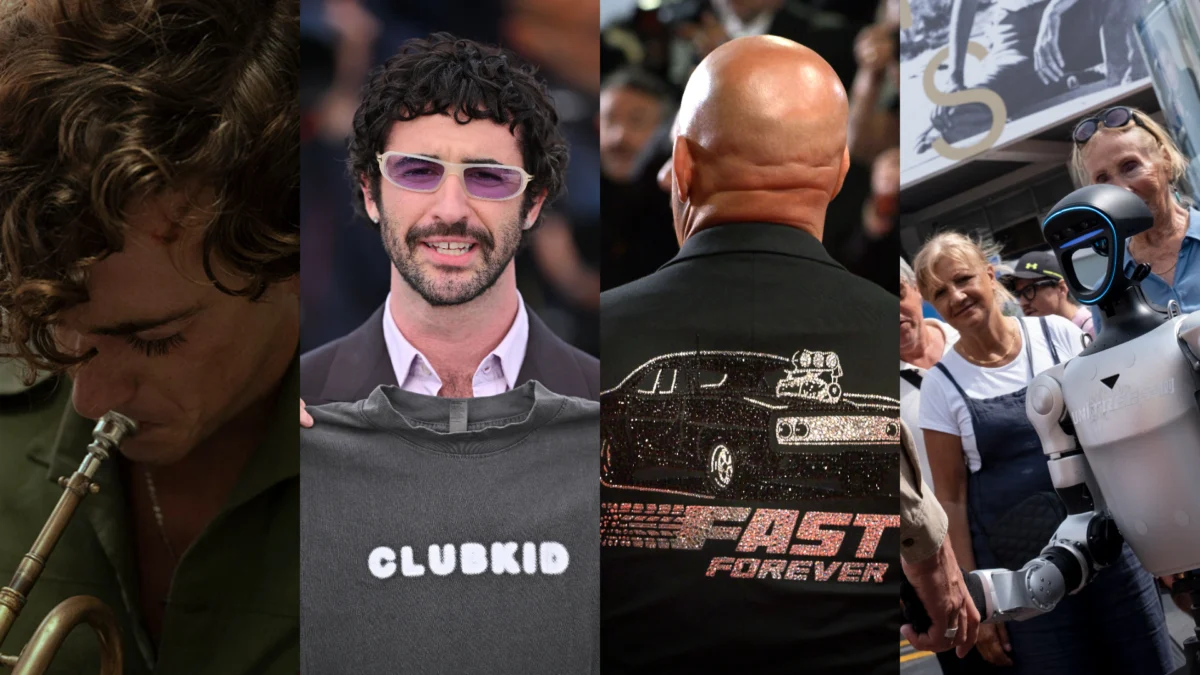
Another notable presence was Jordan Firstsman, whose experimental feature "Club Kid" garnered considerable buzz in the Un Certain Regard section. Firstsman, known for his boundary-pushing shorts and digital content, represented a new generation of filmmakers seamlessly blending traditional cinematic language with digital native sensibilities. His film, a vibrant, semi-improvised exploration of youth culture and identity, utilized advanced mobile capture techniques and AI-assisted post-production tools, blurring the lines between professional filmmaking and accessible creative expression. As Sarah Chen, a leading independent film financier, observed during a market panel, "Cannes 2026 showcased that ‘independent’ no longer solely implies shoestring budgets, but rather a liberated approach to storytelling, financing, and audience engagement, unburdened by the commercial imperatives of the studio machine. The entrepreneurial spirit here is stronger than ever." This shift suggests a future where independent cinema is not just an alternative, but a vanguard, pushing artistic and technological boundaries.

The Studio Retreat: A Strategic Reassessment or a Permanent Shift?
The conspicuous absence of major Hollywood studio films from the official selection and a significant reduction in their marketing presence marked a definitive turning point for Cannes. Historically, studios leveraged Cannes for prestige launches, Oscar campaigns, and robust international sales. However, 2026 saw only a handful of studio representatives, primarily for legacy sales deals or brand-building events rather than premiere showcases. This retreat is not an isolated incident but the culmination of several years of strategic re-evaluation by studios facing evolving market dynamics.
The primary drivers behind this withdrawal are multifaceted. Firstly, the escalating costs of festival participation, from print and advertising to talent travel and hospitality, have become increasingly difficult to justify against direct-to-consumer streaming strategies. Studios are prioritizing their proprietary streaming platforms, where exclusive content can directly drive subscriptions, over the ephemeral prestige of a festival launch. Secondly, the fragmented global media landscape means that a single, grand festival premiere no longer guarantees the same level of global media penetration it once did. Targeted digital campaigns and regionalized marketing efforts are proving more cost-effective.

The rare studio presence was exemplified by a special retrospective screening of the original "The Fast and The Furious," attended by franchise star Vin Diesel. While drawing a crowd and generating nostalgia, it served more as a brand activation event than a competitive entry, signaling a shift in how studios view and utilize festivals. "We are seeing a strategic re-prioritization," commented industry analyst Dr. Anya Sharma. "Studios are calculating the ROI of every marketing dollar. For many, a Cannes premiere, while prestigious, simply doesn’t align with their current business models focused on direct engagement and franchise optimization. Vin Diesel’s appearance was a nod to heritage, not a signal of renewed mainstream engagement." This trend raises questions about the long-term viability of festivals relying heavily on studio support and the implications for the global film market, potentially leading to a bifurcation where festivals either champion pure artistry or become niche genre showcases. The once-unquestioned symbiosis between Hollywood and the Croisette now appears to be a relationship under severe strain, possibly leading to a permanent divergence.
AI’s Uneasy Embrace: The Future is Here, But At What Cost?
Perhaps the most significant and debated undercurrent of Cannes 2026 was the pervasive, albeit often unsettling, presence of artificial intelligence. From subtle applications in production workflows to overt discussions about its creative and ethical implications, AI was not just a topic of conversation; it was an active participant. The festival’s Innovation Hub hosted several panels on AI in filmmaking, showcasing cutting-edge tools for script generation, virtual cinematography, deepfake technology for de-aging actors or creating digital doubles, and AI-powered marketing analytics.

The visual representation of this new reality came in the form of a highly advanced humanoid robot, a product of a leading European AI research lab, which autonomously navigated the festival grounds, engaging attendees in programmed conversations about the future of cinema. While largely a PR stunt, its presence sparked intense discussions among filmmakers and critics alike. Some hailed AI as an indispensable tool that could democratize filmmaking, reduce costs, and unlock unprecedented creative possibilities, particularly for independent artists. "AI is not here to replace creativity; it’s here to augment it, to take away the mundane so artists can focus on the sublime," stated Dr. Lena Petrova, CEO of CineSynth AI, during a technology symposium.
However, a strong undercurrent of apprehension permeated these discussions. Concerns about job displacement for writers, editors, VFX artists, and even actors were frequently voiced. The ethical implications of AI-generated content, particularly regarding intellectual property, authenticity, and the potential for misuse in propaganda or misinformation, were hotly debated. The "uneasy embrace" of AI highlighted a deep schism within the industry: a powerful recognition of AI’s transformative potential alongside profound anxieties about its unchecked proliferation. Filmmakers grappled with questions of authorship when scripts are co-written by algorithms, or when performances are digitally synthesized. The Directors’ Fortnight even held a special screening of a short film entirely conceived, scripted, and visually rendered by an AI, leaving audiences marveling at the technology’s capability but questioning the "soul" of such creations. This year’s Cannes underscored that while AI’s integration into cinema is inevitable, the industry is only beginning to understand and regulate its profound implications for human artistry and employment.
Festival Dynamics, Market Trends, and Broader Implications

Despite the perceived quietness, the market at Cannes 2026 remained surprisingly robust for independent productions. The absence of studio tentpoles created more oxygen for indie films, leading to competitive bidding for standout titles. Streaming platforms, both global giants and emerging regional players, were active buyers, indicating a continued appetite for diverse, non-franchise content. Distribution companies also reported steady sales for European and Asian arthouse cinema, proving that a dedicated audience for challenging films persists globally. The critical consensus, while noting the lack of major studio spectacle, largely praised the diverse voices and thematic depth presented by the independent selections, suggesting a shift in critical metrics away from pure commercial appeal towards artistic merit and innovation.
The 79th Cannes Film Festival ultimately served as a vital barometer for an industry undergoing profound structural change. It highlighted that the traditional pillars of cinema – the studio system, the independent artist, and the festival circuit – are all being fundamentally re-evaluated in the face of technological advancement and evolving economic models. The quiet on the surface of the Croisette was, in retrospect, a powerful signal of an industry reorienting itself. The questions posed by Cannes 2026 are not merely academic; they are existential: How will independent cinema continue to thrive and innovate? What role will major studios play in a landscape increasingly defined by direct-to-consumer models? And how will the film industry harness the immense power of AI while safeguarding human creativity, ethical standards, and employment? Cannes 2026 may not have offered immediate answers, but it laid bare the fault lines, compelling the global film community to confront these challenges head-on and define the future of storytelling. The festival, in its quiet contemplation, offered a clear, if challenging, vision of cinema’s next act.