


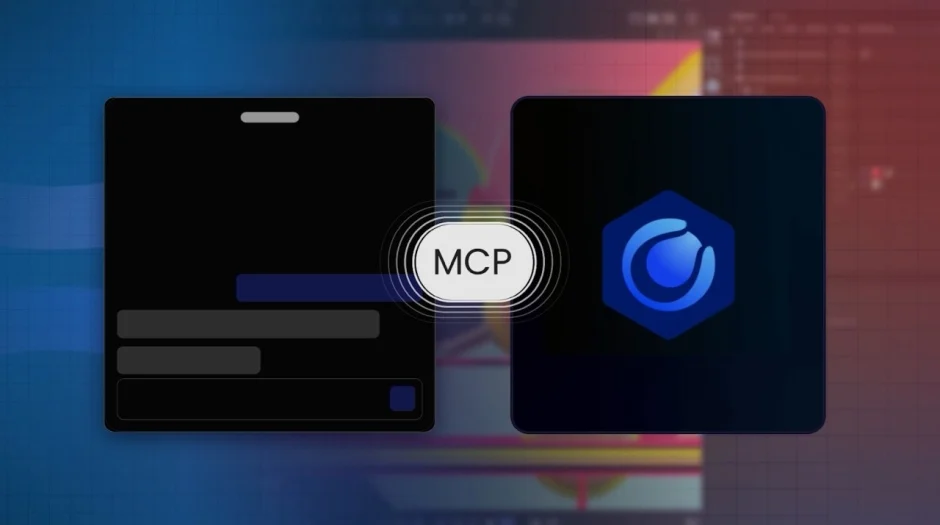
Maxon has officially announced the implementation of built-in Model Context Protocol (MCP) support within version 2026.4 of Cinema 4D, marking a significant milestone in how digital content creators, 3D artists, and visual effects professionals interact with professional software. Available immediately for both Windows and macOS users, the new integration allows artists to leverage advanced artificial intelligence assistants—such as Anthropic’s Claude, OpenAI’s ChatGPT, and specialized coding models like Codex—using standard, conversational, natural-language instructions. Designed to streamline tedious pipeline tasks without sacrificing artistic agency, the feature ships disabled by default, prioritizing user control, local processing, and robust enterprise-grade security protocols.
The integration of MCP into a premier digital creation suite like Cinema 4D represents a structural shift in software design. Rather than relying entirely on traditional GUI navigation, custom scripts, or rigid plug-ins, 3D generalists can now verbally or textually prompt an AI assistant to execute multi-step operations directly inside their active workspace. As the digital content creation industry faces ever-tightening production deadlines and increasingly complex visual pipelines, tools that eliminate repetitive administrative burdens are rapidly transitioning from experimental novelties to essential enterprise assets.
Core Capabilities and Technical Workflow
The Model Context Protocol acts as an open standard designed specifically to securely bridge AI assistants with external software ecosystems. Within the Cinema 4D 2026.4 environment, the native MCP server translates natural-language prompts into actionable 3D commands that operate directly on the user’s local machine, utilizing the software’s established native toolsets.
Instead of generating flattened, non-editable external outputs or opaque procedural assets, the AI-driven commands manipulate real scene data natively. This means that every object, material, and parameter modification remains fully inspectable, editable, and reversible by the artist.
The practical applications span a wide array of pre-production, production, and post-production tasks. Artists can issue commands to sort, categorize, and organize hundreds of imported assets into a clean, logical hierarchy. Furthermore, the system can automate the generation of diverse material variations, establish complex multipass render setups, and orchestrate scene layouts. Beyond asset organization, the MCP server extends its utility into more technical areas of 3D production, including basic camera tracking, preliminary UV mapping, asset rigging, and fundamental animation blocking.

By handling the friction of technical overhead, the system aims to free artists to focus their cognitive energy on higher-level creative decision-making, lighting design, storytelling, and cinematic polish.
Security, Local Processing, and Studio Governance
Because the integration of artificial intelligence into professional production pipelines often raises legitimate concerns regarding data privacy, intellectual property protection, and studio security, Maxon has built the Cinema 4D MCP server with a comprehensive governance framework.
The core architecture operates locally on the artist’s workstation. Communication with external networks or other machines within a studio environment does not happen automatically; it requires an explicit, separate opt-in by the user or system administrator. Access to the local MCP server is tightly guarded by a secure MCP adapter access token, ensuring that unauthorized applications or network endpoints cannot interface with the active Cinema 4D session.
Additionally, granularity of control is a central pillar of the implementation. Artists and technical directors retain the ability to dictate precisely which groups of Cinema 4D tools an AI assistant is permitted to access, as well as strict oversight regarding Python script execution.
To maintain transparency and accountability within professional pipelines, every batch of changes driven by the MCP integration is meticulously documented. Actions are broken down cleanly within Cinema 4D’s native undo history, and all commands are simultaneously recorded to a local audit log. Maxon emphasizes that these robust permissions, secure access tokens, and comprehensive logging mechanisms provide the exact level of administrative oversight required by mid-to-large-scale animation studios and visual effects facilities to evaluate the tool against their strict internal security and compliance mandates.
Industry Perspective and Leadership Commentary

The introduction of natural language processing to 3D pipelines reflects a broader technological evolution sweeping through the media and entertainment industries. As generative technologies mature, software developers are increasingly shifting their focus from standalone AI content generators to AI-powered workflow accelerators.
Addressing the philosophy behind the release, Maxon CEO David McGavran highlighted the importance of preserving the human element in digital artistry. "The idea is simple: artists retain control while handing off any tasks they consider a chore," stated McGavran. "MCP support enables us to make Cinema 4D more powerful without taking the creative process away from the artist."
This perspective addresses a primary anxiety among creative professionals regarding the rise of artificial intelligence in the workplace. Rather than replacing the artist or automating the creative soul of a project, tools built on protocols like MCP are positioned as collaborative copilots designed to absorb the mechanical friction of software operation.
Broader Industry Implications and Future Outlook
The deployment of MCP within Cinema 4D 2026.4 arrives at a pivotal moment for computer graphics software. As interoperability standards between different software packages and AI models improve, open protocols are expected to become the backbone of modern digital pipelines. By adopting an open standard rather than a proprietary closed ecosystem, Maxon has positioned Cinema 4D to seamlessly adapt as language models and AI agent capabilities continue to advance globally.
For solo creators, the integration translates into a dramatic multiplier of productivity, allowing a single artist to manage complex scenes that traditionally required dedicated technical directors or asset managers. For larger studios, the standardized logging and strict local security controls pave the way for the gradual, controlled integration of AI assistants into existing enterprise workflows without compromising proprietary intellectual property.
Maxon has accompanied the release of Cinema 4D 2026.4 with comprehensive instructional content, providing three detailed video walkthroughs that demonstrate general software overview, AI-assisted motion tracking, and the automation of repetitive tasks. Complete technical documentation, step-by-step setup instructions, advanced security configuration guides, and frequently asked questions are currently available to the public on Maxon’s official Cinema 4D MCP server resource page. As artists begin testing the boundaries of natural language within their daily routines, the industry will closely watch how these tools scale within professional production environments.