


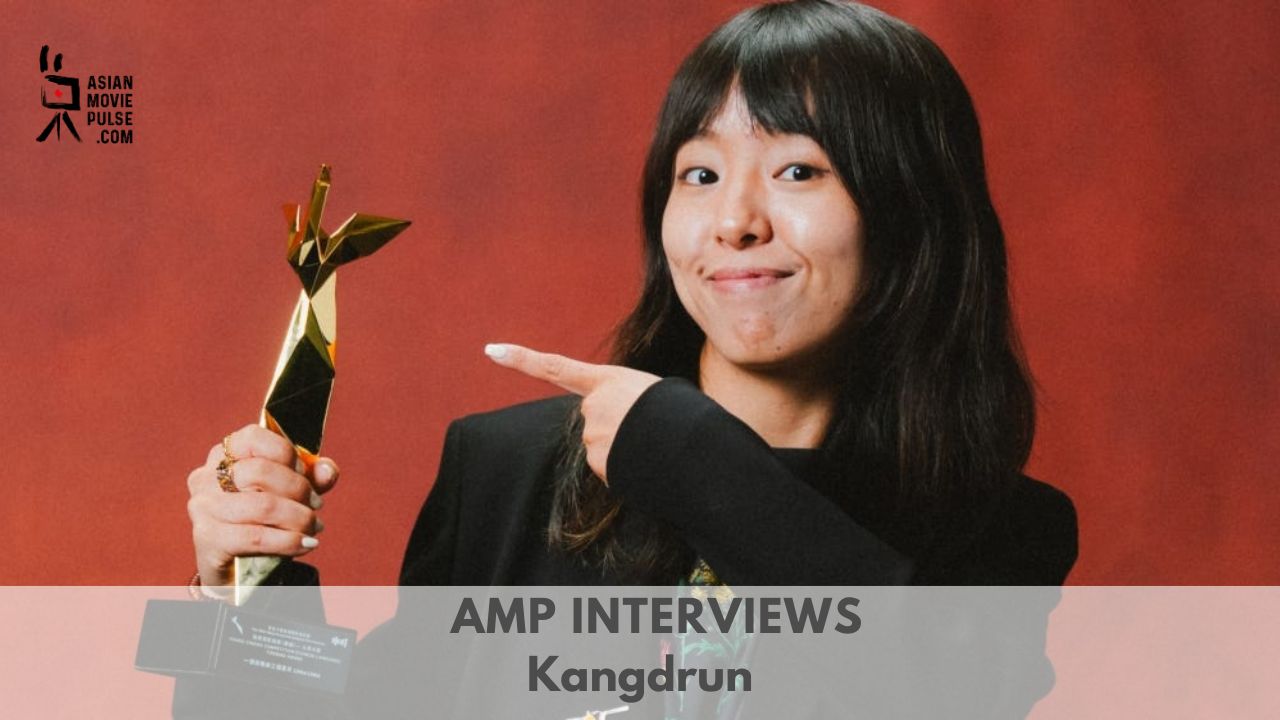
The Hong Kong International Film Festival (HKIFF) recently concluded its 2026 edition, celebrating a vibrant slate of international cinema. Among the most acclaimed films was "Linka Linka," the debut feature from emerging Tibetan director Kangdrun. The film, which garnered the prestigious Firebird Award and the Fipresci award, offers a poignant and introspective look at a younger generation navigating their identities within the evolving landscape of Lhasa. In an exclusive interview following the festival’s awards ceremony, Kangdrun shared insights into the genesis of her film, its intricate narrative structure, and her unique vision for portraying Tibetan urban life.
Kangdrun, born in Lhasa, Tibet Autonomous Region, China, in 1995, has quickly established herself as a filmmaker with a distinct voice. Her previous short film, "Orlo with Karma," garnered international recognition, being selected for the FIRST Film Festival and the Vancouver International Film Festival in 2025, signaling her early promise. "Linka Linka" represents a significant leap, marking her transition to feature filmmaking and solidifying her reputation for a delicate and insightful portrayal of Lhasa’s youth and subcultural communities.
The film’s triumph at HKIFF 2026, a festival renowned for its discerning selection and influence in the Asian film market, underscores the growing international interest in Tibetan cinema. HKIFF, now in its 50th year, serves as a crucial platform for filmmakers to connect with global audiences and industry professionals. The Firebird Award, presented by HKIFF for emerging talent, and the Fipresci Award, given by the International Federation of Film Critics, are testaments to "Linka Linka’s" artistic merit and compelling storytelling.
The Genesis of "Linka Linka": A Fragmented Memory and a Father-Daughter Bond
Kangdrun’s journey to "Linka Linka" began not with a grand narrative concept, but with a deeply personal and unresolved moment. "The film began with a moment I couldn’t let go of," she explained. "One night, after returning to Lhasa following my graduate studies, I ran into my childhood best friend at a party. We didn’t speak, not a single word. In fact, I didn’t even recognize her at first. Yet I was struck by the shock of seeing each other again after more than twenty years. That night lingered with me for a long time, as if something in it had been suspended, unresolved."
This potent encounter with a forgotten past directly informed the film’s thematic core: the fragmented nature of memory and the persistent echoes of formative experiences. Kangdrun elaborated on a generational experience shared by many Tibetans of her cohort. "Many of my Tibetan peers and I left home at around the age of twelve to study elsewhere. Throughout our formative years, we could return to Lhasa only once a year, usually during the summer. As a result, my experience of summer became fragmented, and so did my connection to my hometown, intermittent and discontinuous. For me, memory is not something continuous; it comes in pieces."
This fragmentation is not merely a thematic element but is structurally woven into the fabric of "Linka Linka." The film’s narrative unfolds across "three summers and one night of reunion," a structure directly mirroring Kangdrun’s own lived experience. This deliberate choice extends to the film’s titles; the Tibetan title, "Linka Linka," and the Chinese title, "One Night and Three Summers," both directly reference this cyclical yet disjointed experience of return and reconnection.
Beyond the exploration of collective memory, the film delves into the intimate terrain of the father-daughter relationship. Kangdrun revealed that this aspect of the narrative is deeply personal, drawing from her own relationship with her father. She expressed a conscious desire to move beyond the often-stereotypical portrayals of fathers in Chinese-language cinema, which she observed as frequently absent or defined by authority and even violence. "I was interested in portraying something different, something more nuanced and intimate," she stated. "I have always been drawn to the father-daughter relationships in the works of Yasujiro Ozu, and I believe that sensibility stayed with me while making this project." The influence of Ozu, a master of depicting quiet familial dramas and the subtle complexities of human relationships, is palpable in the film’s understated emotional resonance.
The Meta-Cinematic Layer: Memory, Truth, and the Film-Within-a-Film
A defining characteristic of "Linka Linka" is its ambitious film-within-a-film structure. This meta-cinematic approach serves as a powerful vehicle for exploring the film’s central questions about the reliability of memory. Kangdrun explained her motivation: "It came from a doubt: whether memory can ever be trusted. Samgyi believes in her version of the past and constructs a film around it. But when she tells Lhamo about that, Lhamo responds with a different version of the same events, her own memory. Another version appears."
The director emphasizes that her interest lies not in determining the absolute truth of these conflicting recollections, but rather in examining the "distance between them." She posed a hypothetical scenario: "If Lhamo were the filmmaker, the work would be entirely different. So the structure becomes less about storytelling and more about the instability of perspective and the possible unreliability of memory itself."
This exploration of cinematic truth and the constructed nature of reality owes a significant debt to the works of the late Iranian filmmaker Abbas Kiarostami. Kangdrun cited Kiarostami’s "And Life Goes On" and "Through the Olive Trees" as particularly influential. "What stayed with me is how one feels almost like a documentary, while the other subtly reveals that what we perceived as reality is in fact constructed, particularly through repetition," she observed. This seamless blurring of the lines between documentary realism and carefully constructed fiction, and the subsequent unsettling realization for the audience, became a crucial touchstone for "Linka Linka."
Crafting the Climax: An Interior Ending for Character Resolution
The conclusion of "Linka Linka" has been lauded for its thematic resonance and emotional impact, artfully tying together narrative threads while leaving the audience with a profound sense of character development. Kangdrun admitted that the ending presented a significant challenge during the filmmaking process.
"I struggled with the ending for a long time," she confessed. "In the script, the story originally concluded in a car: after Samgyi retrieves the wallet and the shoot wraps, she drives off to pick up her father, ending against the backdrop of downtown Lhasa. It offered a sense of narrative closure, but during editing, it began to feel insufficient, resolving the plot but not the character."
Seeking a more profound and introspective resolution, Kangdrun shifted her focus. "I started looking for a more interior ending, something that belonged only to Samgyi. That’s when the glasses sequence emerged. It’s a small, almost private moment, but for me it carries a shift. She begins to confront something she had long avoided since childhood. After making a work that returns to her past, she becomes willing to face a buried knot within herself."
The act of getting glasses, and the gradual clarification of her vision as the house comes into focus, serves as a powerful metaphor for Samgyi’s internal journey. Kangdrun explained, "The process of getting glasses, especially when the house gradually comes into focus, mirrors how we come to understand the world, moving from blur to clarity and from distance to recognition." This subtle yet potent finale eschews overt exposition for a deeply personal moment of self-realization, marking a significant turning point for the protagonist.
Capturing the Essence of Urban Lhasa: Beyond the Spectacle
Kangdrun’s decision to portray not just the urban landscape but also the more intimate, everyday rhythms of Lhasa is a deliberate departure from common cinematic representations. "Lhasa is the city where I was born and raised, so I’m interested in staying close to how it actually feels to live there," she stated. "I wanted to capture the texture and atmosphere of everyday life, the side that truly belongs to the people who live there, their rhythms and ways of being."
She observed that Lhasa is often presented in cinematic narratives through an "either sacred or spectacular" lens, overlooking the grounded realities of its inhabitants. "I wanted to present something more grounded, a kind of authenticity that I feel is often overlooked," Kangdrun emphasized. The very title, "Linka," she explained, is a term that embodies this nuanced sensibility. "It’s a word that carries a very specific rhythm of life in Lhasa. It reflects both a way of living and a state of mind, something deeply rooted in the local experience, and that sensibility shaped both the title and the overall approach."
The film also offers a glimpse into Lhasa’s vibrant nightlife, a facet often less explored in international media. Kangdrun painted a picture of a lively and expressive urban scene. "It’s much more vibrant than people might expect," she remarked. "Many Tibetans enjoy drinking, and younger generations are no exception. They are into all kinds of music, from hip-hop and rock to electronic, and they love to dance." She shared an anecdote about friends from Beijing who found Lhasa’s nightlife more engaging due to the "openness and expressiveness" of its patrons, making it "easier to feel part of the atmosphere." This portrayal challenges preconceived notions and highlights the dynamic social fabric of contemporary Lhasa.
The Casting Process: Authenticity Over Formal Training
Kangdrun’s approach to casting for "Linka Linka" prioritized authenticity and natural presence over formal acting experience. "I worked mostly with non-professional actors, people I already knew," she revealed. "This was partly out of necessity but also out of preference. I was looking for faces that carry a certain presence before performance begins."
While acknowledging the exceptional talent of established Tibetan actors like Sonam Wangmo and Jinpa, particularly within the context of Pema Tseden’s influential films, Kangdrun sought a different kind of authenticity for her protagonists, who represent the younger generation born in the late 1990s and 2000s. "There are still relatively few actors from that group," she noted, prompting her to turn to her social circle.
The casting of the adult Samgyi was an intuitive decision. The actress, who initially worked on Kangdrun’s directing team, was chosen for her striking resemblance to the younger version of the character, ensuring a crucial visual continuity. "For me, the face is always the most important criterion," Kangdrun asserted. "If the presence is right, the performance can emerge through repetition and time."
The actor portraying Suoso is a close friend, whose "face deserved to appear on the big screen." The role of the father, initially intended for Lobsang Chomphel, ultimately fell to Kangdrun’s own father due to scheduling conflicts, adding another layer of personal connection to the film.
Working with non-professional actors, while rewarding, presented its own set of challenges. Kangdrun managed this by ensuring her cast was well-versed in their lines and the situational context, while simultaneously granting them the freedom to explore their performances organically. "If they misspoke or made mistakes, we didn’t stop, we kept going," she explained. This approach allowed her to capture "more spontaneous and truthful details," prioritizing the conveyance of "a certain texture of real life" over strict adherence to script.
The Future of Tibetan Cinema: Legacy and Resilience
The recent passing of Pema Tseden, a towering figure in Tibetan cinema, has inevitably cast a shadow over the industry. Kangdrun spoke with deep reverence for his legacy. "Pema Tseden remains a foundational figure for all of us, not only through his work but also through his presence, his generosity, and the way he supported younger filmmakers. He is someone we all deeply respect."
Despite the profound loss, Kangdrun expressed a resolute commitment to moving forward. "After his passing, we have no choice but to continue forward," she stated. She acknowledged the persistent challenges of financing and the marginalization of Tibetan-language films within China. However, she also highlighted the enduring impact of Tseden’s work. "His influence continues to circulate, and many people still come to Tibetan cinema because of him. That attention has not disappeared and creates a kind of invisible continuity."
Kangdrun revealed that she is in dialogue with fellow director Jigme Trinley, who is also developing new projects. This collaborative spirit and shared ambition underscore the resilience of the Tibetan filmmaking community. "We are all trying to find a way forward, each in our own rhythm," Kangdrun concluded. "The wind can be strong, but we move forward slowly, just as he once did. His cinematic spirit remains with us."
A Glimpse into Future Projects: "Orlo with Karma"
Looking ahead, Kangdrun is already developing her next project, tentatively titled "Orlo with Karma." This new film draws inspiration from a vivid image observed in a Lhasa alley: a young girl with short, almost boyish hair, working in a sweet tea house and navigating the city streets on a bicycle.
Kangdrun is particularly drawn to the lives of these young women. "In Lhasa, there are many young girls like her. They come from rural areas and, after finishing middle school, start working in tea houses across the city," she explained. Her intention is to tell a story that illuminates "their lives and to tell a story about this generation of young Tibetan women and the world they inhabit." This upcoming project promises to continue Kangdrun’s tradition of offering authentic and nuanced portrayals of contemporary Tibetan life, further solidifying her position as a vital voice in global cinema.