

India-based Digikore Studios is poised to make a significant mark on the global animation landscape with the upcoming release of its 90-minute, 4K computer-generated animated feature, Kingdom Games. The film, scheduled to premiere in cinemas worldwide on July 24, 2024, showcases a groundbreaking approach to animation production, leveraging an AI-assisted pipeline that has integrated artificial intelligence into virtually every stage of its creation. The official trailer, recently unveiled by the studio, offers a glimpse into this ambitious project, hinting at both innovative visual storytelling and the evolving methodologies within the animation industry.
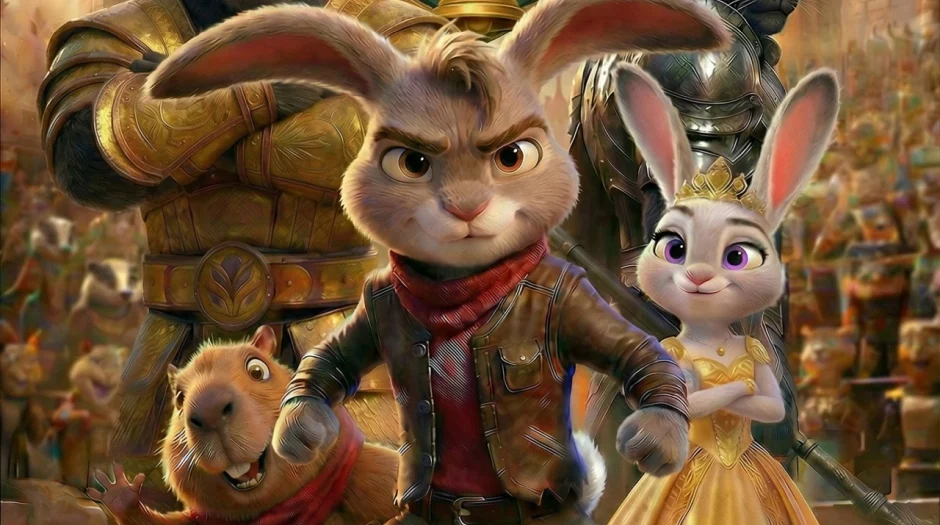
At its core, Kingdom Games centers on a compelling narrative of underdogs triumphing against formidable odds. The story follows a misfit team of animal athletes, guided by the wisdom of their bull coach, Ramses. The team is spearheaded by Max, an unlikely bunny protagonist, and includes a diverse cast of characters such as Rambo the capybara and Fredo the donkey. Together, they embark on a challenging journey through numerous obstacles, striving to reach the coveted finals of the titular "Kingdom Games." Their ultimate adversary is Hura, a powerful and menacing jaguar, promising a climactic showdown that will test the mettle of the entire team.
The true innovation of Kingdom Games lies in its production pipeline, which Digikore Studios has developed and refined to incorporate AI across the entire workflow. This AI integration spans from the initial concept design and previsualization phases to asset generation, motion blocking, complex crowd simulations, and final compositing. The studio has emphasized that this AI-assisted approach significantly accelerates production timelines. Specific processes that historically took weeks have reportedly been compressed into mere hours, and rendering times have been dramatically reduced through the implementation of neural techniques. These techniques, rather than relying on traditional frame-by-frame calculation, predict final frames, a leap forward in computational efficiency for animation. This sophisticated system has enabled the creation of large-scale environments, intricate stadium crowd sequences, and detailed character animations, achievements typically associated with the vast resources of major international film studios.

Abhishek More, the founder and producer at Digikore Studios, articulated the transformative impact of artificial intelligence on the animation industry. "The old constraint in animation was simple – visual ambition required proportional budget," More stated. "AI has broken that equation. We’ve built a film that looks and feels like a studio tentpole because our pipeline lets our artists spend their time where it matters: in the soul of the characters, in the timing of the joke, in the moment that makes a child catch their breath – not on mechanical tasks a machine can now handle." This statement underscores a pivotal shift, where AI tools are envisioned not as replacements for human creativity, but as enablers, freeing artists from laborious tasks to focus on the nuanced and emotionally resonant aspects of storytelling.
Historical Context and Industry Landscape
Digikore Studios’ journey into large-scale animated feature production is built upon years of experience and a proven track record in visual effects. The studio, which was first covered by Animation World Network (AWN) in 2003, later launched its dedicated VFX division in 2010. Since then, Digikore has become a significant player in the global VFX market, contributing its expertise to high-profile projects. The company’s impressive portfolio includes work on critically acclaimed television series such as Stranger Things, and major Hollywood blockbusters like The Marvels and Wakanda Forever. Furthermore, they have lent their talents to popular franchises including Deadpool, Thor, and Jumanji. This extensive background in demanding VFX work has undoubtedly provided Digikore with the technical acumen and project management capabilities necessary to undertake an ambitious animated feature.
The global animation industry has been experiencing rapid evolution, with technological advancements constantly reshaping production methodologies. The rise of 3DCG animation has democratized access to visually rich storytelling, but the scale and complexity of feature films have often remained the domain of well-funded studios. The integration of AI into the animation pipeline represents the latest frontier in this evolution, promising to alter the economics and accessibility of high-quality animated content.
AI in Animation: A Paradigm Shift?
The AI-assisted pipeline employed for Kingdom Games signifies a potential paradigm shift in how animated films are produced. Traditional animation workflows are often characterized by extensive manual labor, particularly in areas like modeling, texturing, rigging, and animation itself. AI’s ability to automate or significantly expedite these processes could lead to substantial reductions in both time and cost.

For instance, AI can be utilized for tasks such as:
- Concept Generation: Generating a vast array of visual concepts and character designs rapidly.
- Asset Creation: Automating the creation of textures, materials, and even basic 3D models.
- Motion Capture Cleanup and Enhancement: Refining raw motion capture data to achieve more polished animation.
- Crowd Simulation: Generating realistic and dynamic crowd behavior for large-scale scenes more efficiently.
- Rendering Optimization: Employing neural networks to predict and generate final frames, reducing computational load.
The potential implications of this are far-reaching. It could enable smaller studios or independent filmmakers to compete with larger entities by lowering the barrier to entry for producing visually sophisticated content. It also raises questions about the future of specialized roles within animation studios and the balance between human artistic input and algorithmic generation.
Creative Comparisons and Industry Scrutiny
A point of discussion arising from the trailer of Kingdom Games is the perceived visual similarity of some of its characters to those in Disney’s popular Zootopia franchise, specifically mentioning potential resemblances between characters from Kingdom Games and Judy Hopps and Chief Bogo from Zootopia. This observation, while subjective, highlights a recurring theme in character design within 3DCG animation, where certain archetypes and aesthetic choices can lead to apparent parallels. The animation community has long grappled with discussions about originality and the potential for AI-generated content to resemble existing works, sometimes raising concerns about intellectual property and artistic distinctiveness.
The animation industry, in general, is in the nascent stages of grappling with the widespread adoption of AI tools. While many see the potential for AI to enhance creativity and efficiency, there are also concerns about the ethical implications, the potential for job displacement, and the very definition of authorship in AI-assisted art. The Kingdom Games case, by presenting a fully AI-integrated feature, will undoubtedly be scrutinized by industry professionals and observers alike, not only for its artistic merit but also for what it signals about the future trajectory of animation production. The argument can be made that in 3DCG, character similarities are often inherent due to shared design principles and anatomical conventions. However, when AI-driven tools are employed, the question arises: if the primary outcome is content that closely mirrors existing popular works, beyond cost reduction, what truly has been achieved in terms of novel artistic expression?

Global Distribution and Future Outlook
Kingdom Games is slated for a comprehensive global theatrical release, encompassing the United States, Europe, Asia-Pacific, the Middle East, India, and Latin America. This wide distribution strategy indicates Digikore Studios’ ambition to reach a broad international audience. Following its theatrical run, the film is also scheduled for distribution across Over-The-Top (OTT) and satellite platforms, with plans for multi-language dubbing to cater to diverse linguistic markets.
The success of Kingdom Games could serve as a significant case study for the viability and impact of AI-assisted animation pipelines in mainstream filmmaking. Its performance at the box office and its reception by critics and audiences will provide valuable insights into consumer acceptance of AI-driven creative processes. For Digikore Studios, this feature film represents a bold step forward, leveraging cutting-edge technology to produce a visually compelling narrative and solidify its position as a forward-thinking animation studio on the global stage. The integration of AI is not merely a technical choice but a strategic one, aimed at redefining the possibilities and economics of animated storytelling in the 21st century.
The studio’s prior successes in the VFX domain, including their contributions to major Hollywood productions, have laid a strong foundation for this ambitious leap into feature animation. The industry will be watching closely to see how Kingdom Games balances its innovative production techniques with compelling storytelling and character development, ultimately shaping perceptions and potentially setting new benchmarks for AI’s role in the future of animated cinema.