

The world of martial arts manga and anime has long been captivated by the relentless pursuit of strength and the ultimate fighter. Keisuke Itagaki’s seminal work, "Baki the Grappler," first unleashed its visceral combat onto readers in 1991, initiating a saga that has spanned over three decades, multiple sequels, video games, stage adaptations, and a remarkable four anime series. The latest installment, "Baki-Dou: The Invincible Samurai," now joins its predecessors, "Baki" and "Baki Hanma," on Netflix, developed by TMS Entertainment, the studio behind acclaimed titles such as "Sakamoto Days" and "Dr. Stone." This new series delves into a profound philosophical exploration of power, pushing the boundaries of combat and character development.
The Genesis of a Fighting Phenomenon
Launched in 1991, "Baki the Grappler" introduced a teenage protagonist, Baki Hanma, whose journey is defined by rigorous training and brutal, no-rules hand-to-hand combat against an ever-escalating roster of formidable opponents. At its core, the series has consistently sought to dissect the very essence of strength and what it truly signifies to be the best, not just within the confines of a fight, but in the broader context of life. This enduring quest for understanding has resonated with a global audience, evidenced by the franchise’s impressive sales figures exceeding 100 million copies worldwide.
The narrative momentum of "Baki" has been relentless. Following the climactic and legendary battle between Baki and his formidable father, Yujiro Hanma, a palpable sense of ennui settles upon Baki and his fellow warriors. The question of who remains to challenge their unparalleled might looms large, a void that is dramatically filled by an audacious scientific endeavor. A team of researchers succeeds in resurrecting a clone of Musashi Miyamoto, Japan’s most revered swordsman from the Edo period. This extraordinary event propels Baki and a cadre of seasoned fighters, including Doppo Orochi, Jack Hanma, and Kaoru Hanayama, back into the arena, setting the stage for a series of battles that defy the conventional boundaries of time and space.

Celebrating 35 Years of Unyielding Power
The recent surge of activity surrounding the "Baki" franchise is not solely attributed to the release of "Baki-Dou: The Invincible Samurai." The 35th anniversary of the series is being marked by a series of commemorative projects, injecting new life into this best-selling manga. Kodama Tales has released a "Baki the Grappler Perfect Edition" of the manga, offering fans a renewed appreciation for the series’ foundational elements. Furthermore, Keisuke Itagaki himself has unveiled a special 35th-anniversary illustration and a commemorative animation featuring the original theme song, "BAKI MENTAL," by POCYOMKIN, RUDEBWOY FACE, and TAKE-M. This wave of releases signifies a broader commitment to celebrating "Baki’s" legacy, with further projects anticipated throughout 2026.
The enduring appeal of "Baki" can be traced back to a fundamental human curiosity: the universal question of "Who is the strongest?" and "How far can human potential be pushed?" This core inquiry, coupled with Itagaki’s distinctive approach to character creation, has been instrumental in maintaining reader engagement for over three decades.
Deconstructing Strength: An Interview with the Architects of "Baki"
To gain deeper insight into the enduring success and creative vision behind the "Baki" franchise, a conversation was held with Kei Watabiki, the producer of "Baki-Dou," and Yuki Yokoi, the editor of the "Baki" manga. Their perspectives illuminate the historical context, artistic innovations, and the unique challenges of adapting such a powerful narrative for the screen.
Early Encounters and Enduring Fascination

When asked about their initial introductions to the "Baki" universe, both Watabiki and Yokoi shared deeply personal anecdotes that underscore the manga’s pervasive influence. Watabiki recalls encountering the "Baki the Grappler" comic volumes in a barbershop during his high school years. He describes being utterly captivated, spending his entire haircut time immersed in the volumes, and finding each subsequent reading as impactful as the first. This early exposure planted the seed for his eventual involvement as an anime producer.
Yokoi echoes this sentiment, referencing the now-iconic line from "Baki the Grappler": "Anyone who is born as a boy will once dream of being the strongest." He explains that for school-aged boys in Japan, encountering "Baki" was almost an inevitability. His own introduction came in middle school, where the manga was readily available, leading him to an unexpected career path working on the very series that had captivated his youth.
The Core Appeal: Beyond Mere Physicality
The question of what initially drew readers to "Baki" and continues to sustain their interest for over thirty years elicits a profound response from both individuals. Watabiki attributes the series’ compelling nature to its direct confrontation with universal curiosities about strength. He emphasizes that "Baki" doesn’t just present raw power; it delves into the "philosophy of strength," exploring what it means to each individual character. The distinct personalities and unique values each fighter brings to their interpretation of strength elevate the narrative beyond simple contests of might.

Yokoi concurs, highlighting the inherent appeal of the characters. He points to Itagaki-sensei’s unique approach to character creation, where even seemingly outlandish individuals are grounded in relatable human experiences or an observable "extraordinariness." This philosophy, he suggests, allows characters to stand on their own, naturally giving rise to compelling narratives.
Crafting Unforgettable Characters: A Philosophy of Extremes
The "interesting characters" are frequently cited as a significant draw for fans. Watabiki elaborates on what makes these individuals so compelling and admirable. He argues that they are not simply designed to be "strong characters" in a generic sense. Instead, each possesses their own distinct values and aesthetics regarding the meaning of strength. Their intensely distinct personalities, genuine edge, and pushed-to-extremes ways of thinking ensure their presence is felt even when they are not actively fighting.
He uses the example of Musashi Miyamoto, who embodies a sense of life and death detached from modern sensibilities, contrasting him with characters like Izo Motobe, who fights with the conviction of "protecting" comrades. This divergence in motivations and philosophies, Watabiki explains, is where the true appeal lies – in witnessing each character’s unique "philosophy of strength."
The visual impact and the force of their words are undeniable elements of their charm. However, Watabiki believes the ultimate memorability stems from the sheer intensity with which each character lives their lives and the depth of their obsessions. On a personal note, he expresses a connection to Katsumi Orochi, viewing him as one of the more relatable figures in the "Baki" universe, someone who achieved growth through sheer effort and hard work.

Yokoi further elaborates on Itagaki-sensei’s character-crafting philosophy. He explains that Itagaki imagines individuals one might encounter in everyday life and then poses the question: "What would happen if you put this person and that person together?" This method of creating relatable yet extraordinary individuals, possessing an intense purpose that makes them stand out, is key to their independent appeal and the organic development of the story.
Redefining Heroic Design and Action
The conversation then shifted to whether "Baki" has redefined the landscape of heroic character design and action in manga. Yokoi posits that the series was groundbreaking in its ability to imbue every character with a discernible human story. Itagaki’s meticulous attention to detail ensures that each character possesses something "extraordinary," even those who are quickly defeated.
When the series first began serialization, mixed martial arts had not yet achieved its current cultural prominence. Yokoi notes that "Baki" could have easily remained a niche, cult classic. However, the overwhelming appeal of its characters transcended genre limitations, establishing it as a manga that depicts "strength" rather than solely focusing on mixed martial arts.
In terms of action expression, Yokoi highlights a distinctive element: the "catharsis of release" that Yujiro Hanma himself articulates within the series. The dramatic contortion of the body, likened to a wind-up mechanism before an attack, creates a sense of restraint. This buildup enhances the impact of the eventual blow, resulting in a powerful rush of release for the viewer. This dynamic expression of the body’s torque is both realistic and uniquely characteristic of "Baki."

The Art of Animation: Translating Manga’s Impact
The transition from the static power of manga to the dynamic medium of animation presents unique challenges, particularly for a series as visually intense as "Baki." Watabiki acknowledges that by the time the anime adaptation of the "Most Evil Death Row Convicts Saga" began, the manga had already achieved a high level of refinement. Techniques like dramatic double-page spreads, shocking reveals upon page turns, and the overwhelming force conveyed within a single panel are hallmarks of the manga. However, directly translating these elements into a chronological animation timeline proved to be a significant hurdle.
The core challenge lay in reconstructing the "shock" value that is inherent to the manga format into the flow of moving images. Watabiki explains that the conventional approach to adapting fighting manga, focusing on movement and pacing, is insufficient for "Baki." Instead, the opposite is often true: pausing, building tension, and creating "moments of stillness" are crucial. The entirety of a fight, encompassing the atmosphere before and after each blow, requires an extraordinary production effort. Simply increasing frame rates or cuts is not enough; composition, acting timing, sound, and effects must converge to create the palpable tension between powerful combatants.
New Frontiers in "Baki-Dou: The Invincible Samurai"
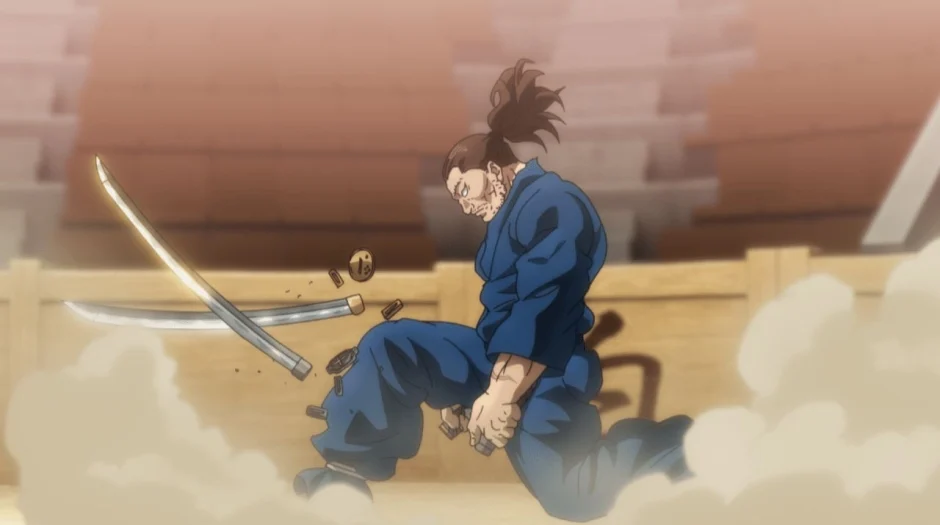
The latest anime installment, "Baki-Dou: The Invincible Samurai," introduced additional layers of complexity and challenges for the animation team. Watabiki points to the introduction of weapons as a primary highlight and a significant departure from previous installments, which were primarily focused on bare-handed combat. The inclusion of Japanese swords, wielded by the resurrected Musashi Miyamoto, fundamentally alters the nature of the tension.
While life-and-death stakes are present in unarmed combat, the introduction of weapons imbues the narrative with a more visceral sense of peril. The possibility of "death" becomes a constant, looming presence, creating a tension that transcends mere physical strength. It is a tension born from the realization that irreversible consequences can occur in a single instant. Capturing this atmosphere was identified as one of the greatest production challenges for "Baki-Dou."

Evolution of a Franchise: From "Who" to "What Kinds"
Over its 35-year history, the "Baki" franchise has seen significant evolution, though its core themes remain consistent. Watabiki reiterates that the overarching themes of "the contest of strength" and "what is strength?" have never wavered. This dedication to exploring the physicality of power is reflected in the continuous efforts within the animation to depict muscles and the human body as symbols of power.
Gradually, the series has expanded its scope beyond simple martial arts prowess. It has delved into deeper thematic territories, exploring the interplay between civilization and the wild, the complex dynamics of parent-child relationships, and cross-generational comparisons of martial philosophies. The narrative has evolved from asking "who is stronger" to investigating "what kinds of strength can exist."
Yokoi observes a parallel evolution in the manga’s visual style, which he feels is intrinsically linked to Itagaki-sensei’s expressive intentions. He notes that through "Baki Hanma" and "Baki-Dou," there was a stylistic shift towards longer forearms and lower legs relative to upper arms, a design choice influenced by the depiction of fast-moving animals and intended to convey a sense of speed. In "Baki-Dou," he perceives a move towards more powerful expressions, particularly in battles against the raw, unyielding strength of sumo wrestlers.
Fan Celebration and Anticipation for the Future
The outpouring of fan celebration surrounding the 35th anniversary has been met with immense gratitude from the creators. Watabiki expresses his sheer joy and a renewed appreciation for the enduring love the series has received. As a fan himself, he feels fortunate to celebrate this milestone alongside the global "Baki" community. He personally hopes viewers will experience the nuanced performance of Naoya Uchida as Musashi Miyamoto in the original Japanese audio, emphasizing Uchida’s ability to bring the resurrected samurai to life with an overwhelming sense of conviction, capturing what such a figure might feel and how he would carry himself in the modern era.

Yokoi, who has been involved with the series since its 15th anniversary around 2007, notes the significant growth of international fan support, which he once could not have imagined. For "Baki-Dou," he is particularly excited about the introduction of the Japanese sword, a pivotal element of the series. Beyond this, he anticipates fans experiencing the nerve-wracking thrill of life-or-death brawls that surpass even the intensity of the battle against Pickle. He expresses a hope that fans will continue to experience the ever-expanding world of this ongoing series in both depth and breadth.
The legacy of "Baki" is a testament to its ability to tap into fundamental human fascinations with strength, character, and the limits of human potential. As "Baki-Dou: The Invincible Samurai" continues to unfold, it promises to deliver the same visceral thrills and philosophical explorations that have cemented its status as a titan in the fighting genre.