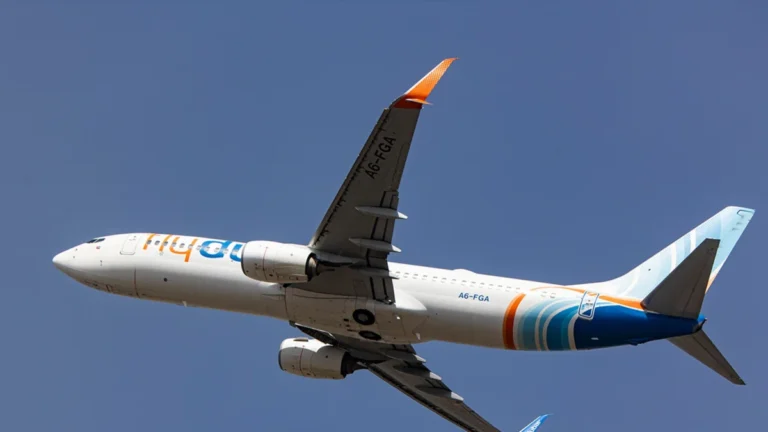



Newark, New Jersey – In an incident described by authorities as almost impossible to imagine, a commercial airliner on approach to Newark Liberty International Airport collided with a tractor-trailer carrying 14,000 loaves of bread on the New Jersey Turnpike. Miraculously, the bread deliveryman sustained only minor injuries, and his valuable cargo remained entirely undamaged. The United Airlines flight, arriving from Venice, Italy, managed to land safely despite the extraordinary mid-air-ground collision. The Federal Aviation Administration (FAA) and the National Transportation Safety Board (NTSB) have launched immediate investigations into the unprecedented event, which occurred Sunday afternoon, May 4, 2026.
The Unthinkable Collision on the Turnpike
The bizarre sequence of events unfolded as the tractor-trailer, operated by a driver for H&S Bakery, was traversing the New Jersey Turnpike in Newark. Eyewitness accounts and video footage, which quickly circulated online, depict the moments leading up to and including the impact. The driver, whose identity has not yet been released, reportedly became confused upon hearing an unusually loud and rapidly approaching sound from above. This was swiftly followed by the terrifying realization that a massive object was about to make contact with his vehicle.
The video evidence clearly shows the plane’s engines roaring overhead, then one of its landing gear assemblies, specifically a wheel, striking the roof of the tractor-trailer. The impact was severe enough to cause substantial damage to the truck and shatter the driver’s side windshield and window. In addition to the truck, the aircraft also struck a light pole adjacent to the roadway, further illustrating the extremely low altitude of the descending plane. The New Jersey State Police confirmed that a United Airlines aircraft was executing its final approach to a runway at Newark Liberty Airport when the landing tire and a portion of the plane’s underside made contact with both the commercial vehicle and the utility pole.
Driver’s Fortitude and Unscathed Cargo
Despite the harrowing nature of the collision, the bread deliveryman exhibited remarkable resilience. He was transported to a local hospital, where he was treated for non-life-threatening injuries, primarily cuts to his arm and hand caused by flying glass. His condition was stable, and he was expected to be released from the hospital within hours of the incident. This outcome is particularly astonishing given the immense forces involved in a collision with an aircraft weighing tens of thousands of pounds.
Perhaps even more astounding was the state of the truck’s cargo. Chuck Paterakis, Senior Vice President of Transportation & Logistics at H&S Bakery in Baltimore, Maryland, confirmed to news outlets that the trailer was carrying approximately 14,000 loaves of bread and rolls intended for delivery to vendors in Newark. In a testament to either the structural integrity of the trailer or a stroke of immense luck, Paterakis reported that "none of the baked goods were damaged." He assured the public that all the bread would be delivered as planned on the same day, underscoring the company’s commitment despite the extraordinary circumstances. The driver was reportedly en route to a bakery in Newark at the time of the incident, a routine trip that turned into an unforgettable ordeal.

The Aircraft and Its Safe Landing
The aircraft involved was identified as a United Airlines flight originating from Venice, Italy. Despite the significant impact with both the truck and the light pole, the pilots managed to maintain control and land the plane safely at Newark Liberty International Airport. This successful landing, under such compromised conditions, speaks volumes about the skill of the flight crew and the inherent robustness of modern commercial aircraft. No injuries were reported among the passengers or crew onboard the flight, a critical detail that prevents this incident from becoming a far greater tragedy.
Immediately after landing, the aircraft was taken out of service for extensive inspection and evaluation. While the full extent of the damage to the landing gear and the underside of the fuselage remains under assessment, preliminary reports suggest structural integrity was maintained sufficiently for a safe touchdown. Such an incident, even with a successful landing, triggers a cascade of safety protocols and engineering assessments to ensure no hidden damage compromises future flights.
Regulatory Investigations Commence
Given the highly unusual and potentially dangerous nature of the collision, both the Federal Aviation Administration (FAA) and the National Transportation Safety Board (NTSB) have swiftly launched comprehensive investigations. The FAA, responsible for regulating civil aviation safety, will focus on air traffic control procedures, flight crew actions, and adherence to established flight paths and altitude minimums. The NTSB, tasked with determining the probable cause of transportation accidents and issuing safety recommendations, will undertake a more exhaustive analysis.
NTSB investigators will meticulously examine the aircraft’s flight data recorders (FDR) and cockpit voice recorders (CVR) to reconstruct the flight path, altitude, speed, and crew communications leading up to the impact. They will also inspect the damaged truck, the light pole, and the specific section of the New Jersey Turnpike where the collision occurred. Factors under consideration will include visibility conditions, air traffic control directives, potential mechanical malfunctions, and any environmental elements that might have contributed to the plane’s unusually low altitude over a heavily trafficked roadway. The rarity of such an event makes this investigation particularly crucial for enhancing aviation safety protocols worldwide.
Newark Liberty: A Busy Hub and Its Challenges
Newark Liberty International Airport (EWR) is one of the busiest airports in the United States, serving as a major hub for international and domestic travel. Its strategic location near the metropolitan New York City area places it amidst a complex network of roadways, railways, and urban infrastructure. The New Jersey Turnpike, a critical artery for regional transportation, runs in close proximity to the airport’s runways.
This geographical reality necessitates stringent air traffic control procedures and strict adherence to approach and departure corridors designed to separate aircraft from ground-level obstructions. Aircraft on final approach typically descend along a glide path, a precisely defined trajectory that ensures adequate clearance over terrain and structures. The incident raises serious questions about why the United Airlines flight deviated from or descended below its prescribed glide path, leading to contact with ground-level elements that should have been well clear. The design and implementation of approach procedures are constantly reviewed, and this event will undoubtedly trigger a reevaluation of the airspace and ground clearance parameters around EWR.

Broader Implications for Aviation Safety and Infrastructure
The collision between a commercial airliner and a truck, though resulting in remarkably minor injuries and no fatalities, carries significant implications for aviation safety, airport infrastructure planning, and regulatory oversight. This event serves as a stark reminder of the intricate balance required to manage air and ground traffic in densely populated areas.
One key area of focus for investigators will be the precise altitude of the aircraft at the point of impact. Standard Instrument Approach Procedures (SIAP) specify minimum altitudes at various points along the approach path to ensure obstacle clearance. A deviation from these minimums, for whatever reason, represents a critical safety breach. Potential causes could range from pilot error or misjudgment to faulty altimeter readings, air traffic control miscommunication, or even unexpected wind shear conditions pushing the aircraft lower than intended.
Furthermore, the incident highlights the ongoing challenge of airport expansion and safety zones, especially for older airports built before the advent of modern aviation safety standards and larger aircraft. The proximity of major highways to runways, while often unavoidable in urban settings, demands continuous risk assessment and mitigation strategies. This could include re-evaluating minimum obstruction clearance altitudes (MOCAs), enhancing radar monitoring capabilities for low-altitude approaches, or even considering physical barriers or advanced warning systems for ground vehicles in critical zones.
Economically, the incident will result in substantial costs. The United Airlines aircraft will require extensive repairs and recertification, leading to significant expenses and operational disruptions for the airline. The investigation itself, conducted by the FAA and NTSB, is a costly and resource-intensive undertaking. Legal ramifications, including potential claims for damages to the truck, the light pole, and any resulting delays or business interruptions, are also likely.
In conclusion, while the immediate outcome of this extraordinary event is one of relief – with no serious injuries or loss of life – its long-term impact will resonate through the aviation industry. The investigation’s findings will be critical in understanding how such a rare collision could occur and in implementing necessary safety enhancements to prevent a recurrence, ensuring the continued integrity of both air and ground transportation systems.