

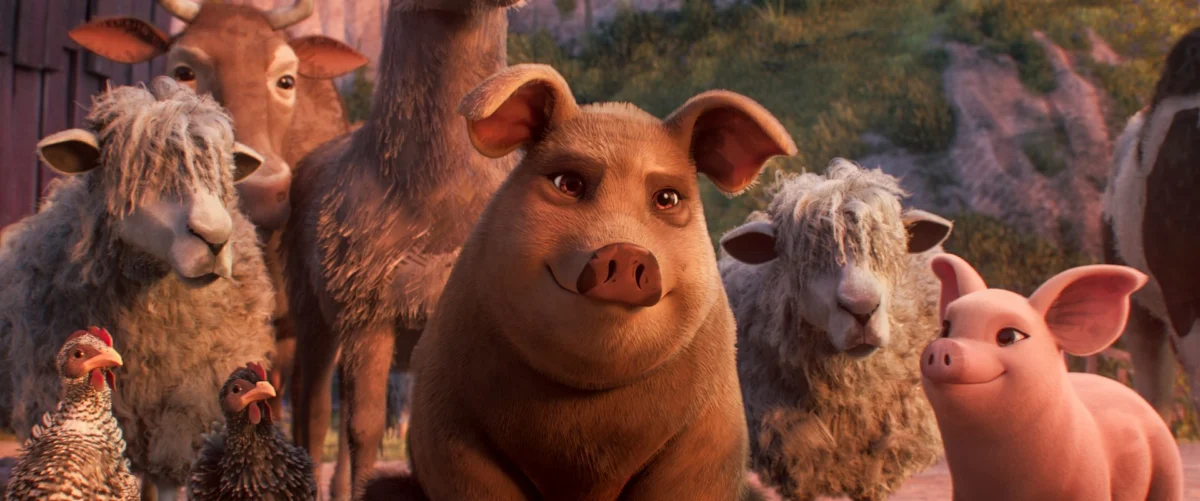
The release of the latest cinematic adaptation of George Orwell’s "Animal Farm" has ignited a fractious debate within the American political landscape, revealing a significant divide in how classic literature is interpreted and weaponized in the modern era. Directed by Andy Serkis and distributed by Angel Studios, the animated film arrived in theaters on May 1 with the intention of bringing Orwell’s 1945 political satire to a contemporary audience. However, instead of fostering a unified critique of authoritarianism, the film’s release has triggered a civil war of interpretation among conservative influencers, highlighting a broader crisis of media literacy and the increasing polarization of cultural consumption.
The Convergence of Satire and Modern Influence
George Orwell’s "Animal Farm" has long been a staple of secondary education, recognized for its allegorical depiction of the Russian Revolution and the subsequent rise of Stalinism. The novella tracks a group of barnyard animals who overthrow their human master, Mr. Jones, only to see their egalitarian dreams subverted by a pig named Napoleon, who establishes a new form of tyranny. For decades, the work has been viewed as a cautionary tale regarding the corrupting nature of power and the fragility of democratic ideals.
The 2026 film adaptation, featuring a voice cast that includes Seth Rogen and Glenn Close, sought to modernize these themes. However, the promotional campaign for the film, orchestrated by Utah-based Angel Studios—the company behind the faith-based hit "Sound of Freedom"—became the catalyst for the current controversy. The conflict began when Riley Gaines, a prominent conservative activist and former collegiate swimmer, posted a trailer for the film on social media. Her post, tagged with #AnimalFarmPartner, lauded the film for its portrayal of the failures of Marxism.
Gaines’ endorsement immediately drew fire from within her own ideological circles. While she characterized the film as a definitive strike against socialist ideologies, other influential figures on the right, such as podcaster Tim Pool and commentator Peachy Keenan, condemned the film as "pro-communist" and "socialist propaganda." This internal schism has raised fundamental questions about the ability of modern audiences to navigate nuanced political messaging in art.
A Chronology of the Controversy
The path to the current debate began in late 2012, when Andy Serkis first announced his intention to adapt Orwell’s work using performance-capture technology. The project spent over a decade in development, eventually finding a home with Angel Studios. The studio’s involvement was initially seen as a strategic move to capture the conservative and faith-based markets that had propelled their previous projects to box-office success.
In early April 2026, Angel Studios began an aggressive influencer-led marketing campaign. On April 28, Riley Gaines shared her promotional post, asserting that the film "reminds viewers that Marxism always has and always will fail." Within hours, the post became a focal point for debate. Critics on the left pointed out that Orwell himself was a democratic socialist who intended the book to critique the perversion of socialist ideals, not necessarily as a blanket endorsement of capitalism.
Simultaneously, Tim Pool revealed on social media that he had been approached by Angel Studios to promote the film but had declined the offer. Pool alleged that the film’s content was "anti-capitalist," specifically citing the inclusion of new characters and plot points that criticized human greed and corporate-style exploitation. By the time the film premiered on May 1, the discourse surrounding "Animal Farm" had shifted from its artistic merits to its perceived political utility.
Supporting Data and Critical Reception
The ideological confusion surrounding the film has been mirrored by its critical reception. As of early May, the "Animal Farm" adaptation holds a 23 percent rating on the review aggregator Rotten Tomatoes. Critical consensus suggests that the film struggles to balance Orwell’s grim political warnings with modern cinematic tropes, such as the inclusion of humor—specifically "fart jokes" voiced by Seth Rogen—that many critics felt undermined the source material’s gravity.
Data from the publishing industry indicates that "Animal Farm" remains one of the most-read books in the United States, with millions of copies sold annually. Despite this ubiquity, the varied reactions to the film suggest a disconnect between the text’s historical context and contemporary interpretation. According to a 2024 study on media literacy by the National Association for Media Literacy Education (NAMLE), there has been a documented decline in the ability of adult media consumers to identify allegory and nuance in scripted content, a trend that appears to be exacerbated by the rapid-fire nature of social media commentary.
Furthermore, Angel Studios’ previous success with "Sound of Freedom," which earned over $250 million worldwide, set a high bar for their subsequent releases. Early box office projections for "Animal Farm" suggest a much more modest performance, potentially due to the fractured nature of the film’s intended audience.
The Adaptation’s Creative Liberties
Much of the controversy stems from specific creative choices made by Andy Serkis and his screenwriting team. In an interview with USA Today, Serkis explained that he wanted the film to address universal themes of "authoritarianism and power corrupting." To achieve this, the film introduced a new character voiced by Glenn Close: a greedy human land developer who seeks to purchase the farm.
This addition was intended to broaden the scope of the critique beyond the internal politics of the animals, suggesting that external capitalist pressures are equally capable of corruption. For commentators like Tim Pool, this was interpreted as a betrayal of Orwell’s original focus on Soviet-style totalitarianism. However, literary scholars note that Orwell’s original text concludes with the pigs and humans becoming indistinguishable, a clear indication that Orwell viewed the corruption of the ruling class as a universal human flaw rather than a defect exclusive to one economic system.
The inclusion of modern humor has also been a point of contention. The decision to cast Seth Rogen, an actor known for irreverent comedies, was seen by some as an attempt to make the film more accessible to younger audiences. Critics argue that this tonal shift muddies the film’s message, making it difficult for viewers to take the political stakes seriously.
Broader Impact and the Erosion of Nuance
The "Animal Farm" controversy serves as a microcosm of the broader cultural struggle over the interpretation of classic literature. In a media environment dominated by "culture war" narratives, artistic works are often reduced to binary indicators of political allegiance. When a work like "Animal Farm"—which is intentionally complex and self-critical—is introduced into this environment, it becomes a Rorschach test for the viewer’s own biases.
The inability of influencers on both the left and the right to reach a consensus on the film’s meaning suggests a move toward "ideological purity" in entertainment. For a segment of the audience, any critique of capitalism is viewed as an endorsement of communism, and any critique of communism is viewed as a dismissal of social equity. This binary thinking leaves little room for the "democratic socialism" that Orwell himself championed.
Orwell’s own history provides essential context that is often missing from modern debates. A veteran of the Spanish Civil War, Orwell fought against fascist forces but was deeply disillusioned by the betrayal of the revolutionary cause by Soviet-backed factions. His work was a defense of individual liberty against all forms of concentrated power. The fact that he is currently being claimed as a champion by factions that he likely would have critiqued is an irony that many literary historians find significant.
Implications for Future Adaptations
The fallout from the "Animal Farm" release may have lasting implications for how studios approach the adaptation of politically charged classics. For Angel Studios, the experience highlights the risks of marketing to a highly ideologically motivated audience that may turn on a product if it does not strictly adhere to a specific political script.
For filmmakers, the challenge remains how to modernize historical allegories without stripping them of their complexity. The 23 percent Rotten Tomatoes score suggests that neither the critics nor the general public were satisfied with the film’s attempt to bridge the gap between 1945 political satire and 2026 blockbuster sensibilities.
As the film continues its theatrical run, the debate it has sparked remains a potent reminder of the importance of media literacy. The capacity to engage with a text on its own terms, rather than through the lens of modern partisan warfare, appears to be a diminishing skill. In the end, the confusion surrounding the "Animal Farm" movie may be the most Orwellian aspect of the entire affair, reflecting a society where the meaning of words and stories is increasingly subject to the whims of those in power—or those seeking it.