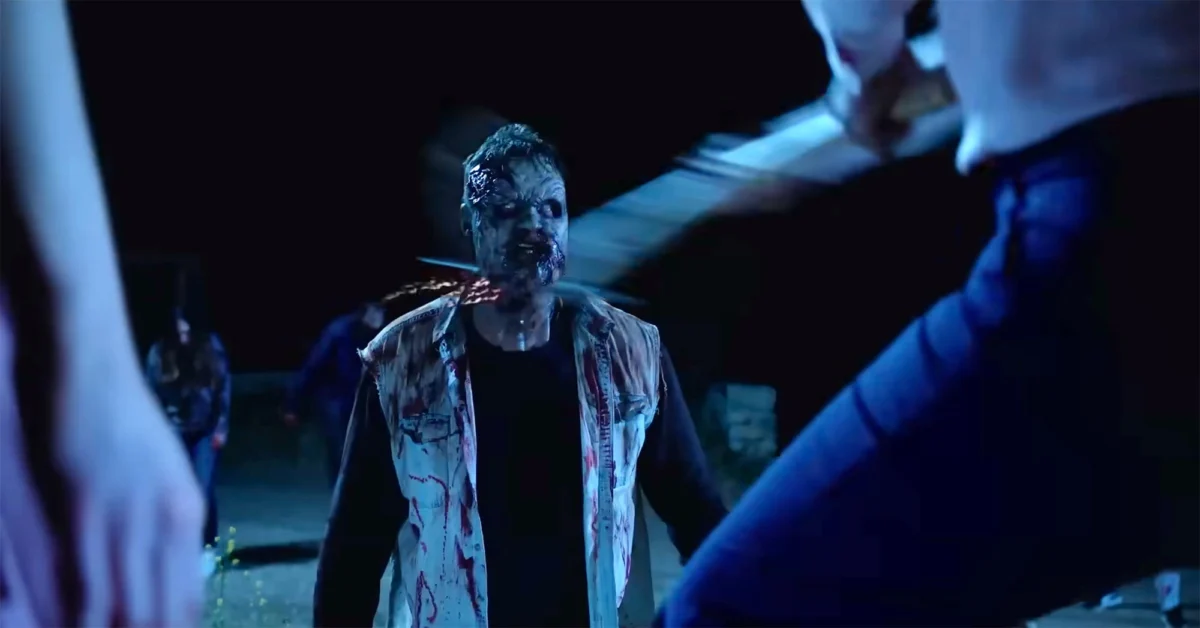
A new trailer for ITN Distribution’s upcoming remake of the seminal horror classic, Night of the Living Dead, has been released, sparking considerable conversation within the horror community as it gears up for a Summer 2026 VOD debut. Directed by prolific B-movie filmmaker Christopher Ray, this modern reinterpretation seeks to bring George A. Romero’s iconic zombie narrative to a new generation, featuring a cast including Vivica A. Fox, Brittany Underwood, Robert Carradine, Miko Hughes, Zack Ward, Rob Van Dam, and Adam Huss. The project notably reworks key elements of the original 1968 film, most prominently gender-swapping the lead character of Ben, now portrayed by Vivica A. Fox.
The Enduring Legacy of a Groundbreaking Classic
George A. Romero’s 1968 black-and-white masterpiece, Night of the Living Dead, stands as a monumental achievement in cinematic history, widely credited with defining the modern zombie archetype and profoundly influencing the horror genre for decades to come. Shot on a shoestring budget of approximately $114,000, the film defied conventional horror tropes of its era, presenting a grim, relentless, and often bleak vision of societal collapse in the face of an inexplicable undead uprising. Its raw, visceral depiction of flesh-eating ghouls, combined with its stark social commentary—particularly regarding racial tensions and media’s role in crisis—resonated deeply with audiences and critics alike.
The film’s impact was immediate and long-lasting. It premiered at a time of significant social upheaval in the United States, lending an unintended layer of allegorical depth to its narrative of ordinary people trapped in a farmhouse, struggling against external horrors and internal divisions. Its success spawned an entire subgenre, establishing many of the conventions that would become synonymous with zombie fiction, from the slow, shambling gait of the undead to the concept of headshots as their sole vulnerability. Beyond its genre-defining qualities, Night of the Living Dead also garnered critical attention for its independent production model, demonstrating that powerful, influential cinema could be made outside the traditional studio system.
A significant aspect of the film’s proliferation and subsequent remakes stems from a crucial oversight during its initial release. Due to a change in the film’s title from Night of the Flesh Eaters to Night of the Living Dead late in production, the copyright notice was inadvertently omitted from the prints. This error immediately placed the film into the public domain upon its release, making it freely available for anyone to distribute, adapt, or remake without needing to acquire rights. This unique legal status has led to countless interpretations, sequels, and homages over the decades, creating a complex and often crowded landscape of "Living Dead" properties.
Navigating the Remake Landscape: Challenges and Precedents

The decision to remake Night of the Living Dead is not unprecedented; indeed, it is a well-trodden path. The most notable and widely acclaimed remake arrived in 1990, directed by Tom Savini, a long-time collaborator of Romero’s and a legendary special effects artist. Savini’s version, produced with Romero’s involvement as screenwriter, aimed to honor the original while updating its visuals and intensifying its gore for a contemporary audience. This remake received a generally positive reception, often praised for its fidelity to the spirit of the original while offering a fresh, more visually explicit take.
However, the public domain status has also led to a deluge of less successful, often low-budget, and critically maligned reinterpretations. These range from official sequels to unrelated projects merely capitalizing on the iconic title. The challenge for any new iteration lies in balancing reverence for the source material with a compelling reason for its existence, offering something new without diluting the power of Romero’s original vision. Audiences and critics often approach such projects with a high degree of scrutiny, weighing them against the nearly sacrosanct status of the 1968 film. The very essence of what made the original so effective—its stark simplicity, its claustrophobic tension, its potent social commentary, and its groundbreaking depiction of horror—makes it a difficult act to follow, let alone surpass.
Production Insights and Creative Departures
This latest Night of the Living Dead remake is helmed by Christopher Ray, a director known for his extensive filmography within the B-movie and direct-to-video horror and action genres. Ray’s previous credits include titles such as 2-Headed Shark Attack, Shark Week, Attack of the Meth Gator, and War of the Worlds: Extinction, indicating a clear stylistic preference for genre-driven, often creature-feature or apocalyptic narratives. His involvement suggests a production designed for the digital distribution market, prioritizing accessible horror entertainment. The screenplay is penned by Jared Cohn, who also has a significant background in independent genre filmmaking. The film is produced by Tiki Terrors, further solidifying its independent production lineage.
A central creative decision that distinguishes this remake is the gender-swapping of Ben, the main protagonist. In Romero’s original, Ben, famously portrayed by Duane Jones, was a resourceful, assertive, and pragmatic Black man who emerges as the de facto leader among the trapped survivors. His character was revolutionary for its time, presenting a Black hero in a mainstream film without explicit racial commentary, yet inherently making a statement through his competence and leadership in a crisis. The casting of Vivica A. Fox in this pivotal role is a significant departure, aiming to recontextualize the character and potentially offer new dimensions to the narrative dynamic within the isolated farmhouse setting. Such changes in iconic roles often generate substantial discussion, with some viewers embracing fresh perspectives and others preferring strict adherence to established characterizations.
The film’s plot, as described, remains faithful to the core premise: "A remake of George Romero’s 1968 cult classic horror film, Night of the Living Dead takes place during a worldwide event in which the dead rise and roam the earth as zombies. As civilization collapses, a small group of survivors must fight to stay alive against the growing threat of the walking dead." This outline suggests that while character specifics may be altered, the fundamental survival narrative against a relentless zombie horde will be maintained, centering on the psychological and physical strain experienced by a ragtag group barricaded in a Pennsylvania farmhouse. The film’s ensemble cast, including veteran actors like Robert Carradine and Miko Hughes alongside genre mainstays like Zack Ward and former professional wrestler Rob Van Dam, indicates a diverse mix of experience and appeal, catering to various fan bases within the horror and action communities.
The Trailer’s Unveiling and Initial Public Perception

The official trailer, released on April 24, 2026, by ITN Distribution, provided the first comprehensive look at Christopher Ray’s vision. Trailers serve as critical marketing tools, shaping initial public perception and generating buzz, positive or negative, ahead of a film’s release. For a remake of a beloved classic, the trailer carries the additional burden of demonstrating why this new version is necessary or compelling.
The footage showcased the updated visual style, depicting the desolate Pennsylvania farmhouse and the relentless advance of the flesh-eating ghouls. Key elements from the original, such as the desperate attempts to barricade the house and the escalating internal conflicts among the survivors, appeared to be present. Vivica A. Fox’s portrayal of Ben was central to the trailer, establishing her as a strong, determined figure in the face of the apocalyptic threat. The trailer also featured glimpses of the supporting cast reacting to the escalating horror.
Initial reactions to trailers for such projects are invariably varied. For a film remaking a genre-defining work like Night of the Living Dead, discussions often revolve around the modernization of effects, the fidelity to the original’s tone, and the justification for its existence. Audiences frequently scrutinize visual effects, acting performances, and the overall atmosphere conveyed in these early glimpses, comparing them against their nostalgic reverence for the source material. These discussions, circulating across social media platforms and film forums, form a crucial part of the pre-release dialogue, influencing broader anticipation and setting expectations for the film’s eventual VOD release.
The Business Model: Direct-to-VOD and the Modern Horror Market
ITN Distribution’s strategy to debut Christopher Ray’s Night of the Living Dead directly on Video-On-Demand (VOD) this summer reflects a prevalent trend in the contemporary film industry, particularly within the horror genre. The VOD model offers several advantages for independent productions and distributors. It bypasses the often-costly and competitive theatrical release landscape, allowing films to reach a global audience instantly and efficiently. For a genre like horror, which boasts a dedicated and often digitally savvy fanbase, VOD provides a direct conduit to consumers who actively seek out new content.
This distribution method is particularly well-suited for films with established brand recognition, even if that recognition stems from a public domain property. The Night of the Living Dead title itself holds significant weight, drawing in viewers curious about new interpretations, regardless of their budget or critical reception. The economics of VOD often rely on volume and accessibility, making it a viable option for films that might not secure a wide theatrical release but can still generate revenue through rentals and purchases on various digital platforms.
The direct-to-VOD market also allows for a rapid turnaround from production to release, capitalizing on current interests and trends. In a crowded content landscape, the ability to release a film quickly after its completion can be a significant advantage. While it may not generate the prestige or box office numbers of a major studio release, the VOD model provides a sustainable pathway for independent genre cinema, enabling a steady stream of new productions and catering to a niche, yet robust, market segment.

The Enduring Allure of the Undead Narrative
The continuous re-imagining and expansion of the zombie narrative, exemplified by this latest Night of the Living Dead remake, underscores the genre’s enduring appeal. From its humble beginnings with Romero’s vision, the zombie apocalypse has evolved into a multifaceted cultural phenomenon, spanning films, television series, video games, literature, and graphic novels. The metaphor of the undead serves as a potent vehicle for exploring a wide array of human anxieties: societal breakdown, loss of individuality, fear of contagion, and the ultimate test of human morality and survival instincts.
The simplicity of the zombie premise—a relentless, mindless threat that multiplies—provides a stark backdrop against which complex human dramas can unfold. It forces characters into extreme situations, revealing their true nature, their capacity for heroism or depravity, and the fragility of societal structures. This thematic richness ensures that despite the proliferation of zombie content, there remains a persistent audience appetite for new stories and new interpretations. Each new iteration, including this latest remake, offers an opportunity to re-examine these fundamental questions through a contemporary lens, reflecting current societal fears and technological advancements.
Anticipation and the Road Ahead
As ITN Distribution prepares for the Summer 2026 VOD release of Christopher Ray’s Night of the Living Dead, the film enters a crowded field of horror remakes and zombie-centric media. Its success will likely be measured not only by its commercial performance on VOD platforms but also by its ability to carve out a distinct identity within the vast legacy of Romero’s original. The creative choices, particularly the gender-swapped lead and the director’s established style, position it as a film that aims to offer a fresh perspective while operating within the confines of a proven genre formula.
For horror enthusiasts, the release presents another opportunity to engage with a classic narrative, to compare and contrast new interpretations with the beloved original, and to witness how contemporary filmmaking approaches an iconic story. The conversation surrounding this remake will undoubtedly contribute to the ongoing dialogue about the role of remakes in cinema, the enduring power of horror, and the complex relationship between reverence for the past and innovation for the future. As the summer approaches, audiences will have the chance to decide for themselves how this new chapter in the Night of the Living Dead saga stands up to its legendary predecessor.