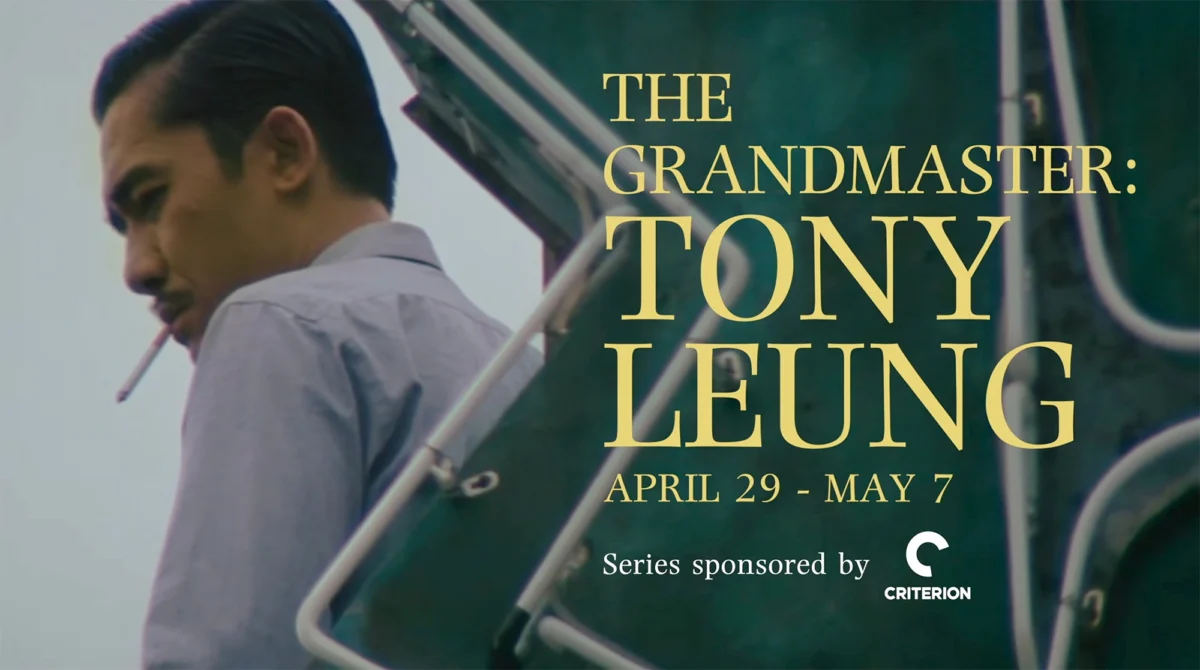
New York City’s prestigious Film at Lincoln Center (FLC) has announced "The Grandmaster: Tony Leung," a comprehensive career retrospective series dedicated to the esteemed Hong Kong actor Tony Leung Chiu-wai. Running from April 29th to May 7th, 2026, the series will showcase 13 of Leung’s most iconic films, culminating in the highly anticipated release of his latest feature, Silent Friend, directed by Hungarian filmmaker Ildikó Enyedi. This event marks a significant cultural moment, celebrating the profound impact of one of Asian cinema’s most revered figures on a global stage, highlighting his unparalleled ability to convey deep emotional resonance through a uniquely restrained and magnetic performance style.
A Career Defined by Subtlety and Stature
Tony Leung Chiu-wai, born in Hong Kong in 1962, has captivated audiences worldwide for over four decades, establishing himself as a defining face of the Hong Kong New Wave and an international icon. His career began in television in the early 1980s, quickly transitioning to film where he forged indelible collaborations with visionary directors such as Wong Kar-wai, Hou Hsiao-hsien, Zhang Yimou, and John Woo. Leung’s acting is frequently characterized by a profound interiority, a capacity to communicate complex emotional landscapes with minimal overt expression, making him a master of the understated performance. This distinct approach has garnered him critical acclaim and a host of prestigious awards, solidifying his status as a cinematic luminary.
Despite never receiving an Academy Award nomination—a point of frequent discussion among cinephiles—Leung’s trophy cabinet is replete with accolades from the world’s most respected film festivals and industry bodies. He famously won the Best Actor award at the Cannes Film Festival in 2000 for his unforgettable portrayal of Chow Mo-wan in Wong Kar-wai’s In the Mood for Love, a role that cemented his global superstar status. This achievement places him among an elite group of actors recognized by one of the world’s preeminent film events. In 2021, the Venice International Film Festival honored him with a Golden Lion for Lifetime Achievement, a testament to his enduring legacy and artistic contributions over five decades. This award recognized his "extraordinary career" and "unique charisma," as stated by the festival director, Alberto Barbera, who praised Leung as "a charismatic and versatile performer…whose allure, like that of all the great stars, has transcended the narrow confines of cult films to conquer a vast international audience." Furthermore, Leung holds multiple Hong Kong Film Awards for Best Actor, underscoring his consistent excellence within his home industry. His consistent recognition by such esteemed institutions speaks volumes about his artistic integrity and the universal appeal of his performances.

Film at Lincoln Center: A Bastion of Cinematic Excellence
Film at Lincoln Center, a constituent of Lincoln Center for the Performing Arts, has long stood as a beacon for film culture in New York City and beyond. For over 50 years, FLC has been dedicated to supporting the art and elevating the craft of cinema, presenting groundbreaking films and filmmakers from around the globe. Its programming includes the renowned New York Film Festival, New Directors/New Films, and numerous retrospectives that delve into the oeuvres of cinematic masters. Hosting "The Grandmaster: Tony Leung" aligns perfectly with FLC’s mission to provide audiences with opportunities to engage deeply with film history and contemporary cinematic achievements. The institution’s venues on the Upper West Side, including the Walter Reade Theater and the Elinor Bunin Munroe Film Center, are iconic spaces where cinephiles gather to experience film as an art form. The decision to dedicate a retrospective to Tony Leung underscores his global significance and the enduring power of his work to resonate across cultures and generations.
According to a statement from Film at Lincoln Center, the series aims to reintroduce audiences to the actor’s profound body of work: "The defining face of the Hong Kong New Wave, an international icon of romantic longing and existential searching, Tony Leung Chiu-wai has made restraint his signature. Across five decades of genre-spanning, globally celebrated work, he embodies the radical idea that the most resonant performances are often the most controlled; that minimalism can be magnetic, hypnotically complex, and aching with emotional depth…. Marking his first return to FLC in more than 25 years, this career-spanning retrospective gives audiences a chance to rediscover, on the big screen, why the world continues to fall for Tony Leung time and time again." This sentiment captures the essence of Leung’s appeal: an actor who commands the screen not through bombast but through an intense, interior stillness that paradoxically projects immense emotional power.
"The Grandmaster: Tony Leung" – A Curated Cinematic Journey
The retrospective offers a meticulously curated selection of 13 films that highlight the breadth and depth of Leung’s career. This cinematic journey spans various genres and directorial collaborations, providing a comprehensive overview of his versatility and evolution as an artist. Among the confirmed titles are many of his universally acclaimed classics:

- Hard Boiled (1992): John Woo’s seminal action film, where Leung delivered a powerful performance as an undercover cop, showcasing his capacity for intense physicality alongside emotional depth. This role was pivotal in establishing his versatility beyond romantic dramas.
- Chungking Express (1994): One of his most beloved collaborations with Wong Kar-wai, where he plays a melancholic police officer, a performance that perfectly encapsulates his ability to portray quiet yearning and urban loneliness.
- Flowers of Shanghai (1998): Hou Hsiao-hsien’s visually stunning period drama, demonstrating Leung’s command of subtle, nuanced characterizations in a highly aestheticized setting.
- In the Mood for Love (2000): His Cannes Best Actor-winning role under Wong Kar-wai, an exquisite portrayal of unspoken desire and elegant restraint that remains one of the pinnacles of his career and world cinema.
- Hero (2002): Zhang Yimou’s visually spectacular wuxia epic, where Leung brings gravitas and emotional complexity to a historical action role, reaching a vast global audience.
- Infernal Affairs (2002): A Hong Kong crime thriller masterpiece, later remade as The Departed, where Leung’s portrayal of an undercover police officer trapped in a moral labyrinth earned him widespread critical acclaim and further cemented his commercial appeal.
- Lust, Caution (2007): Ang Lee’s controversial espionage thriller, featuring a daring and intense performance from Leung, demonstrating his willingness to tackle complex and morally ambiguous characters.
- Red Cliff (2008/2009): John Woo’s epic historical war film, where Leung leads a massive ensemble, showcasing his leadership presence and ability to embody a strategic military leader.
- The Grandmaster (2013): Wong Kar-wai’s martial arts epic, where Leung’s dedication to mastering Wing Chun for his role as Ip Man epitomizes his commitment to his craft, embodying both physical prowess and profound philosophical depth.
These films represent not just critical successes but also significant moments in global cinema, each benefiting from Leung’s transformative presence. The series provides a rare opportunity for audiences, particularly those in North America, to experience these masterpieces on the big screen, as they were originally intended, allowing for a deeper appreciation of his subtle artistry.
The Timely Arrival of Silent Friend
Adding a contemporary layer to this retrospective is the North American debut of Leung’s latest film, Silent Friend. Directed by acclaimed Hungarian filmmaker Ildikó Enyedi, known for her unique and poetic cinematic vision (e.g., On Body and Soul), Silent Friend was heralded as one of the top films of the previous year by critics, including Alex Billington of FirstShowing.net. The film’s inclusion in the retrospective provides a bridge between Leung’s illustrious past and his continuing artistic evolution, demonstrating his ongoing collaboration with diverse international talent. The pairing allows audiences to witness the enduring power of his performances and his continued relevance in contemporary cinema, offering a fresh perspective on an actor whose career spans decades of significant change in the global film industry. The trailer for Silent Friend, which focuses on themes related to trees and nature, hints at a return to the contemplative and emotionally rich narratives often associated with Leung’s best work.
Broader Impact and Cultural Significance
The "Grandmaster: Tony Leung" retrospective at Film at Lincoln Center holds significant cultural implications beyond simply celebrating an actor’s career. It serves as a vital platform for showcasing the rich tapestry of Asian cinema to a broader Western audience, reaffirming its artistic value and global influence. In an increasingly interconnected world, such events play a crucial role in fostering cross-cultural understanding and appreciation for diverse storytelling traditions. Leung’s career, marked by his collaborations with both Asian and Western directors (including his recent foray into Hollywood with Marvel’s Shang-Chi and the Legend of the Ten Rings), exemplifies the growing fluidity of cinematic boundaries.

Moreover, the retrospective contributes to the ongoing critical discourse surrounding "the art of acting." Leung’s signature style—characterized by his deep internalizations, expressive eyes, and mastery of stillness—offers a compelling counterpoint to more overtly demonstrative acting traditions. Film scholars and enthusiasts will find ample material for analysis in the sheer consistency and depth of his performances across such a varied filmography. The series implicitly argues that true acting prowess lies not just in dramatic flourish but in the profound ability to convey complex human emotions with subtlety and precision, allowing the audience to project and connect on a deeper, more empathetic level.
The sponsorship of the retrospective by Criterion further highlights its prestige. Criterion, renowned for its dedication to preserving and presenting significant films from around the world, has long championed many of Leung’s best works, making them accessible to home audiences. Their involvement underscores the historical and artistic importance of this event and its potential to introduce new generations to his masterful contributions to cinema.
Conclusion
"The Grandmaster: Tony Leung" at Film at Lincoln Center is more than just a series of film screenings; it is a meticulously crafted homage to a living legend whose performances have shaped the landscape of modern cinema. From his iconic roles in the Hong Kong New Wave to his latest international endeavors, Tony Leung Chiu-wai has consistently delivered performances of unparalleled depth and magnetism. This retrospective offers an invaluable opportunity for audiences in New York City and beyond to immerse themselves in the extraordinary career of an actor whose artistry transcends linguistic and cultural barriers, reaffirming his status as a truly global cinematic icon. The series, running from April 29th to May 7th, is an essential event for anyone passionate about the art of film and the enduring power of exceptional acting. For detailed schedules, film information, and ticket purchases, interested parties are encouraged to visit the official Film at Lincoln Center website.