


The cinematic landscape is increasingly being shaped by short films that push artistic boundaries and tackle complex societal themes. Among these, Shang Ji’s “Memories of the Yellow River” has emerged as a significant work, garnering international acclaim and sparking critical discussion. This magical realist short film, which premiered at the Beijing International Short Film Festival in 2023, has since made notable strides on the global festival circuit, including becoming the first Chinese magical realist short film to be selected for the official competition at the prestigious 46th Moscow International Film Festival in March 2024. Its journey continued with a Jury Special Prize win at the Nomad International Film Festival and inclusion in the second “Shanshui Imaging Youth Project.” The film’s reach further expanded through a joint touring program with Xinpianchang and Canon in April 2025, featuring a special screening at Northwestern University’s Modern College, underscoring its growing influence and the platform’s commitment to fostering new cinematic voices.
A Journey Through Festivals and Recognition
The trajectory of "Memories of the Yellow River" through major film festivals highlights its distinctive artistic merit and resonance with international audiences. Its inclusion in the Chinese-language competition at the Beijing International Short Film Festival in 2023 marked its initial public debut, setting the stage for its subsequent international recognition. The selection for the short film competition at the 46th Moscow International Film Festival in March 2024 was a landmark achievement. Established in 1959, the Moscow International Film Festival (MIFF) is one of the oldest and most respected film festivals globally, a key event in the Eastern European cinematic calendar. For a Chinese magical realist short to break into its competitive program signifies a notable cultural exchange and recognition of emergent narrative styles from China.
Following its Moscow debut, the film received further accolades, securing the Jury Special Prize at the Nomad International Film Festival. This festival, often focused on independent and culturally diverse cinema, provided another platform for "Memories of the Yellow River" to connect with a discerning audience. Its participation in the “Shanshui Imaging Youth Project,” a program dedicated to supporting young filmmakers and their creative endeavors, further solidified its position within the emerging Chinese cinematic scene. The film’s robust festival run culminated in a significant touring program in April 2025, a collaboration between Xinpianchang, a prominent platform for Chinese short films, and Canon, a global leader in imaging technology. This initiative, which included a special screening at Northwestern University’s Modern College, a respected academic institution with a strong focus on media and communication studies, aimed to expose the film to a wider audience of filmmakers, critics, and students, fostering dialogue around its themes and cinematic techniques.
Narrative Unveiling: A Glimpse into the Story
"Memories of the Yellow River" unfolds within a seemingly mundane yet symbolically charged setting. The narrative opens in the courtyard of a building associated with a driving school. Here, a woman, later identified as Chen Ya, is depicted attempting to recuperate amidst an oppressive atmosphere. Her environment is dominated by the presence of a man, seemingly in a supervisory role, who directs workers through a loudspeaker, emphasizing the urgency of preparations for an impending inspection. This scene immediately establishes a sense of pressure and control, hinting at underlying societal or institutional demands.
Interwoven with this ordered, yet strained, environment is a surreal element: a completely naked young boy engaging in a game of catch with Chen Ya. This juxtaposition of the mundane and the fantastical sets the tone for the film’s magical realist approach. The oppressive heat, a palpable presence in the scene, exacerbates the already tense atmosphere, leading to Chen Ya’s eventual collapse.
A Journey of Discovery and Confrontation
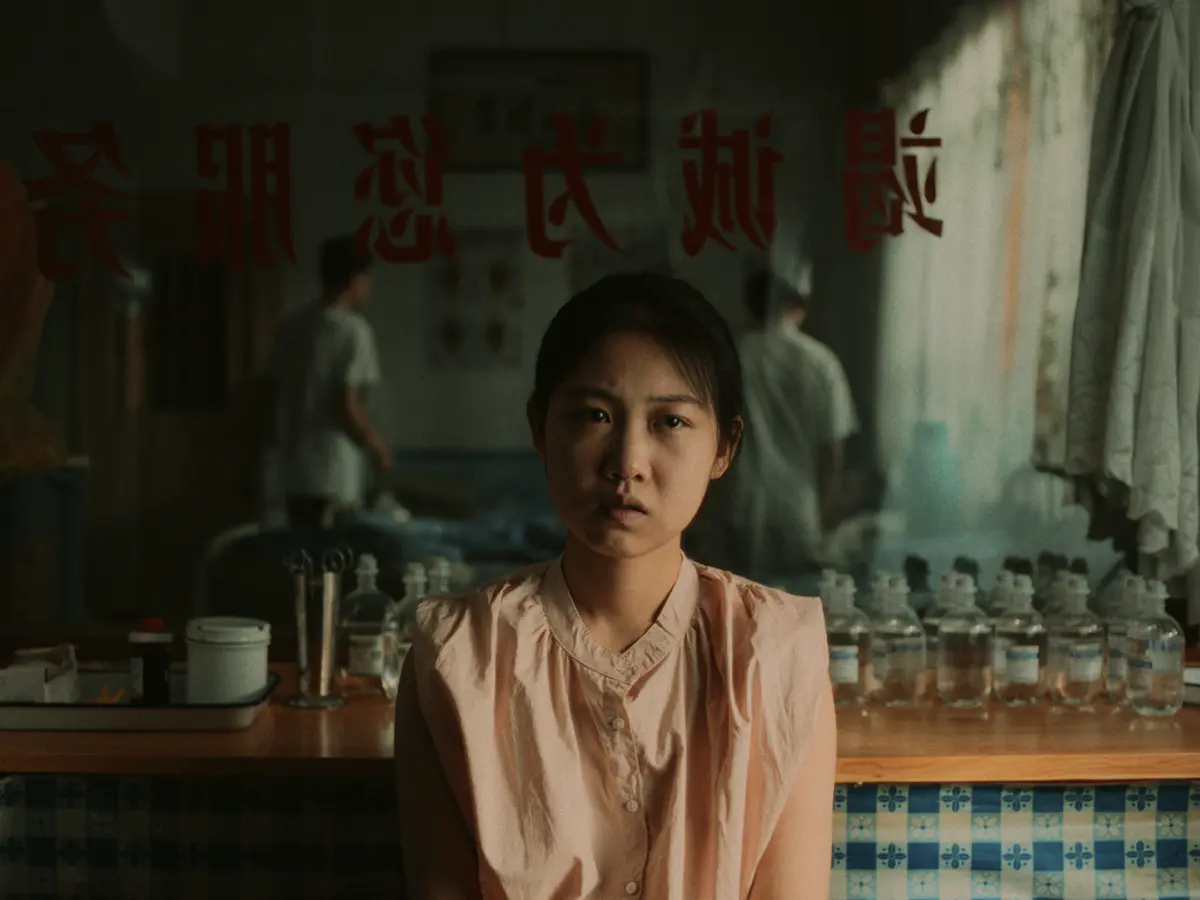
The narrative takes a significant turn when the supervisor, acting as a teacher figure, drives Chen Ya to a hospital. It is here that she receives a life-altering revelation: she is pregnant. This discovery is presented as a private moment, with Chen Ya choosing not to disclose this information to her companion. The journey to the hospital is further disrupted by a minor car collision with another vehicle, escalating into a heated exchange between the drivers. This incident prompts Chen Ya to leave on foot, seeking refuge in her apartment.
The shift to her apartment reveals another layer of her life: a lack of electricity and the presence of her father, who is sharing melon with another man. The domestic scene quickly turns confrontational when her father learns of her pregnancy. His reaction is one of immediate fury, bombarding her with questions that she is unable to answer, underscoring the patriarchal pressures and expectations within her family. The following day, during a driving lesson, the instructor leads Chen Ya to an abandoned factory. The striking imagery of chimneys painted with clouds introduces a visual motif that seems to blend industrial remnants with ethereal elements, further deepening the film’s symbolic language.
Thematic Resonance: Environment, Patriarchy, and Surrealism
Director Shang Ji, who also helmed the screenplay and served as editing supervisor, crafts a narrative that, while appearing somewhat elusive, delves into profound thematic territories. A central exploration appears to be the tension between industrialization and ecological preservation. The abandoned factory, a symbol of past industrial activity now reclaimed by time and nature, and the surrounding desolate landscapes where Chen Ya roams, serve as potent visual metaphors for this conflict. The film seems to suggest a dialogue between human progress and the natural world, highlighting the potential environmental consequences of unchecked development.
Furthermore, Chen Ya’s mysterious pregnancy, occurring under the duress of extreme heat, introduces a surreal dimension to the exploration of environmental impact. The narrative implies that the ecological burden can manifest in profound and even physically surreal ways on the human body. This element elevates the film beyond a simple social commentary, venturing into the realm of magical realism to convey complex ideas about the interconnectedness of human well-being and environmental health.
Juxtaposed against these ecological concerns is a stark critique of patriarchy, most explicitly articulated through Chen Ya’s father’s reaction to her pregnancy. His fury and interrogation highlight the restrictive societal norms and the patriarchal control often exerted over women’s reproductive choices and autonomy. This element adds a layer of social realism to the film’s otherwise surrealist leanings, creating a powerful and multifaceted commentary.
Cinematographic Craftsmanship: Visualizing Dystopia and Claustrophobia
The visual language of "Memories of the Yellow River" is instrumental in conveying its thematic concerns. The deliberate choice of a 4:3 aspect ratio contributes significantly to the sense of claustrophobia that Chen Ya experiences throughout the film. This framing, reminiscent of older cinematic formats, imbues the narrative with a sense of timelessness while simultaneously amplifying the feeling of being confined, both physically and psychologically.

The cinematography employs handheld camerawork and long takes, techniques that effectively emphasize the ecological decay within the urban ruins and the pervasive sense of decay. This stylistic choice lends the entire work a distinctly dystopian tone, immersing the viewer in the film’s unsettling atmosphere. The framing is consistently impressive, showcasing a keen eye for composition and visual storytelling. Coupled with sophisticated color grading, the visuals stand out as one of the film’s most potent strengths, creating a memorable and impactful aesthetic. The editing, resulting in a mid-tempo pace, allows the narrative to unfold organically within its 18-minute runtime, ensuring that the story’s nuances are not rushed, enabling viewers to absorb the visual and thematic elements effectively.
A Captivating Performance: Chen Xuanyu’s Nuance
The success of "Memories of the Yellow River" is significantly bolstered by the compelling performance of its lead actress, Chen Xuanyu. Known for her previous work in "One Girl Infinite," Xuanyu delivers a striking portrayal that is characterized by its largely restrained demeanor. She masterfully conveys the emotional depth of her character through subtle yet powerful eye movements and facial expressions. In a film that relies heavily on atmosphere and subtext, Xuanyu’s ability to communicate Chen Ya’s internal struggles and burgeoning anxieties without overt dialogue is a testament to her considerable talent. Her performance anchors the film’s more surreal elements in human reality, making Chen Ya’s journey relatable and profoundly affecting.
Broader Implications and Future Outlook
While "Memories of the Yellow River" may be considered somewhat elusive in its direct commentary, demanding multiple viewings for a complete appreciation of its layered meanings, its impact is undeniable. The film emerges as an excellent short work, distinguished by its strong direction, meticulous cinematography, and a captivating lead performance. It is a film that is bound to intrigue viewers who seek out cinematic experiences that challenge conventional storytelling and explore the complex interplay between societal issues and artistic expression.
The film’s critical reception and festival success suggest a growing appetite for magical realist narratives that engage with contemporary environmental and social concerns. As audiences become increasingly aware of the ecological crisis and the persistent challenges of patriarchal structures, films like "Memories of the Yellow River" offer a vital space for reflection and dialogue. Shang Ji’s work contributes to a broader conversation within global cinema about how art can serve as a powerful tool for raising awareness and fostering empathy.
The availability of the film on platforms like CathayPlay further democratizes access to such independent cinematic works, allowing a wider audience to engage with emerging filmmakers and diverse storytelling traditions. This accessibility is crucial for the continued growth and recognition of short films that might otherwise struggle to find distribution channels. The journey of "Memories of the Yellow River" from its premiere at the Beijing International Short Film Festival to its international accolades and touring programs exemplifies the vibrant and evolving landscape of short filmmaking, demonstrating its capacity to deliver profound artistic statements and stimulate important societal conversations. The film’s success is not just a personal triumph for Shang Ji and the cast and crew, but a significant marker for the continued innovation and global reach of Chinese cinema, particularly in its exploration of magical realism as a vehicle for profound social commentary.